Love is a mystery. Love is unitive. Love is how we connect as human beings with one another and with the whole universe together. Love is how we learn, become better, and make the world a better place to live for us and others. Love needs freedom to breathe, equality to thrive, and openness to flow and grow. Love is personal, political, philosophical, sexual, social, historical, metaphysical, transcendental, et al. Sadly, we have only one word to describe such a complex emotion. The ancient Greeks had six different words, but even that’s not enough. 2021 taught me new ways to describe the complexity of love and its various hues. Love lost on many counts, but it miraculously sprang on a few occasions like a phoenix. My LOVE vocabulary was defined and redefined by people who touched my life one way or another this year.
shillpi a singh
LOVE IS ART: Cheriyal scroll painters
The handful of artists belonging to the Nakash caste and hailing from Cheriyal village in Telangana are the keepers of the visual form of storytelling popularly named after them as Nakashi art or Cheriyal paintings. Over the years, these artists have painstakingly preserved the rich cultural tradition of using pictures to tell stories from Indian mythology and local folklore. The proponents of this art form are heavily dependent on their art for survival, but the 15-month lockdown left them in the throws of woes.
LOVE IS ART: The award-winning Nakashi artistsD Vaikuntam and his wife Vanaja.
“The Cheriyal art is on the brink of extinction. Today, only seven families are engaged in this art form. Five of these belong to the Nakashi community, and the others are outsiders who learned it from my father, D Vaikuntam,” says D. Rakesh, a young Nakashi artist. With no other source of income, his family of five – father Vaikuntam, mother Vanaja, brother Vinay Kumar, and wife Monisha – took to online workshops to fend for themselves during this period. The workshops conducted by SkillXn, Paramparik Karigar, Crafts Council of Telangana, Spic Macay, Dastkaar Haat Samiti, and Rajasthani Studios were creatively satisfying monetarily rewarding for his family. “The response was heartening, and the students showed keen interest in learning the art form. We want to keep it alive, and efforts like these will help us reach out to a wider audience,” says Vaikuntam.
The dying art form received a Geographical Indication status in 2007. Reminiscing the rich cultural tradition, Vaikuntam says, “Cheriyal scroll painting is one of the earliest forms of audio-visual entertainment. Hundreds of years ago, the storytelling communities travelled through villages, singing and narrating stories using the scroll as a visual tool. Each scroll measured about three feet in width and could extend to over 60 feet. A scroll contained about 40 to 50 panels, and each panel depicted a part of the story. These were displayed in a sequence to tell the tale.”
With newer forms of storytelling ruling the public imagination, the Nakashi artists have adopted unique ways to reinvent the art form and keep it relevant. “The pictorial tale from the epics doesn’t excite people anymore. The scrolls have been reduced to an aesthetic item adorning the walls, collected by art lovers,” rues Vaikuntam. To make the art form saleable, Nakash artists have designed utility items. “We made masks during the lockdown and sold them through our Facebook and Insta pages. We also use the traditional art form to make key chains, pen holders, and wall decor items,” says Rakesh.
Each Cheriyal scroll starts with a panel of Ganapati, followed by Goddess Saraswati. “It is customary for the artist to seek the blessing of the deities to ensure that the art flourishes without any obstacle,” says Vaikuntam. The Cheriyal scroll painting is drawn on handmade khadi cloth or canvas processed by applying a paste of tamarind seed, tree gum and white clay. Three coats of the paste are applied, allowing a day in between for the paste to dry. Once the scroll is ready, the artist outlines characters using a squirrel-haired brush. In Cheriyal scrolls, only natural colours are used like white comes from grounded sea shells, black from lamp soot, yellow from Pevidi stone, blue from Indigo leafs, red from Inglikam stone and the other colours from various vegetable dyes and ground stones. Every colour is mixed with thirumani tree gum, before being applied on the scroll. “The red colour fills the background. The face and skin colours are decided by the nature of the character, like blue and yellow are for gods and goddesses, respectively; brown or darker shades for demons, while pink and skin tones are for humans,” explains Vaikuntam.
LOVE IS ART: National Award winner Cheriyal artist D Vaikuntam.
Love is a mystery. Love is unitive. Love is how we connect as human beings with one another and with the whole universe together. Love is how we learn, become better, and make the world a better place to live for us and others. Love needs freedom to breathe, equality to thrive, and openness to flow and grow. Love is personal, political, philosophical, sexual, social, historical, metaphysical, transcendental, et al. Sadly, we have only one word to describe such a complex emotion. The ancient Greeks had six different words, but even that’s not enough. 2021 taught me new ways to describe the complexity of love and its various hues. Love lost on many counts, but it miraculously sprang on a few occasions like a phoenix. My LOVE vocabulary was defined and redefined by people who touched my life one way or another this year.
SHILLPI A SINGH
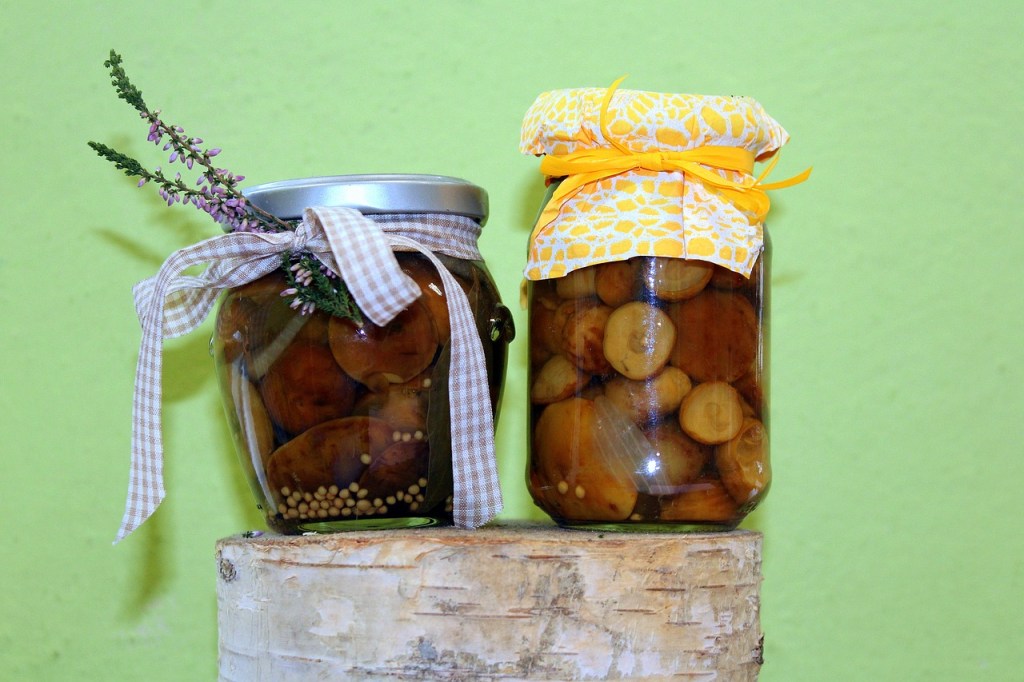
LOVE IS A JAR OF PICKLES: Upasna Prasad
Like a jar of pickles, love is sweet, sour, tangy, and spicy. Love brings colour to your life, just like a jar of pickles makes your everyday meal delectable by adding flavour. Love and a jar of pickles take their own sweet time to ferment. If not preserved well, both a jar of pickles and love can get spoiled in no time.
Homemaker Upasna Prasad has been pickling for as long as she remembers, especially during cold winter months. “It takes a lot of patience and time for the pickles to come out just right,” she says. We couldn’t agree more. It is ditto for love.
LOVE IS A JAR OF PICKLES: Upasna Prasad
Why pickles?
“I have developed my system of learning good Bihari recipes for the past few years. And I have realised that unless I learn fast, the recipes of my grandmother, mother and mother-in-law will be lost forever. Who would send me these delectable achars? So I started pickling with fervour a couple of years, picking up the tips and tricks from them, and mastering the art in some measure.”
Pickling: My favourite winter past-time
“Karonda ka khatta-meetha achar is a sweet Bihari pickle that is a welcome change from regular pickles. When it is freshly made, this seasonal achar tastes best.
One can never match up to the flavour and aroma of homemade Barabarachar. As the name suggests, yam or jimikand (oal) achar is popularly known as Barabar achar since all the major ingredients used in this pickle are equal in quantities or proportions.
Bharwan lal mirchachar (stuffed red chilli pickle) is an integral recipe of any Bihari household. The market is flooded with this bright red delight during the winter months. What makes this pickle extraordinary is the tanginess of dry amchoor powder and the mild bitterness of mustard powder topping it with loads of mustard oil added as a pickling agent.
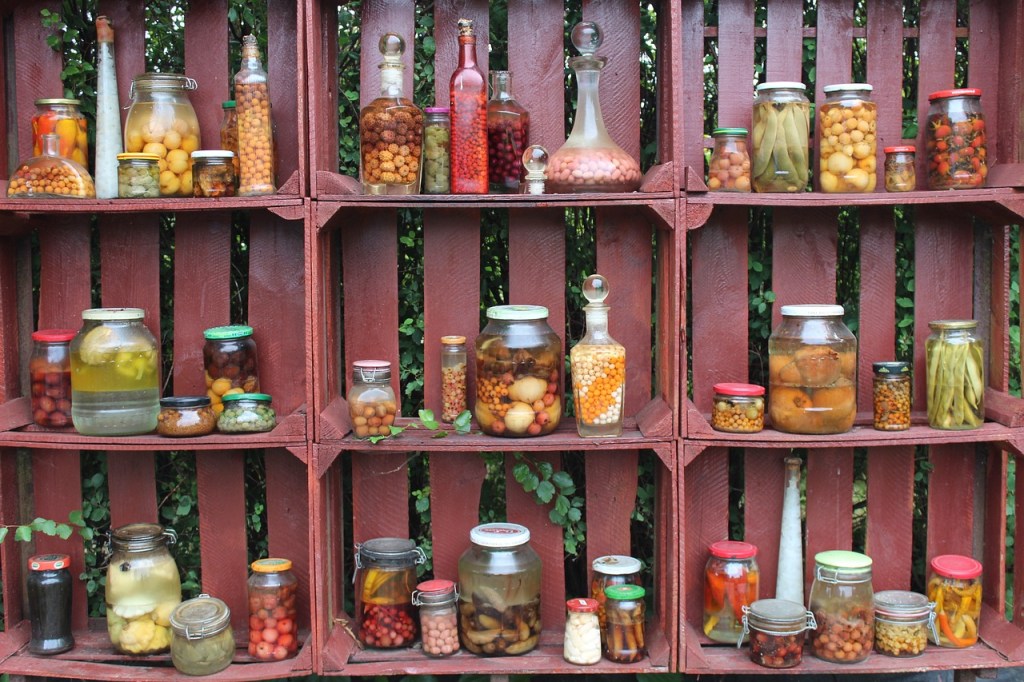
A mixed achar is one of the best Bihari pickles passed on from generation to generation with everlasting memories. Mostly fresh winter vegetables such as potato, brinjal, ginger, chilli, radish, carrot, cauliflower, and flat beans are blended perfectly with spices and mustard oil giving a tangy, zingy flavour. It needs to be soaked in the winter sun before it can be pronounced ready for consumption.
Lahsun ke patta ka achaar is another popular homemade Bihari pickle, enhancing the taste of the simplest food with its strong aroma and flavours. That’s the magic of green garlic!
How can one forget Amla (Indian gooseberry) achaar, which is nutrient-rich, loaded with iron and vitamin C in abundance, and easiest to prepare. The ingredients are simple too – amla, carrom seeds, turmeric, salt and oil to prepare. It is a must-have in winter to keep the cold at bay.”
Homegrown art
“In Bihari pickles, we use a fine blend of roasted spices and oodles of mustard oil to ensure the pickle’s longevity. This delicate balance of spices and oil will make a fantastic pickle that will last for the whole year and not spoil.
LOVE IS A JAR OF PICKLES: Upasna Prasad
Bihari pickles have a consistency close to a large rough chunk of the featured spices/ vegetables smothered in tangy (mostly mustard) oil and stained yellow colour from the inclusion of ground turmeric (haldi).
Among many Bihari families, pickles are a complete substitute to various recipes, as it requires no refrigeration and is ideal for long-distance journeys.
I love Bihari pickles as a side to most dal dishes and rice. Winter is the time to conjure up some sweet, spicy, sour and tangy pickles to accentuate any meal. These homemade pickles are good to eat and so easy to prepare that you will wonder why we ever buy them from grocery stores. There is something good about how pickles are prepared in Bihar and Jharkhand. The tartness combined with the spiciness is just perfect.”
A bite can tickle, be it a jar of pickles for your taste buds or love for your life.
Love is a mystery. Love is unitive. Love is how we connect as human beings with one another and with the whole universe together. Love is how we learn, become better, and make the world a better place to live for us and others. Love needs freedom to breathe, equality to thrive, and openness to flow and grow. Love is personal, political, philosophical, sexual, social, historical, metaphysical, transcendental, et al. Sadly, we have only one word to describe such a complex emotion. The ancient Greeks had six different words, but even that’s not enough. 2021 taught me new ways to describe the complexity of love and its various hues. Love lost on many counts, but it miraculously sprang on a few occasions like a phoenix. My LOVE vocabulary was defined and redefined by people who touched my life one way or another this year.
shillpi a singh
LOVE IS FREE-SPIRITED: Phoolsunghi
New Delhi-based academician, columnist and translator Gautam Choubey has scripted history with his literary outing — Phoolsunghi — that happens to be the first-ever translation of a Bhojpuri novel into English. Apart from being the most representative work in Bhojpuri, Phoolsunghi also happens to be one of the most loved literary works by Pandey Kapil, who is hailed as the protagonist of the Bhojpuri literary movement in post-Independence India. It was published in Hamish Hamilton by Penguin Random House.
The first ever translation of a Bhojpuri novel into English, Phoolsunghi will transport you to a forgotten world filled with mujras and mehfils, court cases and the crashing waves of the River Saryu. 🐝 pic.twitter.com/v5oeMVyJ2d
The story from the soil of Bihar pans out in Chhapra where the magical, mystical, and mundane intertwine much like the lives of three characters — courtesan Gulzaribai who was popular in the region as Dhelabai; ageing zamindar Babu Haliwant Sahay, who worked as an official in the law court and had a stake in the flourishing opium trade; and Bhojpuri folk poet and singer Mahendra Misir. The timeless tale about these celebrated legends of Bihar has traversed centuries and fascinated litterateurs across ages. These dalliances resulted in three other literary jaunts of repute — Ramnath Pandey’s Mahendar Misir, Jauhar Safiyabad’s Poorvi Ke Dhah and Anamika’s DusDwareka Pinjara.
The historical novel spanning ninety years touches upon the early years of colonial rule in India without making any direct references to the fight for independence or any social conflict or instances of religious disharmony. The plot, story, and setting spread over 16 chapters together draw a reader into the enchanting world of the lifelike characters. Music serves as the perfect backdrop in Phoolsunghi, and there is a lot of drama, action, tragedy that unfolds in the lives of these people, to keep one hooked, from start to finish. The enthralling mehfils and mujras, high-pitched abduction drama, episodes of court cases and counterfeiting notes reveal the author’s attempt to make it a wholesome entertainer.
The author explores various shades of romantic love, making it an emotional roller coaster ride for a reader. It delves deep into the characters through the maze of the relationships that they share with each other, crossing paths at times, and flowing like the two banks of a river in a few instances.
The novel documents the lives and times, rise and fall, love and longing, trials and tribulations of these characters, who live in and around the banks of river Saryu in Chhapra and its adjoining villages of Mishrawaliya, Sheetalpur, Revelgunj and Muzaffarpur. Like a river that flows through these cities, the plot intermittently drifts to Banaras and Calcutta, and makes pit stops in Punjab and Delhi, before returning to Chhapra. The story also traces the advent of the railway line and how dhuwankas or trains play an important part in the narrative. Phoolsunghi offers a bird’s-eye view of how the characters co-existed in harmony without being bothered by religious, class or caste considerations, and in some measures, it is also a social commentary on the lives of migrant workers. It reveals how some of them seamlessly merged in the mainstream in their adopted land while a few others, bit by melancholia trace their way back to their roots, sooner than later. The migrant’s life in a metropolis is bound to resonate with the readers, and tug at their heartstrings, especially those who have either been a migrant themselves or have witnessed something more heart-wrenching pan out in the country not so long ago.
LOVE IS FREE-SPIRITED: PHOOLSUNGHI
The Bhojpuri story is quite evocative and engrossing, and Choubey has done full justice to it. The translated work has a cinematic language to it with lively characterisation, and vivid imagery making it an endearing read. It will be no surprise to see the real characters, who inhabited Chhapra once upon a time, taking a reel avatar sometime soon and glossing the big screen, regaling the larger audience who live far, far away from this mofussil. The verses in Bhojpuri have been passionately and painstakingly translated into English by Choubey, but a reader would have benefitted from the richness of the language and appreciated it more had only a list of the originals been provided along with the glossary.
By foraying into the unexplored domain of translating a popular piece of Bhojpuri literature for a discerning, elitist, city-bred reader, Choubey has managed to do the unthinkable, and in one go. It is a stellar act for its sheer thought and effort. He has not only highlighted the long and diverse literary culture of the language but also debunked the common perception of it being only a folk language, giving Bhojpuri its due. His disruptive effort, hopefully, might lead to many more such works being produced by the speakers and readers of the language, and in that context, Choubey’s present translation will fondly be remembered for being the first of its kind that helped to pave the path for many more.
Phoolsunghi has something for all; it serves as a timely reminder about the richness of Bhojpuri literature for the younger generation and has a multitude of joy and nostalgia to offer for the older ones. The story will transport you back to your roots so soak in the subtleties of a bygone era from a faraway land, and shore it up for yourself and your coming generations.
“I have fallen in love with the imagination. And if you fall in love with the imagination, you understand that it is a free spirit. It will go anywhere, and it can do anything.”
Love is a mystery. Love is unitive. Love is how we connect as human beings with one another and with the whole universe together. Love is how we learn, become better, and make the world a better place to live for us and others. Love needs freedom to breathe, equality to thrive, and openness to flow and grow. Love is personal, political, philosophical, social, historical, metaphysical, transcendental, et al. Sadly, we have only one word to describe such a complex emotion. The ancient Greeks had six different words, but even that’s not enough. 2021 taught me new ways to describe the complexity of love and its various hues. Love lost on many counts, but it miraculously sprang on a few occasions like a phoenix. My LOVE vocabulary was defined and redefined by people who touched my life one way or another this year.
shillpi a singh
LOVE IS ADVENTURE: Anshu Jamsenpa
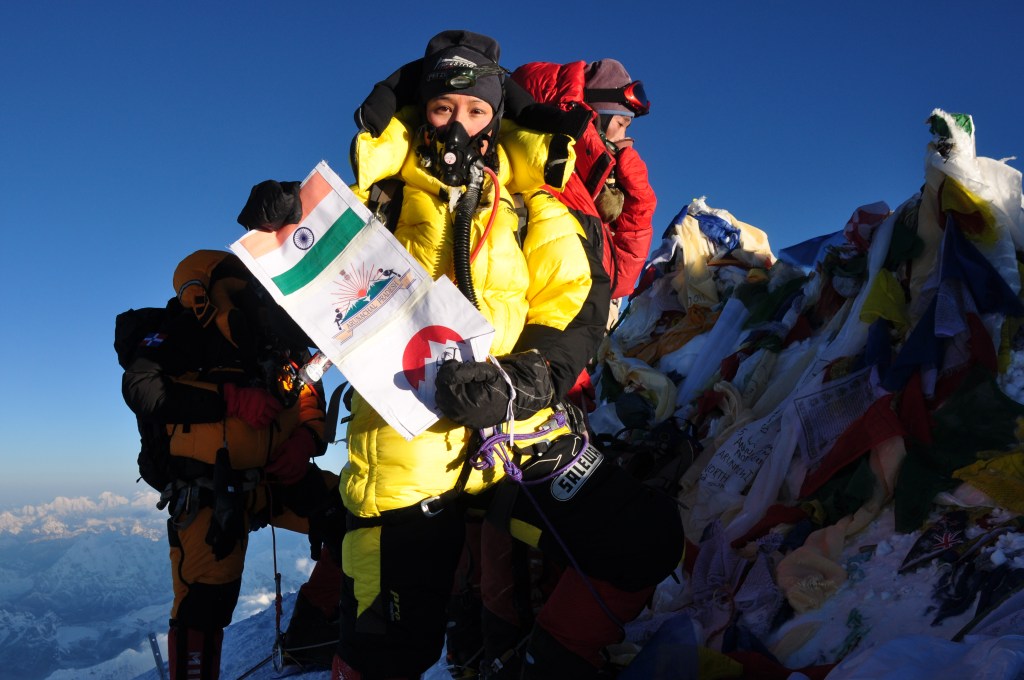
Her name means the sun’s rays, and she’s been living up to it, in letter and spirit. Like the sun that shines above the mountain even when the sky is covered with clouds, Anshu Jamsenpa, the young mountaineer from Bomdila in Arunachal Pradesh has been shining on the highest peak of the world by standing atop it and unfurling the Tricolour on five occasions, a feat that only a few can match.
President Kovind presents Padma Shri to Dr. Anshu Jamsenpa for Sports. She holds two world records, viz., the fastest woman mountaineer to summit Mount Everest twice in 5 days and the first woman mountaineer for double ascents of Mount Everest. pic.twitter.com/B02MpsQDEf
President Ram Nath Kovind gave away the Padma Shri award to Anshu Jamsenpa at a function in the Rashtrapati Bhawan on November 9, 2021.
She’s the fastest woman mountaineer in the world to summit Mt Everest twice in five days, the first woman in the world to do two double ascents of Everest (first one on May 10, 2011, and May 21, 2011; the second one on May 16, 2017, and May 21, 2017) and the first Indian woman in the world to summit Everest five times. Her third successful attempt to conquer the 29,029 ft peak was in between the two double ascents, on May 18, 2013.
LOVE IS ADVENTURE: Anshu Jamsenpafrom Arunachal Pradesh.
A mother of two girls, Anshu was busy looking after her husband Tsering Wange’s travel and tourism business when one fine day she happened to accompany a group of three mountaineers for rock climbing and river crossing activities in her hometown. “The month-long Himalayan Trekking Expedition Programme had been planned by my husband’s company. I used to go along with them daily, stand and watch as they went about rock climbing. One day, I just walked up to the trio and told them that I want to try it too. I did it, and quite well. It gave me an adrenaline rush,” she recounts.
The rock climbing incident stoked her dormant adventure streak, and she was enthused to take it up. She was finally initiated into mountaineering in 2009 after being egged on by the mountaineering instructor of the Arunachal Mountaineering & Adventure Sports Association to follow her passion seriously. She enrolled herself in a course. But the toughest part about taking up mountaineering seriously as a career was convincing family members, especially her husband. “The thought of summiting Everest crossed my mind while I was undergoing a training course, but it was easier said than done. Climbing Everest was obviously the toughest one so far. Barring my second summit of the double ascent in 2011 when the weather was pleasant, the rest of all the other four summits have been tough from different perspectives,” she says. But in the same breath, she clarifies that there is nothing like the easiest or toughest climb. “In the mountains, there is no surety. The risk factors are always there,” she adds.
As someone who yearns to travel to mountain-tops, she says it is because there’s a sense of belonging and an emotional connection with the peaks. “Mountains bring out the best in me. I’m most happy in their company,” she adds. But she also derives a lot of happiness listening to music and being with her children Pasang Droma, 19, and Tenzin Nyiddon, 15.
In between, she is busy working on her pet project, starting a training institute in Bomdila to encourage other deserving candidates into mountaineering and adventure sports from across the country. “It is just a small piece of land, and the building is yet to come up, but I have managed to train more than 5000 adventure enthusiasts here so far,” she says with a sense of pride.
She has also scaled Mt DKD2, Mt Trishul, Mt Nun and Mt Shivling.
Congratulations to Dr. Anshu Jamsenpa ji, an inspiring mountaineer from Arunachal Pradesh on receiving the prestigious civilian award #Padmashri from the Hon'ble President Ram Nath Kovind ji. We are proud of her achievements & wish her all the good luck for her future endeavours. pic.twitter.com/VqaYOXZPZD
I know you want adventure, I know you want to see the world. But love is the greatest adventure, where you risk the most for the greatest reward. What good will all this exceptional living do if you’re doing it only for yourself?
Love is a mystery. Love is unitive. Love is how we connect as human beings with one another and with the whole universe together. Love is how we learn, become better, and make the world a better place to live for us and others. Love needs freedom to breathe, equality to thrive, and openness to flow and grow. Love is personal, political, philosophical, social, historical, metaphysical, transcendental, et al. Sadly, we have only one word to describe such a complex emotion. The ancient Greeks had six different words, but even that’s not enough. 2021 taught me new ways to describe the complexity of love and its various hues. Love lost on many counts, but it miraculously sprang on a few occasions like a phoenix. My LOVE vocabulary was defined and redefined by people who touched my life one way or another this year.
shillpi a singh
LOVE IS COURAGE: Aashna Lidder
Aashna Lidder, 16, is Geetika and late Brigadier Lakhwinder Singh Lidder’s only child. Her father was one among the thirteen people, who lost their lives when an Indian Air Force (IAF) helicopter crashed in Tamil Nadu’s Nilgiris district on December 8. The tragic air crash claimed the lives of the country’s first and sitting Chief of Defence Staff (CDS) General Bipin Rawat and his wife Madhulika Rawat, and ten other defence personnel – Lt Col H Singh, Wg Cdr PS Chauhan, Sqn Ldr K Singh, JWO Das, JWO Pradeep A, Hav Satpal, Nk Gursewak Singh, Nk Jitender, L/Nk Vivek and L/Nk S Teja. Group Captain Varun Singh, who survived the crash, is presently undergoing treatment.
#WATCH | Daughter of Brig LS Lidder, Aashna Lidder speaks on her father's demise. She says, "…My father was a hero, my best friend. Maybe it was destined & better things will come our way. He was my biggest motivator…"
A student of Class 12, Aashna is an author whose book In Search of a Title: A Teenager’s Journey of Trials, Tribulations, Musings and Learnings was released on Thanksgiving Day, November 27, 2021, in the Capital.
At the book Release ‘In Search of a Title by Aashna Lidder @AashnaLidder. Super creativity at this young age. Long way to go. A versatile poet in the making. —A daughter of the Defence Forces. pic.twitter.com/gUTMsOxZVk
“We Must Give Him a Good Farewell, A Smiling Send-Off, I Am A Soldier’s Wife, I have Nothing More To Say, गर्व से ज़्यादा तो दुख है, लाइफ़ बहुत लंबी हमें काटने के लिए लेकिन भगवान को यही मंज़ूर तो यही सही, He Was A Very Good Father, My Child Will Really Miss Him, It’s A Big Loss…”
Geetika Lidder, wife of Brigadier LS lidder
We Must Give Him a Good Farewell, A Smiling Send-Off, I Am A Soldier’s Wife, I have Nothing More To Say, गर्व से ज़्यादा तो दुख है, लाइफ़ बहुत लंबी हमें काटने के लिए लेकिन भगवान को यही मंज़ूर तो यही सही, He Was A Very Good Father, My Child Will Really Miss Him, It’s A Big Loss… pic.twitter.com/6Cx4zkgz2v
— Umashankar Singh उमाशंकर सिंह (@umashankarsingh) December 10, 2021
“I am going to be 17. So he was with me for 17 years, we will go ahead with happy memories. It’s a national loss. My father was a hero, my best friend. Maybe it was destined and better things will come our way. He was my biggest motivator.”
Aashna Lidder, daughter of Brigadier LS Lidder
I am going to be 17. So he was with me for 17 years, we will go ahead with happy memories. It's a national loss. My father was a hero, my best friend: Aashna Lidder, daughter of Brig LS Lidder#BrigLSLidder lost his life in the #IAFChopperCrash
Aashna shared a special relationship with her father who, she said, used to pamper her. In an old video that recently surfaced on social media, Aashna can be seen proudly speaking about her father on Father’s Day.
We live in two Indias,
One where 17yo brave Aashna Lidder D/o Brigadier Lidder is forced to delete her Twitter account, termed Anti National by BJP trolls for her Anti-BJP views.
“In my fifteen years, my father has missed my birthday seven times and missed at least twenty family functions. We knew we did not come first, the nation did I couldn’t be more proud of him. In the Army, we learn to salute before we shake hands, we learn to say Jai Hind before we say hello,” she says in the video.
Former Puducherry lieutenant governor Kiran Bedi took to Twitter to share a clip of Aashna Lidder reciting a poem from the latter’s first book.
“This is the poem Aashna Lidder (daughter of Late Brigadier Lidder who lost his life in the Helicopter crash) recited this from her own book, on December 3, in the Friday Book Reading session. It was ominous when you listen to it. Life is very mysterious,” Bedi tweeted on Friday, hours after the army officer was cremated with full military honours in Delhi.
This is the poem Aashna Lidder ( daughter of Late Brigadier Lidder who lost his life in the Helicopter Crash) recited this from her own book, on Dec 3, in the Friday Book Reading session. It was ominous when u listen to it. 🥲🥲😢 Life is very mysterious pic.twitter.com/svg6aIE3Gu
Clip shared by Kiran Bedi of Aashna Lidder reciting a poem from her debut book.
“So, I’m going to be reading a poem of mine which I wrote on Independence Day and it is called Selfless Independence. It is called that because of how selfless independence is, how people are ready to give up themselves and their lives for a nation and other people, even though gratitude is not sure to come from the other end. They aren’t sure if you’re going to be grateful for what they’ve done but they still do it,” she says, sharing the screen with the nation’s first female police officer, and five other participants.
Daughters of late Chief of Defense Staff (CDS) General Bipin Rawat and Family members of Brigadier LS Lidder during a wreath-laying ceremony at Palam Airport on thursday. @IndianExpress photo by @anilsharma07pic.twitter.com/Gv1qSVvH5z
The aspiring writer then narrates the poem from her debut book, In Search of a Title: Musings Of A Teenager. She says, “To the man that serves not for him but for us, to the man with ruptured organs, silent, creating no buzz. To the child that’s fearless, to a wife who is rudderless, to an incomplete family for a complete nation, to sacrifice beyond your imagination. To the man that buried his independence for you, for you and nothing more. To every fighter on land, on air and shore, for you we pray, for you we pray every way in every day. So, here’s wishing you a very happy Independence Day.”
“This was a short poem,” Aashna Lidder concludes, as Bedi applauds her.
The book was released last month, at a ceremony attended by, among others, the teenager’s parents, as well as Kiran Bedi herself, and Madhulika Rawat. According to a media report, the book has seen a surge in demand in the days following the December 8 tragedy.
17 year old,grieving yet holding strong,has just cremated her father,a decorated army officer,is being trolled for her views,they want to moderate her woke-ism,military train compulsorily,want her to be corrected. In the process got her to delete her account. How low will you go?
Love is a mystery. Love is unitive. Love is how we connect as human beings with one another and with the whole universe together. Love is how we learn, become better, and make the world a better place to live for us and others. Love needs freedom to breathe, equality to thrive, and openness to flow and grow. Love is personal, political, sexual, philosophical, social, historical, metaphysical, transcendental, et al. Sadly, we have only one word to describe such a complex emotion. The ancient Greeks had six different words, but even that’s not enough. 2021 taught me new ways to describe the complexity of love and its various hues. Love lost on many counts, but it miraculously sprang on a few occasions like a phoenix. My LOVE vocabulary was defined and redefined by people who touched my life one way or another this year.
shillpi a singh
LOVE HAS LANGUAGES: Abhishek Banerjee
There is no greater agony than bearing an untold story inside you.
Maya Angelou
Actor and casting director Abhishek Banerjee is perhaps the only actor who has had two cinematic outings with a mannequin in his career. The mannequin had a guest appearance in Devashish Makhija’s Ajji (2017) where Banerjee was playing the male lead, while in Ashwani Iyer Tiwari’s Ankahi Kahaniya (2021), it was his co-star. On both occasions, he cleverly used a mannequin, once as a prop, and then as a tool to explore the chalk and cheese sides of his manhood on the big screen.
A trailer of Ajji.
As politician Vilasrao Dhavle in Ajji, Banerjee used a mannequin to show his gut-wrenching perversion. In complete contrast, the polite salesboy Pradeep Loharia from Gandarwara of Ankahi Kahaniya ekes out a living selling women’s garments at Delight Wear in Mumbai. He happens to meet a mannequin at a crummy little shop and falls madly in love with it. He fondly names her Pari. Two contrasting roles with mannequins help him get under the characters’ skin and bring out the worst and the best that a man can be.
In his book, The 5 Love Languages: The Secret to Love That Lasts, Gary Chapman described five different ways of expressing and receiving love. These five love languages are words of affirmation, quality time, receiving gifts, acts of service, and physical touch.
In Ajji, Banerjee remains the lustful, black sunglasses-wearing, foul-mouthed Dhavale who has no qualms in brutalising a mannequin and cruelly dismembering it, while raping it. The rape sequence is deeply disturbing, even though it is filmed on a dummy. The camera’s gaze moves on to show the mannequin’s severed head at the end, symbolising the blank stare of the people who let such crimes happen because it makes sense to stand and stare, and not stand up and act. Here he uses just one language to communicate his intent to the object of lust, the brutal touch that translates into a visceral action onscreen. It for sure makes for an unsettling watch.
Tailer of Ankahi Kahaniya
Banerjee makes a mannequin his object of affection in his second appearance in Ankahi Kahaniya. He communicates his love to the inanimate object using all five languages and to perfection. Though his overtures remain unrequited, we as the audience, still make a silent wish for it to come alive, just like Emmy in Mannequin (1987), starring Andrew McCarthy and Kim Cattrall.
MANNEQUIN
Banerjee’s role can very well be called a dummy’s guide (pun unintentional) for a man who wants to love a woman just the way she wants. Makhija had once said in an interview that it was the abyss in Banerjee’s eyes that gazed back at him and compelled him to offer Banerjee a role in the short film, Agli Baar. He then chose Banerjee to play Dhavale in Ajji, and Rajendra in Bhonsle, and for both, the abyss in his eyes stared at the roles and helped him take the leap of faith into the world of cinema.
With every appearance, Banerjee seems to have bettered the act. Pradeep of Ankahi Kahaniya is unbelievably good at giving a masterclass on loving a woman because he speaks all five languages of love and fluently. The happiness glows on his face, and his coy smile gives it away. The secret love dalliance makes him a butt of ridicule and reprimand, as his boss and colleague mistake his love for Pari as perverted behaviour. On his return home, he confides in his bride-to-be. One of the most tender moments is when he confesses that he is technically single, but his heart is taken by someone he can’t call his own. Pradeep-Pari’s story also remains the saddest love of all, the one that lets him fall with nothing to hold. But the same love finds its belated fulfilment because it flutters away like a butterfly and dwells in the heart of the person who is destined to keep it forever, his would-be wife. What he felt for Pari felt so real in his heart, but he doesn’t cling to it for long and bids her goodbye with a yellow dupatta, a warm hug, and teary eyes.
I must confess that in all his cinematic outings, Banerjee uses the abyss in his eyes to his advantage, much to the audience’s delight, transforming into the monster (Hathoda Tyagi of Pataal Lok) and mushy lover (Dream Girl) with ease.
Love is a mystery. Love is unitive. Love is how we connect as human beings with one another and with the whole universe together. Love is how we learn, become better, and make the world a better place to live for us and others. Love needs freedom to breathe, equality to thrive, and openness to flow and grow. Love is personal, political, sexual, philosophical, social, historical, metaphysical, transcendental, et al. Sadly, we have only one word to describe such a complex emotion. The ancient Greeks had six different words, but even that’s not enough. 2021 taught me new ways to describe the complexity of love and its various hues. Love lost on many counts, but it miraculously sprang on a few occasions like a phoenix. My LOVE vocabulary was defined and redefined by people who touched my life one way or another this year.
shillpi a singh
LOVE IS LIFE: Nirmal Anand Ki Puppy
True, we love life, not because we are used to living, but because we are used to loving. There is always some madness in love, but there is also always some reason in madness.
Petrach
Filmmaker Sandeep Mohan’s Nirmal Anand Ki Puppy gives away a hint in its title itself. And yes, you guessed it right. A puppy is at the core of this little gem, be it the dog Parie or a kiss, also called puppy in common parlance, and the twain have intertwined beautifully to take the plot forward.
LOVE IS LIFE: NIRMAL ANAND KI PUPPY
The film opens with an Insta feed where Nirmal Anand (Karanveer Khullar) is busy playing and cuddling his dog Parie as wife Sarah (Gillian Pinto) captures the tender moment. The relationship between the three picks pace as the movie progresses. The young couple, played with a lot of sincerity by Khullar and Pinto, seems the neighbour next door. They are happy in their lives, with Nirmal working as General Manager in a pharma company that manufactures a health supplement to keep diabetes at bay. His wife takes care of the home, Parie, and kids (a daughter with the couple’s second baby on the way) while juggling her career as an archivist, working on a freelance basis in between the daily grind. The mundane routine of their lives has been depicted with many credible elements on the screen, with Mohan using clever dialogues and situations to make it an endearing watch.
The usual tropes of domesticity add to the drama. The interfaith couple faces many adjustment issues with their respective families after the runaway wedding, including the name of their newborn son. Their happy life soon hits a roadblock when the man of the house is diagnosed with lifestyle disease, and the twists that follow make the couple use different coping mechanisms to deal with the trials and tribulations to keep their lives going. Nirmal takes refuge in looking for an alternate career as an actor for a filmmaker he met at a Yoga studio. At the same time, Sarah engrosses herself in restoring memories from archival materials like old cassettes for a client. She can’t help but get charmed by the dead man whom she talks to and even dreams about because he strums a guitar and sings love songs to woo her, all in mushy dream sequences. The track fills her with self-doubt, and it ends pretty abruptly for the audience. To make his role as a Taxi Driver (where Robert De Niro meets Nana Patekar) look authentic, Nirmal takes leave from work and spends days and nights driving a taxi around Mumbai. At the same time, Sarah gives birth to a boy and gets back to a full-time job, shifting base and moving out of their marital home to live with her mother.
The film was screened at the CINEQUEST FILM FESTIVAL.
Nirmal’s short reel life kiss with a co-star disturbs the peace in their real lives, leaving their relationship in a tizzy and showing their vulnerability as just another couple. Many tender moments in the couple’s lives add a layer of credibility to their frayed relationships. Mumbai serves as the perfect backdrop for their love story and gives a sneak peek into the gruelling demands of urban living that are often higher than other cities. Nirmal’s calculation of the percentage of emotional torture and happiness in marriage, in the beginning, and at the end, makes the plot and characterisation as convincing as possible for the audience because life is all about loving and living and with a fair share of Emotional Atyachar. The duo agrees on all they disagreed before, including a full-time career for Sarah and acting for Anand, among many things. The name they chose for their son reflects how they lived and loved happily ever after. The end proves that the film is more than just ‘puppy’ love.
Love is a mystery. Love is unitive. Love is how we connect as human beings with one another and with the whole universe together. Love is how we learn, become better, and make the world a better place to live for us and others. Love needs freedom to breathe, equality to thrive, and openness to flow and grow. Love is personal, political, sexual, philosophical, social, historical, metaphysical, transcendental, et al. Sadly, we have only one word to describe such a complex emotion. The ancient Greeks had six different words, but even that’s not enough. 2021 taught me new ways to describe the complexity of love and its various hues. Love lost on many counts, but it miraculously sprang on a few occasions like a phoenix. My LOVE vocabulary was defined and redefined by people who touched my life one way or another this year.
Shillpi a singh
LOVE IS BEAUTIFUL
Ultimately, it’s more useful to see love not as a feeling, but as an act.
Mark manson
It was World Health Day on April 7th, and quite ironically, it was the day when it dawned upon me that an accidental exposure a couple of days ago (because that’s the only time we had stepped out) had compromised the health of my family of four. All of us had started showing symptoms of COVID at a gap of a few days from each other.
My school friend Aashish Juyal, whom I had known since I was a few months old threatened me that if I didn’t come to see him at Sohna for Easter brunch on the 4th, he wouldn’t talk to me ever. I went with my family. He was writhing in high fever, cough and complaining of body ache since April 5th. His wife got the mandatory tests done when he came home on the 9th, and it was a false negative. Astonishingly. The treating local physician dubbed it to be a case of viral fever. His family didn’t find anything amiss and rightly so because the doctor said so, hoping that it would subside and he would be fine soon.
A day later, on 8th, I casually informed my writer-filmmaker friend Devashish Makhija (Dev) how the virus had got the better of me/us, and I was suspecting that we were on our way to be COVID positive. He asked me to wait for the tests, and then the results. On the other hand, my school friend Deepa was constantly praying for it not to be what it eventually turned out to be.
I was wary of informing my sisters and my parents, but I did. In between, Aashish was rushed to a hospital on April 12th; he appeared normal, refused to lie down on the bed in the ambulance, or lie down on the stretcher and even laughed and talked on his way, his wife Divya informed me days later. He was admitted and taken to ICU immediately; his saturation was 31 at that point. He suffered a massive cardiac arrest, and within minutes, a warm, compassionate and beautiful soul had left us wailing and grieving for the rest of our lives. The news hit all of us like a boulder. We were aghast. The bereaved family is yet to come to terms with his untimely demise.
On the same day, we travelled 25 km in high fever to get our RTPCR tests done; the results came two days later and confirmed our worst fears. The corresponding blood tests done on April 13th made it doubly sure that Coronavirus had invaded our bodies, and with every passing minute, the truant virus was getting bolder and our immune system weaker to stand up to it and fight that war.
On my sister, Shruti’s insistence, three of us (kids aged 8, 6 and I) started the medication prescribed by the treating physician, but my husband Ajay chose to rely on paracetamol solely, much to my chagrin. He was running a high fever, cough and severe body ache. She was kind to send my brother-in-law Pushp with food, medicines, and coconut water to my place, and in the process, the poor boy got exposed to the virus and tested positive with his little daughter about a week later. By God’s grace, the infection could be managed with home isolation or else I would have been forever guilty.
Dev formed a WhatsApp War Room with other warriors – Anupama Bose, Chhitra Subramaniam, Monica Rajeha, Gillian Pinto, Niiya Kumar, Mayuri Joshi Dhavale, Taranjit Kaur – that worked like a safety net for my family and me. Day in and day out, these warrior members were busy getting food delivered, sending medicines, arranging for a doctor consultation, checking about hospital beds, and above all, assuring me that it is just a phase and it too shall pass. This lovely bunch made me believe that “sometimes miracles are just good people with kind hearts.” Their kindness stood me in good stead all through this crisis. Also, because I knew these people had my back.
Our saturation levels started dipping, and my younger brother Anshuman Sinha suggested that we get an oxygen concentrator at home. I told my father GP Sinha, who is based out of Dhanbad, and he used his vast reservoir of contacts to arrange an oxygen concentrator and have it delivered at home, past midnight on April 14th. Both my younger kid and Ajay needed oxygen support, but there was only one outlet, and both of them took turns, with Ajay sleeping with 5l/minute oxygen support that night. The morning was quite rushed, and I found that his SPO2 was around 92% while my daughter kept complaining that ‘air is not coming in through her nose’. So I let them use it alternatively with different oxygen masks.
I was alarmed by these two developments and knew for sure that it is getting worse faster than I had expected. All that I had to do next was to keep help handy and immediately look for a hospital with an ICU facility and oxygen bed while thinking of the best and preparing for the worst. At the same time, I was petrified of hospitalisation. I told Dev that ‘if I go to the hospital, I won’t come back. He dismissed it all and texted, ‘of course, you will.’ His words were reassuring, but I still had my doubts like an eternal pessimist.
The next day, I helplessly informed Dev about our deteriorating medical condition and also put out an SOS tweet at 1.42 pm on April 15th while fixing Ajay’s oxygen flow on the concentrator, and checking his saturation level stuck at 92 at 5l/min, as if calling out the Universe to unite its forces and come to my family’s rescue. I was scared to death. I didn’t know whom to call to seek four beds in a hospital and on an urgent basis.
As a non-celebrity with hardly 800 odd followers on the social media handle, I knew my tweet’s fate… it would slip into oblivion sooner than expected. Who cares for an indie writer’s SOS message? “Can anyone please help find oxygen beds in #Gurugram or #Delhi? My family of four is #COVID positive. Our spo2 is dropping off alarmingly.” I was fatigued with this minor exercise and mental marathon that followed, thinking about – what if no help came about? What would we do? How will we manage this COVID emergency? I put the phone aside and dozed off. I woke up to a flurry of WhatsApp messages from my friends. They had sent me screenshots of some of the responses that my tweet had elicited, especially of #IndianYouthCongress Chief, Srinivas BV. He had tweeted asking me to DM my details, and my friends who knew the urgency started calling me frantically to respond. I did so pronto with little hope. But what followed after this leaves me choked with emotions.
Within seconds of dropping my number, the National Convenor of Indian Youth Congress (Social Media) and an active volunteer of #SOSIYC, Manu Jain, called. He asked me about my family’s saturation levels and told him that while my elder daughter and I were hovering at 93-94, my husband and younger one were 92 on intermittent oxygen support. He assured me of all possible help. He connected me to a doctor (Dr Komal Panchal from Satyawadi Raja Harish Chandra Hospital in Narela) for teleconsultation, who asked me to monitor our saturation levels and continue the medicine protocol. I requested Manu that I would prefer a government hospital. He said, ‘Don’t worry, we will do it. For now, follow the doctor’s advice.’ He called a few minutes later to inform me that he had arranged four hospital beds in a government hospital, and I could move there if there were the slightest indication that Ajay’s condition is deteriorating. The worst fears came true that night when his saturation dipped to 90 on oxygen support, and I knew home isolation wouldn’t work for him or my younger daughter anymore. His comorbidities added to my fears, and the following day, I called up Manu at 10 am to update him about the saturation status. Upon hearing Ajay’s numbers, he told me to rush immediately to the hospital and gave me the person’s coordinates (Vikas Panchal) at Satyawadi Raja Harish Chandra Hospital, Narela. The comforting bit was that the hospital was willing to accommodate all four of us.
I informed my co-warriors in the WhatsApp group because they were looking for a bed for us all over NCR, scouring options at both private and government facilities on a war footing. Anupama Bose, or AB as I call her, was quick to send me an ambulance guy’s number that I called, booked, packed some clothes and at 1.30 pm on April 16th, started the arduous journey to recovery.
We reached the hospital at 4 pm, and by then, Ajay’s SPO2 had dipped to 74. He was wheeled into ICU and while we to the third-floor general ward. My younger one needed oxygen support, and she was put on one immediately.
Our go-to person Vikas and his wife Dr Komal, who was posted in the same hospital, were just a call away all through. So were Manu and Srinivas, constantly checking on us and taking our health updates with the treating doctor, especially for Ajay.
The Warrior Squad formed by Dev became my secure space, and I don’t know how much and what all these beautiful souls did to make me stay put and fight it out with all my might, even as they battled with the agony of their near and dear ones becoming COVID positive and losing the battle. But they kept HOPE afloat for my family and me.
On 20th, my sister Richa and brother-in-law Anudeep got six vials of Remdesivir for Ajay, and by paying an exorbitant sum of money. Ajay’s elder brother Rahul got the first two picked up from Faridabad and dropped at Vikas’ place, who came to the hospital and handed them to Ajay’s doctor. The first two doses were administered on the same day and rest over the next four days. The other four came on 22nd through Abdul, a driver who collected them from Rohini and came to Narela to give them.
My father got to know about a homoeopathic medicine that was a lung booster. I contacted Deepa, whose husband Divesh (whom I fondly call a magician) got his bureaucratic colleagues in Delhi into action and within hours, I had the medicine with me. Papa scoured his phone book to get in touch with a driver whom he had met on his recent trips to Delhi to deliver some food and fruits for Ajay in the hospital. My second cousin Rachit sent home-cooked food, fruits and everything else that was needed for him. Papa’s doctor friends provided medical guidance and all of them were mighty impressed with the way doctors were going about his treatment. Anshul, my lawyer and brother from another mother, made ample arrangements by putting his clients on the job of sending snacks for my children and coconut water for Ajay in the hospital, and I can’t thank him enough for this.
His saturation dipped to 84 on 23rd and on full flow oxygen support, and I felt I was on the verge of a nervous breakdown. I met a doctor on the round, and he told me, ‘Ajay is very sick, and you need to look for a ventilator bed for him.’ I broke into a thousand pieces that moment. I called up Vikas and then Manu. Both of them reassured that Ajay has been showing signs of recovery and it could be a minor glitch that he will overcome soon. ‘Nothing to worry,’ they said almost in unison. I believed them and went about looking after my children and Ajay. Manu and Vikas were right.
The first bit of good news came on 25th when the doctors told me that my daughters are stable and good to go home in their best interests because they might catch another infection if they stay around any longer. My sister Shruti whose husband Pushp and four-year-old daughter were also COVID positive, pitched in to take them home in Sarita Vihar on 26th, and they were with her till May 10th. It was a great relief because now I had only one child to take care of, Ajay.
I saw many deaths during my hospital stay, and they all bring an immense amount of pain even to date. I met Gaurav Maul, who was tending to his sick mother Radha, on the same floor. She was on BiPap, and her saturation was fluctuating. She needed intensive care, and despite our best efforts, we couldn’t get an ICU bed for her. She battled a lonely war against the virus in her hospital bed before breathing her last on the 28th. The helplessness still haunts me. The grief is so personal and yet so collective.
On 29th, around midnight, there was another shocker. The doctor on night duty called me to discuss Ajay’s poor recovery because it was worrisome. He suggested that I take him out of the hospital and get his CT Scan done. It was a sleepless night. I dropped another SOS to my guardian angel, AB, to find a diagnostic centre around the hospital. She found one and booked an appointment past midnight.
The following day, I signed a declaration form to take Ajay out of the hospital at my own risk. Once again, I dialled Vikas and Manu. Vikas told me that Ajay is recovering fine, and HRCT isn’t required. I requested Manu to help me get a small oxygen cylinder. He knew Ajay’s saturation was 92 then and was reassured that he would be fine without oxygen support for those half an hour while being away for the tests. It was a thriller drama as we left the hospital bed at 12.12 pm on 30th, rushed in my cousin brother’s private car to the nearest diagnostic centre, and came back at 12.53 pm. Ajay was huffing and puffing and his SPO2 without support at that moment when he reached his bed was 77. He was immediately put on full oxygen support, and slowly, he bounced back.
LOVE IS BEAUTIFUL!
The reports were still worrisome, but the silver lining was his negative RAT and RTPCR tests that came the next day. We were relieved.
Ajay was on full-flow oxygen support during the first two weeks, intermittent after 15 days and then slowly no support after 17 days. He had his share of injections – antibiotics, anti-coagulant, and steroids – pumped into his veins that helped him get back on his feet. With its minimum resources, the hospital left no stone unturned to offer the best treatment to him, and that’s quite commendable.
After three harrowing weeks of hospitalisation and near-death experience due to COVID, Ajay was discharged on May 5th, after 20 days. It will be a long road to recovery given the extent of damage to his lungs, but a significant part is hopefully behind.
My sister Sonali, brother-in-law Rohit and niece Anushka in Mumbai were on their toes, praying and sending me her motivational videos so that I could hold on and not let it slip away. My friends Dev, AB, Chhitra, Taranjit, Mayank Aggarwal, Subha, Nidhi Jamwal, Eklavya Bhaiyya, Deepa, Divesh, Satish, Renu, Pallavi, Saroj, Anumeha, Manisha, Suman, Priyankita, Nikita, Fasiha, Saif, Jaspinder, Nishant, Abhishek, Jolly, Nidhi Sinha, Amitesh… and almost all of them from my family of friends from three schools that I attended, colleges I went to, places where I worked, became my sounding board as I could rant and crib and get back to caregiving business with more vigour. My foster family of Jameel Gulrays Sahab and his wife Rekha Ma’am stood like a pillar during this crisis, and so did my friend Desiree’s father and mother, Khursheed and Pushpa Anwar. I had been a non-believer in healing, but Chhitra and Sonali made me see it in a new light. I was amazed how Manisha, who is settled in Dubai, had a strong intuition and kept texting and calling me when we tested positive; she didn’t buzz off till I told her that yes, we were positive. I think that is the friendship of three decades and its power that helped us heal. My brothers from Northeast – Jyoti, Ziaul and Arghadeep – texted and kept my spirits high all through. My octagenarian school teacher Mrs Vimla Kaul had immense faith that I will somehow sail through, and I am glad I did. My former bosses – P Mohanaiah Sir and S. Manikumar from NABARD – were worried from the day I informed them so they kept checking on me, and motivating me to keep my chin up. And on nights when I was anxious and stressed, I had two options to ease my mind… either call up Deepa and talk to her or go to YouTube and listen to my fav song – I’d Love You to Want Me by Lobo. These voices acted as a lullaby and soothed my frayed nerves.
My mother Shivam Sinha, who had immense faith in her Gods, and in the fact that her daughter is brave enough to defeat this invisible enemy and bring her family out of it, safe and sound, helped me sail through with her willpower once again. It was her faith that silently worked wonders. Papa did everything possible and built a support system around me so that I don’t feel alone in any way whatsoever. Unfortunately, my UK-based sister-in-law Poonam, who was another reservoir of hope for me during this crisis, lost her father-in-law to COVID in Kangra just a couple of days ago. Her husband (in London) and his younger brother (in Bhopal) couldn’t fly for his last rites, and that will perhaps haunt them forever. But that’s how this virus has crippled us. I made a few friends from those days in the hospital. And I hope to stay in touch as a reminder of the grim times that we overcame together.
We as a family are so profoundly touched and overwhelmed by the deluge of goodwill, messages, prayers of one and all. Upon returning home, I checked my Twitter DM, and there were messages from absolute strangers who wished us well and offered help. I don’t know what I have done to deserve this kind of love and support. My heart swells with gratitude at this outpouring. I could not reply to several messages or speak due to my tight caregiving schedule but my heartfelt gratitude to everyone who stood by us and prayed! It’s those prayers and wishes that gave us a new lease of life. And above all, I am deeply grateful to the do-gooder trio – Srinivas, Manu and Vikas – as I lovingly call them for all that they did to save a family from becoming a casualty figure in the second wave of COVID.
And yes, Dev was right all through. I returned home with my guttural laughter (because I laugh from the gut or so thinks my friend Manish Gaekwad). Exhausted, but still alive and kicking. However, I will never be able to speak to Aashish, never again, and that hurts. It will always do.
This reminded me the painful moments we all went through.
Love is a mystery. Love is unitive. Love is how we connect as human beings with one another and with the whole universe together. Love is how we learn, become better, and make the world a better place to live for us and others. Love needs freedom to breathe, equality to thrive, and openness to flow and grow. Love is personal, political, philosophical, social, historical, metaphysical, transcendental, et al. Sadly, we have only one word to describe such a complex emotion. The ancient Greeks had six different words, but even that’s not enough. 2021 taught me new ways to describe the complexity of love and its various hues. Love lost on many counts, but it miraculously sprang on a few occasions like a phoenix. My LOVE vocabulary was defined and redefined by people who touched my life one way or another this year.
shillpi a singh
LOVE IS LONELY: Divya Juyal
“Love is so short, forgetting is so long.”
Pablo neruda
Dear Ashish
I wish you could listen to the songs I am playing on a loop because the lyrics speak the words I fail to say, but I want you to know how much it hurts me to let you go.
You were in such a tearing hurry to leave that you never bothered to give a second thought about how I would cope without you or how children would grow up without their father? We are keeping our chin up for you, but it is easier said than done. Living has become such a drag!
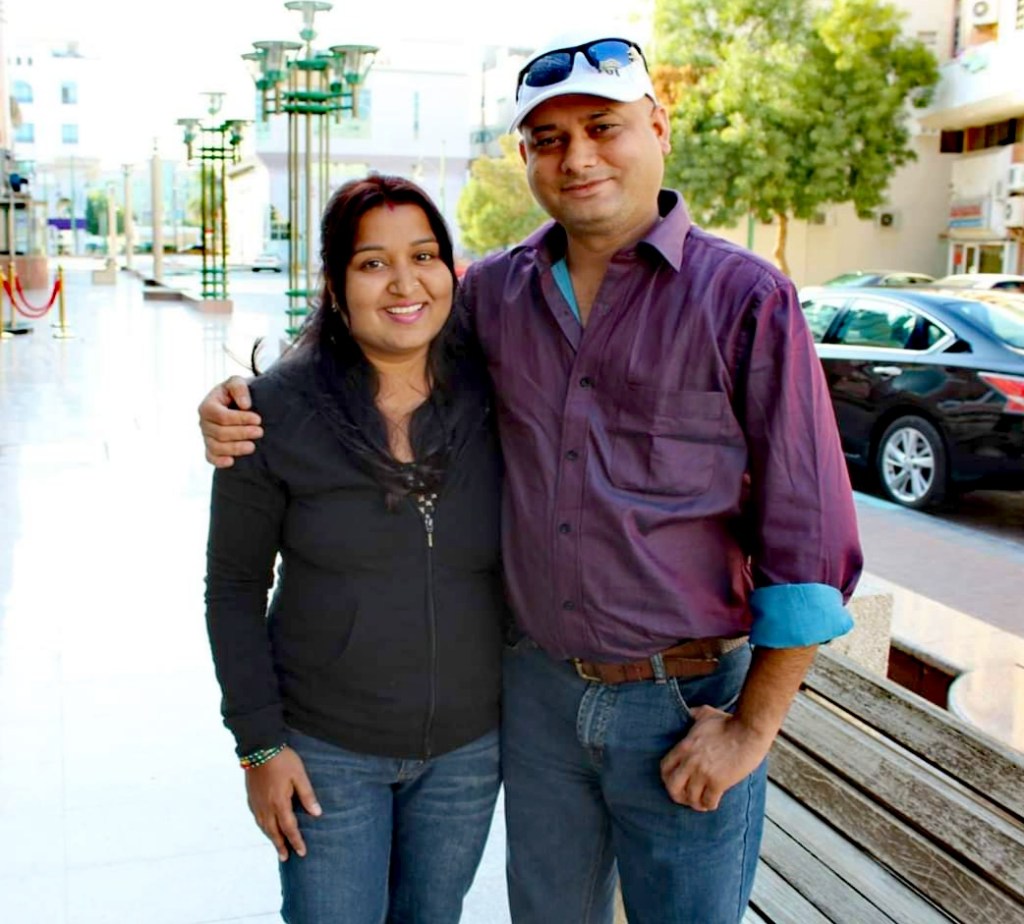
LOVE IS LONELY: Divya and Aashish Juyal
I would have, like usual, enjoyed the music when you were around, but now I understand the lyrics, and the words pierce like an ice dagger, wounding my heart and leaving it bleeding profusely. The words speak the language of my love and longing for you.
On most nights, I cry myself to sleep. The glare of the day controls my tears, holds them tight in my eyes, but the night gives them away. So as the silence of the night descends, my tears are on their own again. They flow like a river in rage, walloping over my cheeks, wreaking havoc on my emotions, and leaving me more broken than before.
You taught us the art of living, but you forgot to give us lessons in the art of leaving. I must tell you that I am not living. I am simply existing. It feels like a war, like a perfect goddamn storm. It seems like the sky is falling in, and I’m the only one to bear the load that I don’t want to. I might not find the words to say, but this song says it for me.
And out of the dark, I hear a voice speaking sense, saying, even love can be so lonely at times. Yes, it is very very lonely without you.
Love is a mystery. Love is unitive. Love is how we connect as human beings with one another and with the whole universe together. Love is how we learn, how we become better, and make the world a better place to live, for us and others. Love needs freedom to breathe, equality to thrive, and openness to flow and grow. Love is personal, political, sexual, philosophical, social, historical, metaphysical, transcendental, et al. Sadly, we have only one word to describe such a complex emotion. The ancient Greeks had six different words, but even that’s not enough. 2021 taught me new ways to describe the complexity of love and its various hues. Love lost on many counts, but it miraculously sprang on a few occasions like a phoenix. My LOVE vocabulary was defined and redefined by people who touched my life one way or another this year.
shillpi a singh
LOVE IS STARRY-EYED: Raju Singh
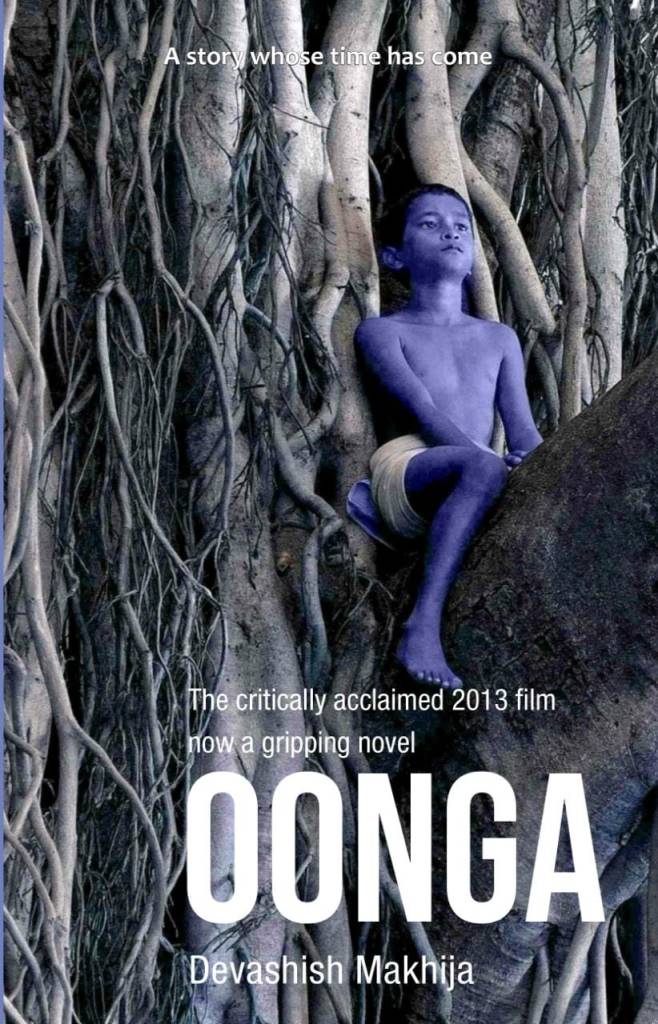
Mumbai-based Raju Singh, 18, who played the titular role in writer-filmmaker Devashish Makhija’s critically acclaimed 2013 film Oonga, is happy as a clam. The reason lies being Makhija’s recently-released novel – Oonga – for young adults that is a reverse-adaptation of his first film. Singh had started his cinematic innings at 9 with Makhija’s directorial debut, and he still hopes to make it big in films to fulfil his mother’s dream. “I have been immortalised in Oonga, the novel. The cover photo of a boy sitting atop a banyan tree branch is mine, and so is the one on the back cover with a bow and arrow,” he says, grinning from ear to ear. Oonga is the winner of the Neev Book Award 2021 in the young adult category and YathaKatha International Film and Literature Award 2021 for Best Book (Fiction).
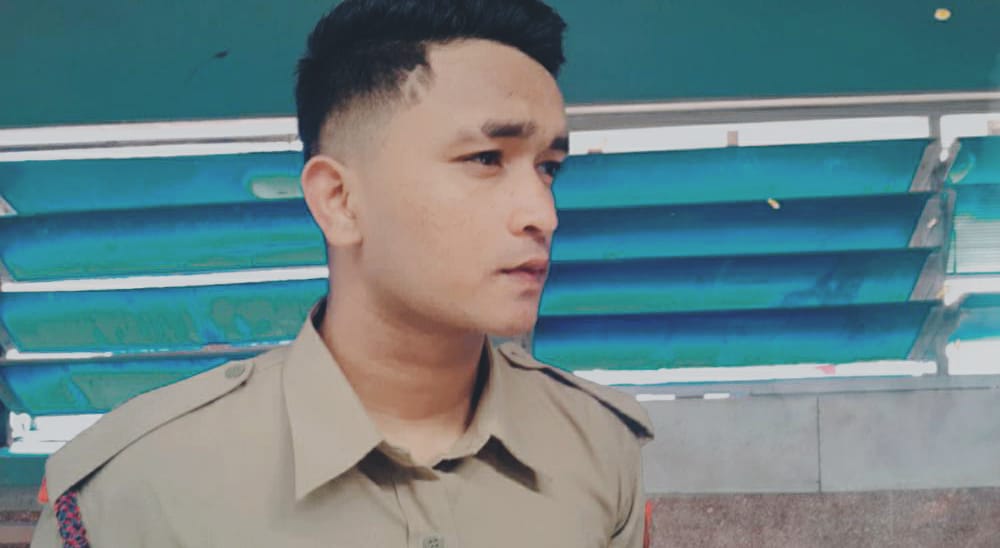
LOVE IS STARRY-EYED: RAJU SINGH (Picture courtesy: Devashish Makhija)
Waiting in the wings
The days spent shooting for the film in faraway Odisha are still fresh in his heart and mind. Reliving his days as the 10-11-year-old Dongria Kondh boy, Singh immediately rattles dialogues in chaste Odia – Ma baygi baygi noyile school pilamane mutti chhaari polayibe (Ma, hurry, or they’ll go for the school trip without me). The impeccable Odia accent is what he had picked up while playing the part of a tribal boy, learning the never-heard language’s nuances from a teacher on the film sets. The film got long over, but Odia is something that has stayed on with the young man of Nepali antecedents, and quite effortlessly. “I enjoyed playing the part of Oonga to the hilt, and it was a dream come true for my mother and me to bag this role,” he says with a twinkle in his eyes.
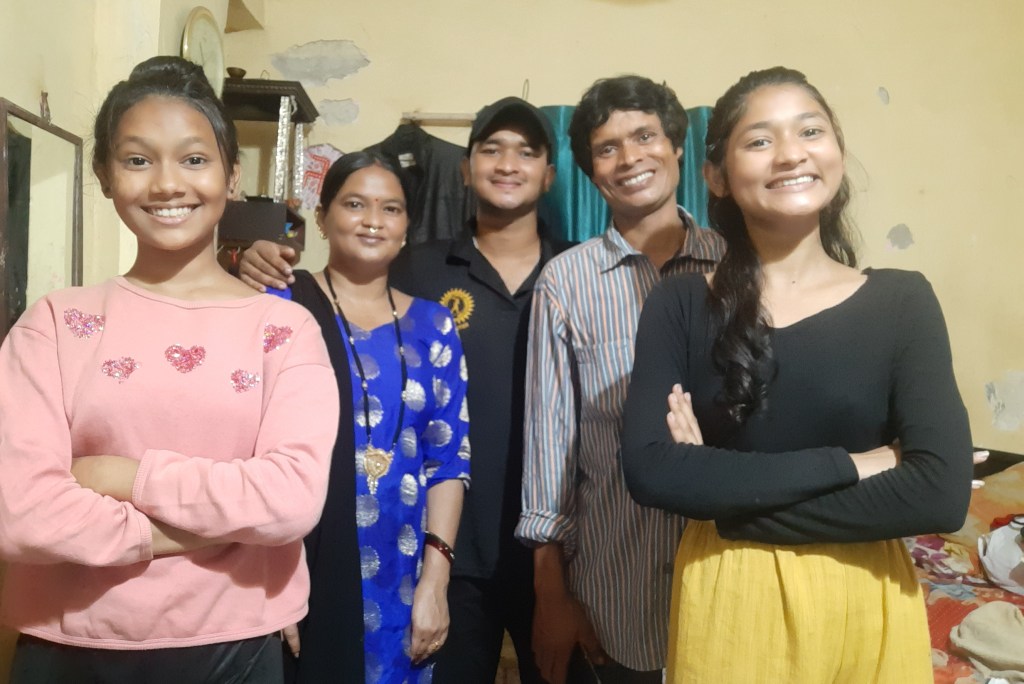
Hailing from a modest background, he had come to Mumbai with his parents when he was barely a year old, and lives in a one-room apartment in Andheri with his family. “My father works as a supervisor, and my mother is house help. I have two younger sisters studying in a BMC-run school here in Versova,” says Singh, who is currently enrolled as an NCC cadet in the senior division because he is keen to make a career in the armed forces.
LOVE IS STARRY-EYED: RAJU SINGH
His entry into the glamour world was serendipitous, he recounts. “My mother used to cook for one of the casting directors, Prabodh Bhajni. He had been looking hard to find a little boy, who could play Oonga in Makhija Sir’s film, and was visibly perturbed in those days. My mother asked him why and he told her how he had been looking for Oonga but in vain. She volunteered to bring a boy who could do justice to the role, but without telling him that the boy is her son, Raju. She took me to meet him the next day, and that’s how I walked my way into the film, quite literally,” he says with a smile. The audition for the role wasn’t a cakewalk, but his grit and persistence paid off. “I had spent a sleepless night thinking about nothing else, but bagging the role, sharing the screen space with famous actors, having my billboards plastered all over the city, and becoming rich and famous. The serpentine queue of children outside the casting director’s office in Aaram Nagar greeted me, and I was nervous as hell. I somehow pulled through the audition process and knocked everyone’s socks off,” says Singh, who was barely nine then.
He fondly remembers the euphoria that followed. “People in the office were thrilled at this find. They were clapping and calling me Oonga. But I kept reminding them that my name is Raju and not Oonga,” he reminisces with a childish grin. A student of Class 4 then, Singh, was ecstatic at bagging this role and getting a break into the world of entertainment, and his family was over the moon too. “Next day, my parents were called and informed about the shooting schedule. I was thrilled to bits at the prospect of all that lay ahead,” says the Class 12 student at Bhavan’s College, Mumbai.
Raju Singh poses with author-filmmaker Devashish Makhija’s award-winning novel for young adults, Oonga.
The story of firsts
He flew for the first time, stayed in a hotel in Odisha, and learned a little about the filmmaking process and people who work behind the scenes during the shooting schedule. “Oonga brought many firsts in my life. I had studied that A for aeroplane while learning English alphabets and used to wave at it longingly but had never thought that I would get an opportunity to board a flight, one day. Oonga gave me wings,” he says. One thing that he realised after this role was that acting is so much more than it appears. “For the first time, I witnessed the hard work that went behind canning a perfect shot. It is a lot of work and involved long hours, but I realised that what keeps one going is the thrill of seeing oneself on the big screen, getting appreciated and recognised, and winning awards,” he says with a sigh.
Singing paeans to his director’s genius, he reminisces how Makhija took extra care of him on the film set. “I had Odia dialogues and would at times forget them, but he would be patient with me and wait for me to deliver them to perfection,” he says about Makhija. The duo shared an excellent rapport on and off-screen, and to date, he is immensely thankful to him for giving a little boy like him an opportunity to hang the moon and the stars in his directorial debut.
Raju Singh with his sisters Pooja and Komal, father Bharat and mother Meena.
Singh lives with one regret, though. The film won critical acclaim and had a successful festival run, but never hit the theatres, and the fame that he was looking forward to never came his way. “I gave that role my best. If only Oonga had been released here in India, I would have become famous and bagged many more roles. But no one saw me as Oonga, and all my work went unappreciated. I felt terrible. I managed small roles in some films, but like my first, these too failed to hit the theatres,” he says, summing up his acting career.
The cover image on Makhija’s novel for young adults has sparked that desire to hit the limelight again, and he yearns to get one more chance to make it big in the world of entertainment. “It is my mother’s dream to see me on the television and in films. I tried my luck by auditioning for a reality show after Oonga, but nothing came of those attempts. I want to fulfil her dream,” he says, brimming with hope at the prospect of becoming an actor, once again.
But till he makes it big, he wants people to buy the book – Oonga – and read the story of a daring little boy who took it upon himself to become Lord Rama and fix the wrongs.










 mindthegapalways