All posts by Shillpi A Singh

Unknown's avatar

About Shillpi A Singh

क़लम मज़दूर | Commspreneur | Recipient of the IIMCAA Award for Public Relations Person of the Year 2024 | Canva's Top 10 Social Media Creator for 2023 | Work-in-Progress

Seven tips to ace the wellness game in 2021

Dr Kirti Sabnis

The concept of wellness is not new, but the pandemic really compelled us to take the time to focus on our health. Instead of working out to the point of exhaustion, people have taken a more holistic approach to their overall wellbeing. From how we work out, what we eat, what we drink, the products we put on our bodies and faces, the way we rest, everything has changed — and the impact of these changes will be felt into 2021 and beyond.

According to studies, people across the world have adopted fitness routines and immunity-boosting diets, making health as their first priority. Here are a few tips on how you can ensure your wellbeing in the new year.

FOCUS ON COMMUNITY CARE: The pandemic has compelled us to focus on community care rather than being self focused – a growing awareness that is helping propel people towards a greater pathway to happiness. Scientific researchers say that people are prioritizing giving back, donating their time, skills, and using their power to address systemic issues that are present in their own lives, workplaces, and communities.

BUILD STRONG METABOLIC HEALTH: With the adverse effect of COVID19 on one’s health, one of the most noticeable effects were weakened metabolic strength. People suffered from the disease because they could not fight the virus. The eating and lifestyle patterns have never been of much concern until this year. Now, everyone is concerned about what they eat, and whether their body has the strength to fight the disease. Food with all the vital elements to provide balanced nutrition to our body is now on everyone’s priority list. Green leafy vegetables, eggs, fruits like berries, apples, citrus fruits, Melon are good for metabolic strength and will become must-have’s in 2021.

MENTAL WELLBEING IS PARAMOUNT: For years together, the issue of mental wellness didn’t get much needed attention. However the pandemic changed this, and for good. In India, there is a surge in telemedicine services for mental health consultations, especially from tier II and III cities as well. People have now understood the relevance of caring for oneself and for the community too. There are newer technologies and wearable devices that now share alerts on your mental wellbeing. Coming year, you will see more devices with built-in alerts to remind you to stop and breathe when it measures that your heart rate is up.

SEEK OUT FOR VIRTUAL FITNESS TRAINING & EXERCISE MODULES: With fitness centers only opened in a limited capacity, many trainers have turned to virtual classes. This has created more access for fitness training for those who didn’t have the time or capacity to go to a gym. There are several platforms that offer holistic virtual programs. Also, trainers are leveraging social media to offer free classes. This trend will picked momentum this year.

MONITOR SLEEP PATTERNS: Not getting the recommended hours of sleep is linked to weight gain and obesity, high blood pressure, diabetes, depression, heart disease, stroke, and a greater risk of death. Furthermore, sleeping for less than seven hours a day leads to impaired immune system, decrease in cognitive performance, and an increased risk of accidents. There are several apps that track your sleep and give you important insights into your sleep patterns. These apps are designed to help you improve your sleep patterns and help fight insomnia.

MINDFUL EATING HABITS: The trend of ‘eat fresh, eat local’ has been gaining strength in India. Moreover, people will continue to turn away from restrictive diets, especially those that completely demonize certain macronutrients, such as carbohydrates. I also believe there will be an increase in people embracing food in all its forms through the trend of upcycling food, which means that strange-looking vegetables and wasted food scraps can be turned into delicious meals and snacks. It is a step toward a healthier, more sustainable, and more conscious future.

BUILDING IMMUNITY: An optimally functioning body and a nutritious diet is the key to keep your immune system on track. A healthy immune system can safeguard the body from any disease, even fight COVID19. The awareness among people for immunity-boosting nutrients has now taken a peak, and everyone is now looking for health supplements or food with rich immunity-boosting elements. The immunity booster supplements whether it’s Green Tea or fruits rich in Vitamin C are now part of every household. This is something that has drawn maximum people’s attention and will be practiced in 2021 as well.

While the above mentioned wellness trends are significant for complete wellbeing of mind and body. It is equally important to seek expert guidance for all medical needs. Adhering to precautionary measures such as maintaining social distancing, sanitizing hands and wearing masks are key. Patients are recommended to follow treatment guidelines in managing chronic diseases such as diabetes, obesity, cardio-vascualr diseases, cancer especially in the elderly to ensure health and safety of everyone around us.

(Dr Kirti Sabnis is Infectious Disease Specialist at Fortis Hospital, Mulund and Kalyan)

‘Virtual healthcare options proved as the saving grace during the pandemic’

While telemedicine as a concept has been around for quite some time now, Remote Patient Monitoring is a relatively new concept for most of us in India. But the CORONA crisis that struck early last year made the not-so popular practice as the go-to service for many.

Dr Brajesh Kunwar

Virtual healthcare services such as telemedicine and Remote Patient Monitoring (RPM) have been of immense help during the pandemic. While telemedicine as a concept has been around for quite some time now, RPM is a relatively new concept for most of us in India. The CORONA crisis struck last year and changed the way doctor-patient interacted during the new normal. RPM gained popularity during the lockdown with healthcare providers preferring, adopting and recommending it. RPM services are more critical than ever because they enable physicians to monitor patients without meeting them, hundreds of miles away, thus cutting out the risk of being exposed to the novel coronavirus. Yet, many people still don’t know much about RPM. 

What is RPM health service? 

Remote Patient Monitoring (RPM) uses digital technologies to collect medical and other forms of health data from individuals in one location, and electronically transmit that information securely to healthcare providers in a different area for assessment. RPM allows providers to continue tracking healthcare data for patients once they are discharged. It also encourages patients to take more control of their health. Some of the benefits associated with RPM for patients include:

  • Better access to healthcare
  • Improved quality of care
  • Peace of mind and daily assurance
  • Improved support, education, and feedback

RPM v/s telemedicine and telehealth: 

While most of it may seem alike for patients, their application, interpretation differs in many ways. While RPM’s definition may seem straightforward, there is some confusion about the concept, including how it differs from telehealth. Distinguishing between remote patient monitoring and telehealth is vital for several reasons, including coding, billing purposes and patient understanding.

Telemedicine uses electronic information and communications technologies to provide and support healthcare when distance separates a doctor from the patient. The term is also applied more narrowly to medical applications that use interactive video, typically for specialty or subspecialty physician consultations. Telehealth includes telephones, facsimile machines, electronic mail systems, and remote patient monitoring devices, which are used to collect and transmit patient data for monitoring and interpretation. Therefore, understanding when to use RPM, or telemedicine is of utmost importance for a patient.

When should you opt for RPM? 

As RPM services are akin to telemedicine technologies, they automatically observe and report on patients, often with chronic illnesses, so caregivers can remotely keep tabs on patients. Moreover, they help in improving medical staff performance, avoid routine visits, and increase the quality of care. But patients need to know when to opt for such services. RPM services are meant for patients who are under a prescribed treatment regime. These services help patients monitor their blood pressure, diabetes, oxygen saturation levels and other health vitals. For more critical healthcare needs, patients need to connect with their doctors in person. Also, it is not advisable for new disease diagnosis.

(Dr Brajesh Kunwar is Director-Interventional Cardiology, Hiranandani Hospital, Vashi – A Fortis Network Hospital)

Adam Imam: The standout star from Jharkhand

Shillpi A Singh

In your name, the family name is at last because it’s the family name that lasts,” wrote author, professional magician and mentalist Amit Kalantri in his book Wealth of Words. Well, the young and talented Adam Christopher Imam, 21, from Hazaribagh in Jharkhand couldn’t agree more with his statement. After all, he comes from one of India’s most distinguished families, which has produced a steady stream of intellectuals for the past two centuries.

Adam is the son of Justin and Alka Imam, the grandson of Padma Shri Bulu Imam and Syed Hasan Imam’s great-grandson. The enviable family lineage has made him conscious because with great power comes great responsibility, and he is aware of both – power and its responsibilities. “My great grandfather was the president of the Indian National Congress in 1918. My parents are founders of Virasat Trust while my grandfather is an environmentalist and social worker who was honored with the Gandhi Peace Award in 2011. I have seen them work so hard for the revival and resurgence of Kohvar and Sohrai paintings in and around Hazaribagh, Jharkhand, all through my growing up years. It is thanks to them that Kohvar and Sohrai paintings bagged the GI tag,” says the youngest Imam, highlighting his illustrious family’s history.    

Adam with his parents – Justin and Alka- and sister Eva.

An alumnus of St Xavier’s School, Hazaribagh, Adam is currently pursuing a bachelor’s degree in travel and tourism management from Chandigarh University. The choice of the subject was obvious. “I come from a family that has devoted itself to the preservation of Jharkhand’s art, culture and tourism. I would like to contribute towards enriching their legacy, and my love for travelling is another reason,” says the travel buff. 

His last trip to the Land of Pyramids & Pharaohs in June 2019 was an enchanting experience. “I was in Egypt for 45 days as a global youth volunteer for a cultural exchange program. I travelled across the country and explored more than eight big cities during my trip,” he adds. The young lad is different from others of his ilk; his fondness and pride for his state, and all things Jharkhand is remarkable. “It comes from my parent’s grounded upbringing. I’ve always been taught to embrace our culture and stay connected to our roots because only a tree with strong roots laughs at storms,” he quips. Adam took it upon himself to ‘educate’ his ignorant classmates and faculty at his College about his home state’s richness. He flaunts his Jharkhand tag with immense pride. He loves dressing up in the traditional attire, and quite often.   

He can count on his attitude and aptitude and these alone will go a long way in helping him carve a niche in the tourism sector. The young boy is angling for his moment in the spotlight and has the personality and charm to be the standout face 2021 from Jharkhand. Watch out world, here comes Adam Christopher Imam. 

Adam Christopher Imam.

LOVE BIRDS

thechubbylittlegirl's avatarNANO STORIES

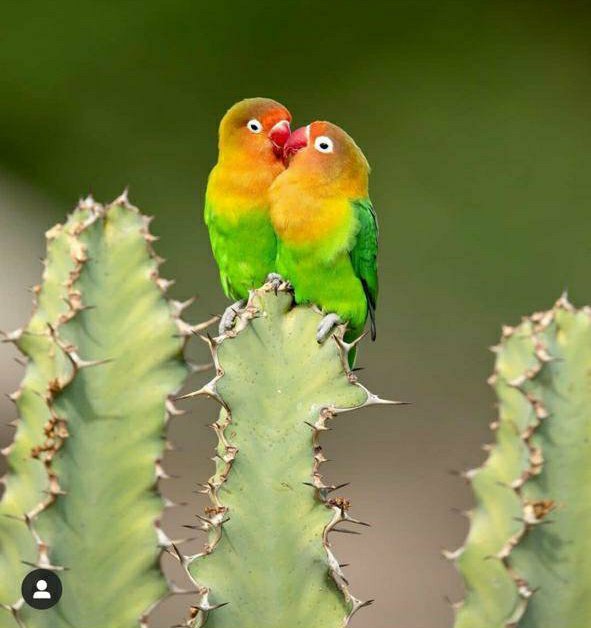
(A dear friend sent me this beautiful photo clicked by an amazing photographer, Rene’ Kahle’ from Netherlands who posted this photo on his instagram handle rene_kahle.My friend asked me if I could write a nano story based on this photo.And I did write a story which I am sharing with you all here)

When she was captured and put in a fancy cage, the love bird couldn’t bear the separation from her mate and stopped eating.She grew weak and lost her sheen.The bird catcher took pity and released her.
She couldn’t fly high but found a thorny cactus to rest.In an instant , her long lost mate who hadn’t let her go out of his sight found her.

He perched himself beside her inspite of the thorns piercing his body, fed her lovingly and groomed her till she got her sheen back.

The Chubby Little Girl.
Copyright © 2020

View original post 1 more word

Liver transplant gives a new lease of life to 36-year-old Kolhapur man who was waitlisted since July 2019

On new year’s eve, doctors at Fortis Hospital in Mulund, Mumbai, conducted fourth cadaveric liver transplant of 2020; the donor was a 60-year-old woman from Pune who had suffered a fatal Acute Subarachnoid Hemorrhage.

Mumbai, December 31, 2020: On the new year’s eve, doctors at Fortis Hospital, Mulund, Mumbai, gave a new lease of life to a 36-year-old man, who runs a small store in Kolhapur. The recipient was waitlisted for a liver transplant in July 2019 after being diagnosed with Alcoholic Liver Disease; a liver transplant was his only option.

The donor, a 60-year old female from Pune, was rushed to a local hospital; she had suffered a fatal Acute Subarachnoid Hemorrhage; she was subsequently declared brain dead. Doctors and Medical Social Workers counselled her family, who readily consented to donate her liver, kidneys, heart, lungs, intestines and corneas. With immense effort and astute time management, the retrieval procedure was initiated.

A green corridor was meticulously laid out between Pune and Mumbai so the harvested liver could be transported to Fortis Hospital, Mulund. The donor is survived by her husband, son, and a daughter, who breathed a new life into a young recipient from Kolhapur.

Dr Gaurav Gupta, Sr. Consultant & Chief Surgeon – Liver Transplant & HPB Surgery, Fortis Hospital, Mulund, said, “We are happy to have been able to give our young recipient a new chance at life, and we are extremely humbled by the donor family’s gesture that enabled this life-saving surgery. It is heartening to see that families are continuing to respond warmly to the cause of organ donation even during the pandemic. While the fear of virus looms large, such stories continue to ignite hope within all of us.”

Thanking the donor, Dr S. Narayani, Zonal Director, Fortis Hospitals, Mumbai, said, “I extremely thankful of the donor family who made this courageous decision in the time of profound grief. I must thank the medical teams, nurses, Medical Social Workers, Mumbai Zonal Transplant Coordination Centre, Traffic Police, and Transplant Coordinators who enabled this feat. Each successful donation is one progressive step towards building a better and robust organ donation system in India.”

‘Post-COVID recovery may take longer than expected’

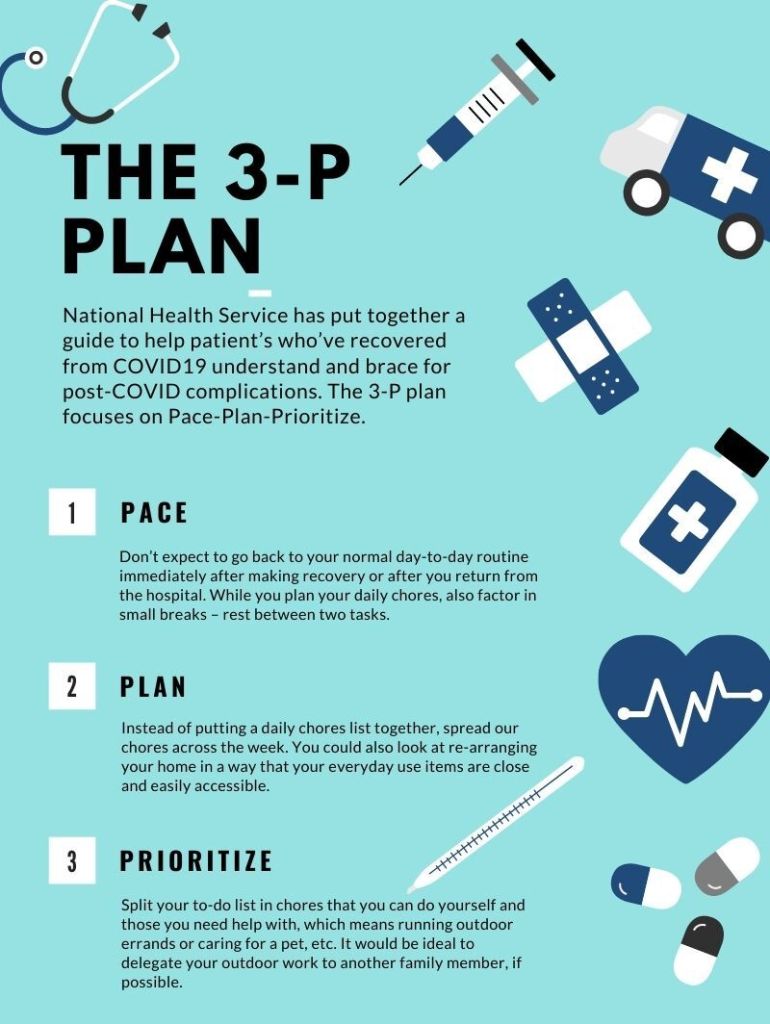
A patient should speak to doctor using tele-medicine option/over a call so that post-COVID recovery is assessed regularly and properly. The doctor will also be able to indicate if a patient needs to undergo any tests, make any lifestyle changes or recalibrate medication. So a patient shouldn’t miss on doctor appointments, eat healthy, take prescribed medication, and stay positive.

Dr Rahul Pandit

It was in December 2019 that the first human cases of COVID-19, the disease caused by the novel coronavirus causing COVID-19, subsequently named SARS-CoV-2, were first reported by officials in Wuhan City, China. As we come close to completing a year since the outbreak of COVID19, let’s understand the repercussions of this infection that has impacted the lives of 9.74 million Indians over the past 12 months and its impact, that may extend to not just a few weeks or months, but a year or more. This phenomenon is called ‘Long COVID’, which has had debilitating effect on patient’s lives.

Across the globe so far, the focus has been on saving and enriching lives during the COVID-19 pandemic, but the infection’s long term consequences are now gaining attention, and people continue to reel under its incapacitating impact. While more research is required to understand why certain patients bear the brunt of ‘Long COVID’, a more crucial question that needs to be answered is ‘is complete recovery on the horizon?’

While there is no textbook definition of ‘Long COVID’, patients who experience post-COVID symptoms lasting over six months are known to be suffering from this condition. These patients are not just those who have had lengthy stay in the Intensive Care Unit, but also those who have had mild symptoms and may or may not have needed hospitalization. Most common symptoms of ‘Long COVID’ include fatigue, breathlessness on least amount of exertion, persistent cough, muscular & joint pain, drop/ inaccuracy in hearing and sight, persistent loss of smell and taste. Many patients with ‘Long COVID’ are also noted to have mental health problems, including anxiety and depression.

The Journal of the American Medical Association recently published a study (on 143 patients) conducted by the Fondazione Policlinico Universitario Agostino Gemelli IRCCS in Rome, Italy, which assessed post-COVID patients who came into the hospital’s OPD. Analysis revealed that of the patients who had recovered from COVID-19, 87.4% reported at least one symptom, nearly 2-3 months post recovery.

‘Will there be 100% recovery?’ is a question asked by many, but there is no clear answer for this question. Studies are being conducted worldwide to understand the long-term impact of COVID19, however there are increasing concerns that even after making complete recovery, a section of patients may face lifelong implication.

Most of the symptoms of Long COVID fortunately need symptomatic care, and rehabilitation forms an important aspect of care. The respiratory rehab and cardiac rehab programs aimed at gradually building the exercise capacity back, and also allowing time for gradual improvement are important. Mental health assessment and stability forms a large aspect of recovery and need a lot of attention.

To conclude, it is important to remember that you must speak to your doctor (using tele-medicine option/ over a call) periodically so they can assess you post-COVID recovery. Your doctor will also be able to indicate if you need to undergo any tests, make any lifestyle changes or recalibrate medication. So don’t miss on your doctor appointments, eat healthy, take prescribed medication, and stay positive.

(The author is Director-Critical Care, Fortis Hospital, Mulund)

(Featured Image by Gerd Altmann from Pixabay)

World Patient Safety Day: All that a patient needs to know about haemodialysis

Dr Suresh Sankar 

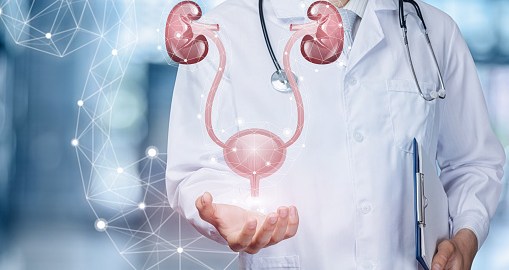
Patient safety is the core aspect of patient care and dialysis care is no exception. It rests on the core ethical principle of “First do no harm”. It is doubly important because haemodialysis is among the most advanced technology used in outpatient settings. Though there are safety checks and controls built in the technology used, the processes of care, the capability of the health care worker delivering the service and an engaged and informed patient are key to achieve the desirable results at a dialysis centre.

Patient safety events in dialysis can occur in the following aspects of care:

  1. Initiation and ending of dialysis session
  2. Type of dialyzer used and whether the appropriate labelled dialyzer was used
  3. Amount of blood thinner used
  4. Medications
  5. Fluid removal on dialysis
  6. Infections

What you can do to make your treatments safer?

  1. It starts with knowing where safety matters and doing the right action.
  2. Give time to your technician and nurse the time for process of care when starting and ending your dialysis session.
  3. Know about the kind of kidney filter used and if it is to be reused, the identity has been verified. You could gently ask your care provider to recheck it especially if there is another patient with the same or similar name in your centre.
  4. Ask your doctor about the amount of blood thinner you will need and know the same recommendations are followed.
  5. Ensure your prescription is updated every few months every few weeks and insist on a copy of your medication prescription is maintained in your dialysis chart.
  6. Limit your fluid intake to what is appropriate for you and do no insist on “maximal fluid removal” during a dialysis session. Based on each individual’s body weight, duration of the session, there is a limit to how much fluid can be removed.
  7. Clean your fistula site with soap and water before every dialysis treatment.
  8. Clean your hands with soap and water or waterless alcohol-based sanitizer before you start your dialysis session and after you leave.
  9. If you have a catheter, wear a mask and request your care provider to wear a mask when starting and ending dialysis. Know the signs when a catheter could be infected.
  10. If you don’t have a permanent fistula, but will need dialysis for your lifetime, discuss the early placement of a fistula with your doctor, before the need for dialysis.
  11. Ensure you have taken the vaccines recommended for you at the right dose and frequency.

(The author is Nephrologist & Senior VP, Clinical Affairs, NephroPlus)

Mumbai’s 29th cadaveric donation by 56-year-old woman helps save 4 lives

It was the first to be conducted at Fortis Hospital in Mulund after the lockdown was announced on March 22, 2020; the harvested lungs, liver and kidneys were sent to four hospitals across Mumbai and the corneas were sent to a local Eye Bank.

Mumbai, December 7, 2020: Mumbai witnessed its 29th cadaveric donation at Fortis Hospital, Mulund on December 2, 2020, when the family of a 56-year-old brain dead patient consented to donate their kin’s lungs, liver, corneas and kidneys. The family’s noble act of giving helped give a new lease of life to four patients with end-stage organ failure; and would enable two people to receive the gift of eyesight. The harvested organs were sent to four hospitals across Mumbai. This donation marked Mumbai’s 29th and Fortis Hospital, Mulund’s first since the lockdown was first implemented in March 2020.
The female donor was declared brain dead at Fortis Hospital, Mulund on December 2, 2020, following a Subarachnoid Hemorrhage. The patient, from Badlapur, Thane, had sustained a fall at home, after which she was rushed to Fortis Hospital, Mulund. The family was counselled and informed consent was sought. The donor is survived by her husband, a son and three daughters.
Speaking about this feat, Dr S. Narayani, Zonal Director, Fortis Hospitals, Mumbai, says, “It is heartening to see that families are continuing to respond warmly to the cause of organ donation, even during the pandemic, as the fear of the virus looms large. This is a gigantic leap towards helping patients with organ failure, who have had longer time on the waitlist, owing to the pandemic. We express our heartfelt gratitude to the donor family, and to our doctors, nurses, Medical Social Workers and administrative staff who enabled the donation, and subsequent transplants”.
According to Dr Bharat Shah, general secretary, Zonal Transplant Coordination Centre (ZTCC), Mumbai, the medical team and transplant coordinator of Fortis team must be congratulated for diagnosing brain-stem death and counselling the family. “All the donated organs were successfully transplanted in four patients with end stage organ failure. This goes on to show that even the recipients are now coming out of fear of COVID pandemic and are willing to go for transplant during this pandemic. There is no need for potential recipients to fear COVID,” he says. The ZTCC has made robust guidelines which are strictly followed by all medical teams. With this, the risk of recipients contracting COVID infection is negligible.
Appreciating the kindness of the the family of deceased donor who came forward to save lives of four patients unknown to them, Dr S.K. Mathur, President, ZTCC, Mumbai, says, “If more people start following their example, then slowly the current dependence on live organ donations can be reduced.”

(Featured Image by Gerd Altmann from Pixabay)

Phoolsunghi’s English debut is a lot more than just a peck on Bhojpuri literature’s cheeks

By Shillpi A Singh

New Delhi-based academician, columnist and translator Gautam Choubey has scripted history with his literary outing — Phoolsunghi — that happens to be the first-ever translation of a Bhojpuri novel into English. Apart from being the most representative work in Bhojpuri, Phoolsunghi also happens to be one of the most loved literary works by Pandey Kapil, who is hailed as the protagonist of Bhojpuri literary movement in the post-Independence India. Published in Hamish Hamilton by Penguin Random House, the book hit the shelves earlier last week. 

The story from the soil of Bihar pans out in Chhapra where the magical, mystical, and mundane intertwine much like the lives of three characters — courtesan Gulzaribai who was popular in the region as Dhelabai; ageing zamindar Babu Haliwant Sahay, who worked as an official in the law court and had a stake in the flourishing opium trade; and Bhojpuri folk poet and singer Mahendra Misir. The timeless tale about these celebrated legends of Bihar has traversed centuries and fascinated litterateurs across ages. These dalliances resulted in three other literary jaunts of repute — Ramnath Pandey’s Mahendar Misir, Jauhar Safiyabad’s Poorvi Ke Dhah and Anamika’s Dus Dwareka Pinjara

The historical novel spanning ninety years touches upon the early years of colonial rule in India without making any direct references to the fight for independence or any social conflict or instances of religious disharmony. The plot, story, and setting spread over 16 chapters together draw a reader into the enchanting world of the lifelike characters. Music serves as the perfect backdrop in Phoolsunghi, and there is a lot of drama, action, tragedy that unfolds in the lives of these people, to keep one hooked, from start to finish. The enthralling mehfils and mujras, high-pitched abduction drama, episodes of court cases and counterfeiting notes reveal author’s attempt to make it a wholesome entertainer. The author explores various shades of romantic love, making it an emotional roller coaster ride for a reader. It delves deep into the characters through the maze of the relationships that they share with each other, crossing paths at times, and flowing like the two banks of a river in a few instances.

The novel documents the lives and times, rise and fall, love and longing, trials and tribulations of these characters, who live in and around the banks of river Saryu in Chhapra and its adjoining villages of Mishrawaliya, Sheetalpur, Revelgunj and Muzaffarpur. Like a river that flows through these cities, the plot intermittently drifts to Banaras and Calcutta, and makes pit stops in Punjab and Delhi, before returning to Chhapra. The story also traces the advent of the railway line and how dhuwankas or trains play an important part in the narrative. Phoolsunghi offers a bird’s-eye view of how the characters co-existed in harmony without being bothered by religious, class or caste considerations, and in some measures, it is also a social commentary on the lives of migrant workers. It reveals how some of them seamlessly merged in the mainstream in their adopted land while a few others, bit by melancholia trace their way back to their roots, sooner than later. The migrant’s life in a metropolis is bound to resonate with the readers, and tug at their heartstrings, especially those who have either been a migrant themselves or have witnessed something more heart-wrenching pan out in the country not so long ago. 

The Bhojpuri story is quite evocative and engrossing, and Choubey has done full justice to it. The translated work has a cinematic language to it with lively characterisation, and vivid imagery making it an endearing read. It will be no surprise to see the real characters, who inhabited Chhapra once upon a time, taking a reel avatar sometime soon and glossing the big screen, regaling the larger audience who live far, far away from this mofussil. The verses in Bhojpuri have been passionately and painstakingly translated into English by Choubey, but a reader would have benefitted from the richness of the language and appreciated it more had only a list of the originals been provided along with the glossary.   

By foraying into the unexplored domain of translating a popular piece of Bhojpuri literature for a discerning, elitist, city-bred reader, Choubey has managed to do the unthinkable, and in one go. It is a stellar act for its sheer thought and effort. He has not only highlighted the long and diverse literary culture of the language but also debunked the common perception of it being only a folk language, giving Bhojpuri its due. His disruptive effort, hopefully, might lead to many more such works being produced by the speakers and readers of the language, and in that context, Choubey’s present translation will fondly be remembered for being the first of its kind that helped to pave the path for many more.

Phoolsunghi has something for all; it serves as a timely reminder about the richness of Bhojpuri literature for the younger generation and has a multitude of joy and nostalgia to offer for the older ones. The story will transport you back to your roots so soak in the subtleties of a bygone era from a faraway land, and shore it up for yourself and your coming generations. 

(Cover image sourced from Penguin Random House’s Twitter handle)

Ashraf Patel of Pravah and ComMutiny Youth Collective wins Social Entrepreneur Of the Year Award – India 2020

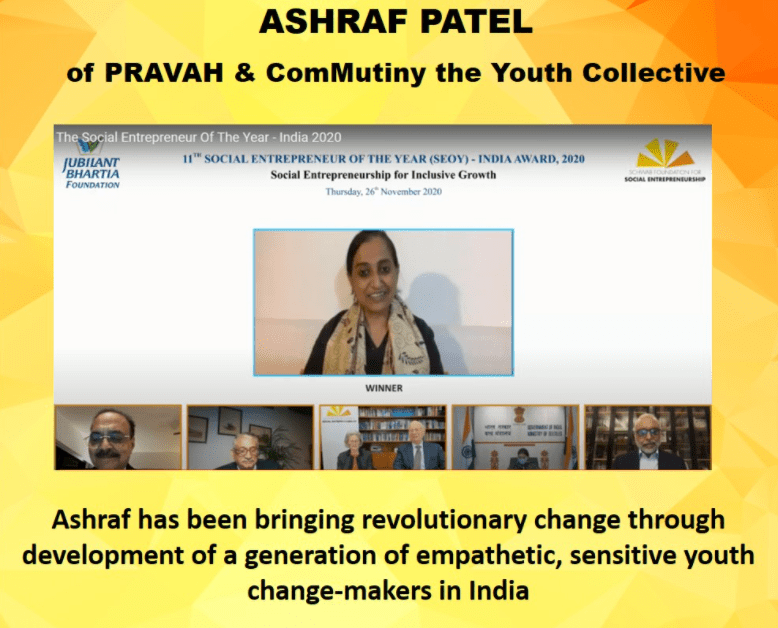
New Delhi, November 26, 2020: The Schwab Foundation for Social Entrepreneurship, the sister organisation of the World Economic Forum and the Jubilant Bhartia Foundation of Jubilant Bhartia Group today announced Ashraf Patel of Pravah & ComMutiny Youth Collective (CYC) as the winner of the Social Entrepreneur of the Year Award – India 2020. The award was presented by Smt Smriti Zubin Irani, Hon’ble Minister of Women & Child Development & Textiles, Government of India, at a virtual ceremony in presence of eminent personalities from different fields from across the world.

Congratulating the winner and appreciating the finalists of this year’s SEOY Award India 2020, Smt Smriti Zubin Irani, Hon’ble Minister of Women & Child Development & Textiles, Government of India, said, “I acknowledge and appreciate the contribution of Schwab Foundation and Jubilant Bhartia Foundation in celebrating social entrepreneurs. I would like to congratulate all the social entrepreneurs who have been considered by the esteemed jury for this prestigious award. This award today highlights to the rest of our country, that compassion is not only the most endearing but also an equally profitable business skill. Those who have come to this platform are the champions of digital India.”

Source: Schwab Foundation for Social Entrepreneurship

The SEOY Award India 2020 winner – Ashraf Patel has been bringing revolutionary change through development of a generation of empathetic, sensitive youth change-makers in India. It is doing so, through psycho-social interventions and helping them build more inclusive identities & societies.

Source: Schwab Foundation for Social Entrepreneurship

Prof Klaus Schwab, Founder & Executive Chairman, World Economic Forum and Co-Founder of the Schwab Foundation for Social Entrepreneurship, announced the winner of the SEOY Award India 2020 and added, “The World Economic Forum is very much involved in helping fight the pandemic. I am looking forward to having India very well represented in our activities because India is a major force in shaping the future and has to be very prominently engaged.

Commending the winner and the finalists of SEOY Award India 2020, Mrs Hilde Schwab, Chairperson and Co-Founder of the Schwab Foundation for Social Entrepreneurship, said, “This year’s winner and finalists of the Social Entrepreneur of the Year India award all exemplify what our community is about – actors who have selflessly dedicated their lives to improving the state of the world around them. Social innovators are pioneering agents of change re-inventing the way our institutions operate, and are critical to achieving the Sustainable Development Goals by 2030. The current global pandemic has highlighted the crucial role of social innovators in identifying urgent needs and mobilizing responses to realities on the ground. The Schwab Foundation for Social Entrepreneurships is proud to have been partnering with Jubilant Bhartia Foundation over the past 11 years to award social innovators from India who are not only driving change but are also shifting organisations and systems towards a more just, inclusive, sustainable future.”

Applauding the winner and the finalists, Mr Shyam S Bhartia, Chairman and Founder and Mr Hari S Bhartia, Chairman & Co-Founder, Jubilant Bhartia Group and Founder Directors of Jubilant Bhartia Foundation, said, “Over last eleven years, we have seen a diversity of applications coming from the remotest corners of the country. The award process has so far seen over 1600 diverse applications. This year, inspite of trying times of pandemic, we received over 100 applications, with over one third women social entrepreneur applicants. The enthusiastic participation reflects the resilience & the tenacity of the social sector in these challenging times. It hearting to see that the finalists of this year have brought disruption in their own fields with their innovative ideas and approach. They have done path-breaking work in the fields of Healthcare, Youth Development and Solid Waste Management. Congratulations and kudos to the winner and the finalists for their extraordinary efforts. Their commitment to the cause is incomparable.

Source: Schwab Foundation for Social Entrepreneurship

On winning the SEOY Award – India 2020, Ashraf Patel, said, “This recognition for youth leadership has come at a moment when it was needed the most, the world right now is beset with inequality, conflict and environmental issues. Never before have we needed more collaboration and shared leadership with young people to create a better world.”

Ashraf Patel will join the Schwab Foundation for Social Entrepreneurship Community, the world’s largest and prestigious network of social innovators from around the world. The winner also participates in the annual and regional meetings of the World Economic Forum, which offer unique opportunities to engage with global decision makers from the public, corporate, media, academic and civil society sectors. The other finalists were Sujoy Santra of IKure, Kolkata & Sandeep Patel of NEPRA , Ahmedabad .

Celebrating its 11th year, the SEOY Award India has established itself as one of the most reputed and coveted awards for social entrepreneurs in India. The award recognises entrepreneurs who implement innovative, sustainable and scalable solutions to solve India’s social problems. In 2010, the Schwab Foundation for Social Entrepreneurship and Jubilant Bhartia Foundation came together to promote social innovation in India through the Social Entrepreneur of the Year (SEOY) India Award.

The SEOY Award – India 2020 received applications from 23 cities this year, with interventions in diverse fields including clean technology, media communication, youth development, disability, energy, enterprise development, labour conditions, microfinance, health & nutrition, sustainable farming and water & sanitation.

Source: Schwab Foundation for Social Entrepreneurship

This year’s jury members for the award included, Shobhana Bhartia, Chairperson & Editorial Director, HT Media Ltd; Hilde Schwab, Chairperson & Co-Founder, Schwab Foundation for Social Entrepreneurship; Sudha Pillai, Board Member, Jubilant Life Sciences Ltd & Former Member Secretary, Planning Commission, Government of India; Uday Kotak, President, CII & Executive Vice Chairman and Managing Director, Kotak Mahindra Bank; Rakesh Mohan, President and Distinguished Fellow, Centre for Social & Economic Progress; Rohini Nilekani, Chairperson, Arghyam Foundation; P R Ganapathy, Regional Director, Stanford Seed, India, and Dipesh Sutariya, Co-founder, EnAble India, Winner SEOY 2019.