All posts by Shillpi A Singh

Unknown's avatar

About Shillpi A Singh

क़लम मज़दूर | Commspreneur | Recipient of the IIMCAA Award for Public Relations Person of the Year 2024 | Canva's Top 10 Social Media Creator for 2023 | Work-in-Progress

Distance no bar if a couple knows how to make it work

Communication remains the key to bridge the geographical separation between a couple and help them stay connected with each other.

Mr X and Ms Y, a young couple were dating each other for two years when suddenly due to career commitments, Ms Y had to move to a different city. This is a familiar situation for many couples today, as career, personal and professional growth, as well as family commitments, make them get into ‘long-distance relationship’. With people connecting online, long-distance relationships are prevalent. A 2018 survey of long-distance couples found that while 27% had never lived near each other, about 50% of couples in the survey had met each other online.

A long-distance relationship is a phase where people are geographically distanced from each other, and work to overcome the physical distance by being connected virtually. Initially, Ms Y was very apprehensive about the prospect of staying away from Mr X. Negative thoughts and the questions that people would ask her like “How can you stay away from him?” and “He will find somebody better than you!” plagued her.

The most important thing that Ms Y and Mr X did was communicate with each other. Before going ‘away’ they spoke a lot, they understood each other’s situation, perspective and promised to not breach their trust in each other. A few coping mechanisms that any Mr X and Ms Y can use to nurture a long-distance relationship are as follows:

MUTUAL ACCEPTANCE: First and foremost, accept that the person is not going to be around you physically, and also acknowledge the reasons behind getting into this phase; the variable reasons could be a job switch, financial needs, family circumstances, etc. Acceptance would make the couple sail through the phase smoothly.

COMMUNICATION: It is always suggested to talk about things with each other. Communication becomes a key aspect when people are in a long-distance relationship. However, one needs to understand that there is some leeway that needs to be given. Communicate because you feel like it and do not force yourself into it. Sharing things about each other’s day can help in maintaining a crucial connection even from afar.

USING TECHNOLOGY IN DIFFERENT WAYS: It is an excellent idea to use technology to your advantage such as making a video call, writing an E-mail, surprising through letters, online gifting to keep the spark alive in the relationship.

DOING ACTIVITIES TOGETHER: There is a need to explore and experience things together when people are in a relationship, but for some, it becomes difficult when there is a geographical distance. However, doing some activities together like watching a movie at the same time, virtually cooking together, or exploring one’s day virtually could help the couple sail through

MAINTAINING TRUST BEYOND THE DISTANCE: Even if there is a physical distance, attachment, and emotional connection can be sustained effectively. Trusting the partner becomes an important aspect of the relationship, whether long-distance or face to face. Try giving the virtual and personal space to each other, respecting, and accepting the changes. Try and avoid linking all the issues and concerns to physical distance.

Getting into a long-distance relationship is a unique phase that people go through; however, keeping in mind certain things, it can be managed effectively. As there can be times when things can be overwhelming and emotionally disturbing, self-care is important, including taking both physical and mental care of oneself.

(This article has been written by Dr Hirak Patel, Counselling Psychologist, Fortis Hospital, Mulund.)

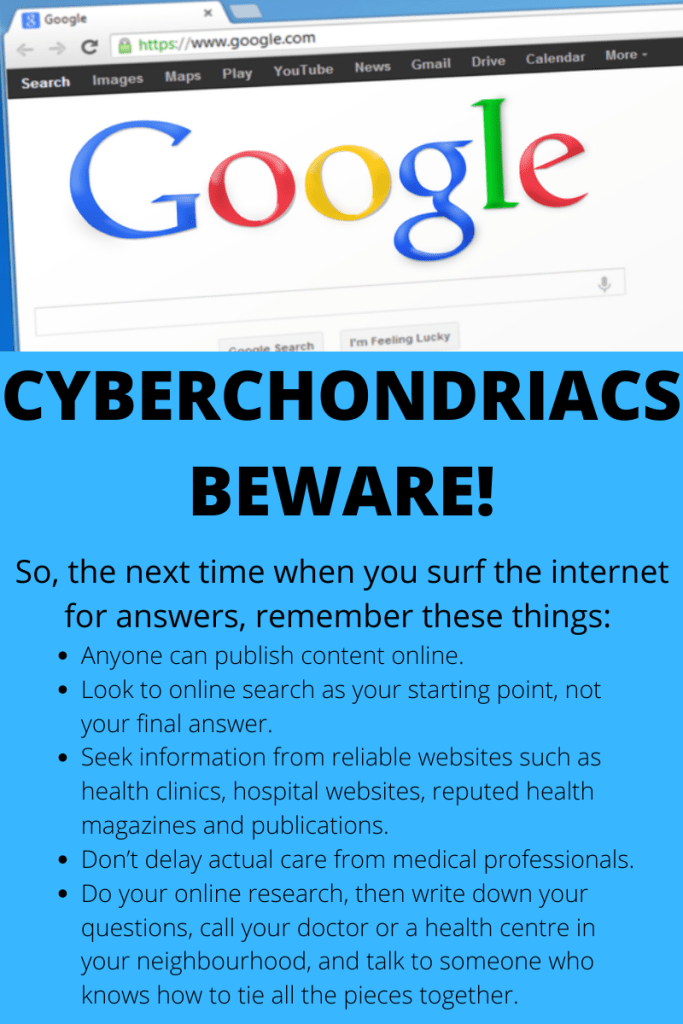
Do you turn to the internet for diagnosis? If yes, then you are a cyberchondriac.

New Delhi, February 5, 2021: Having a headache or a sore throat or indigestion, how many times have you turned to the internet to get a diagnosis? Do you have the habit of searching the internet at the first sign of a niggle? Well, you might be suffering from cyberchondria. The term was coined by a British newspaper in the early 2000s as a play on the word hypochondria. Like hypochondria, cyberchondria refers to a person’s anxiety about their health that is created or exacerbated by using the internet to search for medical information. 

The digital revolution has changed many aspects of our lives, especially in the way we source health-related information, as it is easily and freely available. In the earlier times, 1 out of 10 patients used to seek health information on the internet, but today, that number has changed to 9 out of 10 people seeking health information online before visiting a doctor. Many even believe that the internet has all the answers to their health problems. Ironic indeed! But that is how people surf the world of web, in pursuit of a definite health solution or a diagnosis.

A recent Google trend report on how Indians surfed the web in the past year has some shocking revelation. According to Google trends, “How to make coronavirus vaccine at home? And how to improve immunity against COVID?” were some of the top trending searches on the internet in India, followed by questions around food to eat to build immunity, plasma therapy, COVID symptoms, home remedies for COVID, etc. This indicated that people are all willing to take a chance on self-treatment and self-diagnosis. But is this worth the shot?

RISK OF MISDIAGNOSIS, OVER-DIAGNOSIS OR UNDER-DIAGNOSIS: More often than not, self-diagnosis on the internet always points towards something more frightening. It can lead to misdiagnosis or over-diagnosis. For example, if you search for ‘headache’, you are likely to find around 20 results showing the different interpretation of headaches, each scarier than the other. There are chances that your headache may be something small, but the internet search shows signs of a cancerous tumour or some other neurological problem. In the bargain, you will freak out, and this may cause a high level of stress. Moreover, self-medication involves pharmacological risks that can result in severe adverse reactions. Sometimes, you would even under-diagnose yourself, which could have a severe long-term impact on the quality of life or worse, death.

SYMPTOMS OF A CYBERCHONDRIAC: According to experts, lately, cyberchondria is becoming a growing problem as people resort to finding out what the internet has to say about their health and wellbeing. People having cyberchondria tend to misinterpret regular bodily changes and minor physical symptoms as signs of severe illness or disease. For many people living with health anxiety, fear can become so severe that it interferes with work and relationships.

SEEKING HELP FROM A MEDICAL PROFESSIONAL IS THE RIGHT WAY: Many times, we come across patients with a whole list of questions about their symptoms and medical condition. Some patients come with a diagnosis they have already arrived at by using the internet. And some, come with lab reports and medical investigations, also a result of online searching. Of course, we would call them empowered patients, but quite often, these people display a lack of trust in the health advice offered by doctors. We must understand that no technology or internet search can completely replace professional medical help. By doing so, you are inadvertently putting yourself at risk of anxiety and incorrect diagnosis and will spend more money on healthcare.

‘SEARCH IT’ THE RIGHT WAY: Using search engines to gain knowledge about health topics is not wrong but checking the source of information is very important. Information on these websites and apps should be viewed very cautiously as they don’t know your medical history or actual symptoms. The suggestions they make are not made by medical practitioners but are actually key-word based.

Remember, the internet is just a channel through which you can gain information, but the actual empowerment comes when you use that information wisely and not rashly.

(The article has been authored by Dr Sanjay Shah, General Physician & Dr Pradip Shah, General Physician, Fortis Hospital, Mulund.)

Women should get regular pap smear test every 3 yrs to prevent cervical cancer

New Delhi, February 4, 2021: Cervical cancer is the cancer of the cervix which is the lower part of the uterus that connects to the vagina. Most cervical cancers are caused by the Human Papilloma Virus (HPV), a sexually transmitted infection, that also cause genital warts. 

About 25% of all global deaths due to cervical cancer occur in India and this form of cancer forms 16.5% of the total cancer cases in Indian women. It is estimated that about 160 million women between the ages of 30 and 59 years are at risk of developing cervical cancer in India, with 96,922 new cases registered in 2018 alone. The reason for this difference is lack of effective screening and access to timely treatment.

But most women are not aware of the right age to start screening for cervical cancer. Many assume that it is best done after the age of 40; but that is not true. Women can get regular pap smear test every three years starting at 21 years. Do all women need to test themselves? Ideally, women between age of 25 to 65 years should receive an HPV test once every five years. As cervical cancer is silent, it takes a long time to manifest. Therefore, it is paramount that women learn about cervical cancer and test themselves regularly.

SYMPTOMS OF CERVICAL CANCER: Early-stage cervical cancers do not show any signs or symptoms in most cases, but there are some symptoms that every woman should be aware of:

  • Vaginal bleeding after intercourse, between periods or after menopause
  • Watery, bloody vaginal discharge that may be heavy and have a foul odor
  • Pelvic pain or pain during intercourse

SCREENING AND DETECTION: Screening helps detect cervical cancer and the pre-cancerous cells that may develop into cancer eventually. This is done using Pap Smear and HPV DNA Test. Detection of cancer would involve physical examination by the doctor using a colposcope and biopsy to confirm the diagnosis.

PREVENTION OF CERVICAL CANCER:

Ask your doctor about the HPV vaccine: Receiving a vaccination to prevent HPV infection may reduce your risk of Cervical Cancer and other HPV-related Cancers. The vaccine is ideally given before the first sexual contact for maximum protection (ideally between the age of 15-26 years).

Have routine Pap tests: Pap tests can detect pre-cancerous conditions of the cervix, so they can be monitored or treated to prevent cervical cancer.

Practice safe sex: Reduce your risk of cervical cancer by taking measures to prevent Sexually Transmitted Infections, such as using a condom every time you have sex, and limiting the number of sexual partners.

Do not smoke: If you don’t smoke, don’t start. If you do smoke, talk to your doctor about strategies to help you quit.

HOW TO PREPARE FOR YOUR PAP OR HPV TEST? You should not schedule your test for a time when you are having your period. If you are going to have a test in the next two days:

  • Do not douche (rinse the vagina with water or another fluid)
  • Avoid a tampon
  • Avoid sex
  • Do not use a birth control foam, cream, or jelly
  • Do not use a medicine or cream in your vagina

Above all, all women should talk to their doctors about cervical cancer and decide on an appropriate screening schedule. For women at high risk for developing cervical cancer, screening is recommended at an earlier age and more often, than for women who have an average risk of cervical cancer.

Healthy eating habits can help reduce cancer risk

By Shweta Mahadik

It is no secret that a healthy lifestyle can help reduce the risk of cancer in many ways. Research shows that many types of cancers are linked to lifestyle behaviours, including unhealthy eating patterns and a lack of physical activity. A healthy lifestyle can also help positively support treatment and recovery if you are diagnosed with it.

TO BEAT CANCER:

  • Include fruits and vegetables such as oranges, berries, pineapple, sweet lime, lemon, amla, broccoli, cabbage, collard greens, kale, cauliflower and brussels sprouts, etc. Add whole-grains such as whole wheat, oats/oatmeal, rye, barley, brown rice, millets, high-fibre foods, vegetables, and legumes (beans) to your plate.
  • Consume good amount of protein like cow’s milk and its products, legumes, pulses, whole grains, egg whites, poultry and fish.
  • Eat foods rich in Omega-3 Fatty Acids like fish, especially oily fish (sardine, mackerel, tuna, salmon, herring, trout), almonds, walnuts, and flaxseeds. Prefer cooking methods such as broiling, boiling, stewing, grilling, baking, roasting rather than frying.

ENERGY-RICH FOODS THAT ARE A MUST-HAVE:

  • Antioxidants: Antioxidants protect cells from damage caused by free radicals known as ‘unstable molecules’. Some of the examples of antioxidants include Beta-Carotene, Lycopene, Vitamins C, E, and A, etc.
  • Omega 3 rich foods: Omega-3 PUFAs present in nuts, oilseeds, flaxseeds, sesame seeds, pumpkin seeds, sunflower seeds, fish like salmon, tuna, and herring etc., plays an essential role in cell signalling and in the cell structure and fluidity of membranes. They participate in the resolution of inflammation and have anti-inflammatory and antinociceptive effects
  • Garlic: Some clinical studies found that regular consumption of garlic in our diet helps with DNA repair, slow the growth of cancer cells and decrease inflammation as garlic is rich in Allicin i.e. soluble Allyl Sulphur compounds which is responsible for many cancer-fighting properties. Several functional foods showed anti-cancer activity via scavenging free radicals e.g., garlic, broccoli, green tea, soybean, tomato, carrot, cabbage, onion, cauliflower, red beets, cranberries, cocoa, blackberry, blueberry, red grapes, prunes and citrus fruits.
  • Bitter melon: Bitter melon is a widely consumed vegetable all over the world that comprises of several bioactive components such as Polyphenols, Flavonoids & Saponins, and has been reported to possess anti-cancer potential.
  • Wheat Bran: Wheat Bran is abundant in a variety of healthy phytochemicals such as phenolics, flavonoids, glucans and pigments and has been observed to evince noticeable anti-cancer activity.

Apart from diet, it is important that cancer patients maintain a healthy weight, increase physical activity, make healthy food choices, and stay happy in mind and body.

(Shweta Mahadik is Dietitian, Fortis Hospital, Kalyan)

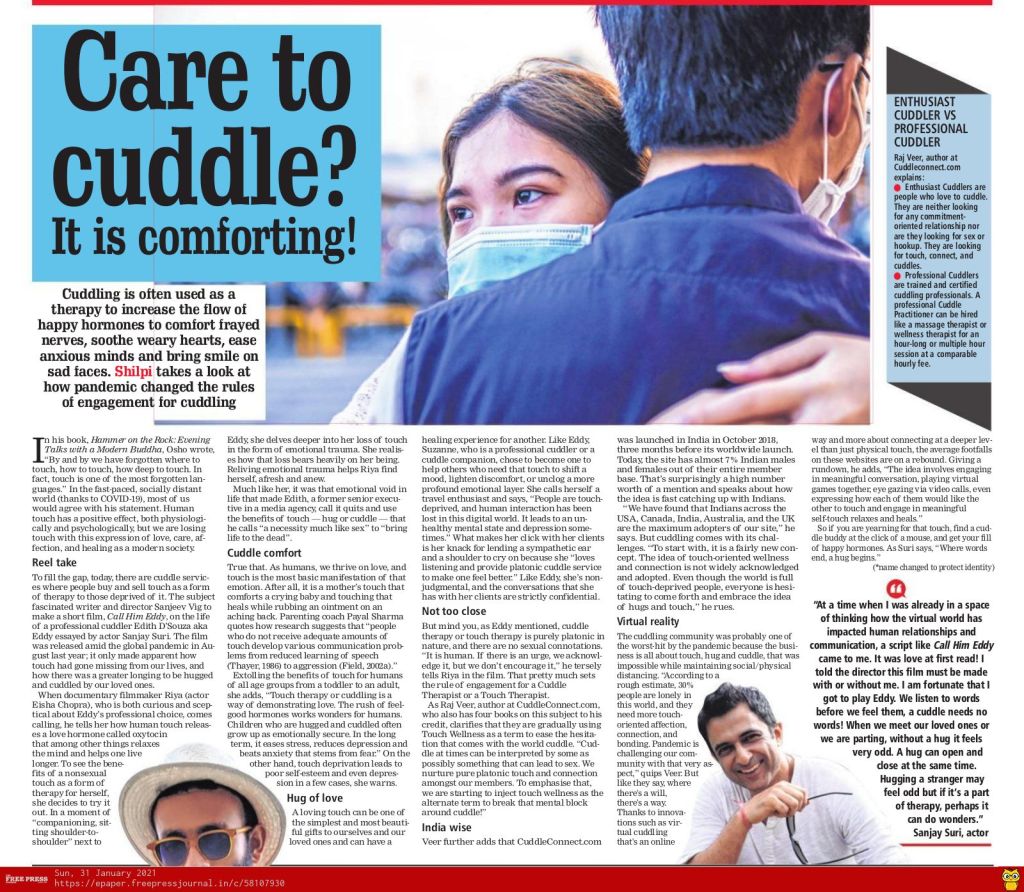
Care to Cuddle? It is comforting.

In The Free Press Journal, Mumbai; January 31, 2021.

To read more: https://www.freepressjournal.in/weekend/did-you-know-there-are-professional-cuddlers-heres-what-they-do-and-the-effect-covid-19-has-on-them

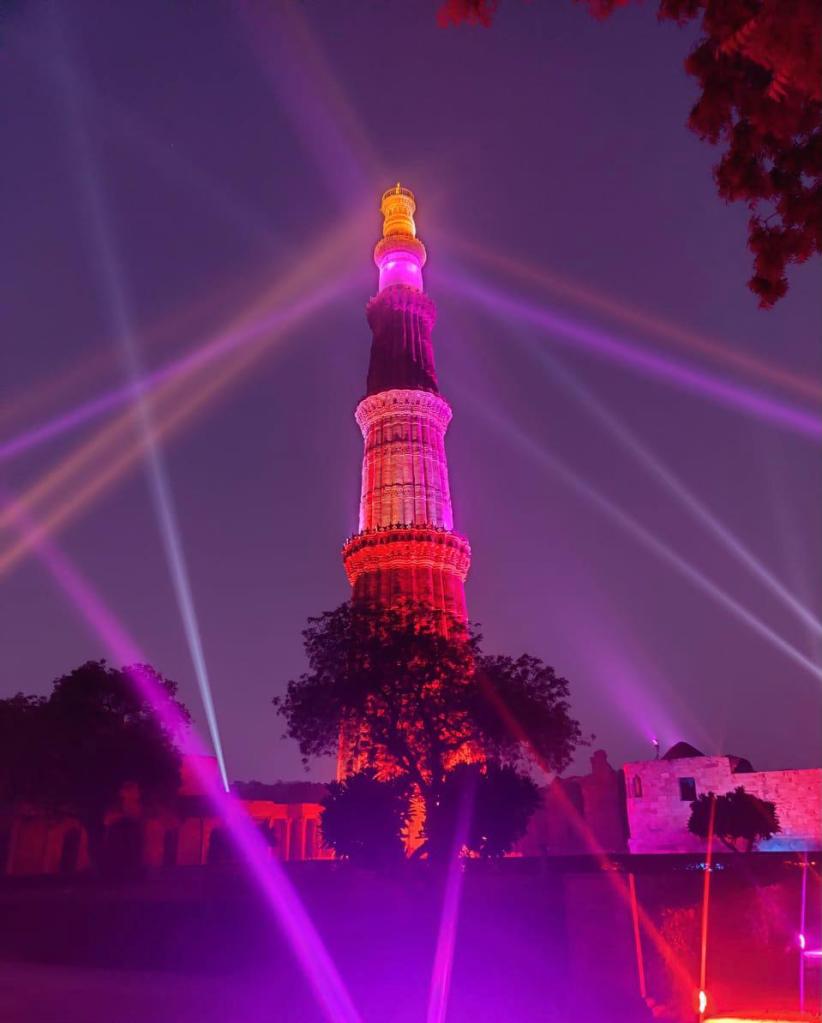
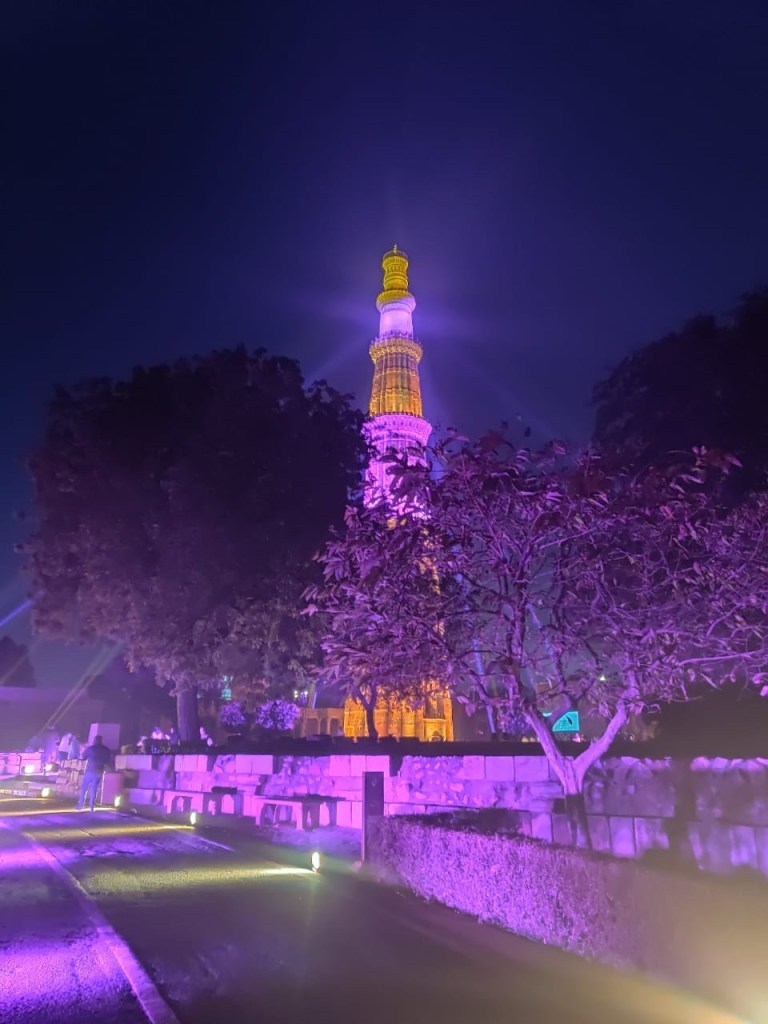
Qutub Minar among 50 landmarks across the world lit up as a sign of unity on second World Neglected Tropical Diseases Day today

New Delhi, January 30, 2021: On the second World Neglected Tropical Diseases (NTD) Day on January 30, 2021, more than 50 landmarks representing 25 nations worldwide were lit up to celebrate how far we’ve come in beating these diseases. India too proudly joined these countries by illuminating UNESCO world heritage site, Qutub Minar. 

The day highlights the global community’s commitment to end the NTDs. These diseases cause immeasurable suffering among the world’s most marginalized communities. 

From Tokyo Tower to Qutub Minar to Seattle Columbia Center, the world came together to end the neglect of NTDs and bring a brighter future to the most impoverished communities worldwide.

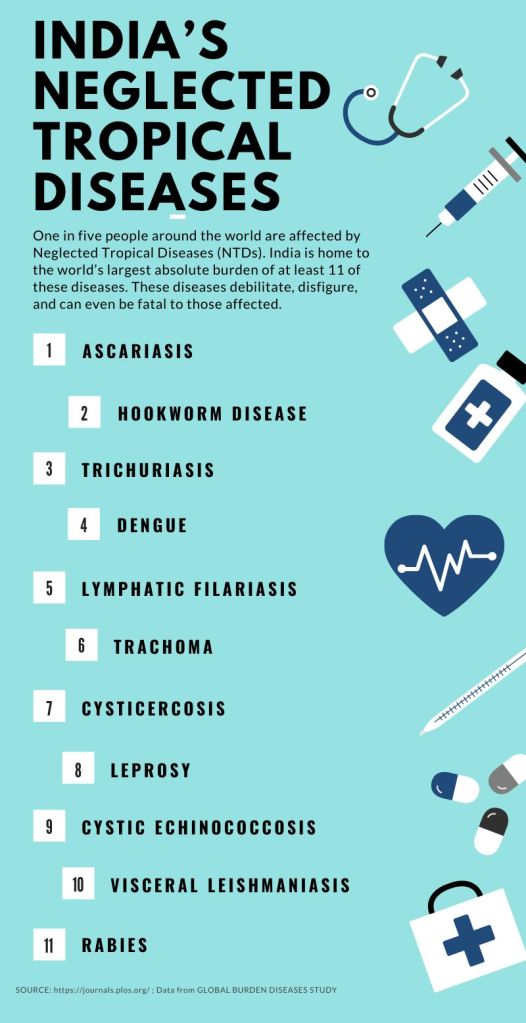
One in five people around the world are affected by NTDs and India, is home to the world’s largest absolute burden of at least 11 of these major neglected tropical diseases. These diseases debilitate, disfigure, and can even be fatal to those affected. But NTDs can and must be beaten.

Filmmaker Arati Kadav uses imagination and innovation to the hilt to embark on a riveting sci-fi ride @ 55 km/sec

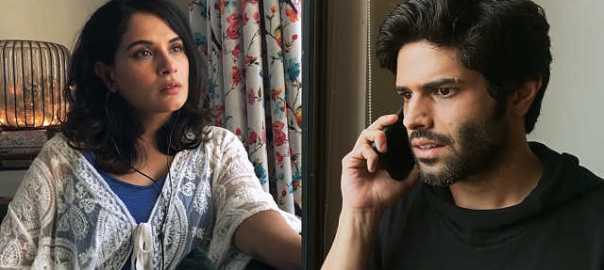
Filmmaker Arati Kadav’s sci-fi short film 55 km/sec starring Richa Chadha and Mrinal Dutt on Disney+Hotstar is a poignant retelling of the year that was for most of us. It is set against a meteor attack and covers the last few minutes before the end comes calling for the two protagonists and all others who inhabit the planet, and it gets over with a bang.
At a deeper level, it is an ingenious attempt to look back at the year when the mighty Coronavirus hit the entire world, and a few of our own — relatives, friends, acquaintances — and lakhs of unknown people around the globe became hapless victims of COVID, much like the meteor — Celestine — moving at a speed of 55 km/sec that was about to hit the planet at 3 pm on that fateful day, wiping all traces of life and living out of it.
The writing on the walls only adds to the fright factor with the planes zip, zap, zooming in the clear blue sky adding to the woes. The flight service to another safe place is available only to a chosen few. There’s no escape from the impending doom for most of the people as the TV anchors announce, giving hope that they will be together, uninterrupted, with their viewers till end. The deserted streets and quiet supermarket are reminiscent of the times that all of us lived and survived in the early part of the year gone by, so the shots and settings are relatable, as are the video and phone calls. The VVIPs had been safely escorted to a safe haven as the voiceover announced; a few lucky ones had found a place in the underground bunkers of dubious construction quality while others who couldn’t make it to the lottery system were in the queue, waiting for the inevitable end. The government had sent the animal kingdom’s embryos to outer space to save the species from extinction. Just as life seemed slipping away, minute by minute, a bunch of college buddies get together on a video call to bide away time and prepare for the strike of the meteor, together, talking, laughing, and bantering. There is a twist in the tale when the boy Suraj (Mrinal Dutt) confesses his love for Shrishti (Richa Chadha) over the video call, and out of the blue. Perhaps the morbid fear of the end makes him say what he would have otherwise never said. She tells him about the greeting card with hearts that he had received from an anonymous sender back then was actually from her; he finds it lying in one of the cartons and it fuels the spark in his heart. He keeps asking her, “are you alone?” till the voice on the other end, blanks out and with that, his hope of togetherness too. The names of the protagonists are metaphorical.
The entire film was remotely shot during the COVID-19 lockdown, and the cast and crew deserve a big round of applause for adapting to the new normal in filmmaking with perfect ease. Their seamless coordination, the frugality of the means and minimalism in the filmmaking approach make Kadav’s effort commendable. The subtle subtext and the deftness with which she handles her subject — questioning the human existence with a lot of empathy — leaves us shocked and awed, in equal measure, at her clever attempt. Her sci-fi gives an out of the world experience that unfolds in a little more than 20 minutes but keeps you gasping till the big thud announces that it is all over, and the blank screen gives way to the credit roll. It’s an escape from the mundane world to the unknown, unheard, unseen and unexplored, and is undoubtedly worth a watch. ~ Shillpi A Singh

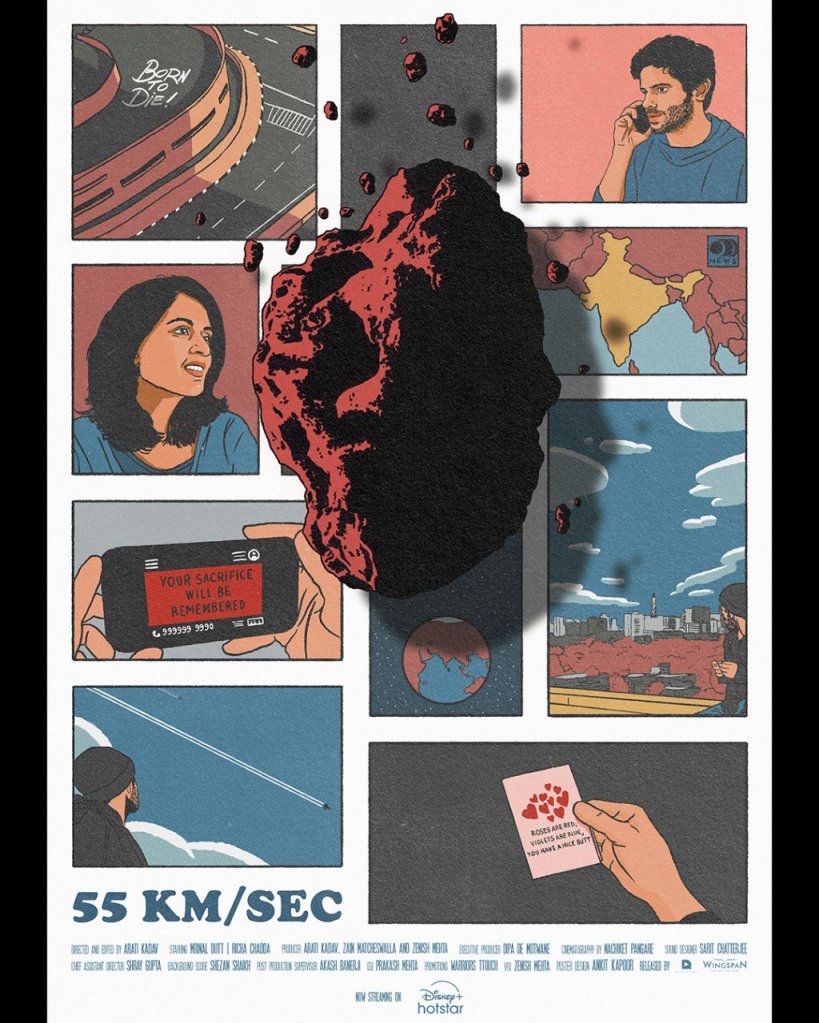
Official poster of 55 km/sec designed by Ankur Kapoor.

Bamboo rice is the next superfood

In The Freee Press Journal, edition dated January 24, 2021.

Benefits of Bamboo Rice

  • Decreased Constipation and Colon Cancer Risk because it is rich in dietary fibre.
  • Lowered Risk of Cardiovascular Disease because the high fibre content also reduces the bad cholesterol levels and maintains blood pressure levels.
  • Optimized Brain and Nerve Health because it is a phenomenal source of B complex vitamins.

(By Dr Shweta Mahadik, Clinical Dietician, Fortis Hospital, Kalyan)

(To read more: https://www.freepressjournal.in/weekend/bamboo-rice-the-next-superfood-that-can-boost-your-health-and-well-being)

Jaipur Literature Festival announces programme for virtual 2021 edition

New Delhi, January 21, 2021: Set to take place between 19th to 28th February 2021, the Jaipur Literature Festival returns with a stellar online programme, spread over 10 days, for its 14th edition.

The ‘greatest literary show on Earth’ returns in a virtual avatar, featuring a spectacular line-up of speakers from across the world, consisting of writers, poets, playwrights, thinkers, politicians, journalists, cultural icons and recipients of major literary awards including the Man Booker, the Pulitzer, JCB Prize for Literature, Commonwealth, European Union Prize, the DSC Prize for South Asian Literature, PEN Award for Poetry in Translation etc.  

The programme, unveiled today, is vast and kaleidoscopic, with themes ranging from Technology & AI, Politics & History, Environment & Climate Change, Mental Health, Economics, Translations, Poetry & Music, Food & Literature, Geopolitics, Science & Medicine, Democracy & Constitutions, Water & Sustainability, Historical Fiction, Travel, etc.

Some highlights from the programme include Glasgow-born author Douglas Stuart whose 2020 Booker Prize-winning debut novel Shuggie Bain evokes the essence of addiction, parenthood, courage and love. Following the bond between a son and his mother, fractured by alcoholism, poverty, aspiration and human misery, the novel graphs an intimate, devastating yet ultimately hopeful journey through their lives.  In conversation with writer and playwright Paul McVeigh, Stuart will unravel the thought and process behind bringing this heartbreaking story out into the world.

Celebrated American linguist, philosopher, cognitive scientist, historian, social critic, and political activist Noam Chomsky’s latest book, Requiem for the American Dream: The 10 Principles of Concentration of Wealth & Power, sharply questions the utopian idea of neoliberalism and the consequences of markets dictating all aspects of society. Evaluating the ten principles that have fuelled this idea, he will unravel its roots and its troubling impact on American society, culture and politics, in conversation with journalist Sreenivasan Jain.

Covering the ongoing pandemic, doctors and co-authors Randeep GuleriaChandrakant Lahariya and Gagandeep Kang will discuss their exciting new project in conversation with award-winning journalist Maya Mirchandani. The focus of the session will revolve around whether India wins the fight against the COVID-19 pandemic. Dr. Randeep Guleria, Director of All India Institute of Medical Sciences, New Delhi, is an MD in Medicine and the first DM in Pulmonary Medicine in the country, and has been at the forefront of the Government of India’s efforts on the COVID-19 pandemic’s preparedness and response. Dr. Chandrakant Lahariya is a leading public policy and health systems expert and a recipient of the Indian Council of Medical Research’s Dr. BC Srivastava Foundation Award for his work on translating community-based health research in public policy interventions. Dr. Gagandeep Kang is a renowned infectious disease researcher and virologist who serves on many advisory committees in India and internationally, including for the World Health Organization.

During the Festival, award-winning Irish writer Colm Tóibín will take us through the rhythm and roots of his writing process and celebrated career. A master of expression and text, Tóibín possesses a unique ability to inhabit and blend through his words an expansive universe of fiction, nonfiction and poetry. He is the bestselling author of The MasterThe Blackwater LightshipThe Testament of Mary and Nora Webster; his upcoming book is The Magician.

Marina Wheeler, a Queen’s Counsel in England, opens the portals of memory as the daughter of a woman traumatised by the Partition of 1947 that divided British India into Pakistan and India. Wheeler follows her mother’s buried past, her marriage and move to England where she refuses to look over her shoulder at a lost world. In conversation with Navtej Sarna, the former High Commissioner of India to the United Kingdom, she will explore the meaning of the Punjabi Sikh identity as it survives through cultural transitions.

In a special session, director and writer Devashish Makhija’s latest book, Oonga will be launched followed by a conversation exploring the book.  The book is a powerful novel based on his film of the same name. Capturing the inherent paradox between dystopian ‘development’ and utopian ideologies, the book narrates the journey of a little boy in the midst of a clash between Adivasis, Naxalites, the CRPF and a mining company.

Acclaimed author and historian Vincent Brown‘s groundbreaking geopolitical thriller Tacky′s Revolt: The Story of an Atlantic Slave War takes on the Atlantic slave trade with a subversive and powerful reconstruction of the history of insurgency, rebellion, victory and defeat. With a keen emphasis on the seminal uprising that upended the dominant imperial rule of the British Atlantic world, eventually becoming known as the Tacky’s Revolt, and ultimately leading the way for abolition. At as session titled ‘Tacky′s Revolt: The Story of an Atlantic Slave War’, in conversation with writer and academic Maya Jasanoff, Brown will unpack the complex narratives binding the conflicting histories of Europe, Africa and America, offering illuminating insights into the condition of terror and war, more relevant than ever in the era of BLM and socio-political change.

Our knowledge and information of the Aztec empire, their history and their conquest, for generations have been informed by the Western pen. Author and historian Camilla Townsend’s Cundill History Prize-winning Fifth Sun: A New History of the Aztecs brings to light a complex and riveting history of the Aztecs based entirely on direct translations of the annals written in the neglected Nahuatl language. The author will speak to acclaimed author and Oxford professor Peter Frankopan and explore the precarious survival and brutal conquest of the people of the sun and their journey of endurance.

Journalist and writer George Packer’s Our Man: Richard Holbrooke and the End of the American Century is an enduring account of the force behind the Dayton Accords which famously ended the Balkan wars. Packer’s sweeping diplomatic history is based on Holbrooke’s diaries and papers and gives a peek into the life of a man equally admired and detested. In conversation with journalist and writer Basharat Peer, Packer will dive into the life and career of an extraordinary and deeply flawed man and the political and social circles he inhabited.

Journalist and writer Meenakshi Ahamed’s latest book, A Matter Of Trust, charts the complex relationship between India and the United States from the years following Indian Independence to today’s evolving politics. Based on her research of presidential papers, newly declassified documents, memoirs and interviews, the book evaluates the dynamics between the people in power in both countries against the backdrop of constantly developing socio-political-economic changes. At a book launch session, the writer will be in conversation with former Foreign Secretary to the Government of India, Shyam Saran and former diplomat Frank G. Wisner, and will discuss the far-reaching implications of this relationship and the current global political climate.

Tripurdaman Singh‘s latest book Sixteen Stormy Days: The Story of the First Amendment of the Constitution of India is a fascinating look into the turbulent history and contentious legacy of the First Amendment of the Constitution. In conversation with journalist and writer Karan Thapar, Singh will explore the nascent years of India in the context of what he calls ‘the first great battle of ideas.’

Democracy is an inherently participatory process that ensures the role of constituents in the direction and operation of political and social life. Electoral systems convert individual votes and choices into larger decisions that impact societies, cultures and nations. At a special session, a distinguished panel consisting of author and the 16th Chief Election Commissioner of India Navin B. Chawla, former Chief Election Commissioner of Nepal Neil Kantha Uprety and the Chief Election Commissioner of Bhutan Dasho Kunzang Wangdi will decipher and evaluate the electoral process in conversation with anthropologist and writer Mukulika Banerjee.

These are dangerous times for democracy. In his new book, The Tyranny of Merit: What’s Become of the Common Good? renowned philosopher Michael Sandel shows how the polarised politics of our time reflects the deep divide between winners and losers. He argues that we must rethink the attitudes toward success and failure that have accompanied globalisation and rising inequality. In conversation with celebrated author and Member of Parliament Shashi Tharoor, Sandel will offer an ethic of dignity and solidarity that points the way to a new politics of the common good.

The Festival continues its rediscovery of the vast heritage of India’s languages. In a session focused on Hindipoetry, scholar and academic Rupert Snell will speak of the enduring legacy of the Bihari Satsai with its evocative romantic imagery and visual vocabulary, in conversation with fellow scholar, academic and translator Harish TrivediThe Bihari Satsai is a work of the early 17th century by the poet Biharilal in Braj Bhasha. The Satsai was written in the court of Raja Jai Singh of Amber near Jaipur. The poet was rewarded with a gold coin for each verse; 700 verses were compiled into the Bihari Satsai, which has been considered an outstanding representative of the Riti period, weaving together worldly experience and divine immanence, and adapting the writing style of court poetry. Rupert Snell’s translation for the Murty Classical Library is scholarly yet accessible and brings alive the tradition for modern readers.

The first Bhojpuri novel to be translated into English, Phoolsunghi, is a period piece about the life of a tawaif in the late 19th century in colonial Bihar.  Though Bhojpuri songs and cinema have gained popular appeal, the richness of Bhojpuri literature is not widely known. Gautam Choubey,  an academic and a columnist, has innovatively translated this modern classic and rendered it with cultural nuances and poetry. Academic and author Francesca Orsini is Professor of Hindi and South Asian Literature at SOAS, University of London. In conversation with academic and award-winning translator Jatindra Kumar Nayak, Orsini and Choubey will discuss the novel, the times it was set in as well as the challenges of presenting it for contemporary readers.

In conversation with the author of Mapping the Heavens: The Radical Scientific Ideas That Reveal The Cosmos, Priyamvada Natarajan, acclaimed Italian physicist and writer Carlo Rovelli will take us through the deeper meaning of the universe and our place in it. Drawing inspiration from the ancient Buddhist philosopher Nagarjuna, Rovelli will take us on an illuminating journey through the unknown, exploring the mysteries of the cosmos, the fabric of space and the nature of time.

The Festival will remember legendary Indian actress Devika Rani through award-winning author and playwright Kishwar Desai’s book The Longest Kiss: The Life and Times of Devika Rani which charts the life and career of the celebrated actress. Based on her personal letters and documents, the book narrates her journey through the creation of Bombay Talkies, India’s first professional studio, her marriages to Himanshu Rai and Svetoslav Roerich, and the struggle of being a woman in the entirely male-dominated world of Indian cinema.

Speaking on the programme of this year, author and Festival Co-Director Namita Gokhale said, “It’s been a joyous challenge to work on the programming for Jaipur Literature Festival 2021. We look at our transformative times and try to understand the future through the lens of the present and the past.  Our hybrid digital outreach has opened up a new universe of possibilities. I’m excited at having Italian astrophysicist and writer Carlo Rovelli in conversation with Professor Priyamvada Natarajan, on Nagarjuna, Sunyata, and Stardust. Winner of the 2020 Booker prize, Douglas Stuart, speaks of his award-winning debut novel. We rediscover Emperor Ashoka’s ancient edicts through music with T.M. Krishna.”

“There is so much more to experience and reflect upon – from Gulabo Sapera and the dance of the serpents to the science, art and philosophy of Indian food – from the tragic life of the great Bangla writer, poet, and playwright Michael Madhusudan Dutt to the one and only M.S. Subbulakshmi. Shekhar Pathak and Ramachandra Guha tell us of the people’s history of the Chipko Movement. We present S. Hareesh’s award-winning novel ‘Moustache’, translated from Malayalam. In ‘Brown Baby’, British writer Nikesh Shukla explores shifting ideas of home. We pay tribute to the genius of S.R. Faruqi as we present his posthumously published novel, ‘Kabze Zaman’. These are some glimpses of the treats in store – a few surprises still await!” she added.

Sanjoy K. Roy, Managing Director of Teamwork Arts, producer of the Jaipur Literature Festival, said, “A year after the world was felled by the pandemic, we have persevered and shown that human endurance can and will prevail, fuelled by knowledge and information, empathy and the right to justice. The Jaipur Literature Festival is representative of these ideals and will continue to be a platform to celebrate the joy of knowledge.”

The full programme will be available to view at : Programme – Jaipur Literature Festival

Jaipur BookMark (JBM), a B2B segment held parallel to the Festival, will open its eighth edition with an engaging virtual programme between the two weekends of the Jaipur Literature Festival. The virtual edition of JBM will run from 22nd to 25th February 2021, hosting two sessions per day. JBM will continue to bring together a wide range of publishers, literary agents, writers, translators, translation agencies and booksellers from across the world and give them an opportunity to exchange ideas and listen to major global industry players.


Manto’s free spirit and courage to stand up against orthodoxy drew me to his story: Nandita

Actor Nawazuddin Siddiqui in and as Manto.

Ten years after making her directorial debut with Firaaq, actor Nandita Das is ready with her next on the life and times of revolutionary Urdu writer Sadaat Hasan Manto. Starring Nawazuddin Siddiqui in the titular role with Rasika Dugal as his wife Safia, the biopic is set in India and Pakistan and focuses on the period between 1945 and 1949; it is woven around five of Manto’s stories. In an exclusive piece, she talks about Manto, her fascination with his life and work, her Manto-esque father, and why Manto is still relevant today’s times.

Introduction to Manto

I first read Manto when I was in college. A few years later, I bought the complete original works in a collection called Dastavez, in Devanagari. I was struck by his simple yet profound narratives and the way he insightfully captured the people, politics and times he lived in. He wrote as he saw, as he felt, without dilution, and with a rare sensitivity and empathy for his characters.

For years, I thought of making a film based on his short stories, even before I made my directorial debut, Firaaq. In 2012, when I delved deeper into his essays, they helped the idea expand beyond his stories. Today I feel equipped, both emotionally and creatively, to tell this story that so needs to be told.

What drew me to the story of Manto was his free spirit and courage to stand up against orthodoxy of all kinds. He was irreverent and had an irrepressible desire to poke a finger in the eye of the establishment, often with sharp humor. As I plunged deeper into Manto’s life, I wondered why he seemed so familiar. Soon I realized that it felt like I was reading about my father, an artist. He too is intuitively unconventional, a misunderstood misfit, and whose bluntness is not too different from my protagonist.

Resonance with Manto:

It is his fearlessness and a deep concern for the human condition that I have always felt most deeply connected to. No part of human existence remained untouched or taboo for him. For him, the only identity that mattered was that of being a human. Manto’s faith in the redemptive power of the written word, through the hardest times, resonates with my own passion to tell stories. In some mystical way, I feel I am part of that hopeful legacy! Through him, I feel I am able to kindle my own conviction for a more liberal and compassionate world. I feel there is a Mantoiyat, in all of us – the part that wants to be free-spirited and outspoken. 

Actor and filmmaker Nandita Das.

My father is very Manto-esque:

My father Jatin Das is an artist and at a person level I feel he is very Manto-esque. In the sense that though an artist he has never really been part of the artist’s market group, as art has also sadly become a commodity. Like Manto, he has also never really been driven by money. He is very outspoken and somewhat a misfit. I’m very close to my father and when I come across struggles of someone who is so honest and wants to speak up all the time. Somewhere I feel that the film on Manto has the power of making a difference. That’s why I want to do films.

This is something that I feel so passionate about because it is a story that I really want to tell. I feel Manto had this feeling that writing and literature have that power of making a difference. That’s why he continued writing even when he was financially in a bad shape and became an alcoholic, especially when he was in Lahore. But he had a belief that his writing can contribute to some kind of change – not that he has ever said it but at a subconscious level he believed it. I think there is a resonance there as well.

Favourite works and why:

When I first read Manto in college, I was struck by his simple yet profound narratives. As for my favourite Manto work, there are many, so please don’t ask me to choose! To name a few, Dus Rupiya, 100 Watt Bulb, Hatak, Khushiya, Khol Do and many more – each one is powerful in its own way. His essays and sketches about people are equally poignant and sharp. 

Manto once said, “Why would I undress a society that is already naked? It is true I make no attempt to cover it, but that’s not my job…my job is to write with a white chalk so that I can draw attention to the blackness of the board.” Manto wrote as he saw, as he felt, without dilution.

Relevance of Manto today:

The deeper I delve into this project, the more convinced I am about the relevance of Manto in these times. Not much has changed… almost 70 years later and we are still grappling with issues of freedom of expression and struggles of identity. Even today our identities lie inextricably linked to caste, class and religion as opposed to seeing the universality of human experience. I know he would have had lots to say about the times we live in. It is no surprise that so much is being written about Manto and that many theatre groups are often performing his plays and essays. He was relevant then and will sadly continue to be relevant for a long time to come. 

Actor Nawazuddin Siddiqui in a still from Manto.

Struggle for freedom of expression:

Manto never perceived himself to be an activist. He in fact says that ‘as much as Gandhi has to do with films I had to do with politics’. He didn’t feel that he was political and yet he was actually extremely political in all his writings. According to him, what political meant was to understand why things happen the way they happen. In today’s times, we can see this all around – censorship, people who are self-censoring to avoid trouble or moral policing where some group decides that something is hurting their sentiments.

And that is what Manto fought against. He was tried for obscenity six times – three times by the British government and three times by the Pakistani government, just because he wrote about the sex workers. There are a lot of interesting essays. We also have scenes in the film showing the way people attacked him saying that what he wrote was obscene and pornographic and how he defended literature, as his writing was not meant to titillate somebody. His writing tried to understand and empathize with people who are on the margins of society. It was about those people who nobody wants to write about. In fact he also says that if you can’t bear my stories it is only because we live in unbearable times. The stories only reflected what happened in society. So I think it is relevant not just in our South Asian sub-continent but also around the world. Artists, writers, freethinkers, rationalists are all being attacked in some form or the other and are being silenced. Any society grows and develops when you have people speaking up the truth and thinking differently. And if you silence them then what hope do we have?

On Manto being labeled a mainstream or an art film: 

I do not like to label films as mainstream or art. And at the end, this film is an artistic expression. Manto was a great writer, and his story will reach out to millions because I think it is very relevant to our times, for multiple reasons. We are still grappling with issues like freedom of expression and struggles of identity. Also we don’t know many of our own writers, artists, scientists, and through them the history of our country and times they lived in. I think people in our country and globally, will connect to the story, as at the end of it all, it is a human story of struggle and courage and the will to speak out and be your own self – something we all struggle with. 

(This interview was first published in Air Vistara’s inflight magazine, Vistara, in April 2018)