February 14th is observed as National Ferris Wheel Day in honour of the birth of George Washington Gale Ferris, Jr., the man who invented the Ferris Wheel.
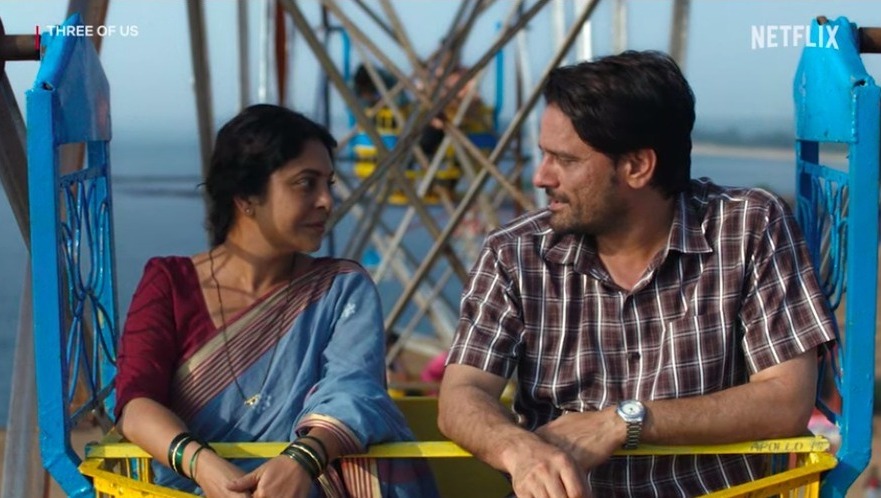
So here is celebrating the day, a bit belated, with the most telling image of the #FerrisWheel or the #GiantWheel from Avinash Arun Dhaware’s #ThreeofUs.
In the novel, “The Catcher in the Rye”, by J.D. Salinger, the protagonist, Holden Caulfield, reflects on his childhood memories while riding a Ferris Wheel with Phoebe at a carnival. He wishes it could be this way for him and her forever.
In this film, while taking a spin on the Ferris Wheel, childhood buddies Pradeep Kamath and Shailaja Desai relive their good old days, rewinding to that moment with a tinge of nostalgia when they were here together for the last time as children and giving that unfinished story the much-needed closure as adults.
Three of Us
A Ferris Wheel has a distinctive and universally recognizable nature, and it is no surprise that this scene is one of the most memorable in the film and finds a place on the poster, too.
The circular motion of a Ferris Wheel symbolizes cycles, continuity, and the never-ending nature of certain processes or experiences for both Pradeep and Shailaja and even Dipankar Desai.
The motion of a Ferris Wheel, with its ascending and descending movements, can be seen as a metaphor for their lives ups and downs after their last ride together on the Ferris Wheel many moons ago.
When Pradeep says, “If the wheel ever stopped mid-air, I didn’t want it to start again,” it highlights how the Ferris Wheel evoked nostalgia and a sense of the past, connecting people to memories of fun times and simpler pleasures. It also creates a sense of adventure and excitement because we see Dipankar choosing to stay away from the ride, letting Shailaja and Pradeep go for a ride one last time before they bid goodbye to each other forever.
Three of Us is streaming on Netflix.
When the wheel stops for a while (a brilliant way to pause and let the characters converse), Shailaja takes a moment to express how she still wouldn’t wish the wheel to restart. She reminisces how she was in a great hurry to get to Vengurla, and now, when she’s here, she’s missing Mumbai. But at that particular moment when the wheel has halted, she doesn’t feel the need to hurry anymore. “This is where I want to be, and I’m here,” she says, to which Pradeep couldn’t help but ask her, “Why didn’t you come back sooner, Shailaja?” She has no answer to his question but makes up for all that was and is now lost by saying, “After I left, I didn’t find the time to return. Our whole life is spent in a dilemma. Do we choose a busy or a peaceful life? Only recently, life said to me, “Slow Down.” And I did.”
Riding the Ferris Wheel together provides a different perspective of the surroundings with each revolution. It also symbolizes the importance of gaining new perspectives, reflecting, and seeing the bigger picture in various aspects of life for Pradeep and Shailaja.
However, the filmmaker has steered away from giving any romantic connotation to the Ferris Wheel ride by filming this scene in the glowing light of the evening and not an illuminated Ferris Wheel at night.
The scene is subtle, subdued, and sublime, much like their performances and the film, #ThreeofUs.
Centuries ago, the humble weaver, mystic and poet Kabir, who once lived in the lanes of Kashi, wrote a profound poem titled ‘Jheeni Jheeni Beeni Chadariya’. His verse is a metaphorical and philosophical expression that uses the metaphor of the loom and weaving process to reveal the mysteries of life. The title also inspired Abdul Bismillah’s Hindi novel ‘Jheeni Jheeni Beeni Chadariya’ on the lives of weavers in Varanasi, much like filmmaker Ritesh Sharma, who borrows it for his film, ‘Jhini Bini Chadariya’, to explore the lesser-talked-about character of the holy city — Kabir’s Kashi where Muslim weavers run the looms and produce some of the world’s finest silk saris worn mostly by Hindu women, and also its once flourishing and now fading into oblivion courtesan culture.
These two quintessential characters of Kashi come to life as Shahdab, the young Muslim weaver facing an existential crisis, and Rani, the orchestra dancer who gyrates and grooves to vulgar songs in the glare of myriad-coloured light beams, entertaining the lustful local audience with her sleazy moves. The filmmaker uses them as the access point to delve deeper into the city’s socio-political, socio-cultural and socio-religious fabric and lays it threadbare. The motif here is the same as that was seen in ‘Nasir’, ‘Aani Maani’, etc, and Ritesh joins other independent voices in filmmaking who aren’t shying away from exploring centuries-old traditions of India that champion humanism, inclusion, syncretism, and how all these ideals are being swiftly eroded under the strong winds of Hindutva.
A traditional handloom weaver, Shahdab, lives in the silk-weaving neighbourhood of Pili Kothi, and the clackety-clack sounds from the looms fill the air in his room but not loud enough to drown the threat of being wiped off sometime soon. The fear looms large over him because his art is helpless before the modern power looms that can produce silk saris cheaper and faster. The shot through the open door also gives us a glimpse of the sari-clad mannequin, his constant companion. On the other hand, Rani fends for herself and her deaf and mute daughter, Pinky, with earnings from a not-so-respectable trade. She dreams of sending her daughter away to a boarding school one day so that the poor child doesn’t have to live with her classmates’ taunts of being a dancer’s daughter. Rani has stars in her eyes and hopes to make it big with a much-awaited debut in a music video and, from there, move on to act in films one day.
The filmmaker uses symmetry in characterisation and plot to show the parallels in the lives of its male and female actors, perhaps to reiterate the more resounding theme of communal bigotry and show how they end up being the victim of circumstances, eventually falling prey to it, in one way or the other, for no fault of theirs. It starts with parallels between Hindu prayer chants and a mosque’s Muslim prayer call, interspersed on the screen. The constant blaring of hate speeches on loudspeakers and the airing of news on radio and television in the background gives the film a documentary feel.
Jhini Bini Chadariya
While Shahdab befriends an Israeli backpacker, Adah, Rani deals with the romantic overtures of a young man, Baba, who has no agency to change things for good for her object of affection. Still, he harbours a deep intent to do so and quite hopelessly nurtures dreams of a good life and helplessly sees it blown to smithereens.
Shahdab’s one-sided love remains unrequited as Adah puts him in the friend zone, nothing more, nothing less. Rani disapproves of the man’s possessiveness and shows complete disdain for his heroism in trying to protect her honour at the hands of vulturous men who treat her like a piece of meat, wanting to devour her at the first given opportunity, all because she treats herself as no-man’s business.
Shahdab weaves a sari to gift Adah, and she, in return, leaves unannounced with a book on Kabir for him as a parting gift. Rani’s paramour Baba gifts her a sari, too, but she throws it away on his face in a fit of rage, and from there, things go downhill for her.
Shahdab goes on to marry her Shazia, while Rani dilly-dallies on the Baba’s proposal before being brutalised by the henchmen of the local Hindu politico, Shiv Shankar Tiwary. An irate Baba avenges Rani’s ill-treatment at his hands, realising little that his ire will stoke the communal fire in the holy city. The two men, Baba on his bike and Shahdab on his scooter brush past each other for a fleeting moment on a well-lit bridge, perhaps in an ominous suggestion that the peace and harmony will soon be up in flames.
Two threads — Rani and Shahdab’s lives — are intertwined when the riots break out in the city, and that’s how the filmmaker explores the third, invisible character — the city — adeptly exposing the tectonic changes under religious fanaticism. After Shankar’s killing, the cow vigilante breaks loose, blaming the Muslim beef traders in the city for Gaurakshak’s murder. The news spreads like wildfire and consumes the peace and brotherhood of the locality. It leaves Shahdab’s family dead at the hands of rioters, much like the communal riots that broke after the demolition of Babri Mosque on the night of December 6, 1992, and his parents who were killed in its aftermath. Baba, too, is killed in a police encounter after being hunted down for shooting the Hindu leader and, in death, is called Mustafa, which pretty much explains the story in a nutshell.
One of the most telling scenes unfolds amidst the resonant chants and the echo of bells. Once a dynamic hub of diverse languages, faiths, and profound knowledge, the vibrant city echoed with loud slogans and ritualistic fervour. The air was filled with the booming beats of dumroos, fervent cries of “Har Har Mahadev” mingling with “Jai Shri Ram,” the showering of petals, and an elaborate display of ceremonial worship, and the city fitting in the oversized idea of aggressive Hindutva.
The camera becomes a silent spectator, standing still and documenting their lives, ways and means of living with acute detachment, offering the audience a voyeuristic glimpse on a few occasions. The cinematic framing of windows, doors and the windows above the doors in the characters’ homes, or the movement of two-wheelers in the city’s lanes and bylanes with the camera positioned at the fag end, or shots of religious processions, are spread liberally all throughout, from beginning to end, to show the camera’s distant approach in filming, and showing the changing face of the city, and not the usual touristy stuff.
The actors owned their roles with ease as if they were one amongst the many Ranis or Shahdabs that inhabit the ancient city of Kashi. Their dialogue delivery, body language, mannerisms, and looks seemed a seamless blend and a perfect reflection of the milieu painstakingly portrayed in the film.
The sound design combines every piece of audio in the film—including dialogues, sound effects, ambience, and score—to create the film’s soundscape quite effectively. It suitably adds to give the film a docu-drama touch.
Much like the poem, where Kabir uses the weaving process as a symbolic representation of life and its mysteries, comparing the fine, delicate cloth to the subtle and intricate nature of existence, with the act of weaving serving as a metaphor for the divine process of creation and the unfolding of life, the filmmaker uses the loom to represent the current political order, and each thread in the fabric signifies an individual’s life. The interconnectedness of the threads illustrates the interdependence of all life forms. The cloth being woven here by the filmmaker symbolizes the intricate tapestry of the prevailing situation in the country.
The disclaimer at the beginning, “some of the events and situations in this film are not fictional”, sets the tone, and in 1 hour 37 minutes, Ritesh portrays all of it with sensitivity, honesty, tenderness and aloofness. The film seems like a leaf out of everyday India, documented by a young filmmaker who manages to weave the fabric with a keen eye on the prevailing situations, leaving us visibly rattled and shaken. We, the audience, are like Pinky, who takes up dancing and is framed from an open window in the last shot, complicit, complacent and conformists in the changing landscape of secular India. It is a brittle thread, and we need to protect it now more than ever.
एक ही दीवाने को आये थे समझाने कई पहले दीवाना मैं था अब हैं दीवाने कई एक ही पत्थर लगे है हर इबादतगाह पर अपने-अपने बुत का सबने गढ़ लिए अफसाने कई ~ नज़ीर बनारसी के लिखी ये पंक्तियां जो इस फ़िल्म में इस्तेमाल हुई हैं
Written and Directed by Ritesh Sharma Cast: Megha Mathur…Rani Muzaffar Khan…Shahdab Sivan Spector…Adah Syed Iqbal Ahmed…Abbu Roopa Chaurasiya…Pinky Nishant Kumar…Nadeem Shweta Nagar…Shazia Ashutosh Singh…Shiv Shankar Tiwari Utkarsh Srivastav…Baba Heramba Shankar Tripathi…Faisal
The trailer of Past Lives; The film releases in India on July 7, 2023.
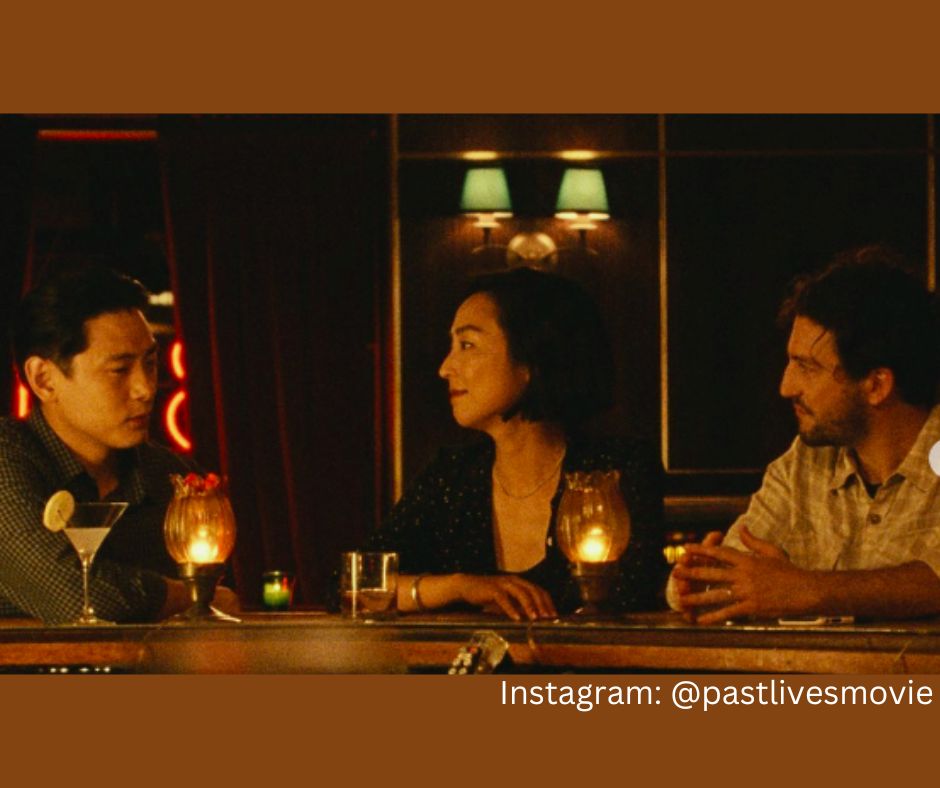
Celine Song’s “Past Lives” tugs at one’s heartstrings. The film by the Korean-Canadian filmmaker explores the complexities of human existence and the Korean concept of In-yun, the belief that souls can be inextricably linked through thousands of reincarnations but that the nature of their connection can shift from life to life. The film opens with an unseen character (voice) asking, “Who do you think they are to each other?” while observing the three protagonists, Nora, Hae Sung, and Arthur, sitting across a bar late at night, engrossed in a deeply animated conversation with the East Asian lady flanked by an East Asian and White (American) men. This question is an access point into the complex tale and takes the audience straight into the past and present worlds of Na Young or Nora and Hae Sung, two deeply connected childhood friends from Seoul, who meet in New York twenty-four years later, and Nora’s Jewish American husband, Arthur. The Korean-American Nora navigates the two worlds when the twain meet and doubles up as a translator for Hae, whose English is poor, and Arthur, whose Korean is basic, to help them converse easily.
More here: https://www.instagram.com/pastlivesmovie/?hl=en There are two love stories, running parallelly through the entire runtime of 146 minutes, with both feeding into each other, yet showing us how truly distinct, in magnitude and scale, spread and width, geographically and emotionally close and distant, these two love tracks are from each other.
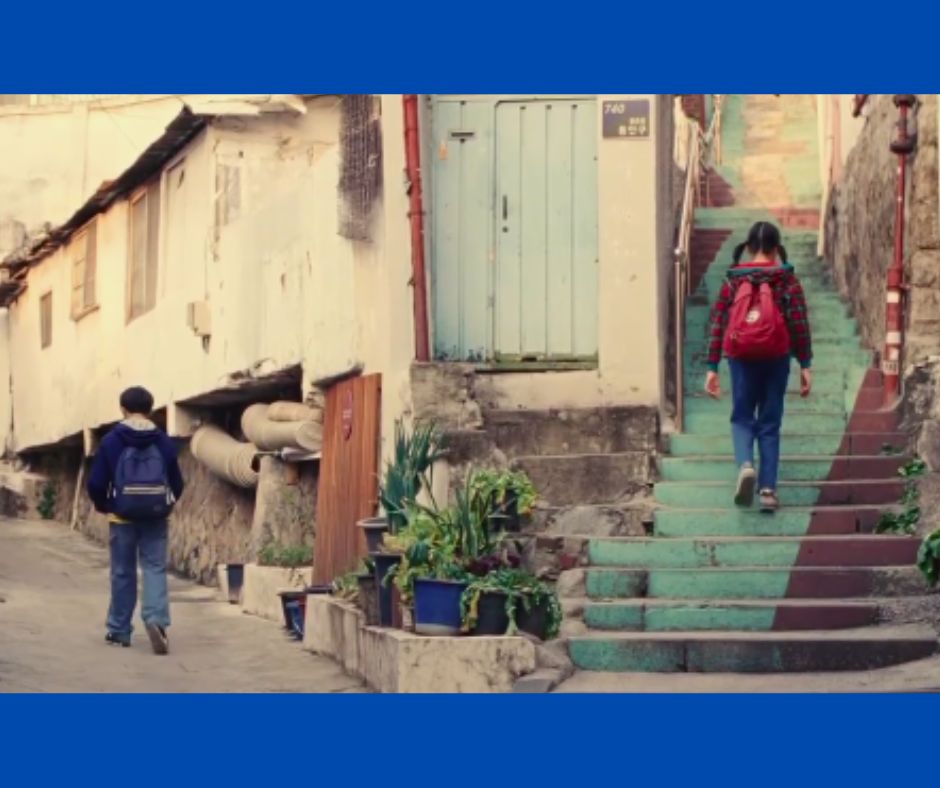
In no time, the story shifts to Seoul in South Korea, with 12-year-old children (a boy and a girl) walking home after school. The girl is grumpy while the boy is playful, dribbling his basketball all along because he, for once, could beat the girl at the grades and stood first in the class. He calls her a psycho and moves on. At home, the girl’s family is busy prepping to emigrate to Canada, and the girl and her sibling get engrossed in finalising their English names. The girl’s mother asks her if she likes anyone in her class, to which the 12-year-old sheepishly confesses that she does like a boy with whom she will get married when she grows up. The mother proposes to take them together on a date, which she heartily accepts with a shy grin.
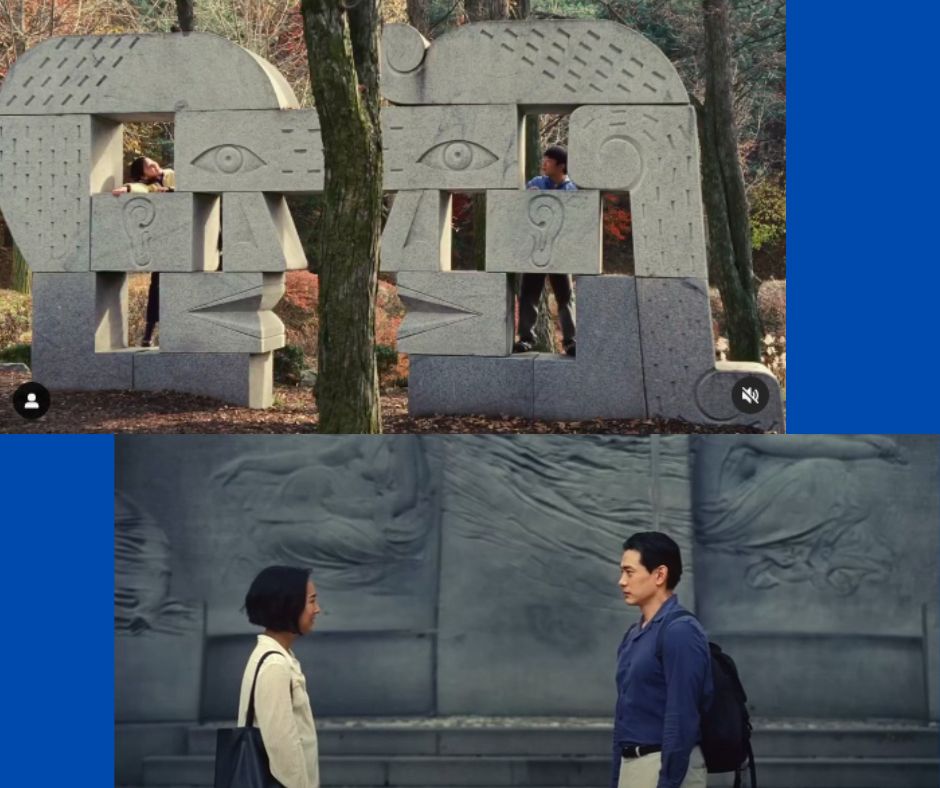
The kids and their mothers meet, and the scene with the girl holding the boy’s hand and sleeping in the backseat while resting her head on his shoulder is symbolic in multiple ways. Nora’s mother’s profound statement to Hae’s mom — “If you leave something behind, you gain something, too” — becomes the guiding light of the young girl’s life, from Seoul to Ontario, from Ontario to New York. Life zips past their childhood, separating them across space and time at a great pace. The symmetry in a young boy staring into the nothingness out of the car window is matched in the finale scene where he looks out as the Uber taxi speeds away to drop him at the airport after his one-week-long reunion with Nora in New York, 24 years later. Then their last meeting in a garden on a rainy day as children in Seoul playing hide and seek against a huge stone art installation, and then meeting against the backdrop of a stone structure in New York is another level of symmetry in their lives and beings, one’s longing and another’s belonging matches frame by frame, without missing a beat.
The story pans in and out of Nora’s life as an adult, where she reads Hae Sung’s message on her filmmaker father’s Facebook page and connects online with him after 12 long years of separation. She asks him, why did he look up for her? His response wins (my heart, at least) hands down, “I wanted to see you one more time.” They rekindle that spark of friendship spread across geographies and time zones, but their togetherness across Skype calls gets spaced out and freezes in the frame. A pragmatic Nora realises that she had moved to New York to make a writing career and wouldn’t trade off that ambition at any cost. She decides to focus on her life’s larger goal — the upcoming Artists’ Residency — at the expense of the duo’s what-if relationship status and keeps it on hold till further notice. Hae is devastated and considerably lonely but accepts her childhood buddy’s decision. Their banters and bickerings across the screen make them so adorable as friends who reconnect, albeit virtually, only to separate in the real world once more. But did this have to happen? It’s a valid question, but perhaps not the most pressing one raised by this delicate and thoughtfully crafted drama that explores how our pasts shape our present realities. It examines when change represents growth and when it masks our true selves. The film contemplates whether life is determined by fate or will, what has permanence, and what is transient. The film delves into these complexities with admirable grace and poise as Nora reflects on how many emotions and missed opportunities have shaped her most cherished desires quite unapologetically. At the same time, Hae seems stuck in the past, looking at everything with nostalgia-tinted glasses. This movie delves into the captivating storytelling, exceptional performances, and profound themes of identity and destiny portrayed in Song’s masterpiece. As the story unfolds, Nora emerges as a strong woman character. She embodies resilience, courage, and determination, refusing to let anything restrict her from pursuing her life’s larger goal, and that’s quite stunningly remarkable. A double emigrant who learns to find her roots in a potted plant with her husband, and despite her hardships, learns to forge her path, embracing her inner strength and discovering her true purpose with aplomb. Her character arc highlights the importance of self-discovery and empowerment. From wanting to win the Nobel Prize for Literature as a 12-year-old to win a Booker as an adult and then wishing for the Tony sums her ambition graph. Within the tapestry of Past Lives, the concept of destiny plays a central role. The characters’ encounters and separations are intricately woven together by a higher force, guiding their lives. Through exploring reincarnation, the story poses thought-provoking questions about the nature of fate, free will, and the enduring power of love. What sustains it? What keeps the sparks alive? What kindles that flame? And how does it all turn into ashes in no time, to rise again, in another space, and in another time? Amidst the complexities of their love story, the narrative also delves into the power of friendship. The artists’ residency changes the course of Nora’s life. She meets her to-be husband Arthur there and explains In-Yun, and why meeting him is no coincidence for the duo in the first encounter itself. “There’s a word in Korean, In-Yun. It means providence or fate. But it’s specifically about relationships between people. For example, if two strangers walk by each other in the street, and their clothes accidentally brush, that means there have been 8,000 layers of In-Yun between them. That is In Yun.” Each encounter is said to be caused by hidden reasons that began years ago. Nora and Arthur were meant to meet and hit off instantly. She finds solace in his unwavering support, which strengthens and guides her professional journey. Through their bond, the story showcases the significance of companionship, loyalty, and the ability to overcome challenges together. His longing to belong in Nora’s world can be gauged from the fact that he is learning a new language to understand Nora’s dreams and sleep talks in Korean because he always felt that there are many places within that are absolutely out of bounds for him due to unfamiliarity with a language. For a fleeting moment, he fears losing her to Hae, Nora’s childhood sweetheart with whom she had reconnected after over two decades. But she handles his misplaced fear and insecurities with trust, places her faith in him, and shows him what his love and life mean to her… he is her world. She manages to assuage untoward and unwanted thoughts of him being an “evil White Husband standing in the way of destiny” with so much grace when she says, “This is my life. This is where I am supposed to be.” The tender moment makes the couple so lovable every which way. Nora and Hae’s encounters may vary in form and circumstance in their childhood and adulthood, but the underlying connection remains unbroken, leaving them with a lingering sense of familiarity and an unexplainable pull toward one another. Surprisingly Nora though not oblivious to Hae’s affections, is unable to reciprocate because it comes in the way of her life’s larger purpose. Once in New York, Nora takes Hae sightseeing and hosts him at home with her husband. The In-Yun conversation makes her come back, as if to complete the loop, when Hae wonders and asks Nora, “If you had never left Seoul, would I have still looked for you? Would we have dated? Broken up? Gotten married? Would we have had kids together?” He tells her upfront that maybe she wouldn’t have stayed because she likes to leave. And then, before bidding her goodbye, he asks her again, “If this is their Past Life, what would their next life be like?” None of them have an answer to it. The most heartbreaking scene is the silence between the three characters. Hae leaves while the otherwise calm and composed Nora cries her heart out, unable to hold back the emotional rollercoaster ride spanning a week. Her strength fades away in the flow of her tears, and that’s cathartic for her and her relationships — the one that is with Arthur and the one that could have been with Hae, as Hae had reminded Arthur in the bar that they must also have had some In-Yun as well.
I. Engaging Storytelling and Cinematic Craftsmanship: “Past Lives” weaves an intricate narrative that seamlessly blends past and present, challenging our perception of time. Celine Song, both writer and director, demonstrates her storytelling prowess by crafting a compelling screenplay that keeps viewers engaged from beginning to end. The film’s exquisite cinematography captures New York like never before, skilful editing, and atmospheric sound design enhance the immersive experience, transporting the audience into the realms of the past lives depicted on screen.
II. Stellar Performances and Emotional Depth: The performances in “Past Lives” are nothing short of exceptional, with each actor bringing depth and authenticity to their characters. The talented ensemble cast delivers nuanced portrayals, effortlessly capturing their respective characters’ complex emotions and internal struggles. Their performances evoke empathy and resonate deeply, adding layers of emotional complexity to the film’s exploration of love, loss, and the eternal cycle of rebirth.
III. Profound Themes of Identity and Destiny: At its core, “Past Lives” delves into profound existential themes, questioning the nature of identity and the role of destiny in shaping our lives. Through its intricate narrative structure, the film challenges conventional notions of time and asks thought-provoking questions about the interconnectedness of past and present. It explores the idea that our actions in past lives reverberate in our current existence, highlighting the inextricable links between our past, present, and future selves.
IV. Critical Acclaim and Audience Reception: Since its release, “Past Lives” has garnered critical acclaim and captivated audiences worldwide. The film has been praised for its innovative storytelling, lyrical visuals, and the profound emotional impact it leaves on viewers. Celine Song’s unique vision and ability to translate complex themes into a relatable and poignant narrative have solidified her status as a rising talent in cinema.
Song’s “Past Lives” is a cinematic masterpiece that transcends the boundaries of time and space, immersing audiences in a contemplative exploration of identity and destiny. The film’s engaging storytelling, stellar performances, and profound themes captivate viewers and leave a lasting impression. As Song continues to establish herself as a visionary filmmaker, Past Lives stands as a testament to her artistic brilliance and ability to provoke introspection and ignite the imagination of audiences worldwide. She has succeeded in taking her viewers on a mesmerising journey through time, blending elements of romance and mysticism, masterfully evoking emotions from heartwarming moments of love and connection to poignant instances of loss, longing, belonging and unbelonging. The film delves deep into the human experience, exploring the profound yearning for connection that transcends time and mortality. Viewers are left contemplating the power of love and the idea of past lives long after the credits roll.
So whether you’re a fan of romance, mysticism, or thought-provoking cinema, Past Lives is a must-watch that will leave you contemplating the mysteries of love and the possibility of eternal connections across lifetimes. Nora and Hae’s souls are destined to meet and maybe part across multiple lifetimes. But we hope that each time they are reborn, their paths intertwine in unexpected ways, shaping their shared destiny, and giving them everlasting togetherness. After all, All the World Loves Lovers.
(All photos sourced from Past Lives’ instagram handle)
Three friends — Teja (Bhumika Dube), Santo (Ipshita Chakraborty Singh) and Tamanna (Annapurna Soni) — from small-town India meet at an upmarket mall, and from there, take the audience on a pillion ride into the world of female desire on a full moon night.
A tightly-knit storyline has the trio exploring the idea of women loving their bodies by taking matters into their hands, quite literally. Two of the actors — Bhumika and Ipshita — have co-written the script with filmmaker Devashish Makhija, and it reflects in their combined gaze on the subject. The off-screen camaraderie of the trio, all alumni of the National School of Drama with a solid body of work in theatre, makes them shine in this short. Sharp dialogues, clever camera work, and tight editing give the not-so-openly-spoken topic in Hindi cinema, ample space to stretch itself to the imagination.
Santo (Ipshita Chakraborty Singh)
The opening scene is a good starter. Teja owns her sexuality and unabashedly. That unbelievable power of ownership leads the audience to the unchartered territory of female desire, and Santo as the woman who fantasises about having sex with a married man under full moon’s gaze that night, ably takes the plot further.
Teja (Bhumika Dube).
In between, the duo leads married but yet uninitiated Tamanna to experience that elusive pleasure for the first time. The transition from organ to orgasm is organic. The result is an ecstatic high. Bishna Chouhan adds zealously to keep the spark alive with her deadpan expression.
The last scene pans out in the open and broad daylight, letting the audience experience the freaky idea of femaleness, of women seeking pleasure and owning their sexuality through the deft approach of a man and two women to this taboo subject. The scene is liberating. Together, all of them have treaded the thin line, carefully manoeuvring the plot and keeping it on track without being preachy or voyeuristic, and that’s quite a feat to say it all in barely 23 minutes.
Tamanna (Annapurna Soni).
Makhija uses the mobile camera, fiddles with aspect ratio, cramps the actor in small spaces and lets the camera focus on their quirky expressions, movements and gestures as they go about exploring their femaleness in this short film currently playing at the Dharamshala International Film Festival.
Cheepatakadumpa questions the double standards regarding sexuality — a rule for a man, an exception for a woman — subtly by letting the female protagonists explore the idea that there’s nothing wrong in seeking pleasure. It is in their hands, after all.
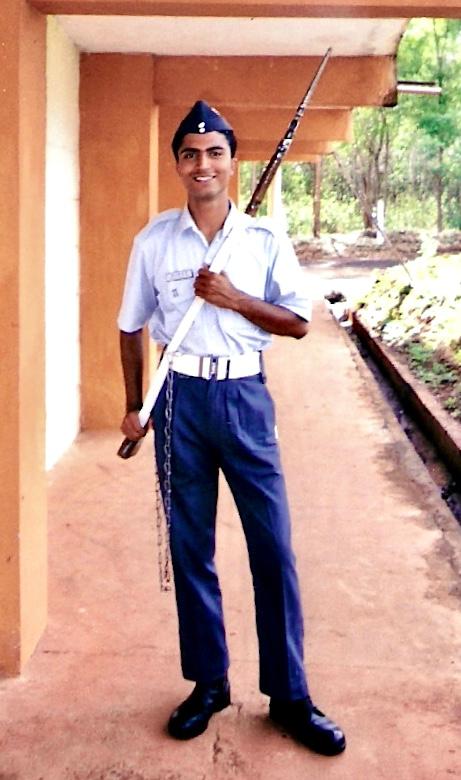
Lucknow boy Kushal Srivastava calls 1999 a year to remember. Fresh out of school, he had made it to the Indian Air Force as a non-commissioned officer and was waiting for his joining letter when the Kargil War broke out in May. It left the lanky teenager on tenterhooks. The ensuing months saw the reluctant newsie (as he calls himself) glued to his television set, 24×7. He keenly followed the war updates from Kargil and Drass way more than keeping a tab on the runs scored by the Men in Blue at the seventh edition of the ICC Cricket World Cup in England. “The Kargil War against Pakistan had overridden my love for cricket, and it remains like that to date. Cricket reminds me of that war. Sitting many miles away from the war front in my home, I remember how it felt so personal. I would cringe every time a soldier was martyred in Kargil; the fatalities in LoC were devastating because it felt like losing one of my own to the enemy,” he recounts.
The only good thing that he remembers of that year is how Pakistan collapsed to a meagre 132 in the final, leading to an eight-wicket win for Australia in the World Cup, and how this loss at the Lord’s matched its fate on the war front in Kargil, this time at the hands of Indian soldiers. Every year since 1999, July 26, the day the Kargil war ended, is celebrated as the Vijay Diwas. Srivastava, who went on to join IAF on December 23, 1999, served in the logistics department till 2006 and landed on the cinematic horizon with his directorial debut Vodka Diaries, featuring Kay Kay Menon, Mandira Bedi and Raima Sen, followed by his production debut The Job in 2018. Still an Airman at heart, he had something up his sleeve to commemorate the 21st anniversary of Kargil War. Days later, on the eve of the Independence Day, he went on to announce his next film, Golden Arrows; Rashmi Sharma of Pink fame is producing the film.
On the occasion of the 88th anniversary of the Indian Air Force Day, we caught up with Srivastava, who took us down the memory lane, reminiscing his good old days in the air force, besides giving us a sneak-peek into his upcoming project.
Filmmaker Kushal Srivastava.
Excerpts:
Q1. What are your memories of this day?
A. It is the most important day of the year for me, and means more than my birthday, even though I am not in the service anymore. During my seven years there, I was a part of the Air Force Day Parade at Palam Air Base on three occasions. And every year, since 2006, I have made it a point to be there as a spectator. It gives me unbridled joy. During those days, my fellow air warriors would perform funny plays, and I used to direct them. This year, I am working on my next that is my, a soldier’s tribute to the two greats of IAF – former Air Chief Marshal Birender Singh Dhanoa, and fighter pilot Squadron Leader Ajay Ahuja – who was martyred in the Kargil War. They are my real-life heroes.
Q2. How did you get into films?
A. Films were always on my radar, but I was more enamoured by the craft of filmmaking. I was barely 11 when my uncle Raju Srivastava took me along to N Chandra’s film set in Mumbai. I saw a shot being canned for the first time in my life, and that image stayed on with me for years. And even though I was serving in IAF, in the heart of hearts, I knew my real calling was filmmaking. I started as an assistant director. My first film as AD was A Flat featuring Jimmy Shergill, under Anjum Rizvi Productions. I assisted JP Dutta, and also Anurag Basu. I directed Kaafir, my first short film at MET College, Mumbai, which bagged the Best Short film award. The real learning happened under filmmaker JP Dutta; he is my film school who taught me the ethics of filmmaking. He always used to tell that there should be honesty and integrity in your work, which is missing in most of the masala films that hit the theatres on Fridays these days. So now I’m not too fond of half of the movies made by our film industry. The journey since then has been quite eventful and interesting, and I have also realised that every obstacle is a challenge. One should stay focused and keep working towards one’s goal.
A poster of filmmaker Kushal Srivastava’s next, Golden Arrows.
Q3. Your next cinematic outing, Golden Arrows, seems like a big-ticket project. Tell us more about the subject.
A. Golden Arrows is a war film about a squadron then led by Wing Commander Dhanoa. The film is dedicated to Sqn Ldr Ahuja. It displays the glory and the courage of our fighter pilots during the most challenging air war ever fought. Yes, production-wise, it’s a big-budget film with a large canvas. That’s the requirement of the subject.
Q4. How did you zero-in on this subject?
A. Fighter jets have always fascinated me. Those dragons are the most amazing things in the world. Going back on the subject, Golden Arrows was raised on October 1, 1951, in Ambala and was based in Bathinda during the Kargil War. Living up to their motto, Arise Forever, they flew in the most challenging and highest terrains in the world, where flying and bombing was impossible by any air force in the world.
When a co-pilot had to eject amidst the war, Sqn Ldr Ahuja decided to go beyond the call of duty to ‘Never leave his wingman behind’, but while doing so, he was hit by Stinger Missile and had to lay down his life. He was awarded the Vir Chakra for his bravery.
The primary role of Golden Arrows was to do photo recce. But when Dhanoa, a trained fighter pilot, lost Ahuja, he converted his aircraft to a bombing one. He set a new benchmark in the world by going for maximum bombing missions in the war and leading India to victory, hence making Golden Arrows the most decorated squadron in the IAF during the war.
Dhanoa later became the Chief of the Indian Air Force and was behind another successful operation, the Balakot strikes. As Chief of Air Force, Dhanoa paid tributes to Sqn Ldr Ahuja and other martyrs of Kargil War by flying a ‘missing man’ formation in a Mig-21. The newly inducted Rafale aircraft is a part of the resurrected Golden Arrows.
Filmmaker Kushal Srivastava and his crew with former ACM BS Dhanoa and his wife.
The heroism of ACM Dhanoa, the sacrifice of Sqn Ldr Ahuja and the camaraderie of Golden Arrows is unprecedented. Kargil was the toughest air war ever fought in the world, we as Indians should be proud of it, but instead, most of us are unaware of it. Hence, this is my tribute to the air warriors, albeit on the big screen.
Q5. What is that one factor from the life of the former ACM Dhanoa that stood out for you?
A. He is an initiator and a risk-taker and forges his unique path, aims high, and reaches his destination come what may. He is a living example of how luck favours the brave.
Q6. How significant were your personal experiences in the making of this film?
A. The heroic but not-so-known story of the Kargil War had been simmering within me for all these 21 years. It flows in my blood. I have lived it. It was just a matter of time, and I am quite excited to see this dream come true. It is for the first time in the world that an ex-soldier will make a war film.
Q7. How difficult or easy is it to make a war film during the current situation?
A. If you are honest, then nothing else matters. What matters is whether you are giving your 100% in the given situation, and then rest everything else will follow.
Q8. What is the learning from the recent releases – Gunjan Saxena, Uri, Avrodh – that came in handy while prepping for Golden Arrows?
A. Kargil War, as we know, was high-altitude warfare. Both sides fought it on mountainous terrain. But what is untold is how IAF’s operation Safed Sagar was instrumental in winning the war. It was for the first time that IAF had air power at the height of 32,000 feet.
Golden Arrows was a photo-reconnaissance squadron of IAF, then led by Wing Commander Dhanoa and Sqn Ldr Ahuja. Technically, reconnaissance in force is a means of obtaining information on the enemy’s disposition, and for probing enemy defenses for gaps. In a layman’s language, the Airmen fly and click the pictures of the enemy. Then they provide the exact location of the enemy to the bombers and the Army. In the Kargil War, they helped identify the Pakistani troops and Mujahideens, and bomb enemy locations.
Also, Golden Arrows doesn’t have a reference point. We have not produced any air force war film in India yet. Commercially, they may be good films, but as an insider, I could only see what mistakes I have to avoid.
Q9. How much does Mr Dutta’s filmmaking style influence your cinematic sensibilities, especially when it comes to war dramas?
A. He has a knack for bringing out the humane part of the war, and that’s Mr Dutta’s innate and effortless talent. I have always admired his attention to details and how he deals with human emotions in his films. Most of his films have been multi-starrers, but he is known for giving equal weightage to each character. You will never feel that character X was in any way less than character Y or Z. I strive to imbibe that quality in my films. I hope I succeed.
Q10. What is behind the scene action that is currently on?
A. As we speak, casting director Mukesh Chabbra is busy finalising the details. It requires a lot of meticulous planning. It is a two-hero film, so we need to two male leads to essay the roles of ACM Dhanoa and Sqn Ldr Ahuja. Meanwhile, the remaining work is also in progress. The film will go on the floors later this year, and we are aiming for a 2021 release.
Poster of Vodka Diaries.
Q11. What filmmaking lessons did you gather while making Vodka Diaries that you think will help you in upping the game while directing this one?
A. Vodka Diaries was like an exam. It was conceived purely out of my love for thrillers. The script was written keeping in mind, Kay Kay Menon. Once, he was on board, rest everything fell into place. It was a complicated subject, and that’s the reason why I went for it. I like challenges, maybe that’s something I have imbibed from my stint with IAF. The film helped me prove my mettle. Now I find it easier to convince people.
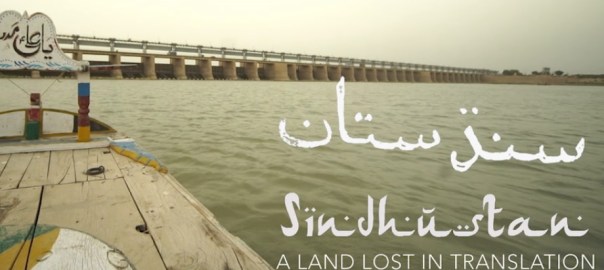
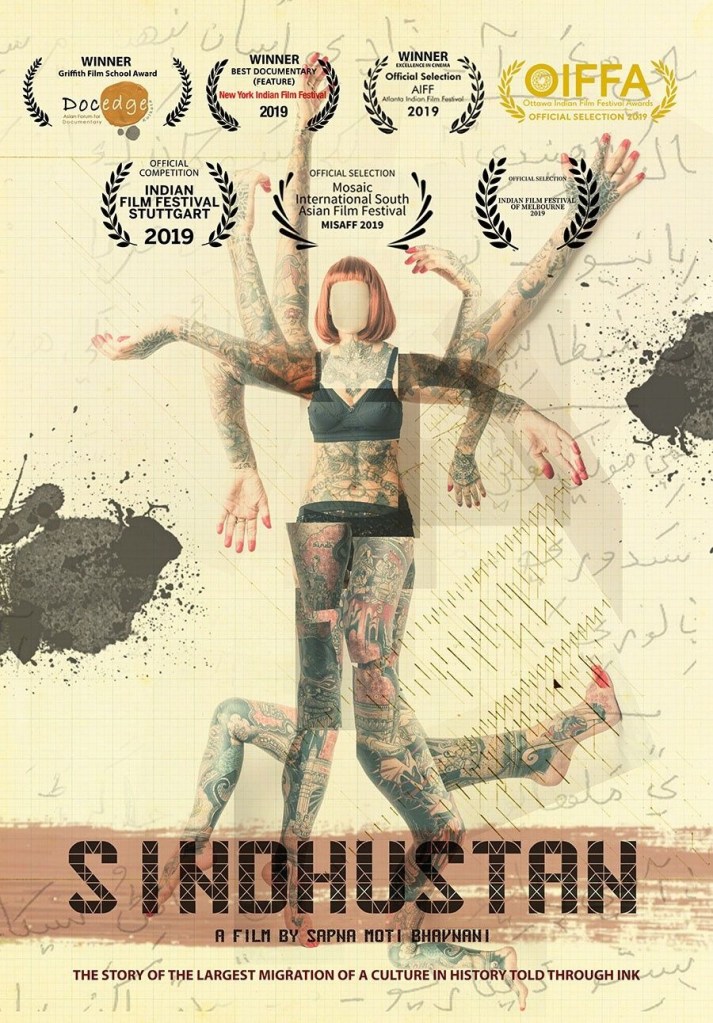
The maiden project by celebrity hairstylist Sapna Bhavnani is a journey to trace her Sindhi roots. The documentary uses food, music, and art forms – Ajrakh and Madhubani – as tattoos to narrate the displaced and dispossessed community’s poignant tale spread over generations.
“All I knew about my culture was Sindhi kadhi,” pronounces celebrity hairstylist and filmmaker in her documentary Sindhustan and on that note, she sets the tone of a poignant tale spread over the last few decades before and after partition to retrace her Sindhi roots. The ubiquitous flavour of vegetable-rich kadhi makes Sindhustan a delectable watch as it meanders through the lanes and bylanes of Sindhis’ memories, whose quintessential identity is synonymous with their kadhi that’s like no other.
Trailer of Sindhustan.
The kadhi also becomes the documentary’s access point; Bhavnani’s aunt Kamla Thakur’s kitchen conversation and verses by the renowned 18th-century Sufi poet Shah Abdul Latif becomes a crucial cinematic tool for the filmmaker. The unobtrusive camera captures her cooking, from start to finish, and the tedious kadhi-making process serves as a metaphor for Sindhis in general and Bhavnani in particular. It manages to create a steady simmer in the storyline, from the moment her aunt places tur dal in a cooker on the stove to painstakingly following the rigours, till it is ready to be served on a carefully laid out table filled with other Sindhi delicacies. The brilliant move not only adds a rich flavour to her storytelling, but the shots, panning in and out the kitchen, and shifting focus on the lives and times of other Sindhis, then and now, takes the story forward. “Food is something big for us, and so it made sense to weave the story around it. Kadhi is my favourite, and it was my only choice because it is also our identity in a way. Also, so many stories happen in the kitchen and around the fire, so it was my best bet,” tells Bhavnani.
The entire process of making a Sindhi kadhi takes about three hours, and Thakur, a chef herself, gives us a sneak-peek into the Sindhi household and tells us how Sindhi kadhi is different from other kadhis in the course of the filming. “It is made from toor daal. We boil it with tomatoes in a cooker, then seave and use the soup, cooking it on slow fire much like a mithai. It is nutritious as we put lots of vegetables in it,” says Thakur.
Another thing that stands out in Bhavnani’s maiden project is the story that her legs carry – the fusion of two dying art forms, one from Sindh and another one from Bihar in the tattoos; while her feet reflect her rootlessness with an image of fish on each to show how the waves have given them a sense of fleeting sand, lashing it with memories, time and again. The use of alta (red liquid dye) to decorate her feet and fingers is another fusion of culture that Bhavnani has used to her advantage in the documentary, and the ease with which she has used ink to tell the story of the largest migration of a culture in history is truly commendable .
“My one leg has motifs from Ajrak, a predominantly Sindhi art form. Here the cloth was first washed in a solution of water and ajrak berries. It was then steamed and stamped with wooden blocks injected with dyes. The printed cloth was then dipped in a solution of indigo and washed in water so that colours came out sparkingly bright. The other leg reflects the popular Madhubani art form from Bihar. The only common thing between the two cultures is fish. It is predominant in Madhubani paintings and also in ours because it is believed that our presiding deity Jhulelal rode a fish,” she recounts. The beauty of this amalgamation in her passion project makes Sindhustan a mini piece of art in itself.
The pain and trauma of those who lived and survived the painful partition echoes louder in each person’s account. Their sense of longing and belonging and connection with the land of their origin – Sindh – where they or their ancestors once lived tugs at the audience’s heartstrings.
Sindhustan is a must watch if you are a Sindhi because it has high nostalgic value.
It is even more important to watch Sindhustan if you are a non-Sindhi because it is a ready reckoner to understand a community that has been dispossessed and displaced but still retains its enterprising, industrious, zealous, benevolent and cosmopolitan nature transcending barriers of castes, race and religion.
Thakur is the go-to person for Bhavnani for food, and she loves to feast on her “Teevan, Sai Bhaji, Seyal Beeh Patata, and, of course, Kadhi on Sundays.” Also, don’t forget to feast on Sindhi kadhi that Thakur’s French neighbours in Paris referred as the water of gods. Bon appétit!
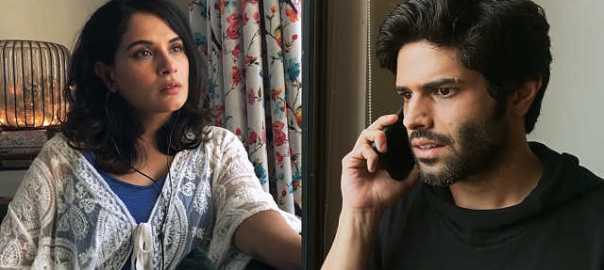
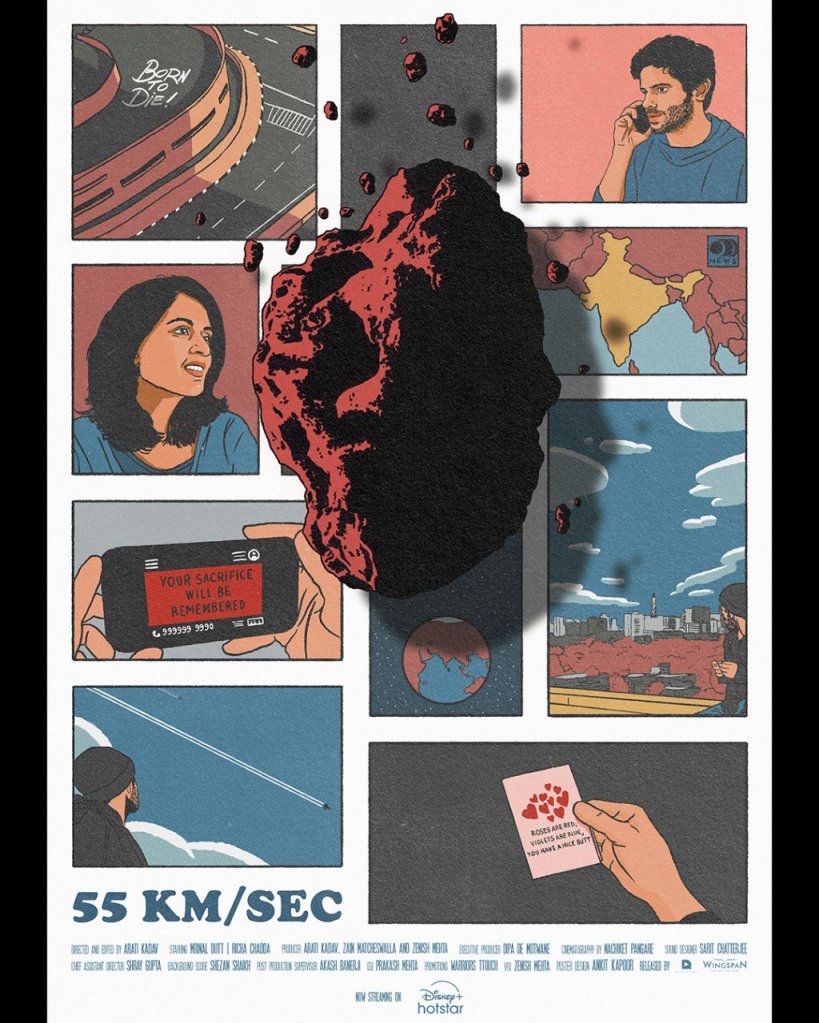
Filmmaker Arati Kadav’s sci-fi short film 55 km/sec starring Richa Chadha and Mrinal Dutt on Disney+Hotstar is a poignant retelling of the year that was for most of us. It is set against a meteor attack and covers the last few minutes before the end comes calling for the two protagonists and all others who inhabit the planet, and it gets over with a bang. At a deeper level, it is an ingenious attempt to look back at the year when the mighty Coronavirus hit the entire world, and a few of our own — relatives, friends, acquaintances — and lakhs of unknown people around the globe became hapless victims of COVID, much like the meteor — Celestine — moving at a speed of 55 km/sec that was about to hit the planet at 3 pm on that fateful day, wiping all traces of life and living out of it. The writing on the walls only adds to the fright factor with the planes zip, zap, zooming in the clear blue sky adding to the woes. The flight service to another safe place is available only to a chosen few. There’s no escape from the impending doom for most of the people as the TV anchors announce, giving hope that they will be together, uninterrupted, with their viewers till end. The deserted streets and quiet supermarket are reminiscent of the times that all of us lived and survived in the early part of the year gone by, so the shots and settings are relatable, as are the video and phone calls. The VVIPs had been safely escorted to a safe haven as the voiceover announced; a few lucky ones had found a place in the underground bunkers of dubious construction quality while others who couldn’t make it to the lottery system were in the queue, waiting for the inevitable end. The government had sent the animal kingdom’s embryos to outer space to save the species from extinction. Just as life seemed slipping away, minute by minute, a bunch of college buddies get together on a video call to bide away time and prepare for the strike of the meteor, together, talking, laughing, and bantering. There is a twist in the tale when the boy Suraj (Mrinal Dutt) confesses his love for Shrishti (Richa Chadha) over the video call, and out of the blue. Perhaps the morbid fear of the end makes him say what he would have otherwise never said. She tells him about the greeting card with hearts that he had received from an anonymous sender back then was actually from her; he finds it lying in one of the cartons and it fuels the spark in his heart. He keeps asking her, “are you alone?” till the voice on the other end, blanks out and with that, his hope of togetherness too. The names of the protagonists are metaphorical. The entire film was remotely shot during the COVID-19 lockdown, and the cast and crew deserve a big round of applause for adapting to the new normal in filmmaking with perfect ease. Their seamless coordination, the frugality of the means and minimalism in the filmmaking approach make Kadav’s effort commendable. The subtle subtext and the deftness with which she handles her subject — questioning the human existence with a lot of empathy — leaves us shocked and awed, in equal measure, at her clever attempt. Her sci-fi gives an out of the world experience that unfolds in a little more than 20 minutes but keeps you gasping till the big thud announces that it is all over, and the blank screen gives way to the credit roll. It’s an escape from the mundane world to the unknown, unheard, unseen and unexplored, and is undoubtedly worth a watch. ~ Shillpi A Singh
Official poster of 55 km/sec designed by Ankur Kapoor.
Ten years after making her directorial debut with Firaaq, actor Nandita Das is ready with her next on the life and times of revolutionary Urdu writer Sadaat Hasan Manto. Starring Nawazuddin Siddiqui in the titular role with Rasika Dugal as his wife Safia, the biopic is set in India and Pakistan and focuses on the period between 1945 and 1949; it is woven around five of Manto’s stories. In an exclusive piece, she talks about Manto, her fascination with his life and work, her Manto-esque father, and why Manto is still relevant today’s times.
Introduction to Manto
I first read Manto when I was in college. A few years later, I bought the complete original works in a collection called Dastavez, in Devanagari. I was struck by his simple yet profound narratives and the way he insightfully captured the people, politics and times he lived in. He wrote as he saw, as he felt, without dilution, and with a rare sensitivity and empathy for his characters.
For years, I thought of making a film based on his short stories, even before I made my directorial debut, Firaaq. In 2012, when I delved deeper into his essays, they helped the idea expand beyond his stories. Today I feel equipped, both emotionally and creatively, to tell this story that so needs to be told.
What drew me to the story of Manto was his free spirit and courage to stand up against orthodoxy of all kinds. He was irreverent and had an irrepressible desire to poke a finger in the eye of the establishment, often with sharp humor. As I plunged deeper into Manto’s life, I wondered why he seemed so familiar. Soon I realized that it felt like I was reading about my father, an artist. He too is intuitively unconventional, a misunderstood misfit, and whose bluntness is not too different from my protagonist.
Resonance with Manto:
It is his fearlessness and a deep concern for the human condition that I have always felt most deeply connected to. No part of human existence remained untouched or taboo for him. For him, the only identity that mattered was that of being a human. Manto’s faith in the redemptive power of the written word, through the hardest times, resonates with my own passion to tell stories. In some mystical way, I feel I am part of that hopeful legacy! Through him, I feel I am able to kindle my own conviction for a more liberal and compassionate world. I feel there is a Mantoiyat, in all of us – the part that wants to be free-spirited and outspoken.
Actor and filmmaker Nandita Das.
My father is very Manto-esque:
My father Jatin Das is an artist and at a person level I feel he is very Manto-esque. In the sense that though an artist he has never really been part of the artist’s market group, as art has also sadly become a commodity. Like Manto, he has also never really been driven by money. He is very outspoken and somewhat a misfit. I’m very close to my father and when I come across struggles of someone who is so honest and wants to speak up all the time. Somewhere I feel that the film on Manto has the power of making a difference. That’s why I want to do films.
This is something that I feel so passionate about because it is a story that I really want to tell. I feel Manto had this feeling that writing and literature have that power of making a difference. That’s why he continued writing even when he was financially in a bad shape and became an alcoholic, especially when he was in Lahore. But he had a belief that his writing can contribute to some kind of change – not that he has ever said it but at a subconscious level he believed it. I think there is a resonance there as well.
Favourite works and why:
When I first read Manto in college, I was struck by his simple yet profound narratives. As for my favourite Manto work, there are many, so please don’t ask me to choose! To name a few, Dus Rupiya, 100 Watt Bulb, Hatak, Khushiya, Khol Do and many more – each one is powerful in its own way. His essays and sketches about people are equally poignant and sharp.
Manto once said, “Why would I undress a society that is already naked? It is true I make no attempt to cover it, but that’s not my job…my job is to write with a white chalk so that I can draw attention to the blackness of the board.” Manto wrote as he saw, as he felt, without dilution.
Relevance of Manto today:
The deeper I delve into this project, the more convinced I am about the relevance of Manto in these times. Not much has changed… almost 70 years later and we are still grappling with issues of freedom of expression and struggles of identity. Even today our identities lie inextricably linked to caste, class and religion as opposed to seeing the universality of human experience. I know he would have had lots to say about the times we live in. It is no surprise that so much is being written about Manto and that many theatre groups are often performing his plays and essays. He was relevant then and will sadly continue to be relevant for a long time to come.
Actor Nawazuddin Siddiqui in a still from Manto.
Struggle for freedom of expression:
Manto never perceived himself to be an activist. He in fact says that ‘as much as Gandhi has to do with films I had to do with politics’. He didn’t feel that he was political and yet he was actually extremely political in all his writings. According to him, what political meant was to understand why things happen the way they happen. In today’s times, we can see this all around – censorship, people who are self-censoring to avoid trouble or moral policing where some group decides that something is hurting their sentiments.
And that is what Manto fought against. He was tried for obscenity six times – three times by the British government and three times by the Pakistani government, just because he wrote about the sex workers. There are a lot of interesting essays. We also have scenes in the film showing the way people attacked him saying that what he wrote was obscene and pornographic and how he defended literature, as his writing was not meant to titillate somebody. His writing tried to understand and empathize with people who are on the margins of society. It was about those people who nobody wants to write about. In fact he also says that if you can’t bear my stories it is only because we live in unbearable times. The stories only reflected what happened in society. So I think it is relevant not just in our South Asian sub-continent but also around the world. Artists, writers, freethinkers, rationalists are all being attacked in some form or the other and are being silenced. Any society grows and develops when you have people speaking up the truth and thinking differently. And if you silence them then what hope do we have?
On Manto being labeled a mainstream or an art film:
I do not like to label films as mainstream or art. And at the end, this film is an artistic expression. Manto was a great writer, and his story will reach out to millions because I think it is very relevant to our times, for multiple reasons. We are still grappling with issues like freedom of expression and struggles of identity. Also we don’t know many of our own writers, artists, scientists, and through them the history of our country and times they lived in. I think people in our country and globally, will connect to the story, as at the end of it all, it is a human story of struggle and courage and the will to speak out and be your own self – something we all struggle with.
(This interview was first published in Air Vistara’s inflight magazine, Vistara, in April 2018)
Abhiroop Basu’s short film Laali is the story of a lonely laundryman played by Pankaj Tripathi. His shop overlooking a busy street in Kolkata is the quietest place because he lives there with his loneliness, nostalgia and truckloads of memories of lost love.
He has a searing pain in his neck, and can’t move it much, but his sweet and docile companion – the clay dancing doll – sits prettily on the shelf above his bed, and moves its neck at the slightest nudge, sometimes with affection and at times in affirmation.
The rickety radio-cum-tape recorder gives him company 24×7 by incessantly playing songs to soothe his lonely heart, and the bootlegger slips in a bottle every night to help him gulp his melancholy.
The late-night radio show anchored by RJ Laali reminds him that neither time stays the same always nor everyone is fortunate enough to get love in life. The other Laali stuck in his head, heart and on the ceiling above the bed, only adds to his insidious sadness. Still unlike these two characters, the man remains the unnamed protagonist of Laali.
The flurry of customers, who come to give him clothes for ironing, and collect it from him with nonchalance after a couple of days, are his only human contact. When he is not ironing clothes, he is lost in his thoughts gazing at the view outside his shop.
The red velvet gown that comes hidden in a pile of clothes one day adds a hue of happiness in his monochromatic existence and breaks the monotony of his quotidian life. He tries looking for the owner but fails. Thinking that it is unclaimed, he decides to keep it with him.
He treats the red dress as a guest and welcomes its presence with warmth hospitality. He showers his affection at the red gown, makes it sit like a princess on a chair, and even sleeps next to it wearing a sherwani that someone had given for ironing the other day.
The next morning, a lady in blue sari (Ekavali Khanna) comes to claim it; the rude conversation wakes up the man from his sweet dream, and he reluctantly hands over the red gown to her. She snatches it and leaves away in a black car. Her fleeting appearance gives the much-needed twist to this simple tale.
Soon after this drama, a wedding procession moves past his shop, and the man who is sitting inside dressed as a groom himself is way too shocked at the turn of events and keeps blankly staring at the joyous crowd.
The metaphor extends in the last scene that pans out with a long shot of the wedding procession. It shows the groom missing from the white horse, which, in a way, poignantly captures the loneliness of the migrant man, who lives in Kolkata all by himself and stays that way till the end. The voice of RJ Laali once again proclaims the irony of time and love, and this man’s experience with the red gown mirrors it to a T.
The highlight of Laali is the story of a man, and explores the shades of his loneliness in the context of a red gown; dialogues are bare minimum but crisp.
The sound design is another highlight. The sublime sounds stand out in the screenplay, and the film’s sound script plays out like perfume, present and yet invisible; one needs to absorb its beauty as it plays out quietly.
The lead actor carries the weight of the entire story on his shoulders, and does a wonderful job of playing a 40 something migrant man from Bihar settled in Kolkata; his measured performance reminded me of actor Manoj Bajpayee’s portrayal of loneliness in Devashish Makhija’s Bhonsle. These two actors are masters of melancholy. They say a lot more when they say nothing and it is the heaviness of silence that adds a lot of weight to their performances, and pulls you in their reel world.
The detailing in each scene is appreciable.
The play of light and dark via camerawork and tight shots in the cramped space add another element to director Abhiroop Basu’s storytelling.
It is a sweet and simple story, meticulously executed and well-told. It is playing at the ongoing Dharamshala International Film Festival till November 4.















 mindthegapalways