Monthly Archives: December 2021

2021: A year of Love, Labour and Loss

Love is a mystery. Love is unitive. Love is how we connect as human beings with one another and with the whole universe together. Love is how we learn, become better, and make the world a better place to live for us and others. Love needs freedom to breathe, equality to thrive, and openness to flow and grow. Love is personal, political, sexual, philosophical, social, historical, metaphysical, transcendental, et al. Sadly, we have only one word to describe such a complex emotion. The ancient Greeks had six different words, but even that’s not enough. 2021 taught me new ways to describe the complexity of love and its various hues. Love lost on many counts, but it miraculously sprang on a few occasions like a phoenix. My LOVE vocabulary was defined and redefined by people who touched my life one way or another this year.

Shillpi a singh

LOVE IS BEAUTIFUL

Ultimately, it’s more useful to see love not as a feeling, but as an act.

Mark manson

It was World Health Day on April 7th, and quite ironically, it was the day when it dawned upon me that an accidental exposure a couple of days ago (because that’s the only time we had stepped out) had compromised the health of my family of four. All of us had started showing symptoms of COVID at a gap of a few days from each other. 

My school friend Aashish Juyal, whom I had known since I was a few months old threatened me that if I didn’t come to see him at Sohna for Easter brunch on the 4th, he wouldn’t talk to me ever. I went with my family. He was writhing in high fever, cough and complaining of body ache since April 5th. His wife got the mandatory tests done when he came home on the 9th, and it was a false negative. Astonishingly. The treating local physician dubbed it to be a case of viral fever. His family didn’t find anything amiss and rightly so because the doctor said so, hoping that it would subside and he would be fine soon. 

A day later, on 8th, I casually informed my writer-filmmaker friend Devashish Makhija (Dev) how the virus had got the better of me/us, and I was suspecting that we were on our way to be COVID positive. He asked me to wait for the tests, and then the results. On the other hand, my school friend Deepa was constantly praying for it not to be what it eventually turned out to be.  

I was wary of informing my sisters and my parents, but I did. In between, Aashish was rushed to a hospital on April 12th; he appeared normal, refused to lie down on the bed in the ambulance, or lie down on the stretcher and even laughed and talked on his way, his wife Divya informed me days later. He was admitted and taken to ICU immediately; his saturation was 31 at that point. He suffered a massive cardiac arrest, and within minutes, a warm, compassionate and beautiful soul had left us wailing and grieving for the rest of our lives. The news hit all of us like a boulder. We were aghast. The bereaved family is yet to come to terms with his untimely demise.  

On the same day, we travelled 25 km in high fever to get our RTPCR tests done; the results came two days later and confirmed our worst fears. The corresponding blood tests done on April 13th made it doubly sure that Coronavirus had invaded our bodies, and with every passing minute, the truant virus was getting bolder and our immune system weaker to stand up to it and fight that war.  

On my sister, Shruti’s insistence, three of us (kids aged 8, 6 and I) started the medication prescribed by the treating physician, but my husband Ajay chose to rely on paracetamol solely, much to my chagrin. He was running a high fever, cough and severe body ache. She was kind to send my brother-in-law Pushp with food, medicines, and coconut water to my place, and in the process, the poor boy got exposed to the virus and tested positive with his little daughter about a week later. By God’s grace, the infection could be managed with home isolation or else I would have been forever guilty.

Dev formed a WhatsApp War Room with other warriors – Anupama Bose, Chhitra Subramaniam, Monica Rajeha, Gillian Pinto, Niiya Kumar, Mayuri Joshi Dhavale, Taranjit Kaur – that worked like a safety net for my family and me. Day in and day out, these warrior members were busy getting food delivered, sending medicines, arranging for a doctor consultation, checking about hospital beds, and above all, assuring me that it is just a phase and it too shall pass. This lovely bunch made me believe that “sometimes miracles are just good people with kind hearts.” Their kindness stood me in good stead all through this crisis. Also, because I knew these people had my back.

Our saturation levels started dipping, and my younger brother Anshuman Sinha suggested that we get an oxygen concentrator at home. I told my father GP Sinha, who is based out of Dhanbad, and he used his vast reservoir of contacts to arrange an oxygen concentrator and have it delivered at home, past midnight on April 14th. Both my younger kid and Ajay needed oxygen support, but there was only one outlet, and both of them took turns, with Ajay sleeping with 5l/minute oxygen support that night. The morning was quite rushed, and I found that his SPO2 was around 92% while my daughter kept complaining that ‘air is not coming in through her nose’. So I let them use it alternatively with different oxygen masks. 

I was alarmed by these two developments and knew for sure that it is getting worse faster than I had expected. All that I had to do next was to keep help handy and immediately look for a hospital with an ICU facility and oxygen bed while thinking of the best and preparing for the worst. At the same time, I was petrified of hospitalisation. I told Dev that ‘if I go to the hospital, I won’t come back. He dismissed it all and texted, ‘of course, you will.’ His words were reassuring, but I still had my doubts like an eternal pessimist. 

The next day, I helplessly informed Dev about our deteriorating medical condition and also put out an SOS tweet at 1.42 pm on April 15th while fixing Ajay’s oxygen flow on the concentrator, and checking his saturation level stuck at 92 at 5l/min, as if calling out the Universe to unite its forces and come to my family’s rescue. I was scared to death. I didn’t know whom to call to seek four beds in a hospital and on an urgent basis.

As a non-celebrity with hardly 800 odd followers on the social media handle, I knew my tweet’s fate… it would slip into oblivion sooner than expected. Who cares for an indie writer’s SOS message? “Can anyone please help find oxygen beds in #Gurugram or #Delhi? My family of four is #COVID positive. Our spo2 is dropping off alarmingly.” I was fatigued with this minor exercise and mental marathon that followed, thinking about – what if no help came about? What would we do? How will we manage this COVID emergency? I put the phone aside and dozed off. I woke up to a flurry of WhatsApp messages from my friends. They had sent me screenshots of some of the responses that my tweet had elicited, especially of #IndianYouthCongress Chief, Srinivas BV. He had tweeted asking me to DM my details, and my friends who knew the urgency started calling me frantically to respond. I did so pronto with little hope. But what followed after this leaves me choked with emotions. 

Within seconds of dropping my number, the National Convenor of Indian Youth Congress (Social Media) and an active volunteer of #SOSIYC, Manu Jain, called. He asked me about my family’s saturation levels and told him that while my elder daughter and I were hovering at 93-94, my husband and younger one were 92 on intermittent oxygen support. He assured me of all possible help. He connected me to a doctor (Dr Komal Panchal from Satyawadi Raja Harish Chandra Hospital in Narela) for teleconsultation, who asked me to monitor our saturation levels and continue the medicine protocol. I requested Manu that I would prefer a government hospital. He said, ‘Don’t worry, we will do it. For now, follow the doctor’s advice.’ He called a few minutes later to inform me that he had arranged four hospital beds in a government hospital, and I could move there if there were the slightest indication that Ajay’s condition is deteriorating. The worst fears came true that night when his saturation dipped to 90 on oxygen support, and I knew home isolation wouldn’t work for him or my younger daughter anymore. His comorbidities added to my fears, and the following day, I called up Manu at 10 am to update him about the saturation status. Upon hearing Ajay’s numbers, he told me to rush immediately to the hospital and gave me the person’s coordinates (Vikas Panchal) at Satyawadi Raja Harish Chandra Hospital, Narela. The comforting bit was that the hospital was willing to accommodate all four of us. 

I informed my co-warriors in the WhatsApp group because they were looking for a bed for us all over NCR, scouring options at both private and government facilities on a war footing. Anupama Bose, or AB as I call her, was quick to send me an ambulance guy’s number that I called, booked, packed some clothes and at 1.30 pm on April 16th, started the arduous journey to recovery. 

We reached the hospital at 4 pm, and by then, Ajay’s SPO2 had dipped to 74. He was wheeled into ICU and while we to the third-floor general ward. My younger one needed oxygen support, and she was put on one immediately. 

Our go-to person Vikas and his wife Dr Komal, who was posted in the same hospital, were just a call away all through. So were Manu and Srinivas, constantly checking on us and taking our health updates with the treating doctor, especially for Ajay. 

The Warrior Squad formed by Dev became my secure space, and I don’t know how much and what all these beautiful souls did to make me stay put and fight it out with all my might, even as they battled with the agony of their near and dear ones becoming COVID positive and losing the battle. But they kept HOPE afloat for my family and me.  

On 20th, my sister Richa and brother-in-law Anudeep got six vials of Remdesivir for Ajay, and by paying an exorbitant sum of money. Ajay’s elder brother Rahul got the first two picked up from Faridabad and dropped at Vikas’ place, who came to the hospital and handed them to Ajay’s doctor. The first two doses were administered on the same day and rest over the next four days. The other four came on 22nd through Abdul, a driver who collected them from Rohini and came to Narela to give them. 

My father got to know about a homoeopathic medicine that was a lung booster. I contacted Deepa, whose husband Divesh (whom I fondly call a magician) got his bureaucratic colleagues in Delhi into action and within hours, I had the medicine with me. Papa scoured his phone book to get in touch with a driver whom he had met on his recent trips to Delhi to deliver some food and fruits for Ajay in the hospital. My second cousin Rachit sent home-cooked food, fruits and everything else that was needed for him. Papa’s doctor friends provided medical guidance and all of them were mighty impressed with the way doctors were going about his treatment. Anshul, my lawyer and brother from another mother, made ample arrangements by putting his clients on the job of sending snacks for my children and coconut water for Ajay in the hospital, and I can’t thank him enough for this.

His saturation dipped to 84 on 23rd and on full flow oxygen support, and I felt I was on the verge of a nervous breakdown. I met a doctor on the round, and he told me, ‘Ajay is very sick, and you need to look for a ventilator bed for him.’ I broke into a thousand pieces that moment. I called up Vikas and then Manu. Both of them reassured that Ajay has been showing signs of recovery and it could be a minor glitch that he will overcome soon. ‘Nothing to worry,’ they said almost in unison. I believed them and went about looking after my children and Ajay. Manu and Vikas were right.

The first bit of good news came on 25th when the doctors told me that my daughters are stable and good to go home in their best interests because they might catch another infection if they stay around any longer. My sister Shruti whose husband Pushp and four-year-old daughter were also COVID positive, pitched in to take them home in Sarita Vihar on 26th, and they were with her till May 10th. It was a great relief because now I had only one child to take care of, Ajay.   

I saw many deaths during my hospital stay, and they all bring an immense amount of pain even to date. I met Gaurav Maul, who was tending to his sick mother Radha, on the same floor. She was on BiPap, and her saturation was fluctuating. She needed intensive care, and despite our best efforts, we couldn’t get an ICU bed for her. She battled a lonely war against the virus in her hospital bed before breathing her last on the 28th. The helplessness still haunts me. The grief is so personal and yet so collective. 

On 29th, around midnight, there was another shocker. The doctor on night duty called me to discuss Ajay’s poor recovery because it was worrisome. He suggested that I take him out of the hospital and get his CT Scan done. It was a sleepless night. I dropped another SOS to my guardian angel, AB, to find a diagnostic centre around the hospital. She found one and booked an appointment past midnight. 

The following day, I signed a declaration form to take Ajay out of the hospital at my own risk. Once again, I dialled Vikas and Manu. Vikas told me that Ajay is recovering fine, and HRCT isn’t required. I requested Manu to help me get a small oxygen cylinder. He knew Ajay’s saturation was 92 then and was reassured that he would be fine without oxygen support for those half an hour while being away for the tests. It was a thriller drama as we left the hospital bed at 12.12 pm on 30th, rushed in my cousin brother’s private car to the nearest diagnostic centre, and came back at 12.53 pm. Ajay was huffing and puffing and his SPO2 without support at that moment when he reached his bed was 77. He was immediately put on full oxygen support, and slowly, he bounced back. 

LOVE IS BEAUTIFUL!

The reports were still worrisome, but the silver lining was his negative RAT and RTPCR tests that came the next day. We were relieved.  

Ajay was on full-flow oxygen support during the first two weeks, intermittent after 15 days and then slowly no support after 17 days. He had his share of injections – antibiotics, anti-coagulant, and steroids – pumped into his veins that helped him get back on his feet. With its minimum resources, the hospital left no stone unturned to offer the best treatment to him, and that’s quite commendable.   

After three harrowing weeks of hospitalisation and near-death experience due to COVID, Ajay was discharged on May 5th, after 20 days. It will be a long road to recovery given the extent of damage to his lungs, but a significant part is hopefully behind.  

My sister Sonali, brother-in-law Rohit and niece Anushka in Mumbai were on their toes, praying and sending me her motivational videos so that I could hold on and not let it slip away. My friends Dev, AB, Chhitra, Taranjit, Mayank Aggarwal, Subha, Nidhi Jamwal, Eklavya Bhaiyya, Deepa, Divesh, Satish, Renu, Pallavi, Saroj, Anumeha, Manisha, Suman, Priyankita, Nikita, Fasiha, Saif, Jaspinder, Nishant, Abhishek, Jolly, Nidhi Sinha, Amitesh… and almost all of them from my family of friends from three schools that I attended, colleges I went to, places where I worked, became my sounding board as I could rant and crib and get back to caregiving business with more vigour. My foster family of Jameel Gulrays Sahab and his wife Rekha Ma’am stood like a pillar during this crisis, and so did my friend Desiree’s father and mother, Khursheed and Pushpa Anwar. I had been a non-believer in healing, but Chhitra and Sonali made me see it in a new light. I was amazed how Manisha, who is settled in Dubai, had a strong intuition and kept texting and calling me when we tested positive; she didn’t buzz off till I told her that yes, we were positive. I think that is the friendship of three decades and its power that helped us heal. My brothers from Northeast – Jyoti, Ziaul and Arghadeep – texted and kept my spirits high all through. My octagenarian school teacher Mrs Vimla Kaul had immense faith that I will somehow sail through, and I am glad I did. My former bosses – P Mohanaiah Sir and S. Manikumar from NABARD – were worried from the day I informed them so they kept checking on me, and motivating me to keep my chin up. And on nights when I was anxious and stressed, I had two options to ease my mind… either call up Deepa and talk to her or go to YouTube and listen to my fav song – I’d Love You to Want Me by Lobo. These voices acted as a lullaby and soothed my frayed nerves.

My mother Shivam Sinha, who had immense faith in her Gods, and in the fact that her daughter is brave enough to defeat this invisible enemy and bring her family out of it, safe and sound, helped me sail through with her willpower once again. It was her faith that silently worked wonders. Papa did everything possible and built a support system around me so that I don’t feel alone in any way whatsoever. Unfortunately, my UK-based sister-in-law Poonam, who was another reservoir of hope for me during this crisis, lost her father-in-law to COVID in Kangra just a couple of days ago. Her husband (in London) and his younger brother (in Bhopal) couldn’t fly for his last rites, and that will perhaps haunt them forever. But that’s how this virus has crippled us. I made a few friends from those days in the hospital. And I hope to stay in touch as a reminder of the grim times that we overcame together.

We as a family are so profoundly touched and overwhelmed by the deluge of goodwill, messages, prayers of one and all. Upon returning home, I checked my Twitter DM, and there were messages from absolute strangers who wished us well and offered help. I don’t know what I have done to deserve this kind of love and support. My heart swells with gratitude at this outpouring. I could not reply to several messages or speak due to my tight caregiving schedule but my heartfelt gratitude to everyone who stood by us and prayed! It’s those prayers and wishes that gave us a new lease of life. And above all, I am deeply grateful to the do-gooder trio – Srinivas, Manu and Vikas – as I lovingly call them for all that they did to save a family from becoming a casualty figure in the second wave of COVID. 

And yes, Dev was right all through. I returned home with my guttural laughter (because I laugh from the gut or so thinks my friend Manish Gaekwad). Exhausted, but still alive and kicking. However, I will never be able to speak to Aashish, never again, and that hurts. It will always do.

2021: A year of Love, Labour and Loss

Love is a mystery. Love is unitive. Love is how we connect as human beings with one another and with the whole universe together. Love is how we learn, become better, and make the world a better place to live for us and others. Love needs freedom to breathe, equality to thrive, and openness to flow and grow. Love is personal, political, philosophical, social, historical, metaphysical, transcendental, et al. Sadly, we have only one word to describe such a complex emotion. The ancient Greeks had six different words, but even that’s not enough. 2021 taught me new ways to describe the complexity of love and its various hues. Love lost on many counts, but it miraculously sprang on a few occasions like a phoenix. My LOVE vocabulary was defined and redefined by people who touched my life one way or another this year.

shillpi a singh

LOVE IS LONELY: Divya Juyal

“Love is so short, forgetting is so long.”

Pablo neruda

Dear Ashish

I wish you could listen to the songs I am playing on a loop because the lyrics speak the words I fail to say, but I want you to know how much it hurts me to let you go. 

You were in such a tearing hurry to leave that you never bothered to give a second thought about how I would cope without you or how children would grow up without their father? We are keeping our chin up for you, but it is easier said than done. Living has become such a drag!  

LOVE IS LONELY: Divya and Aashish Juyal

I would have, like usual, enjoyed the music when you were around, but now I understand the lyrics, and the words pierce like an ice dagger, wounding my heart and leaving it bleeding profusely. The words speak the language of my love and longing for you. 

On most nights, I cry myself to sleep. The glare of the day controls my tears, holds them tight in my eyes, but the night gives them away. So as the silence of the night descends, my tears are on their own again. They flow like a river in rage, walloping over my cheeks, wreaking havoc on my emotions, and leaving me more broken than before. 

You taught us the art of living, but you forgot to give us lessons in the art of leaving. I must tell you that I am not living. I am simply existing. It feels like a war, like a perfect goddamn storm. It seems like the sky is falling in, and I’m the only one to bear the load that I don’t want to. I might not find the words to say, but this song says it for me.

And out of the dark, I hear a voice speaking sense, saying, even love can be so lonely at times. Yes, it is very very lonely without you.

With love, 

Divya

Inheriting six yards of elegance

A full-page dedicated to women, heirloom and nostalgia in The Free Press Journal edition dated December 5, 2021.

https://www.freepressjournal.in/featured-blog/inheriting-six-yards-of-elegance-keepers-of-the-sari-tradition-give-a-glimpse-of-their-prized-possessions

2021: A year of Love, Labour and Loss

Love is a mystery. Love is unitive. Love is how we connect as human beings with one another and with the whole universe together. Love is how we learn, how we become better, and make the world a better place to live, for us and others. Love needs freedom to breathe, equality to thrive, and openness to flow and grow. Love is personal, political, sexual, philosophical, social, historical, metaphysical, transcendental, et al. Sadly, we have only one word to describe such a complex emotion. The ancient Greeks had six different words, but even that’s not enough. 2021 taught me new ways to describe the complexity of love and its various hues. Love lost on many counts, but it miraculously sprang on a few occasions like a phoenix. My LOVE vocabulary was defined and redefined by people who touched my life one way or another this year.

shillpi a singh

LOVE IS STARRY-EYED: Raju Singh

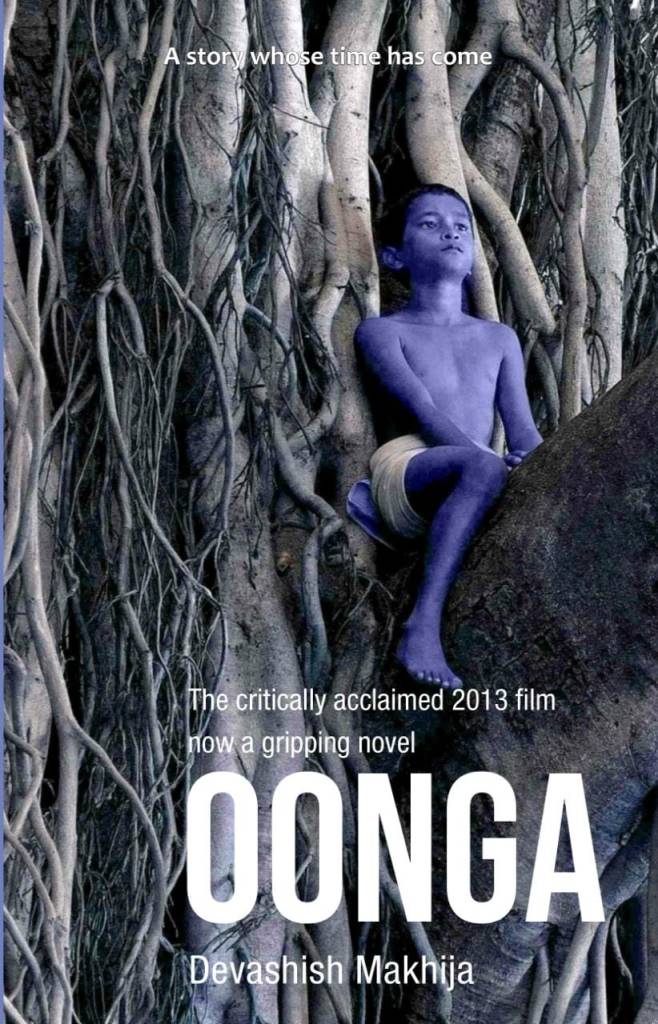
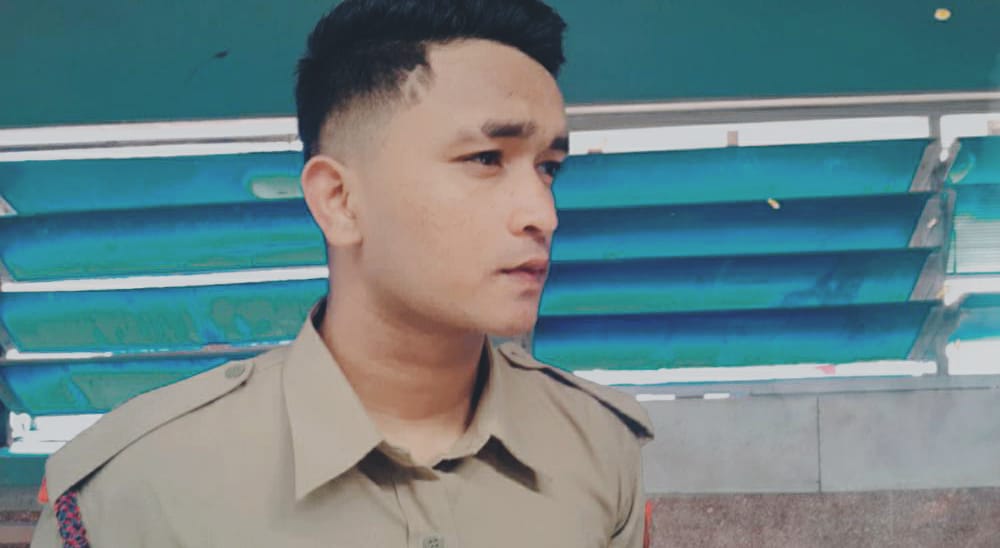
Mumbai-based Raju Singh, 18, who played the titular role in writer-filmmaker Devashish Makhija’s critically acclaimed 2013 film Oonga, is happy as a clam. The reason lies being Makhija’s recently-released novel – Oonga – for young adults that is a reverse-adaptation of his first film. Singh had started his cinematic innings at 9 with Makhija’s directorial debut, and he still hopes to make it big in films to fulfil his mother’s dream. “I have been immortalised in Oonga, the novel. The cover photo of a boy sitting atop a banyan tree branch is mine, and so is the one on the back cover with a bow and arrow,” he says, grinning from ear to ear.  Oonga is the winner of the Neev Book Award 2021 in the young adult category and YathaKatha International Film and Literature Award 2021 for Best Book (Fiction).

LOVE IS STARRY-EYED: RAJU SINGH
(Picture courtesy: Devashish Makhija)

Waiting in the wings

The days spent shooting for the film in faraway Odisha are still fresh in his heart and mind. Reliving his days as the 10-11-year-old Dongria Kondh boy, Singh immediately rattles dialogues in chaste Odia – Ma baygi baygi noyile school pilamane mutti chhaari polayibe (Ma, hurry, or they’ll go for the school trip without me). The impeccable Odia accent is what he had picked up while playing the part of a tribal boy, learning the never-heard language’s nuances from a teacher on the film sets. The film got long over, but Odia is something that has stayed on with the young man of Nepali antecedents, and quite effortlessly. “I enjoyed playing the part of Oonga to the hilt, and it was a dream come true for my mother and me to bag this role,” he says with a twinkle in his eyes. 

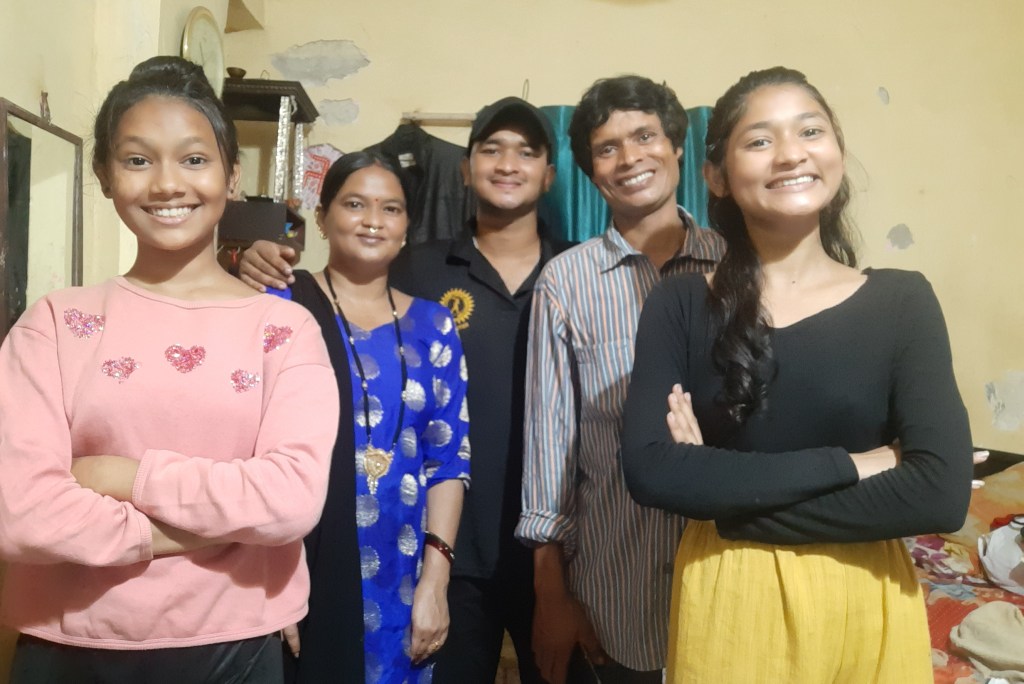
Hailing from a modest background, he had come to Mumbai with his parents when he was barely a year old, and lives in a one-room apartment in Andheri with his family. “My father works as a supervisor, and my mother is house help. I have two younger sisters studying in a BMC-run school here in Versova,” says Singh, who is currently enrolled as an NCC cadet in the senior division because he is keen to make a career in the armed forces. 

LOVE IS STARRY-EYED: RAJU SINGH

His entry into the glamour world was serendipitous, he recounts. “My mother used to cook for one of the casting directors, Prabodh Bhajni. He had been looking hard to find a little boy, who could play Oonga in Makhija Sir’s film, and was visibly perturbed in those days. My mother asked him why and he told her how he had been looking for Oonga but in vain. She volunteered to bring a boy who could do justice to the role, but without telling him that the boy is her son, Raju. She took me to meet him the next day, and that’s how I walked my way into the film, quite literally,” he says with a smile. The audition for the role wasn’t a cakewalk, but his grit and persistence paid off. “I had spent a sleepless night thinking about nothing else, but bagging the role, sharing the screen space with famous actors, having my billboards plastered all over the city, and becoming rich and famous. The serpentine queue of children outside the casting director’s office in Aaram Nagar greeted me, and I was nervous as hell. I somehow pulled through the audition process and knocked everyone’s socks off,” says Singh, who was barely nine then.

He fondly remembers the euphoria that followed. “People in the office were thrilled at this find. They were clapping and calling me Oonga. But I kept reminding them that my name is Raju and not Oonga,” he reminisces with a childish grin. A student of Class 4 then, Singh, was ecstatic at bagging this role and getting a break into the world of entertainment, and his family was over the moon too. “Next day, my parents were called and informed about the shooting schedule. I was thrilled to bits at the prospect of all that lay ahead,” says the Class 12 student at Bhavan’s College, Mumbai. 

Raju Singh poses with author-filmmaker Devashish Makhija’s award-winning novel for young adults, Oonga.

The story of firsts 

He flew for the first time, stayed in a hotel in Odisha, and learned a little about the filmmaking process and people who work behind the scenes during the shooting schedule. “Oonga brought many firsts in my life. I had studied that A for aeroplane while learning English alphabets and used to wave at it longingly but had never thought that I would get an opportunity to board a flight, one day. Oonga gave me wings,” he says. One thing that he realised after this role was that acting is so much more than it appears. “For the first time, I witnessed the hard work that went behind canning a perfect shot. It is a lot of work and involved long hours, but I realised that what keeps one going is the thrill of seeing oneself on the big screen, getting appreciated and recognised, and winning awards,” he says with a sigh. 

Singing paeans to his director’s genius, he reminisces how Makhija took extra care of him on the film set. “I had Odia dialogues and would at times forget them, but he would be patient with me and wait for me to deliver them to perfection,” he says about Makhija. The duo shared an excellent rapport on and off-screen, and to date, he is immensely thankful to him for giving a little boy like him an opportunity to hang the moon and the stars in his directorial debut.

Raju Singh with his sisters Pooja and Komal, father Bharat and mother Meena.

Singh lives with one regret, though. The film won critical acclaim and had a successful festival run, but never hit the theatres, and the fame that he was looking forward to never came his way. “I gave that role my best. If only Oonga had been released here in India, I would have become famous and bagged many more roles. But no one saw me as Oonga, and all my work went unappreciated. I felt terrible. I managed small roles in some films, but like my first, these too failed to hit the theatres,” he says, summing up his acting career. 

The cover image on Makhija’s novel for young adults has sparked that desire to hit the limelight again, and he yearns to get one more chance to make it big in the world of entertainment. “It is my mother’s dream to see me on the television and in films. I tried my luck by auditioning for a reality show after Oonga, but nothing came of those attempts. I want to fulfil her dream,” he says, brimming with hope at the prospect of becoming an actor, once again. 

But till he makes it big, he wants people to buy the book – Oonga – and read the story of a daring little boy who took it upon himself to become Lord Rama and fix the wrongs.       

(https://en.gaonconnection.com/oonga-movie-novel-devashish-makhija-odisha-tribal-adivasi-mining/)

2021: A year of Love, Labour and Loss

Love is a mystery. Love is unitive. Love is how we connect as human beings with one another and with the whole universe together. Love is how we learn, how we become better, and make the world a better place to live, for us and others. Love needs freedom to breathe, equality to thrive, and openness to flow and grow. Love is personal, political, sexual, philosophical, social, historical, metaphysical, transcendental, et al. Sadly, we have only one word to describe an emotion so complex. The ancient Greeks had six different words, but even that’s not enough. 2021 taught me new ways to describe the complexity of love and its various hues. Love lost on many counts, but like a phoenix, it miraculously sprang on a few occasions. My vocabulary of LOVE was defined and redefined by people who touched my life one way or another this year.

shillpi a singh

LOVE IS GRIEF: Dr Amit Gupta

“Being deeply loved by someone gives you strength, while loving someone deeply gives you courage.”

Lao Tzu

While graduating from a medical school, like others of his ilk, Dr Amit Gupta, 39, must have also taken the Hippocratic oath to consecrate his life to the service of humanity and make the health of his patient his first consideration. Little did he know that years later, the oath would be put to test by COVID-19. Dr Gupta is one among those 1,492 doctors, who lived every word of this pledge while being on duty during the first and second waves in India and sadly succumbed to coronavirus infection, according to data released by the Indian Medical Association earlier this year. They are our frontline health workers, our real-life heroes who bravely served their patients without caring for their lives and eventually lost the battle for breath.

LOVE IS GRIEF: DR AMIT GUPTA


It was on April 18, 2021, senior resident Dr Gupta of Satyawadi Raja Harishchandra Hospital (SRCH) in Narela, New Delhi, returned home after being on duty for 80 hours at a stretch. He was doing his job with utmost sincerity. The second wave of COVID-19 was at its peak. Clad in a PPE suit in that sweltering heat, he was there in the hospital, round the clock, and contracted COVID-19 while serving other patients. In spite of his busy schedule, he never forgot to check on others in his family and friend circle who were COVID infected, sending them medical advice and medications as well. The hospitals across the country were fast running out of beds, and oxygen cylinders were scarce, but the doctors were still keeping their chin up and busy fighting the war against the deadly virus, clinging on to hope to save as many lives as possible.
Dr Gupta was initially hospitalised at SRCH for a few days, and then at a private hospital in his neighbourhood, and from there moved to Medanta Gurgaon. The virus had severely damaged his lungs by then. The doctors suggested that he required extracorporeal membrane oxygenation (ECMO) support. His family decided to take him to a hospital in Secunderabad early in May.
Meanwhile, on May 18, 2021, Delhi government health minister Satyendar Jain announced that “the state government would bear the entire cost of treatment because Corona warriors are our strength.”

The Hon’ble minister’s promise gave Dr Gupta’s family immense support, but the official procedures were tardy, and the clearance of bills took longer than usual. The family was back to square one. They were still running helter and skelter, borrowing money from friends, relatives to meet this unforeseen medical emergency. “We spent our entire savings, took huge loans to cater to the medical expenses. Desperate for financial assistance, we even started a fundraising campaign, till the state government cleared a part of the promised amount, and that too after National Human Rights Commission’s intervention,” says his wife, Dr Srishti Mittal.

LOVE IS GRIEF: Dr Srishti Mittal and Dr Amit Gupta

Dr Gupta’s deteriorating condition and the mounting expenses were a cause of concern for the family, but they hoped for the better. “That may be the treatment would work, and he would be fit as a fiddle, if not today, maybe tomorrow for sure. We took loans from all possible quarters hoping to return when the Government would clear our bills because they had promised to do so,” adds Mittal.


The treating doctors in Secunderabad advised lung transplant, and the family left no stone unturned to arrange the organ. The transplant was successful, but the post-operation complications bothered the recovery of Dr Gupta. After a courageous four-month-long battle, he gave up and left for his heavenly abode on August 14, 2021. He is survived by his wife, son, and elderly parents.

DR AMIT GUPTA WHILE HE WAS HOSPITALISED.

Dr Mittal has resumed duty at SRCH, serving patients just like before, deeply engrossed in work, working in shifts, and living up to the Hippocratic oath. It is the same place where she once worked with her life partner, Dr Gupta. Her co-traveller abandoned the journey mid-way, leaving her all alone to put up a strong fight on all fronts, professional as well as personal, but that hasn’t deterred her. She is fighting to clear the debts amounting to Rs 1 crore 67 lakh by following up with the government officials, and once that is done, she will live on for the couple’s little boy and his elderly parents.

Her decision to return to work at SRCH is perhaps a way to beat the deep grief that is like a river — ebbs and flows. It is the last act of love that we give to our loved ones. It is never one thing. It deposits the memory of the past as sediments one day; it eats it away as a shark the next. But it is never one thing. Grief is but non-linear, spread over as carpet of our desire kept under the circumstances: grief ebbs and flows.

Grief is like love. It is a burden and a privilege as well. It is the ache of longing for all that is lost but seeing through the darkness of death, Dr Srishti Mittal is living with gratitude for the gift of time and love she shared with Dr Amit Gupta, and that alone gives her the courage to live on.

2021: A year of Love, Labour and Loss

Love is a mystery. Love is unitive. Love is how we connect as human beings with one another and with the whole universe together. Love is how we learn, how we become better, and make the world a better place to live, for us and others. Love needs freedom to breathe, equality to thrive, and openness to flow and grow. Love is personal, political, sexual, philosophical, social, historical, metaphysical, transcendental, et al. Sadly, we have only one word to describe an emotion so complex. The ancient Greeks had six different words, but even that’s not enough. 2021 taught me new ways to describe the complexity of love and its various hues. Love lost on many counts, but like a phoenix, it miraculously sprang on a few occasions. My vocabulary of LOVE was defined and redefined by people who touched my life one way or another this year.

Shillpi A Singh

LOVE IS MUSIC: The Busking Man

“If music be the food of love, play on,
Give me excess of it; that surfeiting,
The appetite may sicken, and so die.

William Shakespeare

If life is a song, then love is music for Debojyoti Nath, aka The Busking Man. Nath wears many hats. He is a singer-songwriter, busker, life-skills educator, storyteller, and Musart Brigade’s founder. In a heartwarming chat, he takes us along his eventful journey, and gives us a sneak peek into what music means to him… it is love and peace.  

Would you please tell me something about your initial years and initiation into the world of music?

I was born in a small jungle town of Umrongshu in Assam and moved to Shillong a few years later. It was there where my love for music took birth. Being in Shillong, you couldn’t escape music. I would go to the tiny shacks for some tea and momos in the mornings and evenings and invariably find western rock, pop, and folk music playing all day. I started being a part of our school musicals in class four and did it every year.  

I had a very musical family growing up. My father was Indian classical, my mother was Rabindra sangeet, and both my sisters were classically trained pianists. So there was music everywhere. My sister tried to teach me the piano, but I found it intimidating because of a deep-rooted fear of maths. I grew fond of the guitar instead and eventually learnt how to play it by myself. I loved to sing and play the guitar. And after winning the solo singer prize in Class 10, I felt like I made it!

Then I studied in Chennai, Kolkata, Bangalore, and all these places impacted me and the kind of music I listened to or sang. 

Since I was 16 years old, I always dreamt of putting out my album containing my original songs. Nearly two decades later, I fulfilled that dream when I released my album Rolling On under The Busking Man’s name in January 2021. When the album was out on all the major streaming platforms, I felt like I did justice to my life and dreams. And no matter how long it took, I am glad I never gave up on myself.

How did busking happen? When and where did it all start? What was the trigger to embark on this nationwide journey? 

My journey as a busker began after a massive internal frustration of not being able to do my bit to promote Peace and Love in a world filled with hate and wars and violence and brutal rapes, and mindless violence. After the Nirbhaya case that rattled the nation, I was quickly filled with the undying need to do my bit to spread the message of peace and love through music. I was working for the media industry then, and I also got to see the madness of media and how quickly a tragedy became fodder for the media. Being completely disillusioned and disheartened by it all, I was dying to take a stand for myself, if not for what was happening around me. 

Having studied and been inspired by iconic movements like John Lennon’s Bed-In for Peace, the Woodstock concert, the Vietnam protest movement, I knew I wanted to go out there in the masses and sing songs of love and peace. Also, I was 29 going to turn 30, and I wanted to do something for myself that made me happy and content as a human being. 

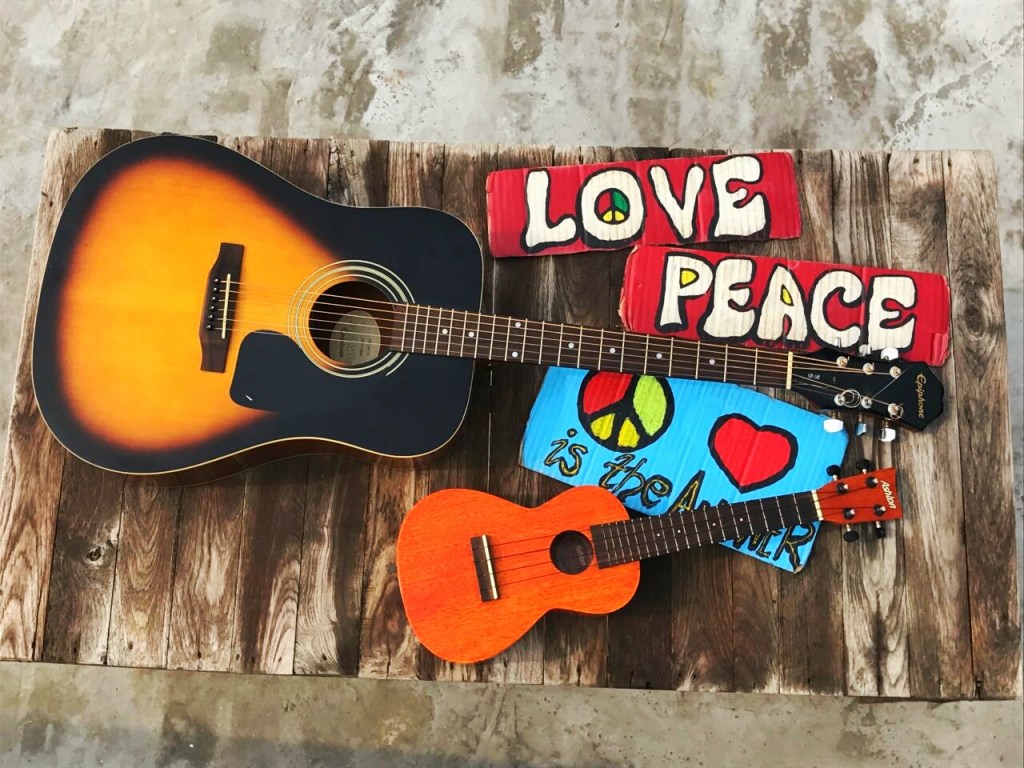
Music is Love and Peace: The Busking Man

So one fine, chilly Sunday morning in October of 2014, I painted a couple of placards with the words Peace and Love and headed over to Connaught Place in Delhi. I hovered around to find a suitable spot, and once I did, I busked my heart out. It was the most incredible feeling ever. Initially, people gave me funny stares, but gradually people stood and heard the songs I was singing and even started donating in my little box.

Literally, two weeks later, one evening after coming back from a frustrating day at work, I almost instantly decided to quit my job and busk around the nation. I wanted to busk in all the 29 states of India and spread the message of Peace and Love through Music. I tried to busk in all the state capitals and other cities as well. I pulled out a map of India from the internet and plotted my journey. That was all that I had planned.

I decided to start my audacious journey on the 1st of January 2015 from Kolkata and reach back home on the 17th of July on my birthday as I turned 30. I wanted to turn 30 on a train back home, and that’s exactly how it happened. 

And so I did. I became the first busker and musician in India to have busked in all the 29 states of India and 36 cities over seven months. It was life-altering. It was my moment of self-actualization. I took trains and buses and shared taxis and even walked. I couch-surfed and also took shelter in a café in the hills. My friends spread the word, and through these connections, I always found a place to stay or find support. I gave up the little savings I had and used whatever I earned on the streets to travel. Later I also ran a crowdfunding campaign to fund a major half of my travels. On average, I would make about 800–1500 a day just by playing on the streets. The earnings from the streets would be more than enough to help me get three meals a day and even shelter in places where I had no contacts. People were extremely generous towards me as well. It was all like a dream.

You have performed abroad as well. How was it different from the Indian performances?

My busking performances aboard were more novelty and tributes than a complete busking set. I played my original song on the hallowed grounds of Woodstock at minus 14 degrees because I just had to. I also performed in New York at the Lennon memorial in Central Park. 

These were more for myself as I played in some of the most iconic spots in music history and that in itself was a big deal for me.

What has been the most memorable busking experience? And why? 

This is a tough one to answer. To date, every place that I have busked is super special to me. But if I had to answer, it has to be the first time I ever busked in my life in Delhi. I chose that because it is where everything started. That one and half hours of busking changed everything for me. It gave me a new identity as The Busking Man, it gave me direction for my future, and it was instrumental in helping me take control of my life and focus on the things I wanted to do. 

How was the crowd experience? Did you feel let down anytime? 

The crowd experience was magical. For me, it was the crowd experience that made everything worthwhile. An artist is nothing without an audience. People gave me love, and I will always be grateful for that. 

Every place I went to and performed, at least one or two people would stay till the end to have a conversation, and those conversations are priceless. Those conversations made me a more empathetic human being. They would share their life story and how they wish they could do something else from what they were doing. I met people from all classes, religions and economic backgrounds, and it helped me understand people a little better. Everyone has a story to tell, and I was all ears for every one of them.

What stood out at the forefront of my busking journey was the power of music. Music was the key. It did not matter what genre it belonged to or what state I was in. I truly understood the power of music by being on the streets in all the 29 states of India. Wherever I went, people understood music, even if it was not in a language they understood or spoke.  

Initially, I would only sing in English and literally, in the second city I went to, Jaipur, I was standing in front of the Hawa Mahal and singing English songs. People loved the music but did not connect to the words. I sang about people and love and non-violence, but no one could understand. So I instantly composed a Hindi song called Nafaratey Bhulao Yaar, that said everything I stood up for. It was just a couple of lines. And as I sang it, I could see the people instantly understanding the words, and they had smiles on their faces. So I made it a point to include multiple languages whenever I sang. I sang, mimicked or tried to sing songs in Hindi, Punjabi, Tamil, Bengali, Khasi, Assamese, Nepali and Spanish. From Kashmir to Kanyakumari, Lucknow and Jaipur to Shillong, Manipur and Nagaland, no matter where I performed, people danced and enjoyed themselves with this odd guy singing on the streets with his guitar.

No matter what genre I sang, I made sure I sang songs that would make people dance or groove or casually headbang or bob their heads and tap their feet. Every day was a performance. I did not want to be meek in my performance. I wanted it to be explosive and joyful, and thought-provoking. Even though technically it was a ticketless concert, I did not take it lightly or take it for granted. I gave it my all, and the audience gave me theirs. All I wanted to do was spread love and music and make someone’s day a little happier and brighter. And invariably, they would give me back all the love tenfold. It was a win-win for me wherever I went. 

I never felt let down in all these years. On the contrary, I have only received more love and care and compassion. I feel I let myself down if I don’t give my 100 per cent in the performances. 

How is busking different and the same as doing a live gig in a ticketed event? 

Busking is vastly different from doing a live gig as a ticketed event. It’s almost at the other end of the spectrum. When someone busks, no person is obligated to stop and stand a listen to your music. If they find you and your music appealing, you might gather up a crowd.

Also, no one is obligated to pay you for the music or your performance. It usually depends on the kindness and generosity of people. 

Coming to the logistics, I have never busked using a microphone or a PA system. So I had to be louder than the traffic or the hustle and bustle to be even heard. It’s great that I am generally loud when I sing, but I also had to maintain my voice and fitness to do so day after day for seven months while travelling. 

Busking also eliminates any boundaries of privilege. Everyone has access to a busker, just like radio. It is free and your choice whether to listen or not.

The Busking Man and his journey

You have beautifully documented your busking journey on the website. Do you intend to bring out a memoir? 

Thank you so much. It took a long while to do that, but I am delighted I did. I put the entire journey as posts on my Instagram. Photo memoirs with stories. I made the whole thing during the pandemic. I have always wanted to write a memoir and put it out but lacked confidence initially as a storyteller. But having made this photo memoir and having received positive feedback, I can see there is a possibility to pen down a memoir. https://www.thebuskingman.com/

You are a busker, teacher, coach or musician-singer-songwriter. Which role seems easier? 

At many levels, all these are very closely interconnected. Having developed a love for music led me to become a musician. Being a musician helped me become a busker, being a busker helped me become a singer-songwriter, which led me to become a teacher eventually. 

So it is pretty easy for me to switch between any of these roles as I am deeply passionate about each one of them. 

Being a musician and a music and arts educator are two roles I love.

What do you do as a corporate music wellness coach? 

As a corporate music wellness coach, I conduct various workshops based on the preferred modules that I have created. The wellness organization Good Lives have tied up with me to conduct workshops as well. I usually work around three main umbrellas — music wellness, mindfulness and expressive arts and lastly, sound therapy. I have developed modules based on each one of these comprising of various activities and instruction based tasks.

Please tell us briefly about Musart Brigade? How did it happen? Why is it Musart and not Mozart?  

Musart is an amalgamation of music and art. Musart Brigade happened when I lost my job from the NGO I used to teach the children of South Delhi Govt. schools. It was in the middle of the pandemic, and I was quite heartbroken. But instead of being sad and dejected, I took this as an opportunity to start something of my own and take my love for teaching a little further. 

So I teamed up with one of my colleagues from the same NGO we taught together. And after a lot of brainstorming, we came up with the teaching initiative called Musart Brigade.

Since taking physical classes was not possible as every school was shut for the pandemic, we decided to start giving online classes. My friend parted ways a little later, and I continued with the Musart classes. And now Musart has completed a year this November, and I can proudly say that Musart has reached close to 500 online classes and collectively will have done over 20 workshops, big and small.

How do you see busking gaining popularity in the age of social media? 

Busking is super popular in the western and Latin American countries like America, Europe, UK, Australia, Brazil, Argentina etc. Some of today’s most prominent musicians started as buskers such as Ed Sheeran. And now, with social media, a lot of buskers have gained a significant fan following. It is a brilliant exposure and also free marketing for buskers. 

In India, it is a whole different story. Busking is something that is very, very niche but slowly picking up some steam. 

The Busking Man is music personified.

What are the legalities of busking? 

What is interesting is that busking abroad has a well-controlled and regulated system. There are unions for buskers where every busker is auditioned and then assigned a spot in the city. For buskers, finding that perfect spot for busking is vital. 

But in India, we are still far from having a body that regulates and encourages busking. When I started out busking, I did not need any permission. I also made sure I did not have any logistics that would require me to take prior permission. I always sang and played the guitar without any amplification. 

But suppose a busker decided to go busking with some PA. In that case, it is always wise to check and ask around with the local authorities, police or the district municipality to avoid any kind of legal or police confrontation.    

What is the future of busking in India? 

I think the future of busking in India looks promising as new buskers come popping up in street corners and perform. I still keep receiving emails and messages from young buskers and musicians asking me about my experience and how to start busking. 

Receiving these makes me happy, and I hope more artists, musicians, dancers, painters, theatre artists make the streets their stage and brighten up people’s lives. 

How often do you see buskers in India? 

When I started, there were hardly any buskers I encountered during my travels, except for Mumbai, where I performed with two other buskers. But through the years, I saw a lot more buskers on the streets. 

Busking in India has always been there in the forms of nukkad natak, and in local trains or our dingy street corners, we mostly never called them buskers. We mostly called them beggars. I used to wonder how there could be privilege or class in busking till I started busking myself. I am privileged who can busk for music and passion and the pure love of it. For many people, busking is the only way to make a living for themselves or their families.

But if I ever encounter a busker, I sure do stop and listen to their performance and put some money in their hats or boxes. I know it can make their day.

Would you like to comment on Shakeel, who recently gathered ample funds for his music school by busking in Mumbai? Or Varun Dagar, who went on to taste fame by participating in the dance reality show?

Shakeel and Varun are doing something very inspiring, and their art is taking them to the next level of their lives. Doing your art for a cause is something to be appreciated. Busking in itself, I feel, is already a way of giving back to society. And when someone does it for a good cause, it doubles up the satisfaction. 

I hope more people, young and old, get inspired by people like Shakeel and Varun and spread the joy of music and the arts in every street.

HE IS MUSIC.
MUSIC IS LOVE.
LOVE IS PEACE.

2021: A year of Love, Labour and Loss

Love is a mystery. Love is unitive. Love is how we connect as human beings with one another and with the whole universe together. Love is how we learn, how we become better, and make the world a better place to live, for us and others. Love needs freedom to breathe, equality to thrive, and openness to flow and grow. Love is personal, political, sexual, philosophical, social, historical, metaphysical, transcendental, et al. Sadly, we have only one word to describe an emotion so complex. The ancient Greeks had six different words, but even that’s not enough. 2021 taught me new ways to describe the complexity of love and its various hues. Love lost on many counts, but like a phoenix, it miraculously sprang on a few occasions. My vocabulary of LOVE was defined and redefined by people who touched my life one way or another this year.

Shillpi a singh

LOVE IS HOPE: Suman Rajat

“Hope is being able to see that there is light despite all of the darkness.”  

Desmond tutu

Do you know what did the COVID-19 virus tell Delhi-based Suman Rajat? “I came, I saw, but I couldn’t conquer you.” Suman fought tooth and nail for two and a half months in the hospital and still suffers from symptoms of long COVID, but she’s one of the lucky few who managed to walk out of the hospital after a long and arduous fight with the virus.
“It’s been seven months now, but my lungs are still reeling under the impact of the virus. HRCT score is worrisome. The virus has impacted my neurological health as well, the doctors say. But then the worst is behind me is what I feel right now as I look back at the life-altering experience of 2021,” says the teacher, who gives a lesson in resilience to one and all with her indomitable spirit.
As an external examiner for the board exams, she was on duty in the government school when the COVID symptoms knocked her down. “It was on April 12, and I suddenly started feeling sick while checking the papers. I got myself tested once. It was negative. Then I went for a repeat test. It was positive, and I couldn’t take any chance. I was wheeled in the hospital after my oxygen saturation started plummeting on April 15. My comorbidities made it imperative to put me under intensive care,” she recounts. The high blood pressure and diabetes added to her COVID woes. While in hospital, on April 26, 2021, her SPO2 sank to as low as 37%, and it got scarier with every passing day. She was administered two units of plasma and six doses of Remdesivir. The para monitor sitting atop the slab next to her bed kept beeping 24×7. After all, it had the onerous responsibility to count her heartbeat and pulse rate. In a way, it gave a real-time account of how the oxygen-supported respiratory mechanism was helping her breathe, and with great difficulty.


“It could have either gotten better or worse from that moment. I was comfortably numb by then. By then, none of the people around me in that intensive care ward had survived the virus, except one. They were falling like flies. To see death all around shattered me to the core, but I knew it was about either fight or fright. I didn’t want to give the option of flight to myself,” she reminisces.
Her husband Manoj, too, had contracted COVID by then. He came to the hospital on the night when her saturation levels and pulse rate were playing truant and stayed back to look after her. He, along with the doctors, nurses, support staff, saw a miracle unfold as she started showing slow signs of improvement, and in May, she was sent away to the general ward. From being on full oxygen support, she came to 4l/minute, and her saturation hovered around 88-92%. She remained on oxygen support until she was discharged from the hospital on June 30, 2021. She survived the deadly attack of the virus by clinging on to hope with all her might and putting up an intense fight.
“ACP of Narela, Dr Nirav Patel ji and Dr Yashpal ji stayed were in constant touch with the attending doctors at the hospital – Satyawadi Raja Harishchandra Hospital – and provided continuous help with the treatment. During this crisis, Balbir Singh, Ranjana ji, Balbir Antil ji and Anita Antil ji gave moral support and motivational guidance, and I thank all of them. Harish and Manjit Bhai helped me with the plasma donation, and that’s what kept me going. My family stood like a rock during this crisis and helped me beat this virus. I will be forever indebted to them,” she says.

LOVE IS HOPE: SUMAN RAJAT
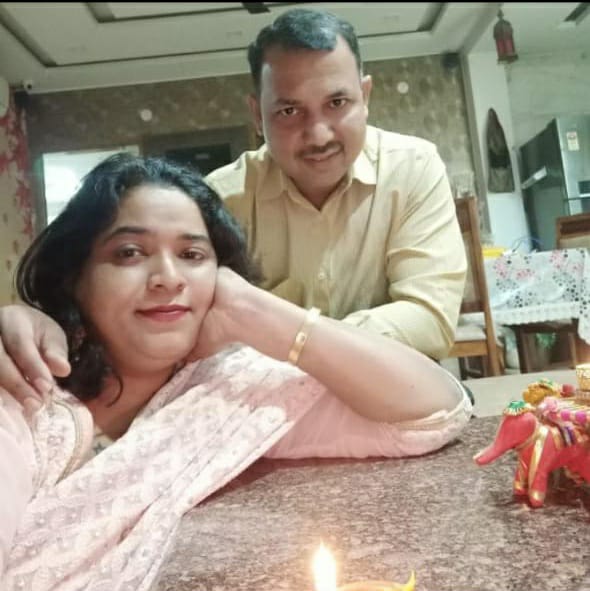
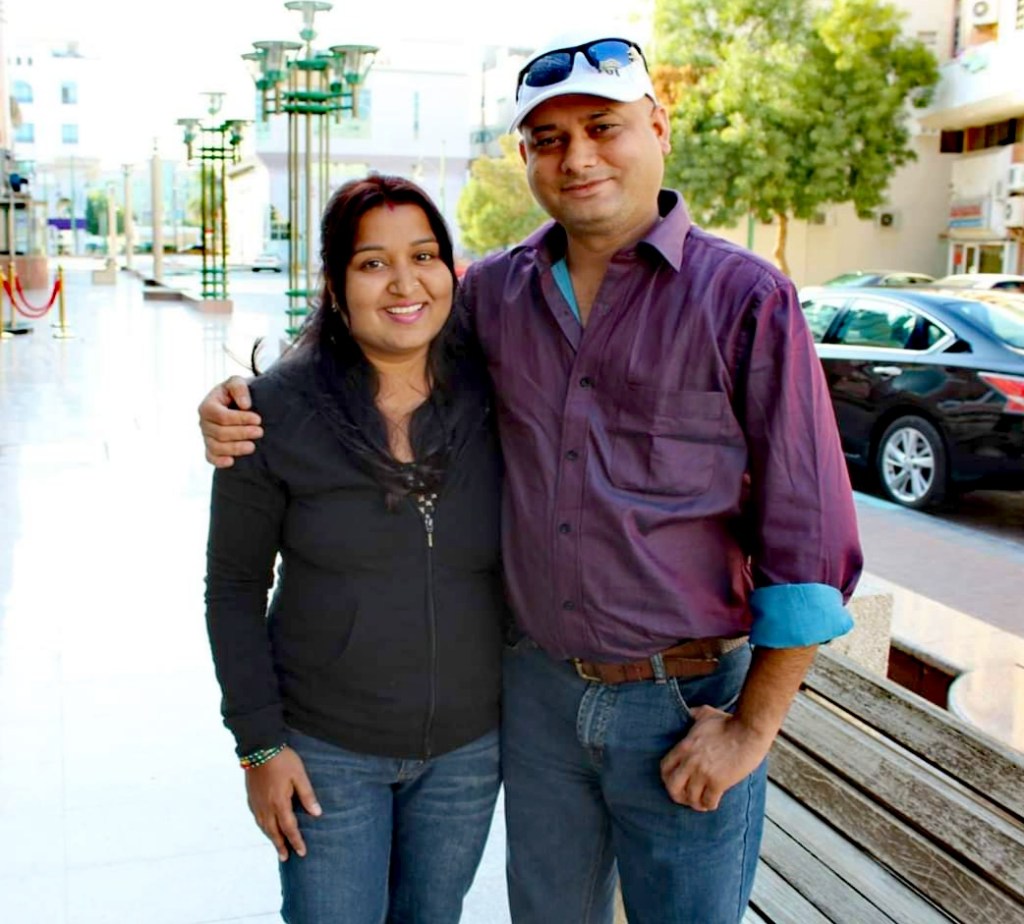
Love is Hope: Suman and Manoj

जिसके होने से मैं खुद को मुकम्मल मानती हूं, मैं खुदा से पहले मेरे परिवार को जानती हूँ। जब हमारी जिंदगी में कोई परेशानी आती है, तो उस परेशानी से लड़ने के लिए सबसे पहले जो साथ में खड़े होते हैं वह होते हैं परिवार के लोग और जब हम उस परेशानी से बाहर आते हैं तो हम सबको थैंक्स बोलते हैं, पर उन्हें थैंक्स बोलना भूल जाते हैं जो हमारे दिल के सबसे करीब होते हैं । लेकिन मुझे लगता है कि मेरी लिस्ट लम्बी है ।थैंक्स के पहले हकदार हैं मेरे पति मनोज जिन्होंने अपनी सेहत की चिंता ना करते हुए मेरी दिन रात सेवा की।मेरे माँ-बाप, भाई जिन्होंने मुझे बचाने के लिए रातों की नींद को खो दिया और भरसक प्रयास करते रहे कि मुझे हर सुविधा मिल जाए जिससे मैं अपने घर सही सलामत आ जाऊं।भाभी, जिन्होंने खाने-पीने का इंतज़ाम किया, पसंद के साथ-साथ सेहत का ध्यान रखा, उन्हें प्यार और आभार । मेरी बहनें, जीजा जी, मामा जी, बच्चे, कुल मिलाकर सभी लोग जिन्होंने मुझे इस बीमारी से लड़ने की हिम्मत दी उन सभी को साधुवाद।सबके हाथ प्रार्थना से जुड़े होते थे और वह सब निरंतर इस प्रयास में व्यस्त थे। ईश्वर ने उनकी प्रार्थना सुन ली। बस एक आस जुड़ी थी – वे सब चाहते थे कि एक सकारात्मक परिणाम आ जाए । जानते हैं उनके लिए धन्यवाद क्यों नहीं निकलता? क्योंकि उनके लिए शब्द नहीं मिलते । एक धन्यवाद कहना ही काफी नहीं होता । उनका प्यार अमूल्य है । उनके आगे हर चीज नतमस्तक है। धन्यवाद !

Suman rajat


She’s our fighter.
She’s our winner.
She’s our hope.
She’s one among the countable few happy stories from 2021.