2021: A year of Love, Labour and Loss

Love is a mystery. Love is unitive. Love is how we connect as human beings with one another and with the whole universe together. Love is how we learn, become better, and make the world a better place to live for us and others. Love needs freedom to breathe, equality to thrive, and openness to flow and grow. Love is personal, political, philosophical, sexual, social, historical, metaphysical, transcendental, et al. Sadly, we have only one word to describe such a complex emotion. The ancient Greeks had six different words, but even that’s not enough. 2021 taught me new ways to describe the complexity of love and its various hues. Love lost on many counts, but it miraculously sprang on a few occasions like a phoenix. My LOVE vocabulary was defined and redefined by people who touched my life one way or another this year.

SHILLPI A SINGH

LOVE IS EQUALITY: Tribe of Penguin Dads

Penguin dads are redefining the rules of parenthood by ‘mothering’ their children. Meet the waddle, who are busting the pre-defined and gender-dictated notions and social norms and taking up daddy duties, and for good. 

Bengaluru-based IT professionals Abhinav Sitesh and his wife Natasha welcomed twin girls – Abhisha and Naysha – into their lives in December 2016. The couple’s joys were doubled, and so were the duties and responsibilities that came along in their new role. “Natasha’s post-delivery complications had left her bedridden. We had no family support around, so I was on double duty. I had to take care of the little ones’ feeding, bathing, massaging, cleaning poop, pee, and puke, plus putting them to sleep. With two of them, it was around the clock job, from then to now, and to add to my woes was my work-from-home arrangement for an important office assignment,” recalls Sitesh, who had to give paternity leave a miss to do the due as a ‘working father’. He has since then chosen to WFH and is one of the many young fathers, who are happy to be on daddy duty 24×7 and find the newfound role to be far more enjoyable and satisfying. “When one of my children was diagnosed with autism, I knew that here on, I will have far more responsibilities to shoulder. A lot more interventions are required at my end to ease it out for them,” he says. The couple relocated to Lucknow from Bengaluru in March this year so that his children could be around their grandparents, relatives and other extended family members.   

LOVE IS EQUALITY: Abhinav Sitesh with his twins.

Parenting as a joint venture

In a traditional setup, the onus often falls on a mother to raise the child, and she eventually becomes the sole nurturer, while the father’s role is to earn, and he is considered more of a provider. Delhi-based sports journalist Nishant Singh, who is married to news anchor and correspondent Rajani Sen, belongs to the new creed of fathers and is happy to ‘mother’ his two boys, Adamya and Sahishnu. “The societal norms are changing, and our generation is making necessary contributions by shattering the stereotyped, gender-defined roles at home and outside. What a mother does, a father can do too, and a couple is in this parenting business together, isn’t it?” asks Singh. As a father, he is quite hands-on in raising his children and loves to do it all, be it helping with their studies, taking them out to play games or participating in extracurricular activities. As his wife recounts, “Adamya had to wear a rainbow-themed shirt to school, and she was in office in the evening shift, and by the time she came home, Nishant had used his creativity to colour a white shirt and keep it ready for his school.” 

LOVE IS EQUALITY: Rajani and Nishant with their children.

Parenting coach and author of a parenting book ParenTeen Prakriti Prasad agrees with Singh on the shared responsibilities while raising a child. “Conceiving a child is a joint endeavour of both parents. I don’t see why and how nurturing that infant, toddler, adolescent or even a young adult became the sole responsibility of the mother with the father acting as a mere spectator, supervisor or sometimes a visiting faculty, with minimal involvement in parenting,” she says.

Starting point 

A father playing an active role in raising his children becomes a talking point because it has been an exception and not a rule. As a father of seven-year-old Sadgi, author and columnist Pankaj Ramendu, who chose to stay at home to take care of her since her birth, while his wife Kalpana pursued her career ambitions, rues, “Why do people find it unusual? It is because our previous generations have been raising children with a set mindset. We have never questioned the existing gender roles in our society because we have been conditioned to accept it as a norm.” 

LOVE IS EQUALITY: Pankaj Ramendu with his daughter Sadgi.

Contextualising the parenting dynamics, Prasad adds, “Indian dads have traditionally just been onlookers of their newborns or enforcers of discipline in their growing up years. It’s both heartening and relieving to see this burgeoning trend of hands-on dads, what you call ‘penguin dads’ now in India too. Millennial fathers are taking paternity leave not just to revel in the birth of their child but chipping in with staying up the nights, changing diapers or bathing and feeding their infants.” 

Ramendu believes that a man has never been taught to shoulder this responsibility and participate in a child’s upbringing because this idea has been perpetuated to suit the patriarchal setup. “It is all about gender equality, something which has been an oft-neglected issue. Motherhood is an emotion and not a gender-specific category to bracket a parent. A father can have the same emotions and fit in the role of a mother well if given a chance,” he says.  

Changing the rules 

Bengaluru-based Prithvi Ramachandran has dabbled in many trades, most notably being the Bengaluru casting director for the Oscar-winning Ang Lee film, Life of Pi, but one role that he is content with the most is the role of a do-it-all dad for his two boys – Mir and Arya. “I have been a stay-at-home dad since my elder son was born, although the terminology might be disputed since the pandemic began and everyone else also began to stay at home! My wife Ruhi works full time and has had a demanding career for over 25 years,” says Ramachandran, who decided to take an active role in children’s upbringing. He takes care of school drops/pickups, organizing playdates, and cooking/ensuring healthy meals and snacks, and the couple takes turns reading stories to kids at bedtime. 

A father doing it all for his children, more than the mother, makes his role conspicuous to others, and there is a fair share of challenges all through. “However, much I’ve had to swallow my ego and deal with disapproving looks, snide comments from friends and relatives, and a general giving up of power, I feel blessed that I have been able to spend so much time with my children and dogs. Having children, watching them grow and experiencing with them the joys of the simple things in life helped me realize what life is truly about,” says Ramachandran. 

It is a win-win situation for all three parties – the mother, the father and the kid. While the overworked mom gets a breather, dad his share of unique bonding and the kid thrives in an atmosphere of love and attention. “These children are bound to share a much deeper bond with their fathers. Besides, I think this will also reverse the archaic gender perceptions about fathers being the breadwinners while mothers being the nurturers, something we’ve unwittingly been passing on to our children,” advises Prasad.

Two-gether is the way 

The tribe of penguin dads is growing because these men want to reverse the outdated concept of bracketing a mother as a nurturer and a father as a provider because these gender-defined roles have blurred. Sitesh fondly remembers how his equation with Abhisha and Naysha is in complete contrast to what he shared with his dad. “I like it this way – open, warm and affable,” he says. Like Ramendu, Ramachandran too believes in gender agnostic parenting and says, “Men being involved in the raising their children is the way it ought to be. It is challenging enough to leave it to just one person. As the saying goes, it takes a village, and all that.. the more hands, the better.” 

But Prasad is amazed and also amused to see only mothers flocking parenting workshops and sessions. She encourages both parents to attend such sessions or their children’s PTMs or school events to keep parenting even-keeled. “It goes a long way in boosting the child’s confidence and self-worth besides strengthening their bond. When both parents work as a team to bring up their children, the child grows upon the firm foundations of love, understanding and belief in each other. Such children grow up to display positive traits,” she reasons.

The article was carried on Father’s Day (June 20, 2021) in The Free Press Journal; https://www.freepressjournal.in/weekend/fathers-day-2021-meet-the-new-tribe-of-do-it-all-penguin-dads

2021: A year of Love, Labour and Loss

Love is a mystery. Love is unitive. Love is how we connect as human beings with one another and with the whole universe together. Love is how we learn, become better, and make the world a better place to live for us and others. Love needs freedom to breathe, equality to thrive, and openness to flow and grow. Love is personal, political, philosophical, sexual, social, historical, metaphysical, transcendental, et al. Sadly, we have only one word to describe such a complex emotion. The ancient Greeks had six different words, but even that’s not enough. 2021 taught me new ways to describe the complexity of love and its various hues. Love lost on many counts, but it miraculously sprang on a few occasions like a phoenix. My LOVE vocabulary was defined and redefined by people who touched my life one way or another this year.

shillpi a singh

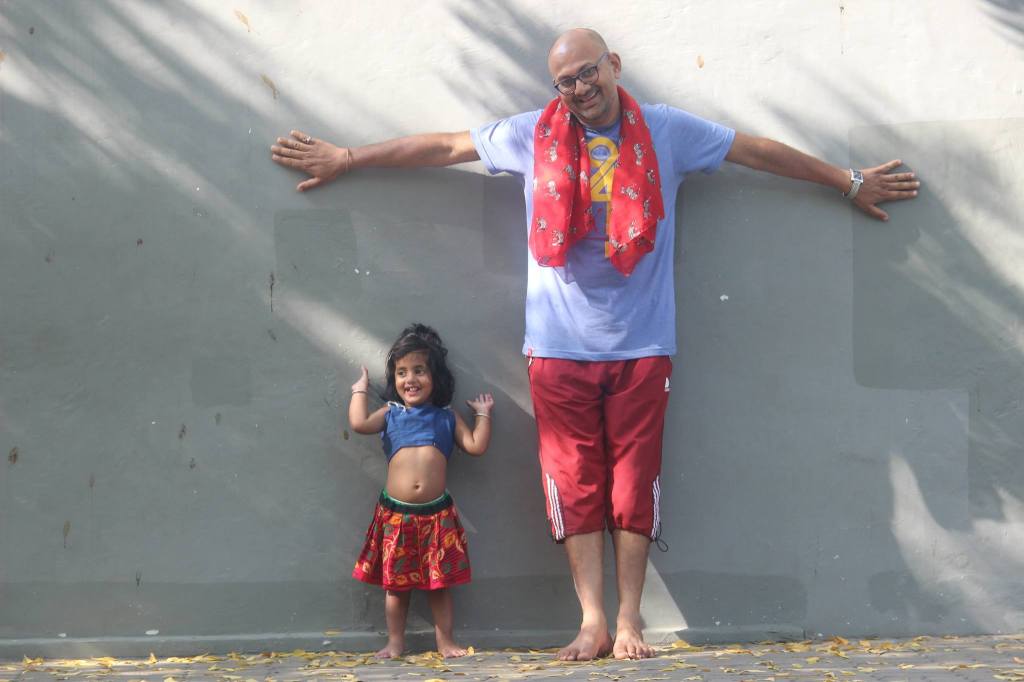
LOVE IS DIVERSITY: Kalki Subramaniam

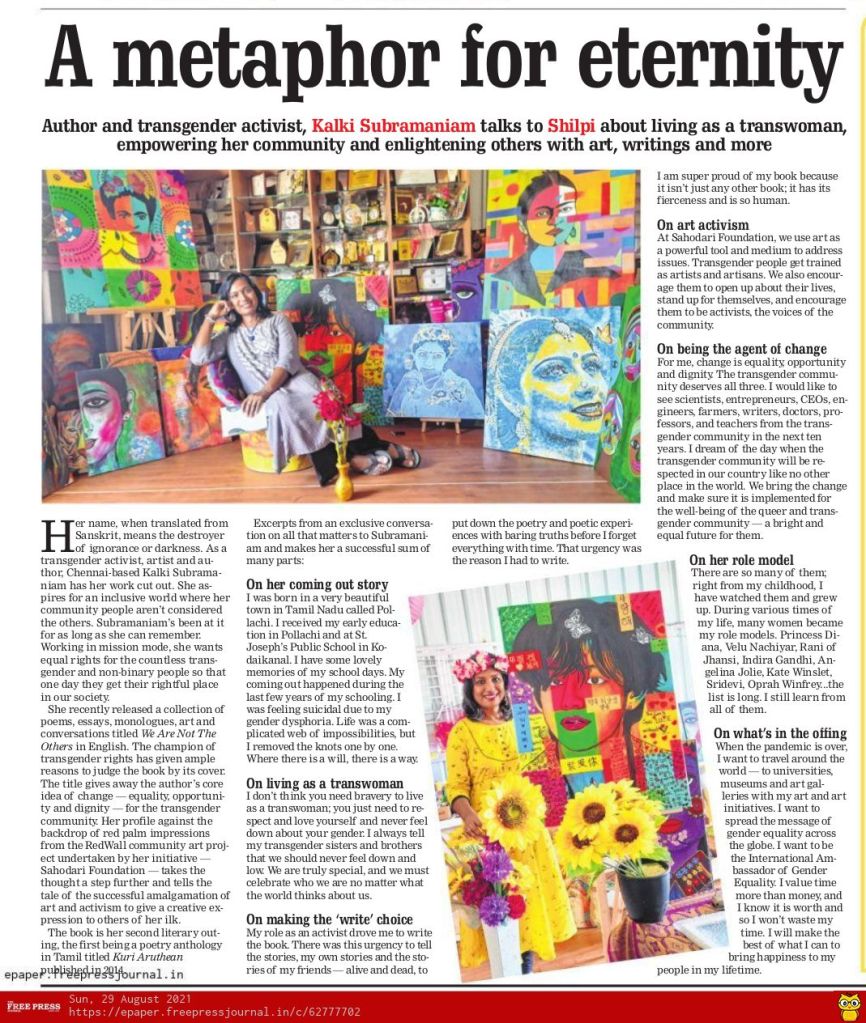
Her name, when translated from Sanskrit, means the destroyer of ignorance or darkness. As a transgender activist, artist and author, Chennai-based Kalki Subramaniam has her work cut out. She aspires for an inclusive world where her community people aren’t considered the others. Subramaniam’s been at it for as long as she can remember. Working in mission mode, she wants equal rights for the countless transgender and non-binary people so that one day they get their rightful place in our society.     

LOVE IS DIVERSITY: Kalki Subramaniam

She recently released a collection of poems, essays, monologues, art and conversations titled We Are Not The Others in English. The champion of transgender rights has given ample reasons to judge the book by its cover. The title gives away the author’s core idea of change — equality, opportunity and dignity — for the transgender community. Her profile against the backdrop of red palm impressions from the RedWall community art project undertaken by her initiative – Sahodari Foundation – takes the thought a step further and tells the tale of the successful amalgamation of art and activism to give a creative expression to others of her ilk. The book is her second literary outing, the first being a poetry anthology in Tamil titled Kuri Aruthean published in 2014. 

Excerpts of an exclusive conversation on all that matters to Subramaniam and makes her a successful sum of many parts:

On her coming out story 

I was born in a very beautiful town in Tamil Nadu called Pollachi. I received my early education in Pollachi and at St. Joseph’s Public School in Kodaikanal. I have some lovely memories of my school days. My coming out happened during the last few years of my schooling. I was feeling suicidal due to my gender dysphoria. Life was a complicated web of impossibilities, but I removed the knots one by one. Where there is a will, there is a way.

On living as a transwoman

I don’t think you need bravery to live as a transwoman; you just need to respect and love yourself and never feel down about your gender. I always tell my transgender sisters and brothers that we should never feel down and low. We are truly special, and we must celebrate who we are no matter what the world thinks about us.  

On making the write choice  

My role as an activist drove me to write the book. There was this urgency to tell the stories, my own stories and the stories of my friends – alive and dead, to put down the poetry and poetic experiences with baring truths before I forget everything with time. That urgency was the reason I had to write. I am super proud of my book because it isn’t just any other book; it has its fierceness and is so human. 

On art activism

At Sahodari Foundation, we use art as a powerful tool and medium to address issues. Transgender people get trained as artists and artisans. We also encourage them to open up about their lives, stand up for themselves, and encourage them to be activists, the voices of the community. 

On being the agent of change 

For me, change is equality, opportunity and dignity. The transgender community deserves all three. I would like to see scientists, entrepreneurs, CEOs, engineers, farmers, writers, doctors, professors, and teachers from the transgender community in the next ten years. I dream of the day when the transgender community will be respected in our country like no other place in the world. We bring the change and make sure it is implemented for the well being of the queer and transgender community — a bright and equal future for them.

On her role model 

There are so many of them; right from my childhood, I have watched them and grew up. During various times of my life, many women became my role models. Princess Diana, Velu Nachiyar, Rani of Jhansi, Indira Gandhi, Angelina Jolie, Kate Winslet, Sridevi, Oprah Winfrey… the list is long. I still learn from all of them. 

On what’s in the offing 

When the pandemic is over, I want to travel around the world — to universities, museums and art galleries with my art and art initiatives. I want to spread the message of gender equality across the globe. I want to be the International Ambassador of Gender Equality. I value time more than money, and I know it is worth and so I won’t waste my time. I will make the best of what I can to bring happiness to my people in my lifetime. 

The article was carried in The Free Press Journal, Mumbai, in its edition dated August 29, 2021. https://www.freepressjournal.in/weekend/you-dont-need-bravery-to-live-as-a-transwoman-you-just-need-to-respect-and-love-yourself-says-author-and-transgender-activist-kalki-subramaniam

2021: A year of Love, Labour and Loss

Love is a mystery. Love is unitive. Love is how we connect as human beings with one another and with the whole universe together. Love is how we learn, become better, and make the world a better place to live for us and others. Love needs freedom to breathe, equality to thrive, and openness to flow and grow. Love is personal, political, philosophical, sexual, social, historical, metaphysical, transcendental, et al. Sadly, we have only one word to describe such a complex emotion. The ancient Greeks had six different words, but even that’s not enough. 2021 taught me new ways to describe the complexity of love and its various hues. Love lost on many counts, but it miraculously sprang on a few occasions like a phoenix. My LOVE vocabulary was defined and redefined by people who touched my life one way or another this year.

shillpi a singh

LOVE IS ART: Cheriyal scroll painters

The handful of artists belonging to the Nakash caste and hailing from Cheriyal village in Telangana are the keepers of the visual form of storytelling popularly named after them as Nakashi art or Cheriyal paintings. Over the years, these artists have painstakingly preserved the rich cultural tradition of using pictures to tell stories from Indian mythology and local folklore. The proponents of this art form are heavily dependent on their art for survival, but the 15-month lockdown left them in the throws of woes.

LOVE IS ART: The award-winning Nakashi artists D Vaikuntam and his wife Vanaja.

“The Cheriyal art is on the brink of extinction. Today, only seven families are engaged in this art form. Five of these belong to the Nakashi community, and the others are outsiders who learned it from my father, D Vaikuntam,” says D. Rakesh, a young Nakashi artist. With no other source of income, his family of five – father Vaikuntam, mother Vanaja, brother Vinay Kumar, and wife Monisha – took to online workshops to fend for themselves during this period. The workshops conducted by SkillXn, Paramparik Karigar, Crafts Council of Telangana, Spic Macay, Dastkaar Haat Samiti, and Rajasthani Studios were creatively satisfying monetarily rewarding for his family. “The response was heartening, and the students showed keen interest in learning the art form. We want to keep it alive, and efforts like these will help us reach out to a wider audience,” says Vaikuntam.

The dying art form received a Geographical Indication status in 2007. Reminiscing the rich cultural tradition, Vaikuntam says, “Cheriyal scroll painting is one of the earliest forms of audio-visual entertainment. Hundreds of years ago, the storytelling communities travelled through villages, singing and narrating stories using the scroll as a visual tool. Each scroll measured about three feet in width and could extend to over 60 feet. A scroll contained about 40 to 50 panels, and each panel depicted a part of the story. These were displayed in a sequence to tell the tale.”

With newer forms of storytelling ruling the public imagination, the Nakashi artists have adopted unique ways to reinvent the art form and keep it relevant. “The pictorial tale from the epics doesn’t excite people anymore. The scrolls have been reduced to an aesthetic item adorning the walls, collected by art lovers,” rues Vaikuntam. To make the art form saleable, Nakash artists have designed utility items. “We made masks during the lockdown and sold them through our Facebook and Insta pages. We also use the traditional art form to make key chains, pen holders, and wall decor items,” says Rakesh.

Each Cheriyal scroll starts with a panel of Ganapati, followed by Goddess Saraswati. “It is customary for the artist to seek the blessing of the deities to ensure that the art flourishes without any obstacle,” says Vaikuntam. The Cheriyal scroll painting is drawn on handmade khadi cloth or canvas processed by applying a paste of tamarind seed, tree gum and white clay. Three coats of the paste are applied, allowing a day in between for the paste to dry. Once the scroll is ready, the artist outlines characters using a squirrel-haired brush. In Cheriyal scrolls, only natural colours are used like white comes from grounded sea shells, black from lamp soot, yellow from Pevidi stone, blue from Indigo leafs, red from Inglikam stone and the other colours from various vegetable dyes and ground stones. Every colour is mixed with thirumani tree gum, before being applied on the scroll. “The red colour fills the background. The face and skin colours are decided by the nature of the character, like blue and yellow are for gods and goddesses, respectively; brown or darker shades for demons, while pink and skin tones are for humans,” explains Vaikuntam.

LOVE IS ART: National Award winner Cheriyal artist D Vaikuntam.

(Photographs by P Mohanaiah and Tejaswini Paladi)

2021: A year of Love, Labour and Loss

Love is a mystery. Love is unitive. Love is how we connect as human beings with one another and with the whole universe together. Love is how we learn, become better, and make the world a better place to live for us and others. Love needs freedom to breathe, equality to thrive, and openness to flow and grow. Love is personal, political, philosophical, sexual, social, historical, metaphysical, transcendental, et al. Sadly, we have only one word to describe such a complex emotion. The ancient Greeks had six different words, but even that’s not enough. 2021 taught me new ways to describe the complexity of love and its various hues. Love lost on many counts, but it miraculously sprang on a few occasions like a phoenix. My LOVE vocabulary was defined and redefined by people who touched my life one way or another this year.

SHILLPI A SINGH

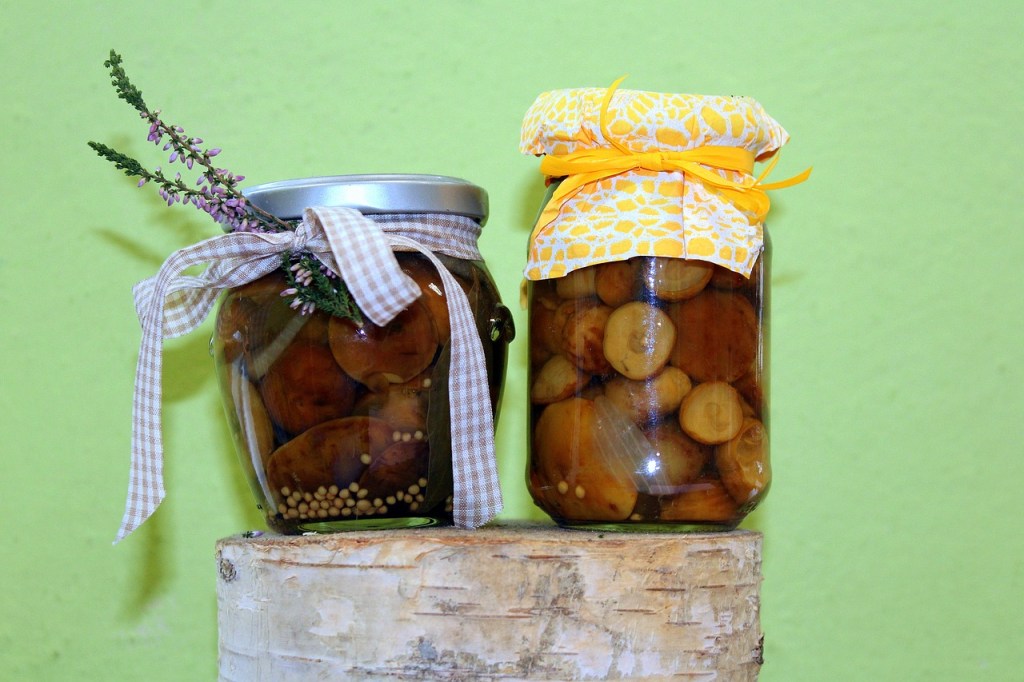
LOVE IS A JAR OF PICKLES: Upasna Prasad

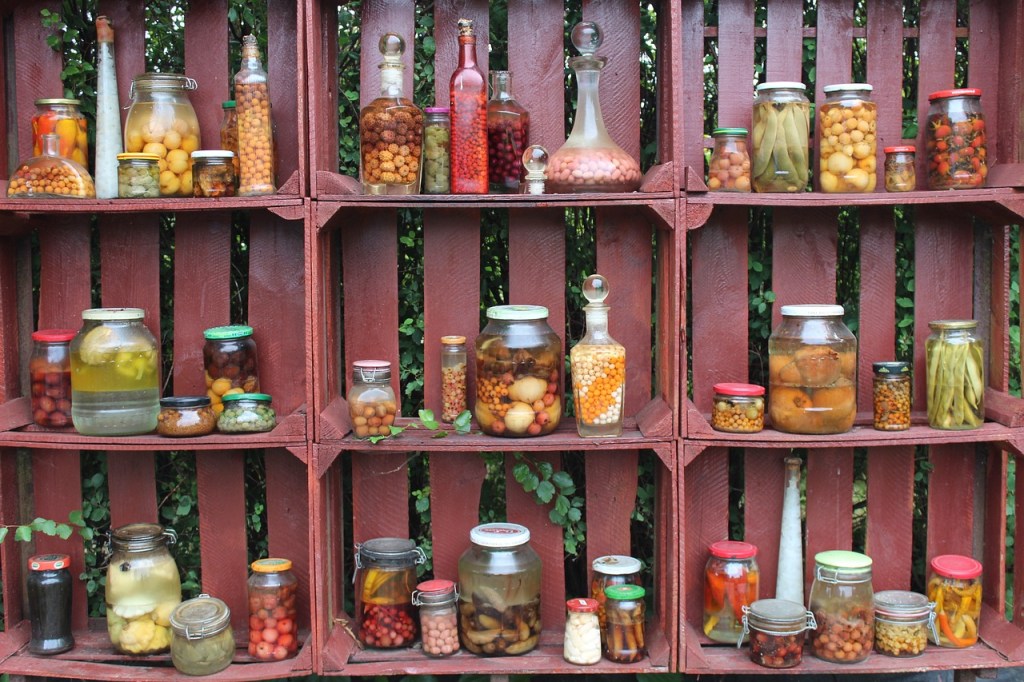
Like a jar of pickles, love is sweet, sour, tangy, and spicy. Love brings colour to your life, just like a jar of pickles makes your everyday meal delectable by adding flavour. Love and a jar of pickles take their own sweet time to ferment. If not preserved well, both a jar of pickles and love can get spoiled in no time.   

Homemaker Upasna Prasad has been pickling for as long as she remembers, especially during cold winter months. “It takes a lot of patience and time for the pickles to come out just right,” she says. We couldn’t agree more. It is ditto for love.

LOVE IS A JAR OF PICKLES: Upasna Prasad

Why pickles?

“I have developed my system of learning good Bihari recipes for the past few years. And I have realised that unless I learn fast, the recipes of my grandmother, mother and mother-in-law will be lost forever. Who would send me these delectable achars? So I started pickling with fervour a couple of years, picking up the tips and tricks from them, and mastering the art in some measure.”

Pickling: My favourite winter past-time

“Karonda ka khatta-meetha achar is a sweet Bihari pickle that is a welcome change from regular pickles. When it is freshly made, this seasonal achar tastes best.

One can never match up to the flavour and aroma of homemade Barabar achar. As the name suggests, yam or jimikand (oal) achar is popularly known as Barabar achar since all the major ingredients used in this pickle are equal in quantities or proportions.

Bharwan lal mirch achar (stuffed red chilli pickle) is an integral recipe of any Bihari household. The market is flooded with this bright red delight during the winter months. What makes this pickle extraordinary is the tanginess of dry amchoor powder and the mild bitterness of mustard powder topping it with loads of mustard oil added as a pickling agent.

A mixed achar is one of the best Bihari pickles passed on from generation to generation with everlasting memories. Mostly fresh winter vegetables such as potato, brinjal, ginger, chilli, radish, carrot, cauliflower, and flat beans are blended perfectly with spices and mustard oil giving a tangy, zingy flavour. It needs to be soaked in the winter sun before it can be pronounced ready for consumption.

Lahsun ke patta ka achaar is another popular homemade Bihari pickle, enhancing the taste of the simplest food with its strong aroma and flavours. That’s the magic of green garlic!

How can one forget Amla (Indian gooseberry) achaar, which is nutrient-rich, loaded with iron and vitamin C in abundance, and easiest to prepare. The ingredients are simple too – amla, carrom seeds, turmeric, salt and oil to prepare. It is a must-have in winter to keep the cold at bay.”

Homegrown art 

“In Bihari pickles, we use a fine blend of roasted spices and oodles of mustard oil to ensure the pickle’s longevity. This delicate balance of spices and oil will make a fantastic pickle that will last for the whole year and not spoil.

LOVE IS A JAR OF PICKLES: Upasna Prasad

Bihari pickles have a consistency close to a large rough chunk of the featured spices/ vegetables smothered in tangy (mostly mustard) oil and stained yellow colour from the inclusion of ground turmeric (haldi).

Among many Bihari families, pickles are a complete substitute to various recipes, as it requires no refrigeration and is ideal for long-distance journeys.

I love Bihari pickles as a side to most dal dishes and rice. Winter is the time to conjure up some sweet, spicy, sour and tangy pickles to accentuate any meal. These homemade pickles are good to eat and so easy to prepare that you will wonder why we ever buy them from grocery stores. There is something good about how pickles are prepared in Bihar and Jharkhand. The tartness combined with the spiciness is just perfect.”

A bite can tickle, be it a jar of pickles for your taste buds or love for your life. 

Rating: 1 out of 5.

2021: A year of Love, Labour and Loss

Love is a mystery. Love is unitive. Love is how we connect as human beings with one another and with the whole universe together. Love is how we learn, become better, and make the world a better place to live for us and others. Love needs freedom to breathe, equality to thrive, and openness to flow and grow. Love is personal, political, philosophical, sexual, social, historical, metaphysical, transcendental, et al. Sadly, we have only one word to describe such a complex emotion. The ancient Greeks had six different words, but even that’s not enough. 2021 taught me new ways to describe the complexity of love and its various hues. Love lost on many counts, but it miraculously sprang on a few occasions like a phoenix. My LOVE vocabulary was defined and redefined by people who touched my life one way or another this year.

shillpi a singh

LOVE IS FREE-SPIRITED: Phoolsunghi

New Delhi-based academician, columnist and translator Gautam Choubey has scripted history with his literary outing — Phoolsunghi — that happens to be the first-ever translation of a Bhojpuri novel into English. Apart from being the most representative work in Bhojpuri, Phoolsunghi also happens to be one of the most loved literary works by Pandey Kapil, who is hailed as the protagonist of the Bhojpuri literary movement in post-Independence India. It was published in Hamish Hamilton by Penguin Random House. 

The story from the soil of Bihar pans out in Chhapra where the magical, mystical, and mundane intertwine much like the lives of three characters — courtesan Gulzaribai who was popular in the region as Dhelabai; ageing zamindar Babu Haliwant Sahay, who worked as an official in the law court and had a stake in the flourishing opium trade; and Bhojpuri folk poet and singer Mahendra Misir. The timeless tale about these celebrated legends of Bihar has traversed centuries and fascinated litterateurs across ages. These dalliances resulted in three other literary jaunts of repute — Ramnath Pandey’s Mahendar Misir, Jauhar Safiyabad’s Poorvi Ke Dhah and Anamika’s Dus Dwareka Pinjara

The historical novel spanning ninety years touches upon the early years of colonial rule in India without making any direct references to the fight for independence or any social conflict or instances of religious disharmony. The plot, story, and setting spread over 16 chapters together draw a reader into the enchanting world of the lifelike characters. Music serves as the perfect backdrop in Phoolsunghi, and there is a lot of drama, action, tragedy that unfolds in the lives of these people, to keep one hooked, from start to finish. The enthralling mehfils and mujras, high-pitched abduction drama, episodes of court cases and counterfeiting notes reveal the author’s attempt to make it a wholesome entertainer.

The author explores various shades of romantic love, making it an emotional roller coaster ride for a reader. It delves deep into the characters through the maze of the relationships that they share with each other, crossing paths at times, and flowing like the two banks of a river in a few instances.

The novel documents the lives and times, rise and fall, love and longing, trials and tribulations of these characters, who live in and around the banks of river Saryu in Chhapra and its adjoining villages of Mishrawaliya, Sheetalpur, Revelgunj and Muzaffarpur. Like a river that flows through these cities, the plot intermittently drifts to Banaras and Calcutta, and makes pit stops in Punjab and Delhi, before returning to Chhapra. The story also traces the advent of the railway line and how dhuwankas or trains play an important part in the narrative. Phoolsunghi offers a bird’s-eye view of how the characters co-existed in harmony without being bothered by religious, class or caste considerations, and in some measures, it is also a social commentary on the lives of migrant workers. It reveals how some of them seamlessly merged in the mainstream in their adopted land while a few others, bit by melancholia trace their way back to their roots, sooner than later. The migrant’s life in a metropolis is bound to resonate with the readers, and tug at their heartstrings, especially those who have either been a migrant themselves or have witnessed something more heart-wrenching pan out in the country not so long ago. 

LOVE IS FREE-SPIRITED: PHOOLSUNGHI

The Bhojpuri story is quite evocative and engrossing, and Choubey has done full justice to it. The translated work has a cinematic language to it with lively characterisation, and vivid imagery making it an endearing read. It will be no surprise to see the real characters, who inhabited Chhapra once upon a time, taking a reel avatar sometime soon and glossing the big screen, regaling the larger audience who live far, far away from this mofussil. The verses in Bhojpuri have been passionately and painstakingly translated into English by Choubey, but a reader would have benefitted from the richness of the language and appreciated it more had only a list of the originals been provided along with the glossary.   

By foraying into the unexplored domain of translating a popular piece of Bhojpuri literature for a discerning, elitist, city-bred reader, Choubey has managed to do the unthinkable, and in one go. It is a stellar act for its sheer thought and effort. He has not only highlighted the long and diverse literary culture of the language but also debunked the common perception of it being only a folk language, giving Bhojpuri its due. His disruptive effort, hopefully, might lead to many more such works being produced by the speakers and readers of the language, and in that context, Choubey’s present translation will fondly be remembered for being the first of its kind that helped to pave the path for many more.

Phoolsunghi has something for all; it serves as a timely reminder about the richness of Bhojpuri literature for the younger generation and has a multitude of joy and nostalgia to offer for the older ones. The story will transport you back to your roots so soak in the subtleties of a bygone era from a faraway land, and shore it up for yourself and your coming generations. 

“I have fallen in love with the imagination. And if you fall in love with the imagination, you understand that it is a free spirit. It will go anywhere, and it can do anything.”

Alice Walker

2021: A year of Love, Labour and Loss

Love is a mystery. Love is unitive. Love is how we connect as human beings with one another and with the whole universe together. Love is how we learn, become better, and make the world a better place to live for us and others. Love needs freedom to breathe, equality to thrive, and openness to flow and grow. Love is personal, political, philosophical, sexual, social, historical, metaphysical, transcendental, et al. Sadly, we have only one word to describe such a complex emotion. The ancient Greeks had six different words, but even that’s not enough. 2021 taught me new ways to describe the complexity of love and its various hues. Love lost on many counts, but it miraculously sprang on a few occasions like a phoenix. My LOVE vocabulary was defined and redefined by people who touched my life one way or another this year.

SHILLPI A SINGH

LOVE IS DESIRE

It was not too long ago when lonely widow Usha Parmar (Ratna Pathak Shah) in Alankrita Srivastava’s Lipstick Under My Burkha scorched the screen with her burning desire for intimacy. Parmar sought refuge in Hindi pulp novels out of desperation, fantasised about escapades with a young man and, in return, was rebuked and ridiculed for her overt sexuality because her actions were unfitting her age. Subtly, Parmar’s character hints that sexuality, desire, activity and intimacy in the elderly don’t come with an expiry date. While age-related medical issues have a considerable role to play, the social and cultural aspects too have a bearing on them.

LOVE IS DESIRE

Senior psychotherapist and counsellor Padma Rewari recalls how she recently offered consultation to a 52-year-old woman, well past her menopause, who didn’t want to put a pause button on her sex life, much to her husband’s chagrin. “The woman went deep into depression after her husband body-shamed her and made fun of her overtures. She didn’t know how to deal with her need for intimacy, which was a social and cultural taboo for her husband. His behaviour made her feel so low about herself that she developed suicidal tendencies,” says Rewari.

LOVE IS DESIRE AND IT DOESN’T HAVE AN EXPIRY DATE.

Cause of concern
One partner’s overt and other partner’s inert reaction to the other’s needs was the cause of the problem in Rewari’s patient. Although sexuality is a fundamental driving force, human sexuality is frequently misunderstood and often neglected in the case of the elders. “Sexuality and senior citizens seems a weird proposition. There is a mental block. People often suppress those desires and feelings because it is not age-appropriate behaviour,” says Rewari.
It is assumed that older people lose their sexual desires or are physically unable to perform. It is common for older men to fear the loss of sexual prowess, while older women may also express sexual desire but may fear their interest is undignified and disgraceful. “You become a senior citizen as soon as you cross 50. Ageism has a tremendous impact on the subconscious mind. It makes one slowly withdraw and retire when it comes to sexual activity, and expressing the desire and need for intimacy is a strict no-no. It is taboo. If one partner still has such desires, and the other partner doesn’t show such feelings or desires, it leads the partner (who has it still) on a guilt trip,” adds Rewari.
Niyatii N Shah, sexuality educator, intimacy coach and counsellor, has come across many cases where one of the partners and, in some cases, the couple approached her for help. “I have had both types of clients. Many of them seek advice through social media. A few of the most common reasons I have come across are lack of respect, no sexual satisfaction, boredom and abuse,” says Niyatii.

Dealing with the issue
The sexuality, desire, activity and intimacy in the elderly seems to be waning partly because of medical complications and partly because of a general loss of interest due to social or cultural reasons. “It’s a mix of both but mainly because of loss of interest and emotional baggage. Most of the time, partners are very supportive if there’s a medical reason. Intimacy counselling looks into why the couples are not intimate anymore and helps them live a fuller life that they desire from each other,” informs Niyatii. 
During a recent webinar organised by Boston Scientific, psychiatrist, clinical sexologist, and sex and intimacy coach Dr Anita Shyam, who regularly meets such couples, said, “I also follow a simple formula in patients — seek a detailed sexual and relationship history. So that pretty much gives me a more comprehensive view of the issue. Is it an organic cause? Or is it a psychological cause? Is it a social cause or whether it is a relationship problem?”
If there is an organic cause, she refers them to the physicians who specialise in that field, but if it is a psychological cause, she digs deeper to ascertain the reason. “Is this person suffering from anxiety or depression? Or is he or she into drugs and alcohol? Sometimes even the partner can have a problem. The partner must be suffering from medical issues, desire disorders or depression that could lead the man to have ED. If not, then the couple must be having a relationship problem. So, I look holistically at the three parts of the triangle — the individual, the partner and the relationship,” she says.

The article was published in The Free Press Journal on December 12, 2021.
https://www.freepressjournal.in/weekend/love-sex-and-age-does-desire-have-an-expiry-date-no-many-older-adults-will-say

A problem area
A marked increase in life expectancy over the past century has meant that individuals over the age of 65 form an increasingly large proportion of the population. Yet, very little attention has been paid until recently to treating sexual dysfunction in older adults. Older individuals are generally erroneously viewed as asexual people who have lost their interest in sex and their capacity for sexual behaviour. Calling for the need for more attention in psychiatric training to deal with sexuality in the elderly, Rewari adds, “The chain of ignorance needs to break. We need to change the way we think about older people and how they treat each other once they reach a certain age. We say age gracefully but without suppressing the fantasy or the feeling of sexual desires. Leave the guilt out, which plays on every human mind. These are conditioned behaviours and patterns which we have seen all through, but it is normal to have the flame of desire and need for intimacy burning even if you are past a certain age.”
People often refuse to believe that they are depressed and stressed. And sometimes, they could even be on a list of psychiatric medications. “Stress is a major factor for any of the psychological and several medical problems. There are four phases in a sexual cycle. Stress affects the desire, if the desire is affected, it’s going to affect the arousal, it affects the orgasm and also the resolution. It plays a major role in even in an individual’s life and in the relationship, causing a lot of relationship and sexual problems in couples,” says Dr Shyam.

Health issues
While women could blame menopause, older men could have many physical problems because of diabetes, hypertension, high cholesterol and smoking that could affect their sexual capabilities. “There are many issues that men may have. A libido problem means he doesn’t feel the urge for sex. He may have an arousal problem and he’s not attracted to his partner, he may have an erection problem. Then sometimes, he has a problem with early orgasm or premature ejaculation. All of which are different and need different treatments,” says Dr Rupin Shah, consultant andrologist and microsurgeon.
India is the diabetes capital and 50-70% of men with diabetes will eventually develop erectile dysfunction due to the disease. “Lifestyle is vital because, as I tell patients, sex happens when you are at the peak of your health, then you have the greatest urge, the greatest energy, the greatest capability. As your general health diminishes, your sexual abilities decrease, even though that desire may be there. So the middle-aged executive who’s overweight, not exercising, overeating sugar, smoking 10 cigarettes a day is going to have a lifestyle-induced sexual problem,” adds Dr Shah. 

Why it matters
There was an upsurge in teleconsultation in such cases during the pandemic-induced lockdown. It was because it is comfortable and convenient for the couple or individual to discuss the issue over a phone rather than in person. The key remains communication. “Always communicate how you feel with your partner. Seek professional help, talk to friends, understand what spouses think in general, and seek medical help if required,” emphasises Niyatii.
Communication and conversation become more important as one grows older. “The bond needs to be stronger, and as the empty nest syndrome hits, the couple needs to be there for each other. A relationship which is healthy and respectful needs to be maintained so that the couple live happily,” says Rewari, signing off.

Ask me to define my love for you and I’ll say it’s captured in every beautiful memory of our past, detailed out in vivid visions of our dreams and future plans, but most of all it’s right now, at the moment where everything I’ve ever wanted in my life is standing right in front of me.

Leo Christopher

2021: A year of Love, Labour and Loss

Love is a mystery. Love is unitive. Love is how we connect as human beings with one another and with the whole universe together. Love is how we learn, become better, and make the world a better place to live for us and others. Love needs freedom to breathe, equality to thrive, and openness to flow and grow. Love is personal, political, philosophical, social, historical, metaphysical, transcendental, et al. Sadly, we have only one word to describe such a complex emotion. The ancient Greeks had six different words, but even that’s not enough. 2021 taught me new ways to describe the complexity of love and its various hues. Love lost on many counts, but it miraculously sprang on a few occasions like a phoenix. My LOVE vocabulary was defined and redefined by people who touched my life one way or another this year.

shillpi a singh

LOVE IS ADVENTURE: Anshu Jamsenpa

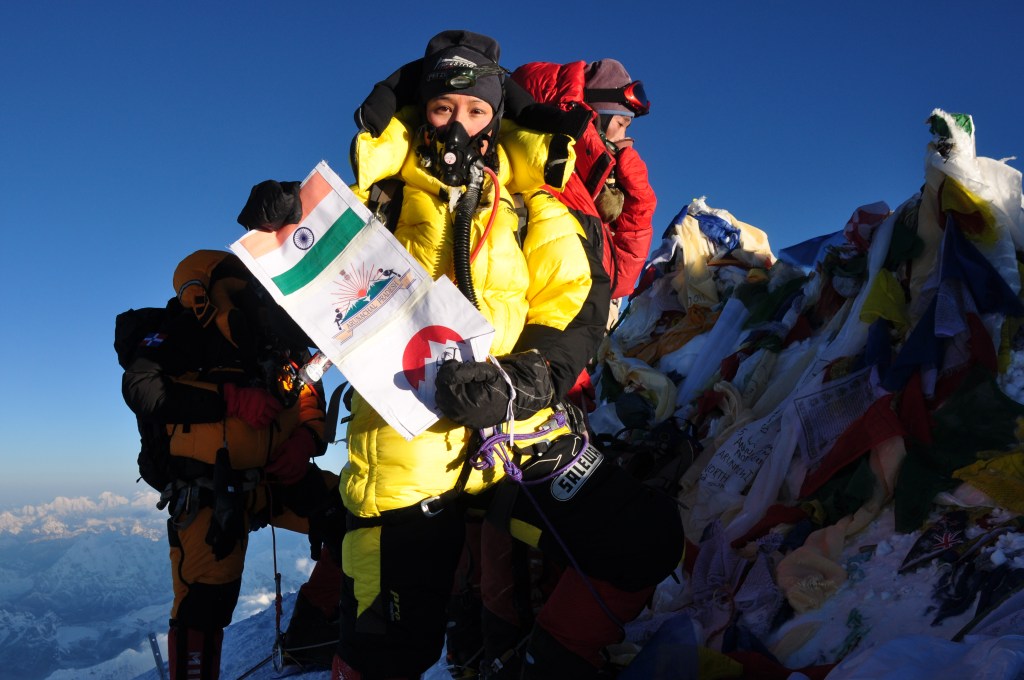
Her name means the sun’s rays, and she’s been living up to it, in letter and spirit. Like the sun that shines above the mountain even when the sky is covered with clouds, Anshu Jamsenpa, the young mountaineer from Bomdila in Arunachal Pradesh has been shining on the highest peak of the world by standing atop it and unfurling the Tricolour on five occasions, a feat that only a few can match.

President Ram Nath Kovind gave away the Padma Shri award to Anshu Jamsenpa at a function in the Rashtrapati Bhawan on November 9, 2021. 

She’s the fastest woman mountaineer in the world to summit Mt Everest twice in five days, the first woman in the world to do two double ascents of Everest (first one on May 10, 2011, and May 21, 2011; the second one on May 16, 2017, and May 21, 2017) and the first Indian woman in the world to summit Everest five times. Her third successful attempt to conquer the 29,029 ft peak was in between the two double ascents, on May 18, 2013.

LOVE IS ADVENTURE: Anshu Jamsenpa from Arunachal Pradesh.

A mother of two girls, Anshu was busy looking after her husband Tsering Wange’s travel and tourism business when one fine day she happened to accompany a group of three mountaineers for rock climbing and river crossing activities in her hometown. “The month-long Himalayan Trekking Expedition Programme had been planned by my husband’s company. I used to go along with them daily, stand and watch as they went about rock climbing. One day, I just walked up to the trio and told them that I want to try it too. I did it, and quite well. It gave me an adrenaline rush,” she recounts.

The rock climbing incident stoked her dormant adventure streak, and she was enthused to take it up. She was finally initiated into mountaineering in 2009 after being egged on by the mountaineering instructor of the Arunachal Mountaineering & Adventure Sports Association to follow her passion seriously. She enrolled herself in a course. But the toughest part about taking up mountaineering seriously as a career was convincing family members, especially her husband. “The thought of summiting Everest crossed my mind while I was undergoing a training course, but it was easier said than done. Climbing Everest was obviously the toughest one so far. Barring my second summit of the double ascent in 2011 when the weather was pleasant, the rest of all the other four summits have been tough from different perspectives,” she says. But in the same breath, she clarifies that there is nothing like the easiest or toughest climb. “In the mountains, there is no surety. The risk factors are always there,” she adds.

As someone who yearns to travel to mountain-tops, she says it is because there’s a sense of belonging and an emotional connection with the peaks. “Mountains bring out the best in me. I’m most happy in their company,” she adds. But she also derives a lot of happiness listening to music and being with her children Pasang Droma, 19, and Tenzin Nyiddon, 15.

In between, she is busy working on her pet project, starting a training institute in Bomdila to encourage other deserving candidates into mountaineering and adventure sports from across the country. “It is just a small piece of land, and the building is yet to come up, but I have managed to train more than 5000 adventure enthusiasts here so far,” she says with a sense of pride.

She has also scaled Mt DKD2, Mt Trishul, Mt Nun and Mt Shivling. 

Quick ones:

A fact not known: She played the female lead in the feature film ‘Crossing Bridges” that won several awards including the National Film Award.

The weirdest quirk: I used to keep a notebook with my favourite songs written in it. Writing songs and singing has a calming effect on me.

Must carry items to the mountains: I carry a photograph of His Holiness The Dalai Lama, Kindle and camera.

https://www.newindianexpress.com/magazine/2017/sep/30/on-top-of-the-world-1664215.html

I know you want adventure, I know you want to see the world. But love is the greatest adventure, where you risk the most for the greatest reward. What good will all this exceptional living do if you’re doing it only for yourself?

Penny Reid

2021: A year of Love, Labour and Loss

Love is a mystery. Love is unitive. Love is how we connect as human beings with one another and with the whole universe together. Love is how we learn, become better, and make the world a better place to live for us and others. Love needs freedom to breathe, equality to thrive, and openness to flow and grow. Love is personal, political, philosophical, social, historical, metaphysical, transcendental, et al. Sadly, we have only one word to describe such a complex emotion. The ancient Greeks had six different words, but even that’s not enough. 2021 taught me new ways to describe the complexity of love and its various hues. Love lost on many counts, but it miraculously sprang on a few occasions like a phoenix. My LOVE vocabulary was defined and redefined by people who touched my life one way or another this year.

shillpi a singh

LOVE IS COURAGE: Aashna Lidder

Aashna Lidder, 16, is Geetika and late Brigadier Lakhwinder Singh Lidder’s only child. Her father was one among the thirteen people, who lost their lives when an Indian Air Force (IAF) helicopter crashed in Tamil Nadu’s Nilgiris district on December 8. The tragic air crash claimed the lives of the country’s first and sitting Chief of Defence Staff (CDS) General Bipin Rawat and his wife Madhulika Rawat, and ten other defence personnel – Lt Col H Singh, Wg Cdr PS Chauhan, Sqn Ldr K Singh, JWO Das, JWO Pradeep A, Hav Satpal, Nk Gursewak Singh, Nk Jitender, L/Nk Vivek and L/Nk S Teja. Group Captain Varun Singh, who survived the crash, is presently undergoing treatment.   

A student of Class 12, Aashna is an author whose book In Search of a Title: A Teenager’s Journey of Trials, Tribulations, Musings and Learnings was released on Thanksgiving Day, November 27, 2021, in the Capital. 

We Must Give Him a Good Farewell, A Smiling Send-Off, I Am A Soldier’s Wife, I have Nothing More To Say, गर्व से ज़्यादा तो दुख है, लाइफ़ बहुत लंबी हमें काटने के लिए लेकिन भगवान को यही मंज़ूर तो यही सही, He Was A Very Good Father, My Child Will Really Miss Him, It’s A Big Loss…”

Geetika Lidder, wife of Brigadier LS lidder

“I am going to be 17. So he was with me for 17 years, we will go ahead with happy memories. It’s a national loss. My father was a hero, my best friend. Maybe it was destined and better things will come our way. He was my biggest motivator.” 

Aashna Lidder, daughter of Brigadier LS Lidder

Aashna shared a special relationship with her father who, she said, used to pamper her. In an old video that recently surfaced on social media, Aashna can be seen proudly speaking about her father on Father’s Day.

“In my fifteen years, my father has missed my birthday seven times and missed at least twenty family functions. We knew we did not come first, the nation did I couldn’t be more proud of him. In the Army, we learn to salute before we shake hands, we learn to say Jai Hind before we say hello,” she says in the video. 

Former Puducherry lieutenant governor Kiran Bedi took to Twitter to share a clip of Aashna Lidder reciting a poem from the latter’s first book. 

“This is the poem Aashna Lidder (daughter of Late Brigadier Lidder who lost his life in the Helicopter crash) recited this from her own book, on December 3, in the Friday Book Reading session. It was ominous when you listen to it. Life is very mysterious,” Bedi tweeted on Friday, hours after the army officer was cremated with full military honours in Delhi.

Clip shared by Kiran Bedi of Aashna Lidder reciting a poem from her debut book.

“So, I’m going to be reading a poem of mine which I wrote on Independence Day and it is called Selfless Independence. It is called that because of how selfless independence is, how people are ready to give up themselves and their lives for a nation and other people, even though gratitude is not sure to come from the other end. They aren’t sure if you’re going to be grateful for what they’ve done but they still do it,” she says, sharing the screen with the nation’s first female police officer, and five other participants.

The aspiring writer then narrates the poem from her debut book, In Search of a Title: Musings Of A Teenager. She says, “To the man that serves not for him but for us, to the man with ruptured organs, silent, creating no buzz. To the child that’s fearless, to a wife who is rudderless, to an incomplete family for a complete nation, to sacrifice beyond your imagination. To the man that buried his independence for you, for you and nothing more. To every fighter on land, on air and shore, for you we pray, for you we pray every way in every day. So, here’s wishing you a very happy Independence Day.”

“This was a short poem,” Aashna Lidder concludes, as Bedi applauds her.

The book was released last month, at a ceremony attended by, among others, the teenager’s parents, as well as Kiran Bedi herself, and Madhulika Rawat. According to a media report, the book has seen a surge in demand in the days following the December 8 tragedy.

It takes courage to love, but pain through love is the purifying fire which those who love generously know.

Eleanor Roosevelt 

2021: A year of Love, Labour and Loss

Love is a mystery. Love is unitive. Love is how we connect as human beings with one another and with the whole universe together. Love is how we learn, become better, and make the world a better place to live for us and others. Love needs freedom to breathe, equality to thrive, and openness to flow and grow. Love is personal, political, philosophical, social, historical, metaphysical, transcendental, et al. Sadly, we have only one word to describe such a complex emotion. The ancient Greeks had six different words, but even that’s not enough. 2021 taught me new ways to describe the complexity of love and its various hues. Love lost on many counts, but it miraculously sprang on a few occasions like a phoenix. My LOVE vocabulary was defined and redefined by people who touched my life one way or another this year.

SHILLPI A SINGH

LOVE IS BELONGING: Sindhustan

“All I knew about my culture was Sindhi kadhi,” pronounces celebrity hairstylist and filmmaker in her documentary Sindhustan and on that note, she sets the tone of a poignant tale spread over the last few decades before and after partition to retrace her Sindhi roots. The ubiquitous flavour of vegetable-rich kadhi makes Sindhustan a delectable watch as it meanders through the lanes and bylanes of Sindhis’ memories, whose quintessential identity is synonymous with their kadhi that’s like no other.  

Trailer of Sindhustan.

The kadhi also becomes the documentary’s access point; Bhavnani’s aunt Kamla Thakur’s kitchen conversation and verses by the renowned 18th-century Sufi poet Shah Abdul Latif becomes a crucial cinematic tool for the filmmaker. The unobtrusive camera captures her cooking, from start to finish, and the tedious kadhi-making process serves as a metaphor for Sindhis in general and Bhavnani in particular. It manages to create a steady simmer in the storyline, from the moment her aunt places tur dal in a cooker on the stove to painstakingly following the rigours, till it is ready to be served on a carefully laid out table filled with other Sindhi delicacies. The brilliant move not only adds a rich flavour to her storytelling, but the shots, panning in and out the kitchen, and shifting focus on the lives and times of other Sindhis, then and now, takes the story forward. “Food is something big for us, and so it made sense to weave the story around it. Kadhi is my favourite, and it was my only choice because it is also our identity in a way. Also, so many stories happen in the kitchen and around the fire, so it was my best bet,” tells Bhavnani.

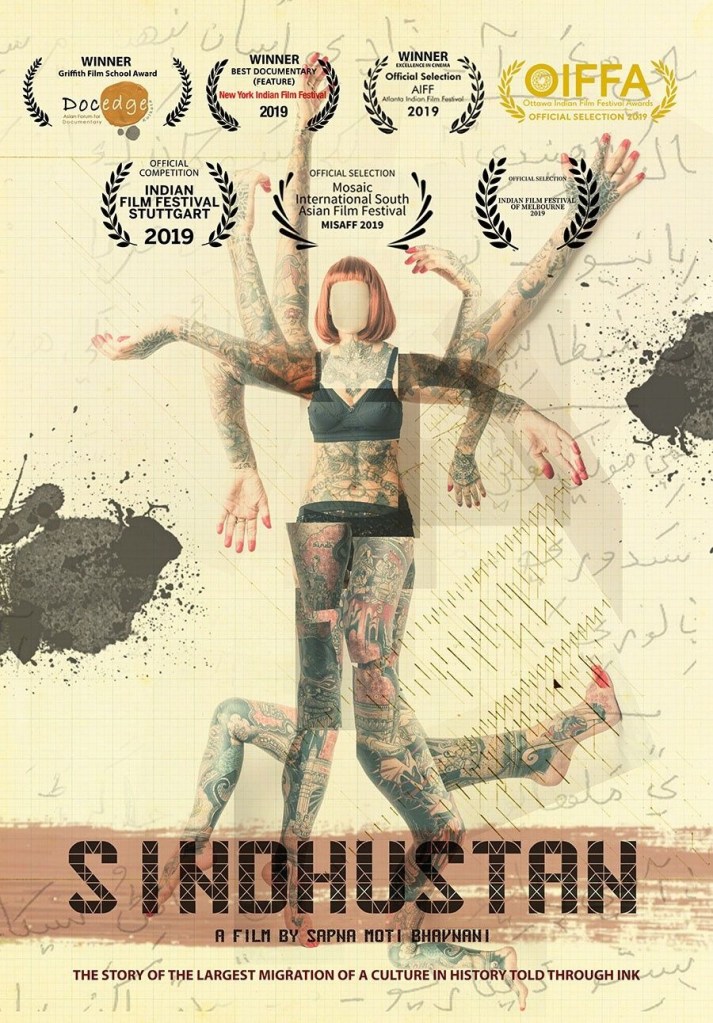
Poster of Sindhustan.

The entire process of making a Sindhi kadhi takes about three hours, and Thakur, a chef herself, gives us a sneak-peek into the Sindhi household and tells us how Sindhi kadhi is different from other kadhis in the course of the filming. “It is made from toor daal. We boil it with tomatoes in a cooker, then seave and use the soup, cooking it on slow fire much like a mithai. It is nutritious as we put lots of vegetables in it,” says Thakur. 

LOVE IS BELONGING: A still from Sindhustan.

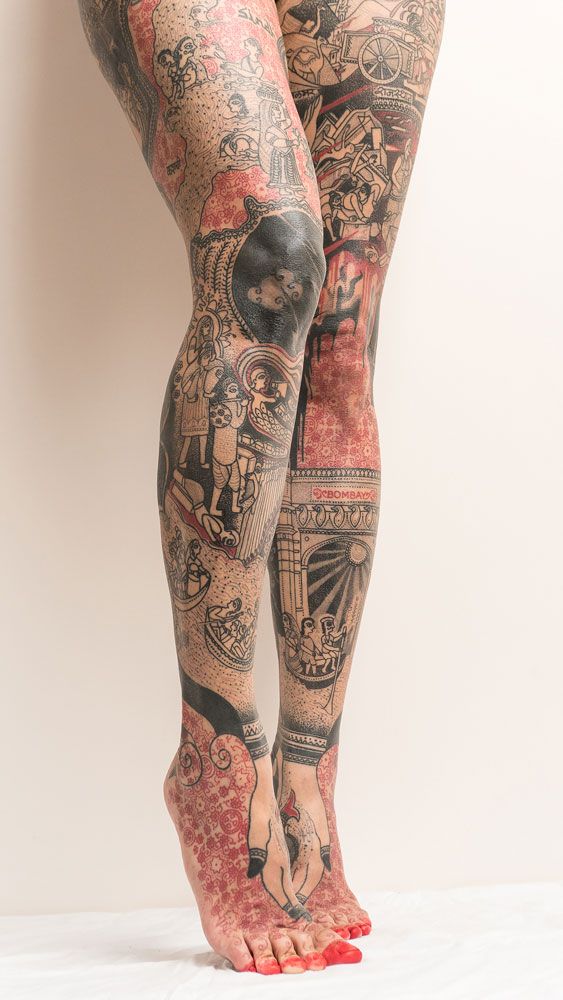
Another thing that stands out in Bhavnani’s maiden project is the story that her legs carry – the fusion of two dying art forms, one from Sindh and another one from Bihar in the tattoos; while her feet reflect her rootlessness with an image of fish on each to show how the waves have given them a sense of fleeting sand, lashing it with memories, time and again.  The use of alta (red liquid dye) to decorate her feet and fingers is another fusion of culture that Bhavnani has used to her advantage in the documentary, and the ease with which she has used ink to tell the story of the largest migration of culture in history is truly commendable.

“My one leg has motifs from Ajrak, a predominantly Sindhi art form. Here the cloth was first washed in a solution of water and ajrak berries. It was then steamed and stamped with wooden blocks injected with dyes. The printed cloth was then dipped in a solution of indigo and washed in water so that colours came out sparkingly bright. The other leg reflects the popular Madhubani art form from Bihar. The only common thing between the two cultures is fish. It is predominant in Madhubani paintings and also in ours because it is believed that our presiding deity Jhulelal rode a fish,” she recounts. The beauty of this amalgamation in her passion project makes Sindhustan a mini piece of art in itself.

The pain and trauma of those who lived and survived the painful partition echo louder in each person’s account. Their sense of longing and belonging and connection with the land of their origin – Sindh – where they or their ancestors once lived tugs at the audience’s heartstrings.

Sindhustan is a must-watch if you are a Sindhi because it has high nostalgic value.

It is even more important to watch Sindhustan if you are a non-Sindhi because it is a ready reckoner to understand a community that has been dispossessed and displaced but still retains its enterprising, industrious, zealous, benevolent and cosmopolitan nature transcending barriers of castes, race and religion.

Thakur is the go-to person for Bhavnani for food, and she loves to feast on her “Teevan, Sai Bhaji, Seyal Beeh Patata, and, of course, Kadhi on Sundays.” Also, don’t forget to feast on Sindhi kadhi that Thakur’s French neighbours in Paris referred to as the water of gods. Bon appétit!

Maybe your country is only a place you make up in your own mind. Something you dream about and sing about. Maybe it’s not a place on the map at all, but just a story full of people you meet and places you visit, full of books and films you’ve been to. I’m not afraid of being homesick and having no language to live in. I don’t have to be like anyone else. I’m walking on the wall and nobody can stop me.

Hugo Hamilton

(All pictures from Sindhustan; the film is streaming on https://www.moviesaints.com/movie/sindhustan)

2021: A year of Love, Labour and Loss

Love is a mystery. Love is unitive. Love is how we connect as human beings with one another and with the whole universe together. Love is how we learn, become better, and make the world a better place to live for us and others. Love needs freedom to breathe, equality to thrive, and openness to flow and grow. Love is personal, political, sexual, philosophical, social, historical, metaphysical, transcendental, et al. Sadly, we have only one word to describe such a complex emotion. The ancient Greeks had six different words, but even that’s not enough. 2021 taught me new ways to describe the complexity of love and its various hues. Love lost on many counts, but it miraculously sprang on a few occasions like a phoenix. My LOVE vocabulary was defined and redefined by people who touched my life one way or another this year.

shillpi a singh

LOVE HAS LANGUAGES: Abhishek Banerjee

There is no greater agony than bearing an untold story inside you

Maya Angelou

Actor and casting director Abhishek Banerjee is perhaps the only actor who has had two cinematic outings with a mannequin in his career. The mannequin had a guest appearance in Devashish Makhija’s Ajji (2017) where Banerjee was playing the male lead, while in Ashwani Iyer Tiwari’s Ankahi Kahaniya (2021), it was his co-star. On both occasions, he cleverly used a mannequin, once as a prop, and then as a tool to explore the chalk and cheese sides of his manhood on the big screen. 

A trailer of Ajji.

As politician Vilasrao Dhavle in Ajji, Banerjee used a mannequin to show his gut-wrenching perversion. In complete contrast, the polite salesboy Pradeep Loharia from Gandarwara of Ankahi Kahaniya ekes out a living selling women’s garments at Delight Wear in Mumbai. He happens to meet a mannequin at a crummy little shop and falls madly in love with it. He fondly names her Pari. Two contrasting roles with mannequins help him get under the characters’ skin and bring out the worst and the best that a man can be. 

In his book, The 5 Love Languages: The Secret to Love That Lasts, Gary Chapman described five different ways of expressing and receiving love. These five love languages are words of affirmation, quality time, receiving gifts, acts of service, and physical touch. 

In Ajji, Banerjee remains the lustful, black sunglasses-wearing, foul-mouthed Dhavale who has no qualms in brutalising a mannequin and cruelly dismembering it, while raping it. The rape sequence is deeply disturbing, even though it is filmed on a dummy. The camera’s gaze moves on to show the mannequin’s severed head at the end, symbolising the blank stare of the people who let such crimes happen because it makes sense to stand and stare, and not stand up and act. Here he uses just one language to communicate his intent to the object of lust, the brutal touch that translates into a visceral action onscreen. It for sure makes for an unsettling watch. 

Tailer of Ankahi Kahaniya

Banerjee makes a mannequin his object of affection in his second appearance in Ankahi Kahaniya. He communicates his love to the inanimate object using all five languages and to perfection. Though his overtures remain unrequited, we as the audience, still make a silent wish for it to come alive, just like Emmy in Mannequin (1987), starring Andrew McCarthy and Kim Cattrall.

MANNEQUIN

Banerjee’s role can very well be called a dummy’s guide (pun unintentional) for a man who wants to love a woman just the way she wants. Makhija had once said in an interview that it was the abyss in Banerjee’s eyes that gazed back at him and compelled him to offer Banerjee a role in the short film, Agli Baar. He then chose Banerjee to play Dhavale in Ajji, and Rajendra in Bhonsle, and for both, the abyss in his eyes stared at the roles and helped him take the leap of faith into the world of cinema.  

With every appearance, Banerjee seems to have bettered the act. Pradeep of Ankahi Kahaniya is unbelievably good at giving a masterclass on loving a woman because he speaks all five languages of love and fluently. The happiness glows on his face, and his coy smile gives it away. The secret love dalliance makes him a butt of ridicule and reprimand, as his boss and colleague mistake his love for Pari as perverted behaviour. On his return home, he confides in his bride-to-be. One of the most tender moments is when he confesses that he is technically single, but his heart is taken by someone he can’t call his own. Pradeep-Pari’s story also remains the saddest love of all, the one that lets him fall with nothing to hold. But the same love finds its belated fulfilment because it flutters away like a butterfly and dwells in the heart of the person who is destined to keep it forever, his would-be wife. What he felt for Pari felt so real in his heart, but he doesn’t cling to it for long and bids her goodbye with a yellow dupatta, a warm hug, and teary eyes. 

I must confess that in all his cinematic outings, Banerjee uses the abyss in his eyes to his advantage, much to the audience’s delight, transforming into the monster (Hathoda Tyagi of Pataal Lok) and mushy lover (Dream Girl) with ease.