All posts by Shillpi A Singh

Unknown's avatar

About Shillpi A Singh

क़लम मज़दूर | Commspreneur | Recipient of the IIMCAA Award for Public Relations Person of the Year 2024 | Canva's Top 10 Social Media Creator for 2023 | Work-in-Progress

A Pillar of the Post

https://www.freepressjournal.in/weekend/india-post-undergoes-a-tech-tonic-makeover-to-match-the-pace-of-changing-times
The article was published in The Free Press Journal in the edition dated October 17, 2021.

During National Postal Week that concluded on October 16, I spoke to women working in the Mumbai Postal Region, at different levels of hierarchy, about what it means to be part of the world’s largest postal network.

On the occasion of National Mails Day on October 16, 2021, India Post, Mumbai Region, took a tech-tonic leap and launched a new mobile application, Know Your Postman. The mobile application is a brainchild of Swati Pandey, Postmaster-General (PMG) of Mumbai Region. The unique android application designed and created by Mumbai Postal Region will enable Mumbaikars to get the details of their beat postman when searched by locality, area, post office name and Pin Code; more than 86,000 localities of Mumbai city and suburb are readily available in the database. There are 89 delivery post offices in Mumbai city, around 2,000 postmen/women with mobile devices, and around 2 to 2.5 lakh accountable mails, which includes speed posts, registered posts, Aadhar cards, passports, etc. that are delivered every day.

“Know Your Postman is an initiative towards digitisation of the postal network that will enable the working population of Mumbai to directly communicate with their beat postman and facilitate delivery as per their convenience.”

Swati Pandey, Postmaster-General, Mumbai region

Earlier, the postal department was synonymous with letters, parcels, money orders, telegrams, etc. But today, India Post is much more than these, remaining relevant by adding a plethora of services under its wings. A significant part of it deals with financial inclusion vis-a-vis savings. For the unversed, the Post Office Savings Bank provides some of the best small scale savings schemes to individuals. India Post also delivers old-age pensions at customers’ doorsteps, does Aadhar enrolment and updation work in post offices, and has a formidable clientele on the Business Development wing. 

Besides these, the India Post Payment Bank instantly transfers money to any part of the country if the Aadhar card is linked with the customer’s bank account. “So, the bouquet of services that we provide in present days makes us completely relevant, and we are the leading organization in public service across the country,” says Pandey, adding how postmen and postwomen, who are the brand ambassadors of India Post, have undergone a major makeover in the present era and are matching the pace of changing times.

Being a postwoman

Postwoman Radhika Milind Parkar, 58, shares a deep bond with India Post. Parkar’s father was a postmaster, while his uncle and aunt served in the post office, so joining the postal network was the obvious choice. “I had joined as an Extra Department Stamp Vendor in 1982 at a salary of Rs 90. My first posting was at Malabar Hill Post Office. I have always felt at home in the Post Office,” she recounts.

Her salary had touched Rs 500 by the time she appeared for the Departmental Exam in 1990, cleared it and joined as a postwoman at Grant Road PO. “I was posted there till 2008, and have been at Mahim PO since then,” she says. A mother of two boys, one of whom is specially-abled, Parkar thanks her stars for bagging this job and staying put all through. She is one of the three postwomen at Mahim Bazar all-women Post Office.

The ratio of the postwoman to the postman in the country is approximately 10% to 15%, but change is round the corner. “Of late, I have seen that women are approaching this field with enthusiasm and sit for exams held by the department of post to become a postwoman, and that’s so heartening,” says Sub Postmaster Amrita Jogi of Mahim Bazar all-women Post Office.

Currently, women are manning nine post offices across Mumbai city and suburb. “Earlier, there were fewer postwomen, considering the outdoor mode of work that included door-to-door visits and long working hours. However, with time more and more women have started joining the service, and in present days the ratio has reduced,” says Pandey, Indian Postal Services officer and administrative head of 229 post offices across Mumbai city and suburb..

The face of India Post

Pandey was instrumental in launching the Smartest Postmen Campaign and Digital Identity of Postmen. Talking about the initiative, she observes how the image of the postmen/postwomen has undergone a tech-tonic shift over the years. “We visualize a postman as a lean, grey-moustached, old man delivering letters to us, but the real fact is that young, smart, tech-savvy cool gentlemen have long replaced that old, grey-moustached men with smartphones in bikes and two-wheelers delivering mails to us. Postmen and postwomen are the brand ambassadors of India Post who have undergone a major makeover in the present era. These two campaigns were initiated to change the viewpoint of people towards post offices and postmen,” she says.

The smartest postmen campaign awards the title to one postman and one postwoman from every post office in Mumbai city and suburb based on their smart approach, proper dress up and chutzpah, while the Digital Identity of Postmen is an effort to emphasise the digitalization of India Post, where you can scroll on the mobile application and get details of your beat postmen. “Both the initiatives are to change the face of postmen/postwomen before the public and make them feel better in look and smarter at work,” says the PMG.

The uniform is their prized possession. “The khaki salwar-kameez with the India Post logo is my identity. It gets me immense respect from people. I am familiar with the nook and corner of Mahim, and the people I have been serving are like my extended family members. A few of them even call me to check my well-being on the days when they don’t see me around in the area,” she says, beaming with pride talking about people in and around her service area, who are the biggest asset that she’s accumulated over the years. She starts the round at 10 am, goes door-to-door on foot, distributes mail, and trudges back to the post office by 3 pm, and calls it a day by 4 pm. “The goodwill earned by me is my actual gratuity. I will be able to live off that alone after I retire in another two years,” she adds.

Empowering women

Jogi, who had joined as Postal Assistant at Tulsiwadi PO in 1993, is today at the helm of affairs at the all-women Post Office in Mahim Bazar inaugurated on the eve of Republic Day last year. In all these years, she has seen India Post adapt to the changing times and adopt newer ways to serve the customers. “All postal business transactions are made available with proper display of services at Mahim Bazar PO. All types of saving bank services, Multipurpose Counter Machine services, India Post Payment Bank services, Common Service Centre services, Aadhar services, etc., are offered here and are provided by women staff only,” she says.

The response of the public is overwhelming, and Mahim Bazar PO sees a high footfall of women. “People appreciate our services a lot. It motivates us to work with more enthusiasm. Many customers are astonished to find that an all-women staff runs this office,” says Jogi. She attributes the smooth run to her colleagues at the PO, who leave no stone unturned, come what may. “The staff here is always on its toes. Despite facing a lot of pressure, they handle it patiently. The staff is efficient and adept at work, and that makes me so proud of all of them,” she states. 

The work that Parkar does as part of her job is the same as that for a man. “Work doesn’t differentiate between our genders, and even we don’t. We walk shoulder to shoulder and give each day our best, delivering letters and other items from door-to-door, day and night,” says the postwoman.

Rising to the occasion

During the pandemic, India Post played a vital role in delivering medicines to needy people, banking facilities, and even Aadhar services, apart from regular work. “When people were scared to step out of their homes, India Post took the initiative to provide essential items to the people, deliver PPE Kits to hospitals, etc. Also, we offered Aadhaar-related services to people as it was indispensable for COVID19 vaccination purposes,” says Jogi.

Pandey, who was instrumental in launching SOFT or Supporting Officials for Treatment during the pandemic, states, “Mumbai was the worst affected city during the first wave of COVID. Helplessly watching my team succumb to the deadly virus, depressed and agitated me. SOFT was the outcome of this emotional trauma. I formed a team of officers who would extend help from admission in hospitals to delivering medicines and groceries at the doorsteps of the COVID affected members of India Post, Mumbai Region.”

To build a proper communication chain, she coordinated with the local authorities, local hospitals, and nursing homes to make beds available immediately for the patients, 24×7. “We coordinated with the medical and grocery shops as well to readily provide service to my team members. SOFT was an immensely successful initiative that the Directorate later adopted as part of their HR policy,” adds Pandey.

Indian Postal Services Officer Swati Pandey, who happens to be the first officer of the India Post to win a National Film Award for her documentary on Netaji Subhas Chandra Bose, Elephants Do Remember. As a career bureaucrat and administrative head of 229 post offices across Mumbai city and suburb, Pandey no doubt has a tremendously hectic work schedule, yet the “keeda” of filmmaking keeps her on her toes. “Currently, I am working on a script that may take off in the middle of the coming year,” says the filmmaker bureaucrat. She started the Heritage Walk of Mumbai GPO in 2019, and authored a book titled Dawn under the Dome on the illustrious history of the Mumbai General Post Office with one of her staff members, Orchida Mukherjee.   

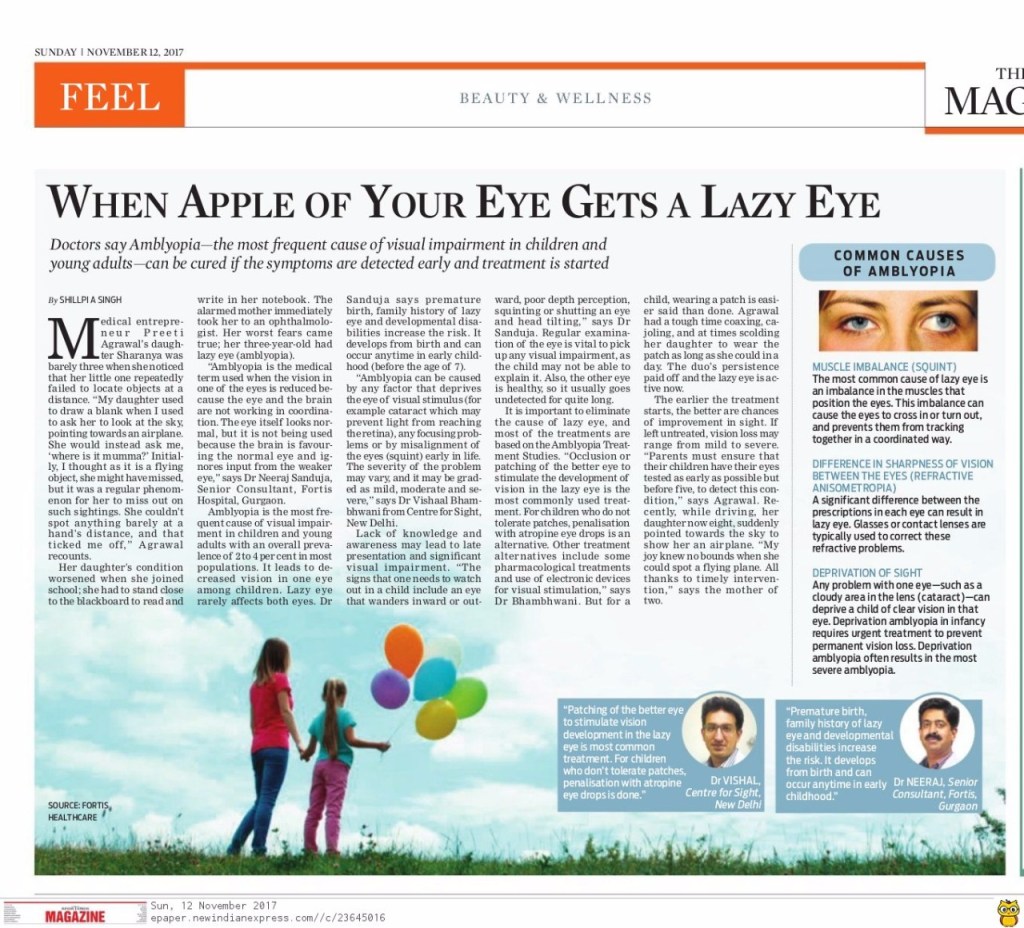
Why is an eye lazy to see?

https://www.newindianexpress.com/lifestyle/health/2017/nov/11/when-apple-of-your-eye-gets-a-lazy-eye-1697058.html

Tests and diagnosis: 

The ophthalmologist will look for a wandering eye, as well as a difference in vision between the eyes or poor vision in both eyes. Depending on the child’s age, tests may include the following:
* Newborns: Red reflex test to look for cataracts, using a lighted magnifying device (ophthalmoscope)
* Infants: Test for ability to fixate their gaze and follow a moving object, as well as check for strabismus
* Toddlers: Red reflex test, photo screening or remote auto refraction
* Preschoolers and older children: Testing using pictures or letters. Each eye is patched in turn to test the other
The doctor may also check for inflammation, tumors and other inner eye problems.

Common causes of the condition

Muscle imbalance (Squint): The most common cause of lazy eye is an imbalance in the muscles that position the eyes. This imbalance can cause the eyes to cross in or turn out, and prevents them from tracking together in a coordinated way.

Difference in sharpness of vision between the eyes (refractive anisometropia): A significant difference between the prescriptions in each eye can result in lazy eye. Glasses or contact lenses are typically used to correct these refractive problems.

Deprivation of sight: Any problem with one eye — such as a cloudy area in the lens (cataract) — can deprive a child of clear vision in that eye. Deprivation amblyopia in infancy requires urgent treatment to prevent permanent vision loss. Deprivation amblyopia often results in the most severe amblyopia.

Treatment options depend on the cause of lazy eye and on how much the condition is affecting the child’s vision.

Corrective eyewear: Glasses or contact lenses can correct problems such as nearsightedness, farsightedness or astigmatism that result in lazy eye.

Eye patches: To stimulate the weaker eye, your child may wear an eye patch over the stronger eye. The patch is generally worn for two to six hours a day.

Eyedrops: A twice-weekly eyedrop of a medication called atropine (Isopto Atropine) can temporarily blur vision in the stronger eye. This will encourage your child to use the weaker eye, and offers an alternative to wearing a patch. Side effects include sensitivity to light.

Surgery: If the child’s eyes cross or wander apart, the doctor may recommend surgical repair for the eye muscles. The child may also need surgery if he or she has droopy eyelids or cataracts.

World Sight Day 2021: Touch to See, Listen to Know

https://www.freepressjournal.in/cmcm/they-cant-see-but-they-can-read
https://mindthegapalways.in/2017/04/23/touch-to-see-listen-to-know/

Grooming is a man thing

Does one cream fit all? No, not anymore. Not just women, but the men, are equally conscious of their looks. After all, it pays to look presentable, and well-groomed. And unlike the common perception that men aren’t bothered enough to pay attention to their skin, beard, hair, men do care, and a lot more than ever. True that! Even though the millennial generation has grown up watching the men in the family apply nothing more than Old Spice after shaving lotion as far as grooming was concerned, and it was the only indulgence. Then came the onslaught of creams, and here too, they were happy to use the products meant only for women because none existed for them. But going by the way the men’s grooming market is expanding in every conceivable dimension – categories that people are using, diversity of choice variables, price points that are operational, and so on, there is one cream for every season, to suit any occasion and indeed, for a good reason. Be it skin care, body and bath, hair care, or beard and moustache; a man is spoiled for choice when it comes to a grooming range explicitly meant for them, from the tip to that toe, nothing is off that grooming range. Because a well-groomed man is a complete man.

Shillpi A singh

https://www.freepressjournal.in/lifestyle/male-grooming-is-booming

Rheumatoid Arthritis is more common in women

On World Arthritis Health, Dr Siddharth M. Shah says that Rheumatoid Arthritis impacts the immune system attacks its joints and organs. It results in inflammation, destruction, and damage of the involved joints, tissues, or organs. Like most autoimmune problems, rheumatoid arthritis also affects women more commonly than men. 

Rheumatoid Arthritis is an autoimmune condition that predominantly affects the joints in one’s body. It may also affect other parts like the skin, lungs, eyes, heart, blood vessels, and bones. A dysfunctional immune system characterises autoimmune disorders. The body’s immune mechanism, which is supposed to fight against harmful bacteria and viruses, attacks its joints, tissues, and organs. In the case of rheumatoid arthritis, the immune system attacks its joints and organs. It results in inflammation, destruction, and damage of the involved joints, tissues, or organs. Like most autoimmune problems, rheumatoid arthritis also affects women more commonly than men. Statistically, it occurs three times more in women than men and is typically seen amongst 30 to 60-year-olds.

What causes the gender differences in rheumatoid arthritis? Rheumatoid arthritis not only affects women more but also causes a severe disease manifestation in them. Although the exact cause of rheumatoid arthritis is unknown, genetic, hormonal, environmental, and lifestyle factors are assumed to play a role. The gender differences can be attributed to genetic (X chromosome) and hormonal factors. Women’s immune systems are stronger and more reactive; this might help explain a greater prevalence of autoimmune problems. The X-linked genetic factors can also be held responsible for severe disease in women.

Hormonal factors are thought to play a role because the disease is influenced by pregnancy, childbirth, breastfeeding, menopause, and the menstrual cycle. These significant bodily changes fluctuate the hormonal balance in the body. Generally, normal levels of female hormones Oestrogen and Progesterone protect against rheumatoid arthritis.

  • Sometimes, women who have rheumatoid arthritis may experience disease remission during pregnancy. The condition is also known to flare up post-childbirth.
  • Breastfeeding has been found to reduce the risk of getting rheumatoid arthritis.
  • The disease may appear after having a baby or around menopause.
  • Women may experience worsening symptoms during the second week of their menstrual cycle when the hormonal levels are low.

The disease severity is greater, and its progression is faster in women. Research suggests that women may experience more physical pain for the same painful stimulus as compared to men. Rheumatoid arthritis is also known to cause more disability in women as they have lesser muscle strength than men. In contrast, the male hormone Testosterone suppresses the immune system, which is primarily responsible for the disease, explaining the less severity of symptoms in men.

How to deal with Rheumatoid Arthritis?

  • It is best to seek timely treatment from a specialist and follow up regularly
  • Avoid smoking as it worsens the symptoms
  • Moderate alcohol consumption may have some beneficial effects as it tends to reduce exhibitory symptoms by reducing inflammatory activity
  • Maintain a healthy body weight as being overweight can worsen your rheumatoid arthritis
  • Regular exercise has been found to improve rheumatoid arthritis
  • Frequently consume fish rich in Omega-3 Fatty Acids to gain protection against rheumatoid arthritis

Although there is no cure for rheumatoid arthritis, modern medical treatments can help keep the disease under control and achieve remission. The importance of early diagnosis and appropriate treatment of rheumatoid arthritis in women cannot be stressed enough, as they are likely to have a severe disease with rapid progression. Hence, proper, timely medical care helps limit disability and improves the quality of life.

(Dr Siddharth M. Shah is Consultant Orthopaedics & Joint Replacement Surgeon, SL Raheja Hospital, Mahim)

Mind it because older adults matter

https://www.freepressjournal.in/amp/weekend/world-mental-health-day-2021-helping-the-elderly-cope-with-mental-health-problems-amid-the-pandemic
The article was published in all editions of The Free Press Journal on World Mental Health Day on October 10, 2021.

Floored by Flowers

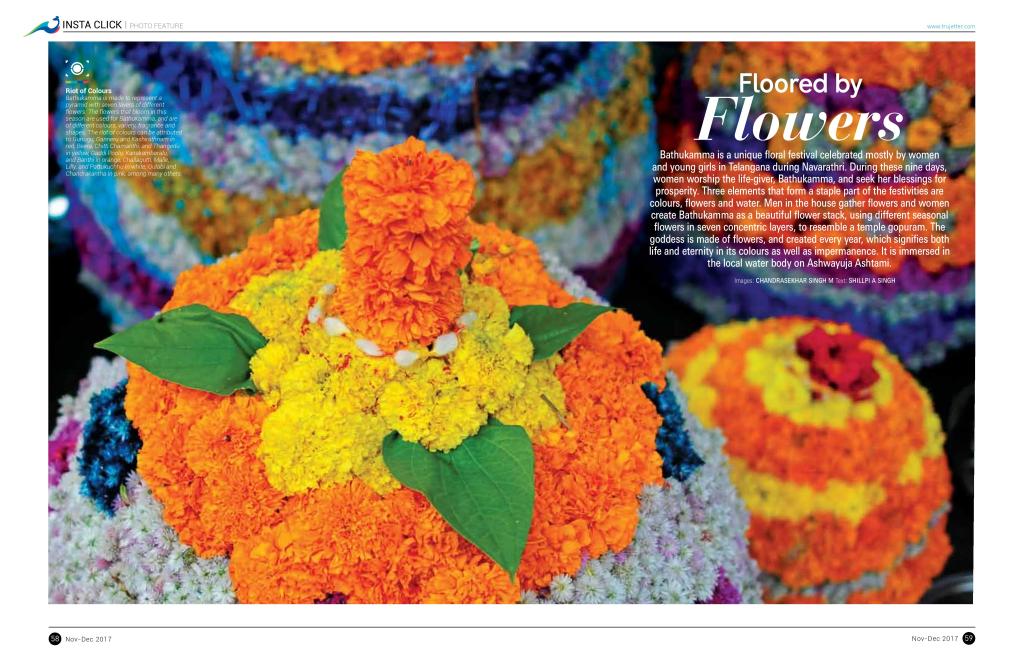
Bathukamma is a unique floral festival celebrated mostly by women and young girls in Telangana during Navarathri. During these nine days, women worship the ‘life-giver’ Bathukamma, and seek her blessings for prosperity. Three elements that form a staple part of the festivities are colours, flowers and water. Men in the house gather flowers and women create Bathukamma as a beautiful flower stack, using different seasonal flowers in seven concentric layers, to resemble a temple gopuram. The goddess is made of flowers, and created every year, which signifies both life and eternity in its colours as well as impermanence. It is immersed in the local water body on Ashwayuja Ashtami that falls two days before Dussehra. The Government of Telangana has declared the Bathukamma festival as Telangana’s state festival.  A photo feature with photos by Chandrasekhar Singh M and text by Shillpi A Singh; it was first published in TruJetter.

The nine-day long Bathukamma festival begins on Petramavasya or Mahalaya Amavasya in the month of Bhadrapadam. During these nine days, women worship the nine Bathukammas. The festivities culminate on Pedda Bathukamma or Ashwayuja Ashtami that falls two days before Dussehra. Women walk with their Bathukammas, place it on the banks of the river, pond or lake, sing and dance before immersing them. The festival is a celebration of womanhood, but men also participate in it with equal fervour. Mostly, it is the menfolk who gather flowers and also carry the Bathukamma on their heads before leaving it into the water body as the women watch Bathukammas flow away. The flowers used for making Bathukamma work as purifiers for water bodies and help in ecological conservation. 
The marketplace is abuzz with flowers, sellers and buyers during this time of the year. A seller sits with a heap of flowers called Gunugu, the common name for Silver Cock’s comb or Celosia agrentea. Like other flowers used in preparing Bathukamma, this too has unique medicinal values. 
Preparing a Bathukamma is an art. The layers of the flower are arranged in the shape of a pyramid with a lotus or pumpkin flower on top of the stack along with Gouramma (a symbolic idol of Gowri made of turmeric). The lotus flower used in Bathukamma represents prosperity. 
Bathukamma is made to represent a pyramid with seven layers of different flowers. The flowers that bloom in this season are used for Bathukamma, and are of different colours, variety, fragrance, and shapes. The riot of colours can be attributed to Gunugu, Ganneru and Kashirathnam in red, Beera, Chitti Chamanthi, and Thangedu in yellow, Gaddi Poolu, Kanakambaralu, and Banthi in orange, Challagutti, Malle, Lilly, and Pattukuchhu in white, Gulabi and Chandrakantha in pink, among many others.  


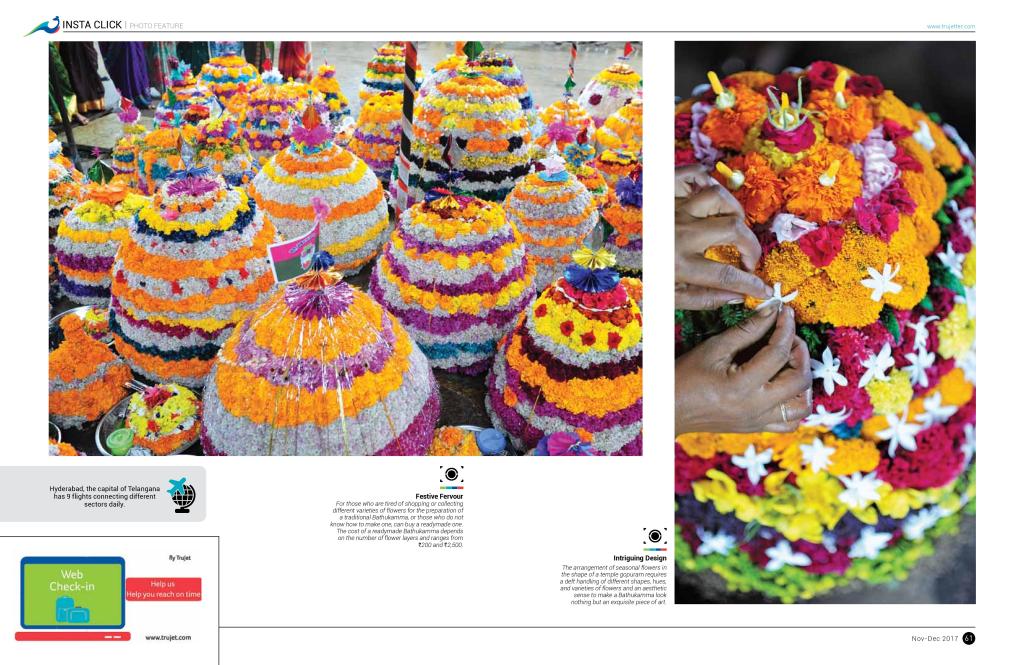
For those who are tired of shopping or collecting different varieties of flowers for the preparation of a traditional Bathukamma, or those who do not know how to make one, can buy a readymade one. The cost of a readymade Bathukamma depends on the number of flower layers and ranges from Rs 200 and Rs 2,500. 
The arrangement of seasonal flowers in the shape of a temple gopuram requires a deft handling of different shapes, hues, and varieties of flowers and an aesthetic sense to make a Bathukamma look nothing but a piece of art.  
For making a Bathukamma, flowers are arranged in seven concentric circles to form a pyramid on a round steel or brass plate with a small edge. Two pieces of thread are laid on the plate, perpendicular to each other, and passing over the centre of the plate. A ‘Vistharaku’ or a plate made of leaves is placed on the steel or brass plate. A layer of pumpkin leaves is spread over the ‘Vistharaku’, over which a layer of Thangedu, tiny yellow flowers with green buds and leaves and long stems, is placed and on top of it, Gunugu flowers are arranged radially. The hollow that is formed in the centre is called Bathukamma’s stomach, and it is kept full and filled with leaves and other flowers. The filling also makes the pyramid strong irrespective of its size. The subsequent layers/rows are arranged with Banthi and Chamanthi or any other colourful flower and even some artificially coloured flowers. On the top of the layer, a pumpkin flower or lotus is placed. Finally, the loose ends of the two threads are drawn up and tied at the top to hold the Bathukamma in position. 


In addition to the beautiful layering of flowers, Bathukamma festival is also about folk songs, a great vocal tradition handed down from generation to generation. In the evenings and on the last day, women dressed in their traditional finery assemble at an open ground, keep their Bathukammas in a circle and dance around it while singing soul-stirring Bathukamma folk songs. Their moves are beautifully syncronized with clapping in between that makes for a splendid sight. The older Bathukamma songs depicted people’s problems whereas the current songs are about Telangana culture and traditions.

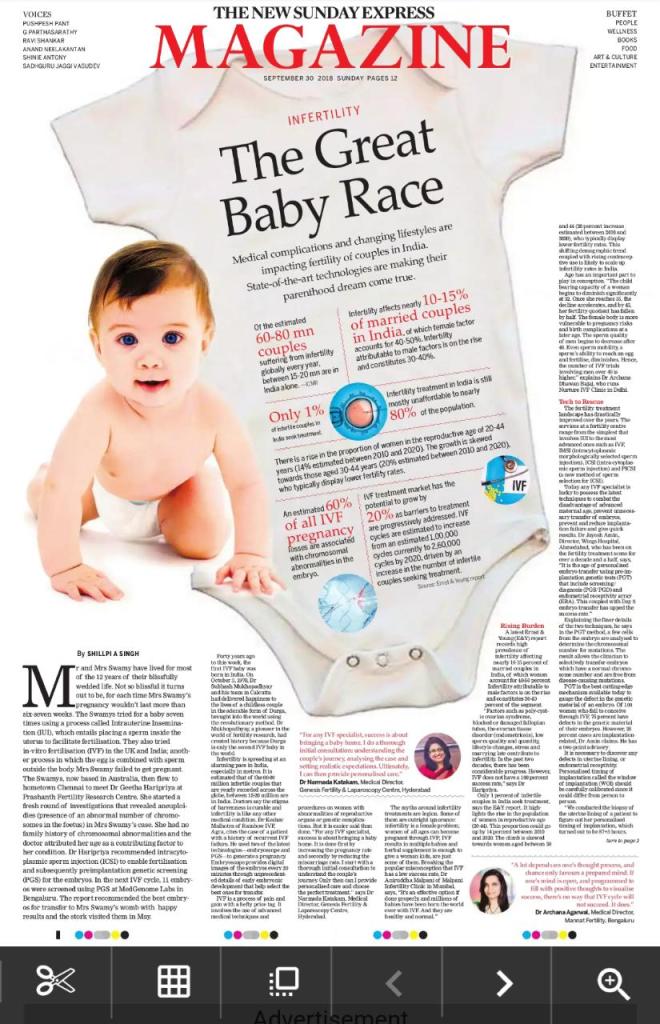
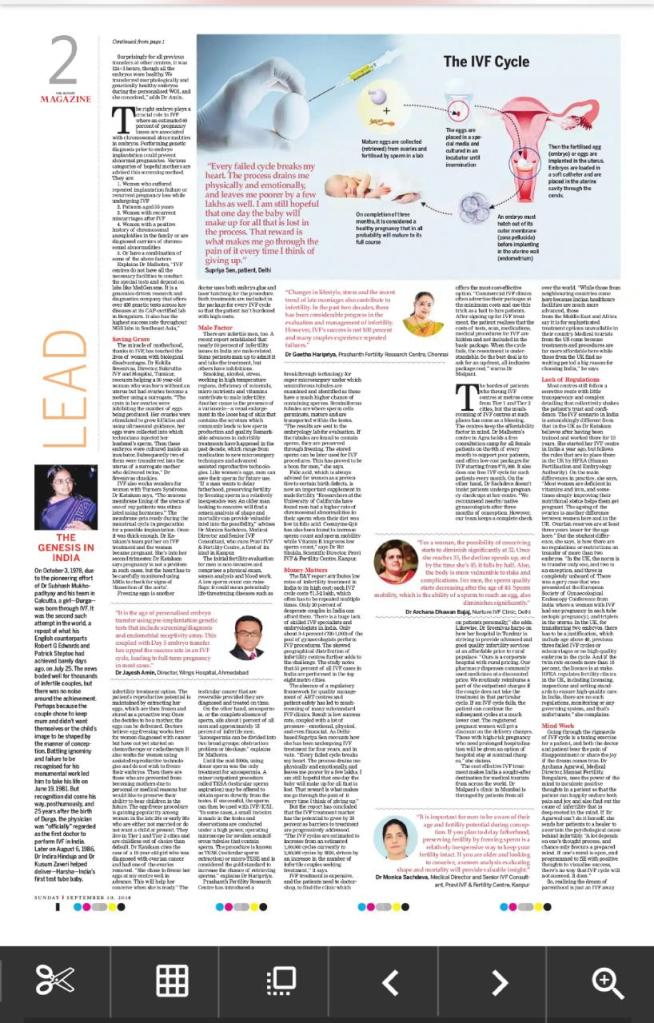
Happy 43rd to India’s first IVF baby, Durga

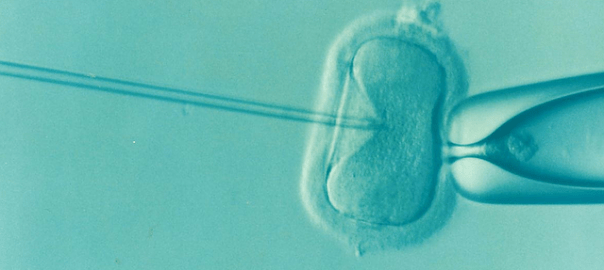
On October 3, 1978, Dr Subhash Mukhopadhyay’s and his team in Calcutta successfully delivered happiness in the lives of a childless couple with the birth of their little bundle of joy. The girl who was nicknamed Durga after the Hindu goddess was born through in-vitro fertilisation (IVF) thanks to Dr Mukhopadhyay’s pioneering effort that was the second such successful attempt for IVF across the world. It was a repeat of what his English counterparts Robert G Edwards and Patrick Steptoe had achieved barely days ago, on July 25 with the birth of Louise Brown, the world’s first such baby. The news bode well for thousands of infertile couples who yearned to become parents, but unlike the much celebrated IVF birth in England, there was no noise around his pioneering achievement, the first of its kind in India. Perhaps because the couple chose to remain mum and didn’t want themselves or the child’s public image to be shaped by the manner of conception, and the other stakeholders too remained indifferent to his remarkable achievement. Battling ignominy and failure to be recognised for his monumental work led him to take his life on June 19, 1981.

Meanwhile, Dr Indira Hinduja and Dr Kusum Zaveri helped deliver a baby girl named Harsha on August 6, 1986, who went on to earn the pride of being India’s first test-tube baby. But recognition did come Dr Mukhopadhyay’s way, posthumously, and 25 years after the birth of Durga, the Indian physician was “officially” regarded as the first doctor to perform in-vitro fertilization in India. 
The case in point explains the burden of having a progeny, often weighed down by the shame and embarrassment of not having one without any medical intervention, and sets the tone for the problem called infertility, a condition that needs attention and like any other ailment, can be cured with proper treatment. To fulfil parenthood dream, one needs to get past the maze of ignorance to access medical care that often comes at a price, endure all the pain that is borne by the patient, and doctor in equal measure, and get assurance in abundance that one day it would be all worth it with a baby around to wipe off all the weariness of undertaking the arduous journey called IVF. 

Published in The New Indian Express on September 30, 2018 https://www.newindianexpress.com/magazine/2018/sep/30/the-great-baby-race-1878013.html