क़लम मज़दूर | Commspreneur | Recipient of the IIMCAA Award for Public Relations Person of the Year 2024 | Canva's Top 10 Social Media Creator for 2023 | Work-in-Progress
View all posts by Shillpi A Singh →
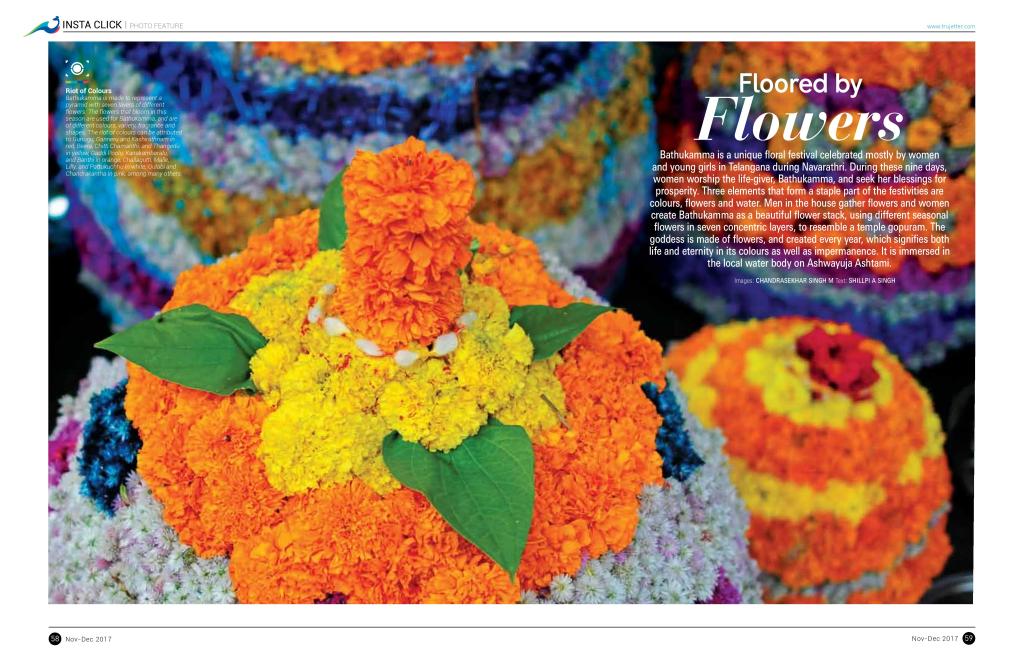
Bathukamma is a unique floral festival celebrated mostly by women and young girls in Telangana during Navarathri. During these nine days, women worship the ‘life-giver’ Bathukamma, and seek her blessings for prosperity. Three elements that form a staple part of the festivities are colours, flowers and water. Men in the house gather flowers and women create Bathukamma as a beautiful flower stack, using different seasonal flowers in seven concentric layers, to resemble a temple gopuram. The goddess is made of flowers, and created every year, which signifies both life and eternity in its colours as well as impermanence. It is immersed in the local water body on Ashwayuja Ashtami that falls two days before Dussehra. The Government of Telangana has declared the Bathukamma festival as Telangana’s state festival. A photo feature with photos by Chandrasekhar Singh M and text by Shillpi A Singh; it was first published in TruJetter.
The nine-day long Bathukamma festival begins on Petramavasya or Mahalaya Amavasya in the month of Bhadrapadam. During these nine days, women worship the nine Bathukammas. The festivities culminate on Pedda Bathukamma or Ashwayuja Ashtami that falls two days before Dussehra. Women walk with their Bathukammas, place it on the banks of the river, pond or lake, sing and dance before immersing them. The festival is a celebration of womanhood, but men also participate in it with equal fervour. Mostly, it is the menfolk who gather flowers and also carry the Bathukamma on their heads before leaving it into the water body as the women watch Bathukammas flow away. The flowers used for making Bathukamma work as purifiers for water bodies and help in ecological conservation. The marketplace is abuzz with flowers, sellers and buyers during this time of the year. A seller sits with a heap of flowers called Gunugu, the common name for Silver Cock’s comb or Celosia agrentea. Like other flowers used in preparing Bathukamma, this too has unique medicinal values. Preparing a Bathukamma is an art. The layers of the flower are arranged in the shape of a pyramid with a lotus or pumpkin flower on top of the stack along with Gouramma (a symbolic idol of Gowri made of turmeric). The lotus flower used in Bathukamma represents prosperity. Bathukamma is made to represent a pyramid with seven layers of different flowers. The flowers that bloom in this season are used for Bathukamma, and are of different colours, variety, fragrance, and shapes. The riot of colours can be attributed to Gunugu, Ganneru and Kashirathnam in red, Beera, Chitti Chamanthi, and Thangedu in yellow, Gaddi Poolu, Kanakambaralu, and Banthi in orange, Challagutti, Malle, Lilly, and Pattukuchhu in white, Gulabi and Chandrakantha in pink, among many others.
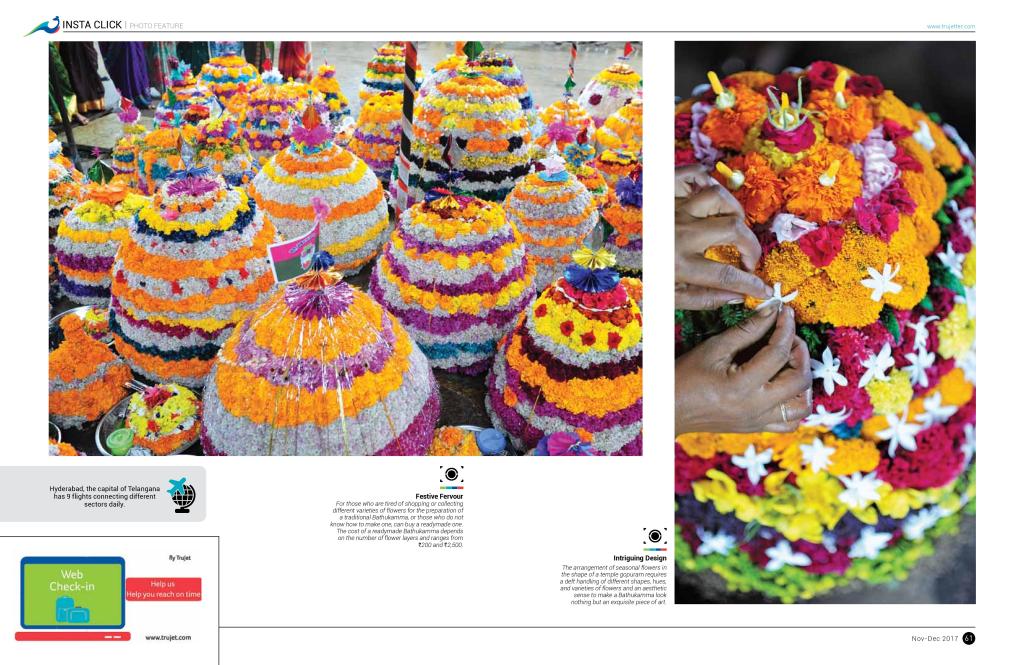
For those who are tired of shopping or collecting different varieties of flowers for the preparation of a traditional Bathukamma, or those who do not know how to make one, can buy a readymade one. The cost of a readymade Bathukamma depends on the number of flower layers and ranges from Rs 200 and Rs 2,500. The arrangement of seasonal flowers in the shape of a temple gopuram requires a deft handling of different shapes, hues, and varieties of flowers and an aesthetic sense to make a Bathukamma look nothing but a piece of art. For making a Bathukamma, flowers are arranged in seven concentric circles to form a pyramid on a round steel or brass plate with a small edge. Two pieces of thread are laid on the plate, perpendicular to each other, and passing over the centre of the plate. A ‘Vistharaku’ or a plate made of leaves is placed on the steel or brass plate. A layer of pumpkin leaves is spread over the ‘Vistharaku’, over which a layer of Thangedu, tiny yellow flowers with green buds and leaves and long stems, is placed and on top of it, Gunugu flowers are arranged radially. The hollow that is formed in the centre is called Bathukamma’s stomach, and it is kept full and filled with leaves and other flowers. The filling also makes the pyramid strong irrespective of its size. The subsequent layers/rows are arranged with Banthi and Chamanthi or any other colourful flower and even some artificially coloured flowers. On the top of the layer, a pumpkin flower or lotus is placed. Finally, the loose ends of the two threads are drawn up and tied at the top to hold the Bathukamma in position.
In addition to the beautiful layering of flowers, Bathukamma festival is also about folk songs, a great vocal tradition handed down from generation to generation. In the evenings and on the last day, women dressed in their traditional finery assemble at an open ground, keep their Bathukammas in a circle and dance around it while singing soul-stirring Bathukamma folk songs. Their moves are beautifully syncronized with clapping in between that makes for a splendid sight. The older Bathukamma songs depicted people’s problems whereas the current songs are about Telangana culture and traditions.
On October 3, 1978, Dr Subhash Mukhopadhyay’s and his team in Calcutta successfully delivered happiness in the lives of a childless couple with the birth of their little bundle of joy. The girl who was nicknamed Durga after the Hindu goddess was born through in-vitro fertilisation (IVF) thanks to Dr Mukhopadhyay’s pioneering effort that was the second such successful attempt for IVF across the world. It was a repeat of what his English counterparts Robert G Edwards and Patrick Steptoe had achieved barely days ago, on July 25 with the birth of Louise Brown, the world’s first such baby. The news bode well for thousands of infertile couples who yearned to become parents, but unlike the much celebrated IVF birth in England, there was no noise around his pioneering achievement, the first of its kind in India. Perhaps because the couple chose to remain mum and didn’t want themselves or the child’s public image to be shaped by the manner of conception, and the other stakeholders too remained indifferent to his remarkable achievement. Battling ignominy and failure to be recognised for his monumental work led him to take his life on June 19, 1981.
Meanwhile, Dr Indira Hinduja and Dr Kusum Zaveri helped deliver a baby girl named Harsha on August 6, 1986, who went on to earn the pride of being India’s first test-tube baby. But recognition did come Dr Mukhopadhyay’s way, posthumously, and 25 years after the birth of Durga, the Indian physician was “officially” regarded as the first doctor to perform in-vitro fertilization in India. The case in point explains the burden of having a progeny, often weighed down by the shame and embarrassment of not having one without any medical intervention, and sets the tone for the problem called infertility, a condition that needs attention and like any other ailment, can be cured with proper treatment. To fulfil parenthood dream, one needs to get past the maze of ignorance to access medical care that often comes at a price, endure all the pain that is borne by the patient, and doctor in equal measure, and get assurance in abundance that one day it would be all worth it with a baby around to wipe off all the weariness of undertaking the arduous journey called IVF.
Alaska has many pleasant surprises in store, says avid globetrotter and travel writer Upasna Prasad.
My family was holidaying in Vancouver, Canada, in June 2015, from where we decided to go on a week-long Celebrity Cruise trip across Alaska. Our first halt was Icy Strait Point, then Juneau and finally Ketchikan before retreating to Vancouver.
Icy Strait Point.
Icy Strait Point: After being on the sea for a full two days with no land in sight across the North Pacific Ocean, we reached Hoonah village, Alaska’s largest Native Tlingit village, on the third day. Icy Strait Point was the name of the port where our ship disembarked. We took the exciting Humpback Whale watching boat trip in the Pacific’s nutrient-rich, bountiful, icy cold waters. The whales are plentiful here, so we did spot a few.
Our Humpback Whale watching boat trip.
Next, we headed to Tongass National Park on a local bus for coastal brown bear sightings. Alas, we did not have a glimpse of the bear! We wore warm-layered clothing and a waterproof jacket with comfortable shoes to enjoy the open-air adventure. Remember, when in Alaska, do not forget your cameras and binoculars!
The Gray Line of Alaska.
Juneau: In Alaska, there are many spectacular glaciers and mountains to view. So, upon reaching Juneau, the capital city of Alaska and an important hub for gold diggers; we did not waste time. After finishing our scrumptious lunch of delectable Dungeness crabs, grilled corn and salmon, we headed to view the spectacular Mendenhall Glacier. The glacier has retreated a mile every year since 1930. We also visited a visitor centre nearby with a wealth of information on plants, animals and geology.
Mendenhall Glacier.
Since it was a day stopover, we had to make the most of it. We hired a Ranger who showed us old gold mines in the mountains. We continued with our adventure with a helicopter sightseeing at Douglas Island. It was a phenomenal experience over the Juneau ice fields in the picturesque Norris Glacier. The pilot was well informed too! The helicopter halted at Norris Glacier for a mushing time, Dog Sledding!
A helicopter sightseeing at Douglas Island.
The dog teams welcomed us and took us on a thrilling trip on wheeled sleds. Alaskan huskies pulled us across fields blanketed by snow and surrounded by snow-capped mountains. We were given snow boots to wear over our shoes to walk comfortably.
The dog sled tour.
It was a fabulous experience. The dog sled tour is long over, but the memories will remain with us forever.
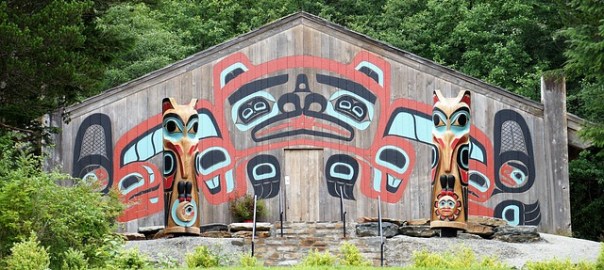
Ketchikan: Rains welcomed us in Ketchikan, a colourful city of timber, totem poles and salmon. Totem poles are beautifully carved, painted logs of wood, vertically mounted and constructed by the North American Tlingit clan. In fact, colourful Totem poles adorn the whole city. Each animal or spirit carved on the pole has a meaning and is part of an important story or myth.
The totem pole in Ketchikan.
The Alaskan salmon have interesting lives as before they die, they return to their birth stream or river after spending several years in the Pacific. Our Ranger told us that brown bears come down from the mountains towards the rivers or streams searching for salmon.
Cruising along.
By evening, we bid adieu to this colourful historic city of Ketchikan and embarked on our cruise for our last lap of the journey back to Vancouver.
… a letter for my dearest and now departed friend, Aashish
प्रिय आशीष, बचपन में तुम्हारी शैतानियाँ। लड़कपन में तुम्हारी इश्क़ की कहानियाँ। और फिर जवानी में तुम्हारे हाथ की बनी मिठाइयाँ। आज बहुत याद आ रही है तुम्हारी, दोस्त । पिछले कुछ सालों में आदत सी हो गयी थी तुम्हारी बतकही की। चाहे तुम कितना भी व्यस्त रहते थे, चाहे दुनिया के किसी भी कोने में होते थे, पर हर दूसरे दिन एक बार फ़ोन खटका ही दिया करते थे, कभी हाल-चाल जानने के लिए, कभी कुछ बताने के लिए, कभी अपना दिल हलका करने के लिए और कभी मेरी बेवजह वाली बकवास सुनने के लिए । तुम्हारे इंडिया लौट आने के बाद तुमसे हर अगले दिन बात हो जाया करती थी।और बातें भी क्या हुआ करती थी बस यूँ ही इधर-उधर की बकर, बेवजह की हंसी-ठिठोली और कुछ दूर एक साथ बचपन के शहर की यादों में खो जाना। बहुत अच्छा लगता था । आज फिर तुम्हारी कमी बहुत ज्यादा महसूस हो रही है क्यूंकि तुम्हारे जैसा और कोई नहीं था और न होगा, आशीष। तुमने उस दिन (चार अप्रैल) को कितनी बड़ी धमकी दी थी मुझे, याद है तुम्हें? “अगर आज तू मुझसे मिलने सोहना नहीं आयी तो मैं तुझसे ज़िन्दगी भर फिर कभी बात नहीं करूँगा! याद रखना, शिल्पीजी (इस नाम से सिर्फ तुम ही बुलाते थे मुझे)।” तुम और तुम्हारी इमोशनल ब्लैकमेलिंग ! इनके सामने मेरी क्या बिसात। दिन के बारह बजे थे और फ़ोन पर तुम्हारी धमकी सुनकर मेरे दिल में बारह बज गए। फिर क्या था। तुमसे फिर कभी न बात करने से बड़ी और कोई सज़ा नहीं हो सकती है मेरे लिए, मेरे दोस्त। तुम्हें फ़ोन कर बता दिया कि हम सब आ रहे हैं। तुरंत बच्चों को तैयार करवा कर हम सपरिवार तुम्हारे आदेशानुसार सोहना के लिए रवाना हो गए। तब तक दोपहर के दो बज गए थे। दूरी बहुत ज्यादा थी। तुम हर दस मिनट के बाद पूछ रहे थे, “अब कहाँ?” “और कितनी दूर?” “कब पहुँचोगी?” आज सब कुछ बहुत याद आ रहा है। पौने चार बज गए थे हमें सोहना पहुँचते-पहुँचते और हम चारों को वहां देख तुम कितने खुश हुए जैसे एक रूठे हुए बच्चे के हाथ में उसकी प्यारी चॉकलेट थमा दी हो किसी ने और उसे पा कर उस बच्चे की बांझे खिल गयी हो। तुमने दोनों बच्चों कि जिम्मेदारी मेरे हाथों से ले ली और मुझे हिदायत दी, “अब तू सिर्फ रिलैक्स कर। यहाँ बैठ, और सिर्फ खा-पी।” शायद यह कह कर तुम मुझे आने वाले तूफ़ान से जूझने के लिए तैयार कर रहे थे। तुम्हारे साथ बच्चों ने खूब मस्ती की। आज भी उन्हें तुम बहुत याद आते हो। तुमने उन्हें चॉपस्टिक से नूडल्स खाना सिखाया और यह शायद उनके लिए एक अनमोल सीख है। और हमेशा रहेगी। हम तुम फिर यूँ ही शाम की हलकी धूप में बैठकर हमेशा की तरह फिर से बकर करने में जुट गए। कितने देर तक यूँ ही बैठे रहे। तुमने मेरी वाली कड़क चाय बनवाई और प्यार से एक नहीं दो कप मेरे लिए मंगवाई।वह शाम, तुम और तुम्हारी बातें आज बहुत याद आ रही हैं। दीवार पर एक काली छिपकली देख कर तुमने हाउसकीपिंग वाले बन्दे को बुला कर खूब डांटा और शायद उसके आने से पहले तुम्हारे गुस्से से डर कर वह छिपकली तुरंत गायब भी हो गयी थी । मैंने हंस कर तुम्हें बताया कि दो दिन पहले मुझे और अजय को सपने में छिपकली खुद पर रेंगती दिखी थी। तुम भी हंस कर बोले, “और तू डर गयी?” मैंने कहा, “नहीं, पर कहते हैं कि ऐसा सपना देखने से इंसान की जान को खतरा होता है।” तुम और जोर से हंस कर मेरी खिल्ली उड़ाने लग गए। बात आयी गयी कर तुम हमें पूल के पास ले गए। दिन खत्म होने को था पर तुम्हारी कहानियाँ खत्म होने का नाम ही नहीं ले रही थी। बचपन-जवानी-बुढ़ापा (क्यूंकि हम और तुम हमेशा एक-दुसरे से यह कह कर अपनी ४०+ उम्र का मजाक उड़ाते थे) तुमने मुझे तीनों पड़ावों के बहुत सारे किस्से सुनाये थे उस दिन । आज भी सब कुछ याद है। बातों-बातों में तुमने अपने युवा सहकर्मी की कुछ दिन पहले (ग्यारह मार्च) को सड़क दुर्घटना में हुई मौत के बारे में बताया। तुम उसके अचानक यूँ ही चले जाने से बहुत दुखी थे। यह कहते-कहते तुम्हारी बड़ी-बड़ी भूरी आखें आंसुओं से भर कर धुंधली हो गयीं थी । आंसुओं को तो तुमने किसी तरह रोक लिया पर तब तक तुम्हारी आवाज ने धोखा दे दिया। उस सहकर्मी के पार्थिव शरीर को देख कर उसकी माँ की हालत बताते हुए तुम जैसे फिर से टूट गए थे। ऐसा लग रहा था कि तुम्हें यकीन नहीं हो रहा था कि वो अब फिर कभी लौट कर नहीं आएगा। तुम्हें क्या पता था कि आज मेरी भी वही हालत है। शाम हो चली थी। हमने भी तुमसे घर जाने की अनुमति मांगी। तुमने साथ में मेरा वाला चॉकलेट केक, मिठाइयों का डिब्बा और मीठी यादों के साथ हमें विदा किया।आखरी बातचीत में साथ में ऋषिकेश जाना तय हुआ था।इस बात पर तुमने कहा था, “पक्का, पक्का।” याद है न, तुम्हें? पर तुम तो अकेले ही चले गए। तुम्हें शायद अनहोनी का पूर्वाभास हो गया था पर मुझे तो अभी भी यकीन नहीं हुआ है तुम्हारे नहीं होने का। अगले दिन तुमने शाम को पांच बजे के करीब फ़ोन कर पूछा, “तू रिलैक्स हुई। आजा फिर। बच्चों की चिंता मत कर। मैं उनकी देखभाल कर लूँगा। तू सिर्फ अपना ख्याल रख। बस खुश रह।” मैंने कहा, “अरे, कल ही तो आई थी सोहना। अब कल फिर आ जाऊँ?” हम-तुम यूँही फिर थोड़ी देर बकर करते रहे और जल्दी मिलने का वादा करके फ़ोन रख दिया। बस शायद यह पूर्णविराम था। मेरे और तुम्हारे लिए। उसी हफ़्ते हम-तुम बीमार पड़े। दिव्या को मैंने अचानक आठ तारीख को फ़ोन किया तो तुम्हारी तबियत के बारे में मालूम हुआ। ऐसा हमेशा होता था कि जब भी तुमसे बात नहीं हो पाती थी तो उससे तुम्हारा हाल-चाल पूछ लिया करते थे। पर उस दिन क्यों तुम्हें नहीं पर उसे फ़ोन लगाया यह समझ नहीं आया। तुम्हारी तरह, तब तक हम भी सपरिवार बुख़ार कि चपेट में आ गए थे। फिर दस तारीख को दिव्या से यह पता चला कि तुम्हारा कोविड टेस्ट नेगेटिव है तो बहुत राहत मिली। पर यह फाल्स नेगेटिव था। हमने तब तक टेस्ट नहीं करवाया था। ग्यारह को रविवार होने कि वजह से गुरुग्राम में सभी लैब बंद थे तो हम सपरिवार बारह तारीख को टेस्ट करवाने गए। वहां से वापस घर पहुंचे ही थे कि दिव्या का कॉल आया। पर कॉल मिस हो गया। तब तक दोस्तों के मेसेजस आने लगे। पर यकीन नहीं हुआ। तुम चले गए थे। दूर, बहुत दूर। अपना वादा तोड़ कर। दिव्या, अभिनव और अर्णव, मीनू को अकेला छोड़ कर। तुमने कहा था कि अगर मैं तुमसे मिलने नहीं आई तो तुम मुझसे बात नहीं करोगे पर मैं मिलने तो आई थी उस दिन पर तब भी तुम मुझसे अब कभी बात नहीं करोगे। ऐसा कोई करता है क्या, दोस्त? मुझे इतनी बड़ी सजा दे दी ? क्यों? तुम्हारी याद में, शिल्पी
(वर्तनी और व्याकरण की गलतियों के लिए मैं क्षमाप्रार्थी हूं)
वो कह के चले इतनी मुलाक़ात बहुत है मैंने कहा रुक जाओ अभी रात बहुत है Handsome is as handsome does… Aashish Juyal.
Ganesh Chaturthi is just around the corner. We are also excited to welcome Ganpati Bappa into our homes, but there is a constant worry of inviting people at home or celebrating the upcoming festivals in a crowded setting. Well, there goes a famous song, “There’s no place like home for the holidays,”and thisclassic English song seems more relevant in times today than ever before as we navigate the festival season in the COVID-19 era.
Most experts across the country have insisted that staying home is the best and safest option. That doesn’t make it sting less, though. After months of isolation, economic anxiety, and pandemic fatigue, it is entirely understandable that people are yearning for hugs from family members and meet-ups with friends.
But the reality remains that large parties/gatherings, travelling to see friends and family and brushing off masks and social distancing can have serious consequences – the impact of which will be felt beyond your circle. There is no need to celebrate festivals by gathering in a crowd; the festivities can be scaled down too. The good news is, with some modifications, you can still make the most out of our favourite time of the year. Most festivals bring hope and light – and we must hold onto this meaning all the more if we cannot celebrate them in the way we might have in the past.
GUIDELINES TO FOLLOW SHOULD YOU HAVE A SMALL GATHERING AT HOME:
Make your event as safe as possible for guests; ventilate the rooms appropriately or host the event on the terrace/ balcony to enable natural ventilation.
Keep the gathering small and short.
Encourage people to wear masks and ensure enough space for each guest to maintain at least a 1-meter distance from others.
Help your guests follow COVID19 appropriate measures – provide masks, alcohol-based hand sanitiser or access to soap and water, tissues and bins with lids that close.
Follow guidance issued by local public health authorities before you plan a gathering.
IF YOU DO PLAN TO GO OUT, HERE’S WHAT YOU NEED TO KNOW TO REDUCE YOUR RISK OF ANY INFECTION, INCLUDING CORONAVIRUS.
All crowded places should be avoided; festivals should be celebrated with all precautions.
Meet people in open areas and maintain required distancing.
Wearing a mask is a must once you step out of the house.
Six feet or two meters of social distancing is compulsory.
Sanitize your hands frequently (for at least 20 seconds).
Go out with only your social bubble.
Spitting is strictly prohibited.
Even if you get stuck in a crowd by chance, make sure you are wearing a mask and avoiding face-to-face contact.
Wash your clothes with detergent after coming back home and also take a hot water bath.
Experts suggest that those with respiratory complaints or a weakened immune system must refrain from venturing out at any cost.
Consult a doctor without delay if you notice any symptoms after returning home.
THIS FESTIVE SEASON COULD BE CELEBRATED DIFFERENTLY LIKE THIS:
As a family, be there for each other – try to have conversations with family and friends. Maybe a virtual call or small gathering while maintaining social distancing can be done. Listen to how others are coping and act with empathy & understanding.
Gift-giving – we’re all in this together and you & your gifts can be a way to share your love with your family and friends.
Be aware of overindulging – regardless of whether we can have large celebrations or not, it’s important to keep an eye on what you’re drinking and eating.
Celebrating with children – this may be when your children usually get together with cousins or friends. You could try to keep them connected through video calls so they feel included. Spend more time with them, cook for them, and indulge in some fun activities with them.
Maintain traditions – you could try to stick to the traditions that you have in place. Whether it’s making a particular meal or decorating your home on a certain day, you can create a sense of normality by maintaining these traditions.
To conclude, we can’t become complacent and should not let our guard down until the maximum population gets fully vaccinated or we reach herd immunity. Till then, we can continue following our traditions and enjoy ourselves with our family and friends while following COVID-appropriate behaviour.
(Dr Sandeep Patil, Chief Intensivist, and Dr Sudhir Gore, Head-Emergency Medicine, Fortis Hospital, Kalyan)