13 ways to fall head over heels in love with yourself…
Self-love is a crucial aspect of personal well-being and happiness. It involves valuing yourself and prioritizing your needs without compromising your well-being to please others. Understanding what self-love means to you is essential for maintaining good mental health.
Embracing self-love offers numerous advantages, including increased life satisfaction and a more positive outlook on life. It allows you to develop a strong sense of self-worth and confidence in your abilities and place in the world. Furthermore, self-love plays a vital role in maintaining optimal mental health.
Achieving Total Self-Love: 13 Steps
Embrace Your Uniqueness: Instead of comparing yourself to others, focus on your personal journey and growth. Recognize that there is no one else like you, and direct your energy towards self-improvement and personal fulfillment.
Ignore Society’s Expectations: Avoid concerning yourself with societal opinions and expectations. It is impossible to please everyone, so prioritize your own well-being and disregard the pressure to conform.
Learn from Mistakes: Give yourself permission to make mistakes. Mistakes are valuable opportunities for growth and learning. Embrace your past experiences, understanding that they contribute to your ongoing development.
Value Yourself Beyond Appearance: Recognize that your value as a person is not solely determined by your physical appearance. Reject societal pressures and wear what makes you feel confident, comfortable, and happy.
Let Go of Toxic Relationships: Identify and distance yourself from individuals who bring toxicity into your life. It may be difficult, but removing such negative influences is liberating and necessary for your personal growth and well-being.
Confront Your Fears: Instead of avoiding or suppressing your fears, face them head-on. Analyze and understand your fears, which can help alleviate anxiety and provide clarity in your life.
Trust Your Decision-Making Abilities: Believe in yourself and your capacity to make sound decisions. Your feelings and intuition are valid, and you know yourself better than anyone else. Advocate for yourself and trust your instincts.
Seize Opportunities: Don’t wait for the perfect moment to pursue your goals and dreams. Recognize that circumstances may never be ideal, but taking action and seizing opportunities can lead to personal growth and fulfillment.
Prioritize Self-Care: Don’t feel guilty about prioritizing your own well-being. Set aside time for self-care activities that help you decompress and recharge. Whether spending time in nature or engaging in activities that bring you joy, prioritise self-care.
Embrace Your Emotions: Allow yourself to fully experience a range of emotions, both positive and negative. Embrace pain and joy, as they provide valuable insights into your own nature. Remember, your feelings do not define your identity.
Express Yourself Boldly: Practice speaking your mind and expressing your thoughts and opinions. Boldness is a skill that grows with practice. Take a seat at the table, contribute to conversations, and assert your voice confidently.
Appreciate Simple Pleasures: Make a conscious effort to notice and appreciate the beauty in small things around you. Cultivate gratitude for these simple pleasures, as it brings perspective and enhances your ability to find joy.
Practice Self-Compassion: Be kind to yourself in a world full of criticism. Avoid negative self-talk and celebrate your progress and growth. Regularly acknowledge and appreciate your accomplishments, not just on special occasions.
By following these 13 steps, you can embark on a journey towards total self-love, fostering a healthy and positive relationship with yourself while prioritizing your well-being and happiness.
The full moon in July 2023, known as the Buck Moon, will occur on July 3. It will be visible for three days. This full moon is also a supermoon, appearing larger and more vibrant due to its proximity to Earth during perigee.
Three of Us!
Have you ever wondered about the fascinating connection between the moon and the dramatic tides that grace the shores? Join us as we dive into a captivating myth that sheds light on this celestial phenomenon.
In ancient times, the Gods reigned supreme over the sky, the earth, and the seas, each realm governed by a distinct deity. It was a harmonious era when their story unfolded. Atop the celestial sphere, the Sun God held dominion over the skies, basking in the glory of his golden chariot as he surveyed his celestial kingdom. His beloved daughter, Luna, adorned the night sky as the radiant moon, embarking on celestial sojourns in her shimmering silver chariot whenever her father retired.
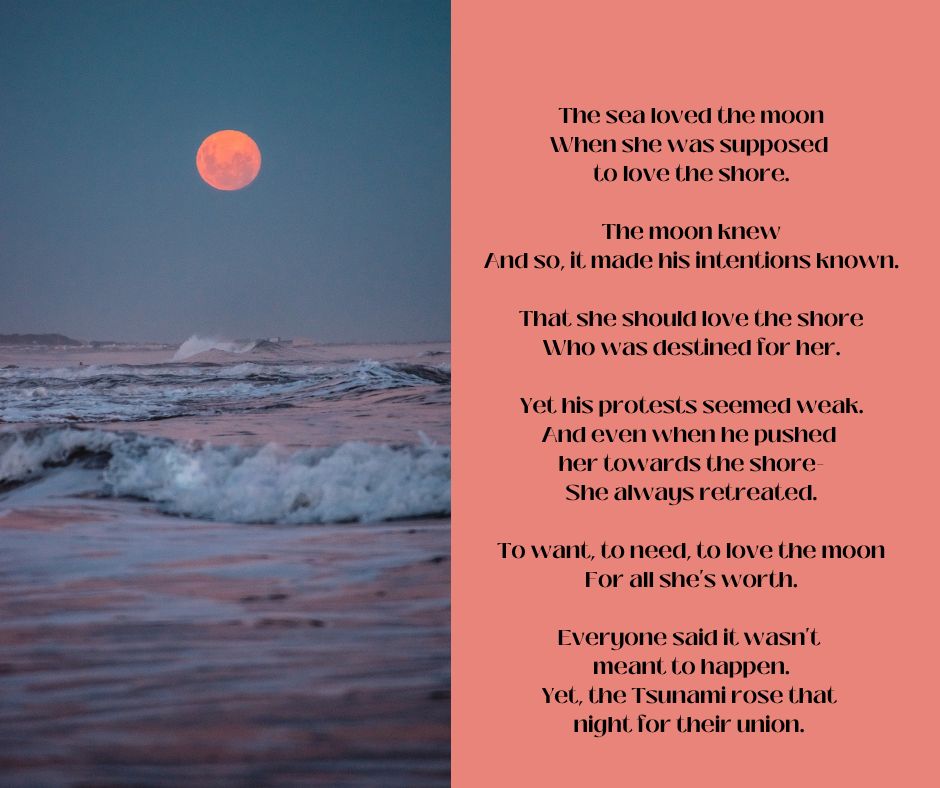
One moonlit night, Luna embarked on an uncharted path, venturing closer to where the vast sky meets the boundless ocean. The mesmerizing expanse of shimmering waters enchanted her, reminiscent of her ethereal abode.
As Luna stood captivated by the scene, she sensed an intriguing presence observing her every move. A young man, bearing a golden hue akin to her father’s brilliance, sat upon a rock, casting his gaze upon her. Initially cautious of the handsome stranger, Luna contemplated leaving the scene. However, his warm smile enticed her to stay.
Curiosity piqued, Luna inquired about his identity, revealing her divine lineage as the daughter of the Sky God. The young man, Mar, proudly disclosed that he was the son of the Sea God. This encounter marked the genesis of an extraordinary friendship.
Mar regaled Luna with captivating tales of the vast ocean and its wonders, while Luna reciprocated by sharing the celestial chronicles from her realm. Night after night, they revelled in the joy of storytelling, forging a profound bond.
Soon, their affection blossomed into love, prompting Luna to confide in her cousin about her clandestine romance with Mar. Unbeknownst to her, her cousin betrayed her trust by promptly informing her uncle.
The wrath of the Sun God blazed like his scorching golden rays when he learned of Luna’s transgressions. He summoned his daughter, vehemently admonishing her for violating the sacred laws that governed their celestial existence. Luna, pleading for understanding, professed her love for Mar, who, like her, hailed from divine origins.
Despite her pleas, the Sun God remained relentless in his anger, confining Luna within the confines of a garden. Meanwhile, a messenger was dispatched to deliver the news to the Sea God, who reacted with fury upon discovering his son’s forbidden affection. Mar, too, found himself imprisoned within a secluded sea cave, bearing the weight of his father’s disapproval.
Separated and consumed by longing, Luna and Mar yearned for each other’s presence. One fateful night, driven by an unquenchable desire to reunite, Luna orchestrated her daring escape from the garden, embarking on a celestial odyssey in her silver chariot toward the vast sea. From his secluded cavern, Mar caught sight of Luna’s ethereal reflection glistening upon the ocean’s surface, intensifying his longing to be reunited with his beloved.
Although Mar’s attempts to break free from his watery prison proved futile, his ardent struggle caused the waves to surge and swell with newfound vigour. The ocean roared in restless turmoil, mirroring the depth of their love and yearning.
Heartbroken, Luna returned to the heavens at daybreak, denied even a glimpse of her beloved Mar. There, she remained in a state of melancholy and desolation. Yet, whenever thoughts of Mar consumed her, Luna would descend swiftly in her silver chariot, hoping against hope for his liberation. Alas, Mar’s confinement persisted, and with each futile attempt to break free, the sea responded with heaving tides. Thus, the magnificent ebb and flow of the tides came into existence, forever entwined with the tale of Luna and Mar.
The enchanting celestial romance of Luna and Mar and its profound impact on the rhythmic dance of the ocean’s ebb and flow… That’s an eternal love story and one for keeps.
Understanding and Addressing Childhood Bullying Among Schoolchildren
On February 24, 2022, a 16-year-old boy studying in a private school in Faridabaad was reported to have jumped to his death from the 15th floor of his residential society. Police had found a purported suicide note, addressed to his mother, in which he had blamed his school and “higher authorities”. It was a case of bullying and harrasmnet by the boy’s classmates, alleged his mother. The boy was harassed over his sexual orientation and the school ignored her complaint, the mother alleged.
But this is not a singular case of bullying. Bullying is a prevalent issue affecting children worldwide, causing significant emotional and psychological distress. And it is rampant among schoolchildren. Children are petrified, and unable to share the trauma, especially if the teachers and school authorities are uncooperative. Parents may or may not be able to spot the tell-tale signs of bullying in their children and even if they are, they need help to assist their child overcome the trauma thereon.
I. Why Children Become Bullies: Several factors contribute to the development of bullying behavior in children:
Family Influence: Negative experiences at home, such as abusive behavior or neglect, can influence a child’s tendency to become a bully.
Learned Behavior: Children may imitate bullying behavior they observe from adults, peers, or media.
Low Empathy and Emotional Understanding: Lack of empathy and difficulty in understanding others’ emotions can contribute to aggressive behavior.
Desire for Power and Control: Some children resort to bullying to assert dominance and gain a sense of power and control over others.
Social Dynamics: Children who seek social acceptance or popularity may engage in bullying to gain social status.
II. Tell-Tale Signs of a Bully: Identifying signs of bullying behavior can help in early intervention and prevention:
Aggressive Behavior: Frequent physical, verbal, or relational aggression towards other children.
Lack of Empathy: Demonstrating little concern or understanding of others’ feelings or distress caused by their actions.
Social Manipulation: Engaging in manipulative tactics to gain power and control over peers, such as spreading rumors or excluding others.
Enjoyment of Others’ Suffering: Exhibiting pleasure or satisfaction when witnessing others in distress.
Defiance of Authority: Consistently challenging and disregarding rules and authority figures.
III. Supporting Children Who Are Being Bullied: Addressing bullying requires a comprehensive approach involving parents, teachers, and the community:
Open Communication: Encourage children to openly share their experiences and emotions related to bullying.
Empathy and Validation: Provide emotional support and validate their feelings to build resilience.
Safety Measures: Collaborate with schools to implement safety protocols, such as increased supervision and secure reporting mechanisms.
Building Social Skills: Help children develop assertiveness and conflict resolution skills to navigate bullying situations effectively.
Professional Intervention: Consult school counselors, therapists, or psychologists for specialized support if needed.
IV. Seeking Help: Various resources are available to support children and address bullying incidents:
School Authorities: Inform teachers, principals, or school counselors about the situation to ensure appropriate intervention.
Helplines and Hotlines: Several helplines provide guidance and support for bullying-related issues. In India, Childline (1098) is a national helpline for children in distress.
Counseling Services: Seek professional counseling from psychologists or therapists who specialize in child and adolescent mental health.
Community Support: Engage with local community organizations or NGOs that focus on child welfare and anti-bullying initiatives.
V. Deep Implications of Childhood Bullying: Being bullied as a child can have severe and long-lasting consequences:
Psychological Effects: Bullying can lead to increased anxiety, depression, low self-esteem, and even suicidal thoughts in some cases.
Academic Impact: Victims may experience difficulties concentrating, decreased academic performance, and an aversion to attending school.
Social Isolation: Bullying can result in social withdrawal, making it challenging for victims to form trusting relationships.
Health Consequences: Physical symptoms like headaches, stomachaches, and sleep disturbances may arise due to the stress caused by bullying.
Long-term Effects: Some individuals carry the emotional scars of bullying into adulthood, impacting their overall well-being and relationships.
VI. Combating Bullying in Schools and Beyond: Preventing and addressing bullying requires a multi-faceted approach:
Awareness and Education: Conduct workshops and awareness campaigns to educate students, parents, and teachers about the consequences of bullying.
Strict Policies: Establish clear anti-bullying policies in schools and ensure their strict implementation.
Peer Support Programs: Implement peer mentoring and support initiatives to foster empathy, inclusion, and positive relationships.
Counseling and Intervention: Provide counseling services within schools to support both victims and bullies, addressing the underlying causes of bullying behavior.
Collaboration and Monitoring: Involve parents, teachers, and community members to create a supportive environment and monitor bullying incidents effectively.
Bullying is a complex issue with far-reaching implications for children’s well-being. Understanding the reasons behind bullying, recognizing signs of bullying behavior, and implementing appropriate interventions can help create a safer and more nurturing environment for children. By promoting awareness, seeking help from available resources, and implementing effective strategies, we can work towards eradicating bullying and fostering a culture of empathy, respect, and inclusion.
The trailer of Past Lives; The film releases in India on July 7, 2023.
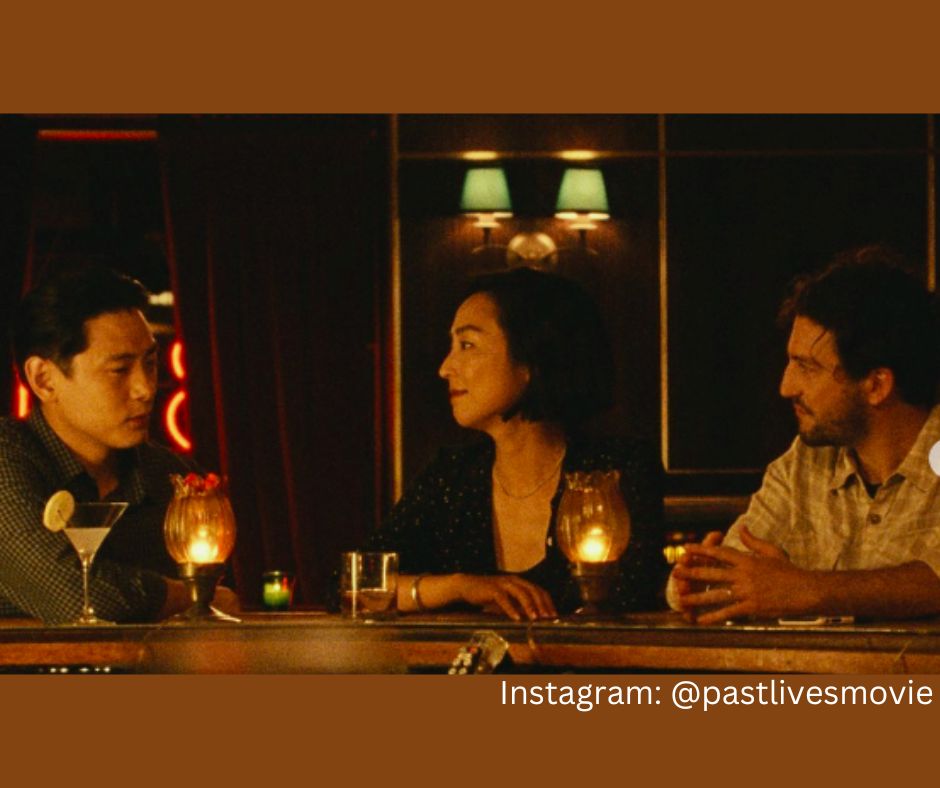
Celine Song’s “Past Lives” tugs at one’s heartstrings. The film by the Korean-Canadian filmmaker explores the complexities of human existence and the Korean concept of In-yun, the belief that souls can be inextricably linked through thousands of reincarnations but that the nature of their connection can shift from life to life. The film opens with an unseen character (voice) asking, “Who do you think they are to each other?” while observing the three protagonists, Nora, Hae Sung, and Arthur, sitting across a bar late at night, engrossed in a deeply animated conversation with the East Asian lady flanked by an East Asian and White (American) men. This question is an access point into the complex tale and takes the audience straight into the past and present worlds of Na Young or Nora and Hae Sung, two deeply connected childhood friends from Seoul, who meet in New York twenty-four years later, and Nora’s Jewish American husband, Arthur. The Korean-American Nora navigates the two worlds when the twain meet and doubles up as a translator for Hae, whose English is poor, and Arthur, whose Korean is basic, to help them converse easily.
More here: https://www.instagram.com/pastlivesmovie/?hl=en There are two love stories, running parallelly through the entire runtime of 146 minutes, with both feeding into each other, yet showing us how truly distinct, in magnitude and scale, spread and width, geographically and emotionally close and distant, these two love tracks are from each other.
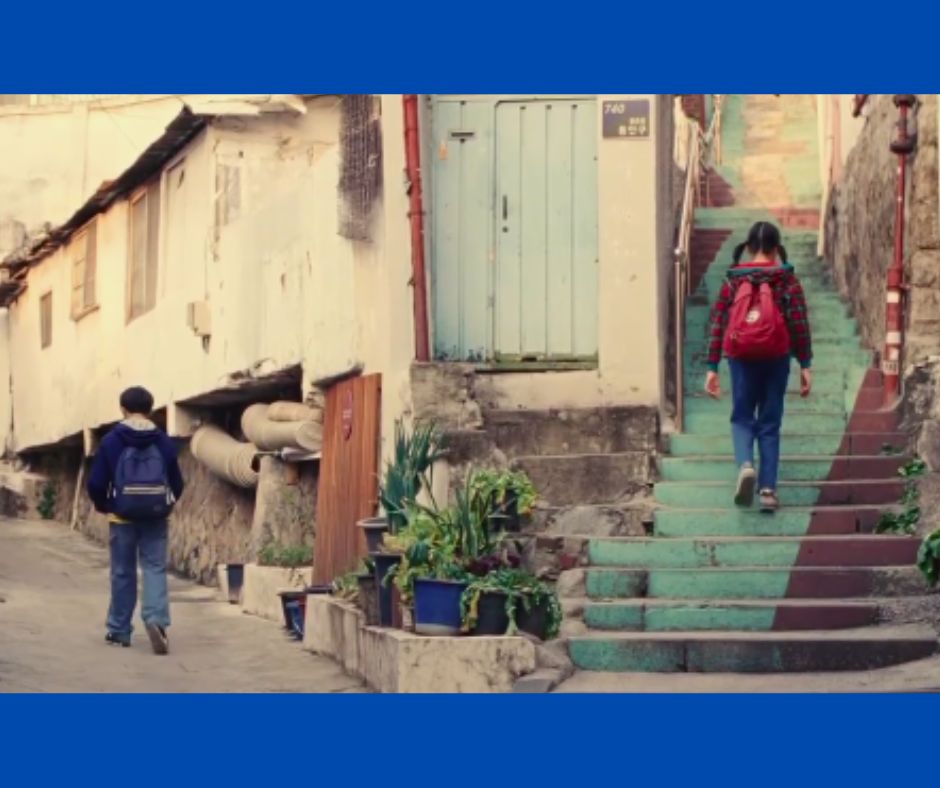
In no time, the story shifts to Seoul in South Korea, with 12-year-old children (a boy and a girl) walking home after school. The girl is grumpy while the boy is playful, dribbling his basketball all along because he, for once, could beat the girl at the grades and stood first in the class. He calls her a psycho and moves on. At home, the girl’s family is busy prepping to emigrate to Canada, and the girl and her sibling get engrossed in finalising their English names. The girl’s mother asks her if she likes anyone in her class, to which the 12-year-old sheepishly confesses that she does like a boy with whom she will get married when she grows up. The mother proposes to take them together on a date, which she heartily accepts with a shy grin.
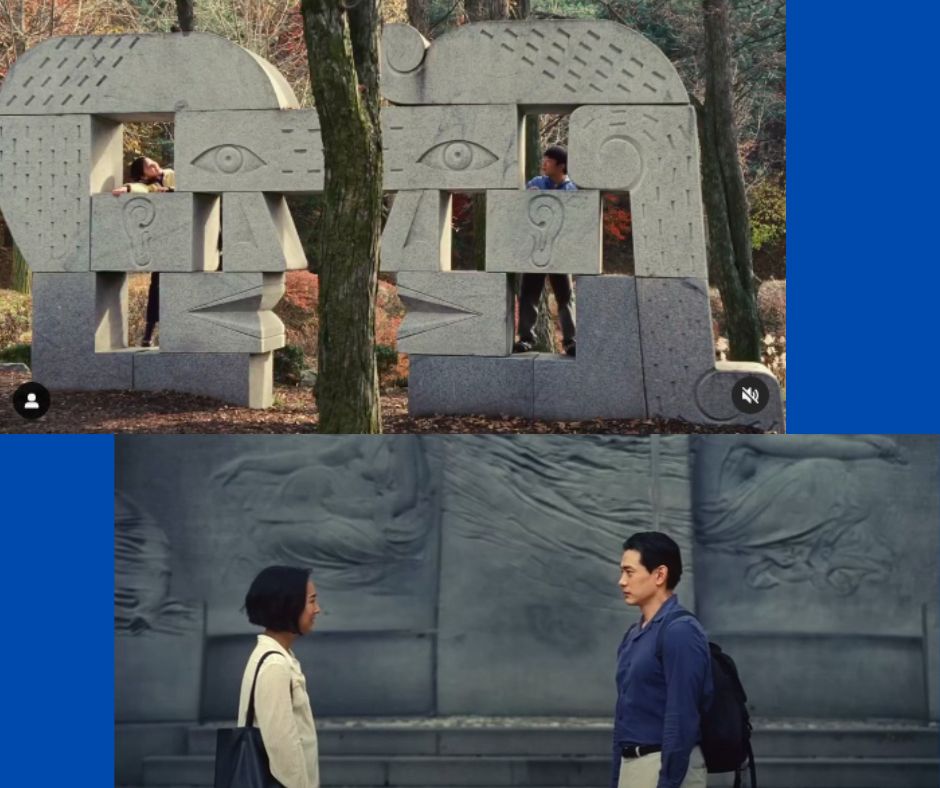
The kids and their mothers meet, and the scene with the girl holding the boy’s hand and sleeping in the backseat while resting her head on his shoulder is symbolic in multiple ways. Nora’s mother’s profound statement to Hae’s mom — “If you leave something behind, you gain something, too” — becomes the guiding light of the young girl’s life, from Seoul to Ontario, from Ontario to New York. Life zips past their childhood, separating them across space and time at a great pace. The symmetry in a young boy staring into the nothingness out of the car window is matched in the finale scene where he looks out as the Uber taxi speeds away to drop him at the airport after his one-week-long reunion with Nora in New York, 24 years later. Then their last meeting in a garden on a rainy day as children in Seoul playing hide and seek against a huge stone art installation, and then meeting against the backdrop of a stone structure in New York is another level of symmetry in their lives and beings, one’s longing and another’s belonging matches frame by frame, without missing a beat.
The story pans in and out of Nora’s life as an adult, where she reads Hae Sung’s message on her filmmaker father’s Facebook page and connects online with him after 12 long years of separation. She asks him, why did he look up for her? His response wins (my heart, at least) hands down, “I wanted to see you one more time.” They rekindle that spark of friendship spread across geographies and time zones, but their togetherness across Skype calls gets spaced out and freezes in the frame. A pragmatic Nora realises that she had moved to New York to make a writing career and wouldn’t trade off that ambition at any cost. She decides to focus on her life’s larger goal — the upcoming Artists’ Residency — at the expense of the duo’s what-if relationship status and keeps it on hold till further notice. Hae is devastated and considerably lonely but accepts her childhood buddy’s decision. Their banters and bickerings across the screen make them so adorable as friends who reconnect, albeit virtually, only to separate in the real world once more. But did this have to happen? It’s a valid question, but perhaps not the most pressing one raised by this delicate and thoughtfully crafted drama that explores how our pasts shape our present realities. It examines when change represents growth and when it masks our true selves. The film contemplates whether life is determined by fate or will, what has permanence, and what is transient. The film delves into these complexities with admirable grace and poise as Nora reflects on how many emotions and missed opportunities have shaped her most cherished desires quite unapologetically. At the same time, Hae seems stuck in the past, looking at everything with nostalgia-tinted glasses. This movie delves into the captivating storytelling, exceptional performances, and profound themes of identity and destiny portrayed in Song’s masterpiece. As the story unfolds, Nora emerges as a strong woman character. She embodies resilience, courage, and determination, refusing to let anything restrict her from pursuing her life’s larger goal, and that’s quite stunningly remarkable. A double emigrant who learns to find her roots in a potted plant with her husband, and despite her hardships, learns to forge her path, embracing her inner strength and discovering her true purpose with aplomb. Her character arc highlights the importance of self-discovery and empowerment. From wanting to win the Nobel Prize for Literature as a 12-year-old to win a Booker as an adult and then wishing for the Tony sums her ambition graph. Within the tapestry of Past Lives, the concept of destiny plays a central role. The characters’ encounters and separations are intricately woven together by a higher force, guiding their lives. Through exploring reincarnation, the story poses thought-provoking questions about the nature of fate, free will, and the enduring power of love. What sustains it? What keeps the sparks alive? What kindles that flame? And how does it all turn into ashes in no time, to rise again, in another space, and in another time? Amidst the complexities of their love story, the narrative also delves into the power of friendship. The artists’ residency changes the course of Nora’s life. She meets her to-be husband Arthur there and explains In-Yun, and why meeting him is no coincidence for the duo in the first encounter itself. “There’s a word in Korean, In-Yun. It means providence or fate. But it’s specifically about relationships between people. For example, if two strangers walk by each other in the street, and their clothes accidentally brush, that means there have been 8,000 layers of In-Yun between them. That is In Yun.” Each encounter is said to be caused by hidden reasons that began years ago. Nora and Arthur were meant to meet and hit off instantly. She finds solace in his unwavering support, which strengthens and guides her professional journey. Through their bond, the story showcases the significance of companionship, loyalty, and the ability to overcome challenges together. His longing to belong in Nora’s world can be gauged from the fact that he is learning a new language to understand Nora’s dreams and sleep talks in Korean because he always felt that there are many places within that are absolutely out of bounds for him due to unfamiliarity with a language. For a fleeting moment, he fears losing her to Hae, Nora’s childhood sweetheart with whom she had reconnected after over two decades. But she handles his misplaced fear and insecurities with trust, places her faith in him, and shows him what his love and life mean to her… he is her world. She manages to assuage untoward and unwanted thoughts of him being an “evil White Husband standing in the way of destiny” with so much grace when she says, “This is my life. This is where I am supposed to be.” The tender moment makes the couple so lovable every which way. Nora and Hae’s encounters may vary in form and circumstance in their childhood and adulthood, but the underlying connection remains unbroken, leaving them with a lingering sense of familiarity and an unexplainable pull toward one another. Surprisingly Nora though not oblivious to Hae’s affections, is unable to reciprocate because it comes in the way of her life’s larger purpose. Once in New York, Nora takes Hae sightseeing and hosts him at home with her husband. The In-Yun conversation makes her come back, as if to complete the loop, when Hae wonders and asks Nora, “If you had never left Seoul, would I have still looked for you? Would we have dated? Broken up? Gotten married? Would we have had kids together?” He tells her upfront that maybe she wouldn’t have stayed because she likes to leave. And then, before bidding her goodbye, he asks her again, “If this is their Past Life, what would their next life be like?” None of them have an answer to it. The most heartbreaking scene is the silence between the three characters. Hae leaves while the otherwise calm and composed Nora cries her heart out, unable to hold back the emotional rollercoaster ride spanning a week. Her strength fades away in the flow of her tears, and that’s cathartic for her and her relationships — the one that is with Arthur and the one that could have been with Hae, as Hae had reminded Arthur in the bar that they must also have had some In-Yun as well.
I. Engaging Storytelling and Cinematic Craftsmanship: “Past Lives” weaves an intricate narrative that seamlessly blends past and present, challenging our perception of time. Celine Song, both writer and director, demonstrates her storytelling prowess by crafting a compelling screenplay that keeps viewers engaged from beginning to end. The film’s exquisite cinematography captures New York like never before, skilful editing, and atmospheric sound design enhance the immersive experience, transporting the audience into the realms of the past lives depicted on screen.
II. Stellar Performances and Emotional Depth: The performances in “Past Lives” are nothing short of exceptional, with each actor bringing depth and authenticity to their characters. The talented ensemble cast delivers nuanced portrayals, effortlessly capturing their respective characters’ complex emotions and internal struggles. Their performances evoke empathy and resonate deeply, adding layers of emotional complexity to the film’s exploration of love, loss, and the eternal cycle of rebirth.
III. Profound Themes of Identity and Destiny: At its core, “Past Lives” delves into profound existential themes, questioning the nature of identity and the role of destiny in shaping our lives. Through its intricate narrative structure, the film challenges conventional notions of time and asks thought-provoking questions about the interconnectedness of past and present. It explores the idea that our actions in past lives reverberate in our current existence, highlighting the inextricable links between our past, present, and future selves.
IV. Critical Acclaim and Audience Reception: Since its release, “Past Lives” has garnered critical acclaim and captivated audiences worldwide. The film has been praised for its innovative storytelling, lyrical visuals, and the profound emotional impact it leaves on viewers. Celine Song’s unique vision and ability to translate complex themes into a relatable and poignant narrative have solidified her status as a rising talent in cinema.
Song’s “Past Lives” is a cinematic masterpiece that transcends the boundaries of time and space, immersing audiences in a contemplative exploration of identity and destiny. The film’s engaging storytelling, stellar performances, and profound themes captivate viewers and leave a lasting impression. As Song continues to establish herself as a visionary filmmaker, Past Lives stands as a testament to her artistic brilliance and ability to provoke introspection and ignite the imagination of audiences worldwide. She has succeeded in taking her viewers on a mesmerising journey through time, blending elements of romance and mysticism, masterfully evoking emotions from heartwarming moments of love and connection to poignant instances of loss, longing, belonging and unbelonging. The film delves deep into the human experience, exploring the profound yearning for connection that transcends time and mortality. Viewers are left contemplating the power of love and the idea of past lives long after the credits roll.
So whether you’re a fan of romance, mysticism, or thought-provoking cinema, Past Lives is a must-watch that will leave you contemplating the mysteries of love and the possibility of eternal connections across lifetimes. Nora and Hae’s souls are destined to meet and maybe part across multiple lifetimes. But we hope that each time they are reborn, their paths intertwine in unexpected ways, shaping their shared destiny, and giving them everlasting togetherness. After all, All the World Loves Lovers.
(All photos sourced from Past Lives’ instagram handle)
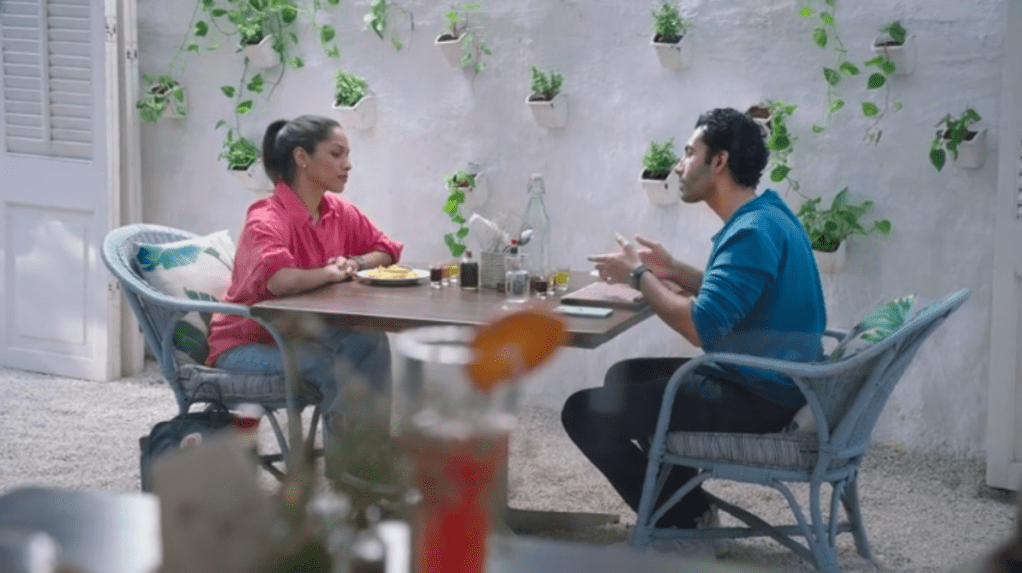
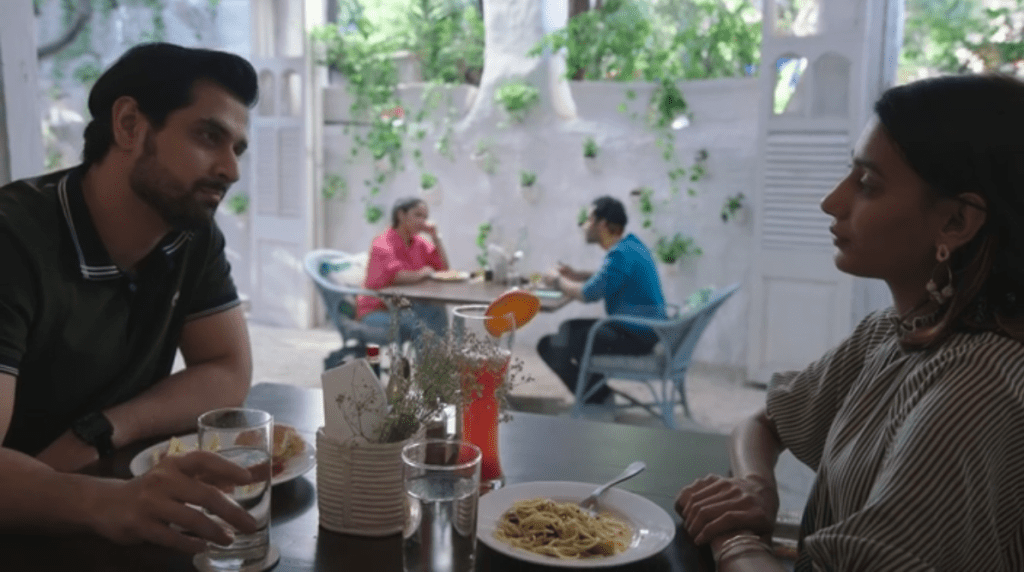
In some measure, Dhruv Sehgal’s I Love Thane in Amazon Prime’s latest anthology Modern Love Mumbai is a cautionary tale on the trappings of a dating app, its trials and tribulations and the emotional toll it takes on a person when things don’t go as ‘planned’. The 34-year-old protagonist, landscape architect Saiba, played by Masaba Gupta, is caught in the dating app loop, spending a lot of time and energy hopeful about finding love just by swiping right. Her expectations from a prospective date are different, and she fails to find the perfect match in the app universe. The emotionally excruciating process gives her self-doubt and humiliation in abundance, as she admits in one scene, but then she starts the grind all over again in the hope of finding that elusive love and Mr Right. On one of her Date Zero, where she meets a hotshot startup founder whom she had never met in person before starts listing out the must-have qualities in the prospective life partner. His long monologue is greeted with her blank, bleak stare. The camera zooms in to capture the disappointment in Saiba’s gaze and matches it with that of another woman sitting a few tables away and out on a date as well; the women exchange a glance of blighted hope, equally let down by their respective dates. The fleeting moment elucidates the dating app plot that often makes one feel like a square peg in a round hole, with many misses before that one hit.
(The frames that tell the story… from I Love Thane in Modern Love Mumbai, currently streaming on Amazon Prime.)
How single women are navigating the world of #onlinedating













 mindthegapalways