All posts by Shillpi A Singh

Unknown's avatar

About Shillpi A Singh

क़लम मज़दूर | Commspreneur | Recipient of the IIMCAA Award for Public Relations Person of the Year 2024 | Canva's Top 10 Social Media Creator for 2023 | Work-in-Progress

Have you been ghosted?

Ghosting is a distressing phenomenon that has become increasingly prevalent in modern relationships. Ghosting refers to the sudden and unexplained disappearance of one person from another’s life, leaving the recipient confused, hurt, and questioning what went wrong. 

  1. Defining Ghosting: Ghosting refers to abruptly and intentionally cutting off all communication with someone, typically without any explanation or warning. It is a form of silent rejection where one party ceases all contact and disappears from the other person’s life, leaving them feeling abandoned and uncertain about what went wrong. Ghosting can occur in various relationship contexts, including romantic partnerships, friendships, and even professional relationships.
  2. Implications of Ghosting: Ghosting can have significant emotional and psychological implications for the individuals involved. The sudden and unexplained communication withdrawal can lead to feelings of rejection, self-doubt, and low self-esteem. The lack of closure and unanswered questions can cause confusion and make moving on from the relationship challenging. Ghosting can also erode trust and make individuals hesitant to invest in future relationships.
  3. Reasons Behind Ghosting: While the motivations for ghosting can vary, some common reasons include fear of confrontation, avoidance of difficult conversations, lack of interest or connection, and a desire to avoid hurting the other person’s feelings. Sometimes, individuals may resort to ghosting to assert control or avoid accountability for their actions. However, it’s important to note that ghosting is not an acceptable or healthy way to end a relationship.
  4. Impact on Mental Well-being: The emotional toll of being ghosted can be significant. The lack of closure and unanswered questions can lead to sadness, anger, and rejection. This can harm mental well-being, causing individuals to question their self-worth and leading to increased anxiety and depression. It is crucial to prioritize self-care, seek support from friends and family, and consider professional help if needed to navigate the emotional aftermath of being ghosted.
  5. Healthy Communication and Relationship Building: Fostering open and honest communication is paramount to prevent and address ghosting. By expressing needs, boundaries, and expectations early on, individuals can establish a foundation of trust and mutual understanding. It is essential to create a safe space for difficult conversations and to approach relationship issues with empathy and respect. Cultivating healthy communication skills and promoting transparency can contribute to healthier and more fulfilling relationships.

But how do you spot if you have been ghosted? What are the ways to deal with ghosting to protect oneself from heartbreak? Let’s explore practical strategies to navigate this distressing dating and relationship phenomenon.

Recognizing the Signs and Symptoms of Ghosting: When you suspect you’re being ghosted, watch out for these common signs and symptoms:

  • Sudden and prolonged silence: The person stops responding to messages, calls, or any form of communication without any valid explanation.
  • Frequent cancellations: Plans are frequently cancelled at the last minute, with excuses becoming more frequent and less plausible.
  • Lack of engagement: The person becomes disinterested and shows reduced enthusiasm in conversations and spending time together.
  • Disappearing from social media: They stop interacting on social media platforms or delete their presence altogether.

Coping Strategies for Dealing with Ghosting: 

a. Give it time: Allow yourself to process the emotions of being ghosted. Allow yourself to feel hurt, but avoid dwelling on it for an extended period. 

b. Seek support: Reach out to trusted friends or family members to share your feelings and gain perspective. Their support can provide comfort and help you gain clarity. 

c. Focus on self-care: Engage in activities that bring you joy and boost your self-esteem. Exercise, practice mindfulness, pursue hobbies, and invest time in personal growth. 

d. Avoid blame: Refrain from blaming yourself for being ghosted. Remember that ghosting is a reflection of the other person’s behaviour and not a reflection of your worth.

Preventing Heartbreak and Minimizing the Risk of Ghosting: 

a. Set clear expectations: Establish open and honest communication from the beginning of a relationship, discussing expectations, boundaries, and the importance of respectful communication. 

b. Take it slow: Avoid quickly rushing into an intense emotional connection. Gradually build trust and understanding to reduce the chances of being ghosted.

c. Be observant: Pay attention to the person’s consistency, actions, and communication patterns. Red flags such as evasiveness or a lack of effort may indicate a higher likelihood of ghosting. 

d. Trust your instincts: Trust your intuition if something feels off or inconsistent. If the person’s behaviour raises concerns, addressing them early on is essential to avoid future heartbreak.

Ghosting can be a painful and confusing experience, but recognizing the signs, employing coping strategies, and taking preventive measures can protect yourself from unnecessary heartbreak. Remember to prioritize your emotional well-being, focus on self-care, and surround yourself with a supportive network of friends and family. Promoting healthy communication, setting boundaries, and prioritizing self-care are key to creating fulfilling relationships and preventing the emotional turmoil of ghosting. Remember, everyone deserves respect and consideration, even when relationships end.

Growing and Rising in Love: Moving Beyond the Fall

Pyar mein giro mat bachche … utho, rise in love.

Sushma seth, Taal

Today’s society often focuses on the initial stages of romantic relationships, glorifying the passionate rush of falling in love. However, many fail to realize that sustaining love requires effort and dedication. While falling in love is easy and exhilarating, growing in love is a lifelong journey that demands maturity, understanding, and commitment. This article delves into the significance of transitioning from a mere feeling of love to a practice of love, highlighting the rewards and challenges of nurturing and evolving a deep connection.

Understanding Love as a Practice, Not Just a Feeling: Love is often mistakenly perceived as a fleeting emotion, something we stumble into by chance. However, true love extends beyond transient feelings and requires ongoing cultivation. It is a conscious decision and commitment to be the best versions of ourselves, both individually and as partners. Recognizing this paradigm shift is crucial to embracing growth and rising in love.

Navigating Conflict and Changes: Every relationship is bound to encounter conflicts and experience changes over time. Understanding that conflicts are not signs of a failing relationship but rather growth opportunities is essential. The initial hormonal rush inevitably subsides, giving way to a more stable and grounded connection. Instead of chasing the fading euphoria, couples who grow in love learn to adapt and find new ways to nurture their bond.

Embracing the Beauty of Growth: Growing in love requires maturity, acknowledging that our partner cannot be responsible for our happiness. It entails accepting that disappointments and disagreements are natural aspects of any relationship. There may be times when both partners are not on the same page or moments of boredom need to be addressed. It is through these challenges that love is tested and fortified.

Nurturing the Relationship: A thriving relationship demands constant nourishment. Growing in love means investing time and effort in self-reflection and recognizing areas within ourselves that require work. It involves being comfortable with occasional discomfort and periods where the emotional connection may wane. Moreover, it requires a willingness to give and receive, understanding that equality is not always about a perfect balance but meeting each other’s needs differently.

The Journey of Growth: While growing in love may not always be easy, it is a beautiful process that offers tremendous rewards. It can be an intense and transformative experience that unearths old wounds, triggering emotional responses from the past. However, it is through these challenges that trust, security, safety, and a joy-filled connection can be established, fostering a deep bond that withstands the test of time.

Moving beyond the initial stage of falling in love, growing and rising in love requires a shift in mindset and a commitment to continuous personal and relational development. Love is not merely a fleeting feeling but an ongoing practice that demands dedication, understanding, and the willingness to navigate challenges together. By embracing the beauty of growth and nurturing our relationships, we can cultivate profound connections that enrich our lives and create lasting happiness.

Orchids and Fungi: A Love Story Like No Other

When it comes to relationships in nature, the partnership between orchids and fungi is a stunning example of symbiosis. As you carefully select a beautiful orchid for your loved one, did you know that orchids have their own partners? In this article, we delve into the intricate world of symbiotic relationships, shedding light on the various types of symbiosis and exploring how orchids and fungi create a unique and mutually beneficial bond.

Flavours of Symbiosis: Symbiosis, derived from Greek roots meaning “living” and “together,” encompasses relationships between different species where one species relies on another for survival. Much like a box of chocolates, symbiosis comes in different flavours, ranging from harmonious to more complicated connections.

  1. Mutualism: In mutualistic relationships, both species involved derive benefits. In the case of orchids and fungi, mutualism is the driving force behind their bond, as they exchange carbohydrates and moisture, ensuring the growth and sustenance of both partners.
  2. Commensalism: Commensalism describes a relationship where one species benefits while the other remains unaffected. Although not directly applicable to orchids and fungi, it is important to understand the range of symbiotic connections in nature.
  3. Parasitism: Parasitic relationships involve one species benefiting at the expense of another. However, this type of relationship is not prevalent between orchids and fungi, as their partnership is primarily mutually beneficial.
  4. Amensalism: Amensalism occurs when one species is inhibited or obliterated while the other remains unaffected. This type of symbiotic relationship does not apply to the orchid-fungi connection.

Orchids and Fungi: Orchids form a complex symbiotic relationship with certain fungi known as mycorrhizae. This relationship is critical for the survival of juvenile orchids, as they rely on these fungal symbionts for carbohydrates. In return, the fungi receive moisture and access to organic matter, creating a sweet and mutually beneficial arrangement.

The Role of Fungi in Orchid Growth: Since orchids often grow in habitats with limited sunlight, they face challenges in producing chlorophyll, essential for their growth. Orchids have overcome this obstacle by depending on specific fungi. These fungi digest organic matter in the surroundings, converting it into simpler molecules such as sugar that the orchids can absorb. Consequently, orchids rely on fungi during their early growth stages.

The Intricacies of Togetherness: In the symbiotic process between orchids and fungi, the fungi invade the orchid seeds before germination, providing vital nutrients to the young orchid. As orchids mature, some species can produce their food through photosynthesis. However, research suggests that even photosynthetic orchids may continue to utilize fungi as a supplementary food source.

The Hidden Connection: The intricate connection between orchids and fungi occurs between the plant’s root tissue and the fungus’s mycelium. While unseen to the naked eye, this relationship plays a vital role in the growth and nourishment of orchids.

Beneficial for Both: The fungi gain moisture and nutrition by digesting plant material in the roots of orchids. In turn, the orchids provide a water-rich environment for the fungi, ensuring their survival. The humid and moist conditions created by orchids offer a haven for the fungi to thrive.

Unveiling the Mycorrhizal Cheaters: Certain plants sometimes bypass traditional photosynthetic processes and obtain nutrients from nearby fungi. Referred to as “mycorrhizal cheaters,” these plants defy conventional methods of nutrient acquisition, showcasing the remarkable diversity of symbiotic relationships in nature.

As you celebrate your loved ones with romantic gestures, remember the captivating partnership between orchids and fungi—a love so true in symbiosis. This extraordinary relationship reminds us that giving and receiving are fundamental to any successful connection. From the sweet mutualism between orchids and fungi, we can learn valuable lessons about the beauty and intricacies of nature’s symbiotic dances.

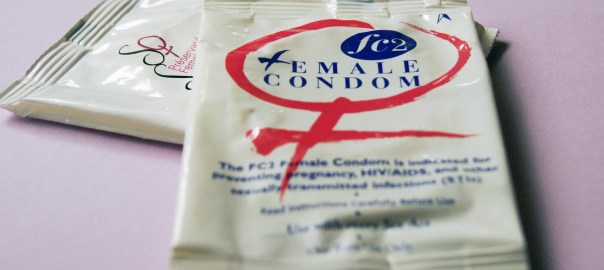
Empowering Women’s Sexual Health: Unleashing the Potential of Female Condoms

On World Population Day, we celebrate the importance of sexual and reproductive health and rights. Among the various contraceptive options available, female condoms are a powerful tool for women to take control of their sexual health. Offering dual protection and empowering women to prioritize their well-being, female condoms have emerged as a game-changer in contraception. In this article, we delve into the remarkable features and benefits of female condoms while optimizing them with top-ranking SEO keywords to ensure their reach to a wider audience.

  1. Enhanced Protection: Female condoms provide an additional layer of protection during sexual intercourse, guarding against both unwanted pregnancies and sexually transmitted infections (STIs). Their unique design enables them to cover the vaginal canal, creating a barrier that helps prevent the transmission of STIs, including HIV. By offering this double protection, female condoms empower women to participate in the decision-making process concerning their sexual health actively.
  2. Pleasurable Experience: Unlike traditional male condoms, female condoms are not solely dependent on the male partner’s cooperation for usage. Women can proactively take charge of their sexual health by inserting a female condom before intercourse. The inner ring of the condom aids in insertion and keeps it securely in place during intercourse. This self-initiated approach allows women to experience increased sexual empowerment and satisfaction.
  3. Versatility and Accessibility: One of the significant advantages of female condoms is their versatility. They can be used with any type of lubricant, unlike male condoms incompatible with oil-based lubricants. Furthermore, female condoms can be inserted up to eight hours before sexual activity, which offers flexibility and eliminates the need for an interruption during the heat of the moment. These features make female condoms an accessible choice for women across diverse circumstances.

Non-Hormonal Option: Female condoms provide a non-hormonal contraceptive option, particularly beneficial for women with health concerns or sensitivities to hormonal methods. By relying on physical barrier protection, female condoms eliminate the potential side effects of hormonal contraception, providing a safe and reliable choice for women worldwide.

Female condoms are vital in empowering women to take charge of their sexual health. By providing dual protection against unwanted pregnancies and STIs, offering a pleasurable experience, and ensuring accessibility and versatility, female condoms stand out as an excellent contraceptive option. As we commemorate World Population Day, let us celebrate the positive impact of female condoms in promoting sexual and reproductive health and advocate for their widespread availability and usage worldwide.

My Hope For You!

In the depths of love’s vast sea,
I wish for you, my dear, to see,
A smile that greets you at the door,
A love that leaves you wanting more.

May you find someone who embraces,
The beauty within your soul’s spaces,
Who sees the scars that tell your story,
And finds them adorned with grace and glory.

I hope for you a love that’s clear,
No doubts or questions, just sincere,
A love that boldly lets you know,
How deeply their feelings for you grow.

May you discover a love so true,
That never hesitates, always pursues,
A love that gives its entirety,
No fragments, just pure sincerity.

I hope for you a love that understands,
Your worth, the treasures in your hands,
A love that cherishes your soul,
And nurtures it, making it whole.

May you find a partner, strong and true,
Your biggest supporter in all you pursue,
Not seeking attention, but giving it back,
A love that’s balanced, never off track.

But above all, my hope, my dear,
Is that you find this love, crystal clear,
Within yourself, before it’s found,
So you’re ready when love comes around.

Discover the depths of your own heart,
Unveil the love, ready to impart,
For in loving yourself, you’ll truly see,
The love you deserve, so wild and free.

So my hope for you, my precious friend,
Is to embrace self-love, let it ascend,
For when you’re ready, love will come,
A love that’s beautiful, pure, and strong.

(by Shillpi A Singh)

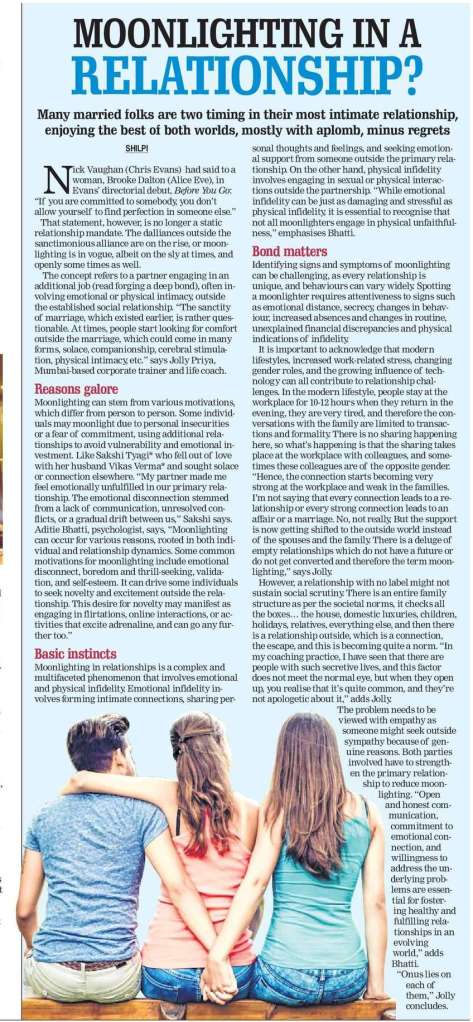
Moonlighting in a relationship? But Why?

The article was published in The Free Press Journal on July 9, 2023. https://www.freepressjournal.in/weekend/heard-about-moonlighting-in-relationship-heres-what-it-entails

One day before I go…

One day before I go,
I want you to know,
That your presence in my life,
Fills me with joy and delight.

Your wisdom streaks so profound,
In your soft brown eyes, wisdom is found.
Your dimpled cheeks, so sweet,
They bring a smile whenever we meet.

And that infectious smile you wear,
Brings light to all who are near.
Your towering height, a gentle might,
Yet you always make me feel just right.

Your warm hugs, they hold me tight,
In your embrace, everything feels right.
Your effervescent presence, a shining light,
Guiding me through the darkest night.

Your sense of humour, a constant delight,
With your sharp wit, you set things right.
Your cleft chin, a mark so fine,
A reminder of a love that’s mine.

Even your anxiety-bitten nails,
Can’t hide the kindness that prevails.
Your heart is so kind and pure,
With genuine concern, that’s sure.

For anger, you have no room,
Your support never ceases to bloom.
Your affection, pure and true,
Unwavering in all that you do.

You tower above, head and heart,
And in your cuddle, I find my start.
That amusing grunt you make,
Leaves me laughing, wide awake.

Your polite refusal, a mark of grace,
In your passionate kiss, I find solace.
Your loving caress, a tender touch,
Brings comfort that means so much.

And oh, your delicious food,
Filling my soul, my gratitude renewed.
Engrossing conversations we share,
Leaving me laughing without a care.

Your swift hand movements, so precise,
Accompany tender talks that entice.
Your magnetic vibes, I’m drawn to you,
With every word, my love for you grew.

Driving with running commentary,
Holding my hand, a beautiful story.
Your engaging tales, they make me smile,
Leaving me laughing for a while.

You’ve been my protector, my rock,
Through thick and thin, around the clock.
Your blue sheet conversations so deep,
Leaving me yearning, longing to keep.

I look up to you, figuratively and literally,
As your chin rest, my heart fills merrily.
In my darkest moments, you’ve rescued me,
Guiding me with love, setting me free.

You’ve shown me how to love unconditionally,
Providing a sense of security.
My knight in shining armour, strong and true,
You make me feel cherished, driving my blues.

For keeping me afloat, my buoy,
I send wishes for your days with joy.
In awe, admiration, and adulation,
I remain your pocket-sized Dynamo.

Thank you for being my full-course meal,
While I am your sweet dessert, so surreal.
With love, always and forevermore,
Your pocket-sized Dynamo, forever yours.

(by Shillpi A Singh)

Beware of breadcrumbers! A toxic lot, they can leave a relationship starving.

In the realm of modern dating and relationships, breadcrumbing has emerged as a common and frustrating practice. Breadcrumbing refers to the practice of intermittently giving attention, communication, or affection to someone while lacking genuine intentions for a committed relationship. Discover how breadcrumbing keeps individuals on the periphery, with sporadic messages, occasional dates, and displays of affection that lead nowhere. Whether experienced in online or offline relationships, breadcrumbing can leave you feeling confused and emotionally drained.

Signs and Symptoms of Breadcrumbing: Recognizing the signs of breadcrumbing is crucial to protect yourself from potential heartbreak. Understand the common indicators of this practice:

  1. Inconsistent communication: Breadcrumbers engage in sporadic texting or messaging, making you wait for their responses or providing vague replies.
  2. Mixed signals: They send flirtatious or affectionate messages, but their actions contradict their words. Their interest and commitment may fluctuate.
  3. Lack of initiation: Breadcrumbers rarely take the lead in progressing the relationship or initiating plans, relying on you to maintain the connection.
  4. Minimal effort: They invest minimal effort into the relationship, such as occasional compliments, infrequent dates, or superficial conversations.
  5. Excuses and postponements: Breadcrumbers frequently cancel plans or make excuses to avoid committing to future arrangements, leaving you feeling frustrated and uncertain.

Safeguarding Against Breadcrumbing: Protecting yourself from breadcrumbing requires awareness and proactive steps. Implement the following strategies:

  1. Recognize the signs: Educate yourself about the signs of breadcrumbing to identify if you are experiencing it. Awareness is key to protecting yourself.
  2. Trust your intuition: Listen to your instincts. If something feels inconsistent or off, address your concerns with the other person and trust your inner voice.
  3. Communicate your expectations: Be clear about your desires and intentions. Openly communicate your needs and boundaries to filter out potential breadcrumbers.
  4. Set boundaries: Establish and assertively communicate your boundaries. Breadcrumbers thrive on relationship ambiguity, so defining your limits can deter such behaviour.
  5. Focus on reciprocity: Assess if the other person reciprocates your efforts and interest. A healthy relationship requires equal investment from both parties.
  6. Prioritize self-care: Invest time and energy in activities that bring you joy and fulfilment. Engage in hobbies, spend time with loved ones, and prioritize personal growth to build resilience and self-worth.
  7. Don’t settle for breadcrumbs: Recognize your value and worth. Refuse to accept half-hearted attention or inconsistent behaviour. Be willing to walk away from relationships that do not meet your needs.
  8. Take time for reflection: Step back and reflect on the relationship if you suspect breadcrumbing. Assess if it aligns with your long-term goals and values.
  9. Seek support: Reach out to friends, family, or a therapist to share your experiences and gain perspective. Having a support system provides guidance and emotional support during challenging times.

Understanding breadcrumbing and implementing strategies to safeguard yourself can protect your emotional well-being and cultivate healthier and more fulfilling relationships. Remember, you deserve genuine love and commitment, not mere breadcrumbs. Safeguard your heart and navigate breadcrumbing with confidence.

Love Bombing: The Destructive Charm That Leaves Hearts Shattered

“The biggest coward of a man is to awaken the love of a woman without the intention of loving her.”

Bob Marley

Love bombing, a manipulative tactic used in relationships, can leave individuals emotionally shattered. This deceptive practice involves an intense showering of affection, attention, appreciation, and grand gestures that quickly captivate the victim. However, beneath the surface, love bombing conceals a darker intention—to gain control and power over the unsuspecting target. In this feature, we explore the phenomenon of love bombing and its devastating effects and provide insights into healing from its aftermath.

Love Bombing is a Psychological Deception: Love bombing is a term coined to describe a manipulative tactic employed by individuals with narcissistic or abusive tendencies. Research suggests that love bombers strategically employ excessive displays of affection, constant communication, lavish gifts, and flattery to overwhelm and captivate their targets. This overwhelming flood of positive attention and validation creates a false sense of security, deep emotional connection, and dependency within the victim.

The Devastating Effects of Love Bombing: While love bombing may initially feel like a whirlwind romance, the aftermath can be catastrophic. Victims of love bombing often find themselves emotionally shattered when the charade unravels. Research indicates that the abrupt withdrawal of affection and the unveiling of the abuser’s true intentions can lead to severe emotional trauma, including anxiety, depression, low self-esteem, and a distorted perception of love and relationships. The deceptive nature of love bombing makes it particularly damaging as victims struggle to reconcile the intense love they experienced with the painful reality they face.

Recognizing the Signs of Love Bombing: Awareness is crucial in identifying and escaping the clutches of love bombing. Some common signs of love bombing include:

  1. Excessive flattery and constant praise.
  2. Overwhelming attention and rapid progression in the relationship.
  3. Isolation from friends and family creating dependency on the love bomber.
  4. Frequent grand gestures and gifts to win affection and control.
  5. Emotional manipulation and control tactics.

Healing and Recovery: Recovering from the aftermath of the love bombing requires time, self-reflection, and support. Here are some strategies to aid in healing:

  1. Self-Care and Self-Compassion: Prioritize self-care activities that nurture your emotional well-being. Practice self-compassion by reminding yourself that you deserve love and respect.
  2. Seek Support: Reach out to trusted friends, family members, or support groups who can provide understanding and guidance throughout the healing process. Sharing your experiences with others can help validate your emotions and regain a sense of empowerment.
  3. Set Boundaries: Establish and enforce healthy boundaries to protect yourself from further manipulation. Learn to recognize and prioritize your needs and emotions.
  4. Professional Help: Consider seeking therapy or counselling to process the trauma and regain emotional stability. A mental health professional can provide guidance and support tailored to your needs.

Moving Forward with Empowered Love 

Recovering from love bombing involves rediscovering your self-worth and rebuilding trust in yourself and others. Remembering that healthy relationships are built on mutual respect, trust, and genuine care is essential. Be patient with yourself as you navigate the healing journey and focus on personal growth.

Love bombing may leave individuals shattered, but with awareness, support, and self-care, it is possible to reclaim personal power and rebuild a healthier future. Recognising the signs of love bombing and taking proactive steps towards healing, survivors can learn to differentiate between genuine love and manipulative tactics. Remember, you deserve love and respect that is authentic, nurturing, and built on trust. Embrace the healing journey, and let it catalyse growth, resilience, and empowered love.

References:

  1. Stines, S. (2016). Love Bombing: An Early Warning Sign That You’re Dating a Narcissist. Psych Central. Retrieved from https://psychcentral.com/lib/love-bombing-an-early-warning-sign-that-youre-dating-a-narcissist#1
  2. Dixon, L. J., Hamilton-Giachritsis, C., Browne, K. D., & Ostapuik, E. (2005). The co-occurrence of child and intimate partner maltreatment in the family: Characteristics of the violent perpetrators. Journal of Family Violence, 20(6), 377-387.

The unspoken, unheard and unseen pain of friendship breakup: Understanding & Coping with the Heartache

The pain from a friendship breakup is real. It’s even worse if you don’t understand why it ended. People expect friendships to last forever. The ending is just as painful as romantic breakups. We just don’t talk about it.

Friendships are special in our lives, providing companionship, support, and shared experiences. However, when a friendship abruptly ends, the pain can be just as agonizing as a romantic breakup. Surprisingly, society often overlooks the emotional toll of friendship breakups, leaving individuals grappling with unanswered questions and a sense of loss. In this article, we delve into the unspoken heartache of friendship breakups, shedding light on their real impact and offering strategies for healing.

Understanding the Depth of Friendship Breakup Pain: Friendships are often perceived as enduring and eternal bonds, leading to high expectations of lifelong companionship. Consequently, when a friendship abruptly dissolves, the pain can be profound. Studies have shown that the emotional distress experienced after a friendship breakup is comparable to that of romantic relationships (1). However, unlike romantic breakups, the topic of friendship dissolution remains largely unspoken, further exacerbating the emotional turmoil.

The Lack of Closure: A Source of Intense Pain: One of the most challenging aspects of friendship breakups is the lack of understanding regarding why the relationship ended. Friends may not engage in open discussions or formal closure, unlike romantic partners. This lack of clarity often leaves individuals with unanswered questions, leading to self-doubt, rumination, and prolonged distress (2). The absence of closure can hinder the healing process, making it harder to move on and find resolution.

The Importance of Acknowledging and Validating Feelings: Acknowledging and validating the pain caused by a friendship breakup is essential. Recognizing that the pain is real and legitimate can help individuals navigate the healing process. Cultivating self-compassion and seeking support from trusted confidants can provide solace during this difficult time. Remember, your emotions are valid, and allowing yourself to grieve the loss is essential to healing.

Healing Strategies: Moving Forward

  1. Self-Reflection and Acceptance: Reflect on the friendship and why it may have ended. Accept that friendships, like any relationship, can change and evolve over time. Acknowledge that personal growth and shifting priorities are natural, and it doesn’t diminish the value of the friendship shared.
  2. Seek Support: Reach out to other friends or family members who can provide a listening ear and emotional support. Sharing your feelings with a trusted confidant can help alleviate the pain and provide perspective.
  3. Engage in Self-Care: Engaging in activities that bring joy and comfort can aid healing. Whether practising mindfulness, pursuing hobbies, or taking care of your physical health, prioritizing self-care can facilitate emotional recovery.
  4. Foster New Connections: While it may be challenging initially, opening yourself up to new friendships can help fill the void left by the breakup. Attend social events, join interest groups, or participate in community activities to meet new people with similar interests.

Friendship breakups are a deeply felt and often unaddressed aspect of human relationships. By acknowledging the pain caused by these separations and seeking to understand their impact, we can provide solace and support to those experiencing this silent heartache. Remember, friendship breakups are part of life’s journey, and with time, self-reflection, and nurturing new connections, the pain will gradually subside, paving the way for healing and growth.

References:

  1. Sbarra, D. A., & Allen, J. J. (2009). Heartbreak and bereavement: Cognitive consequences and implications for self-concept. Annals of Behavioral Medicine, 37(2), 154-166.
  2. Felmlee, D., & Sweet, E. (2005). To sever friendships: Context and meaning in relationship dissolution. Journal of Social and Personal Relationships, 22(1), 3-16.