All posts by Shillpi A Singh

Unknown's avatar

About Shillpi A Singh

क़लम मज़दूर | Commspreneur | Recipient of the IIMCAA Award for Public Relations Person of the Year 2024 | Canva's Top 10 Social Media Creator for 2023 | Work-in-Progress

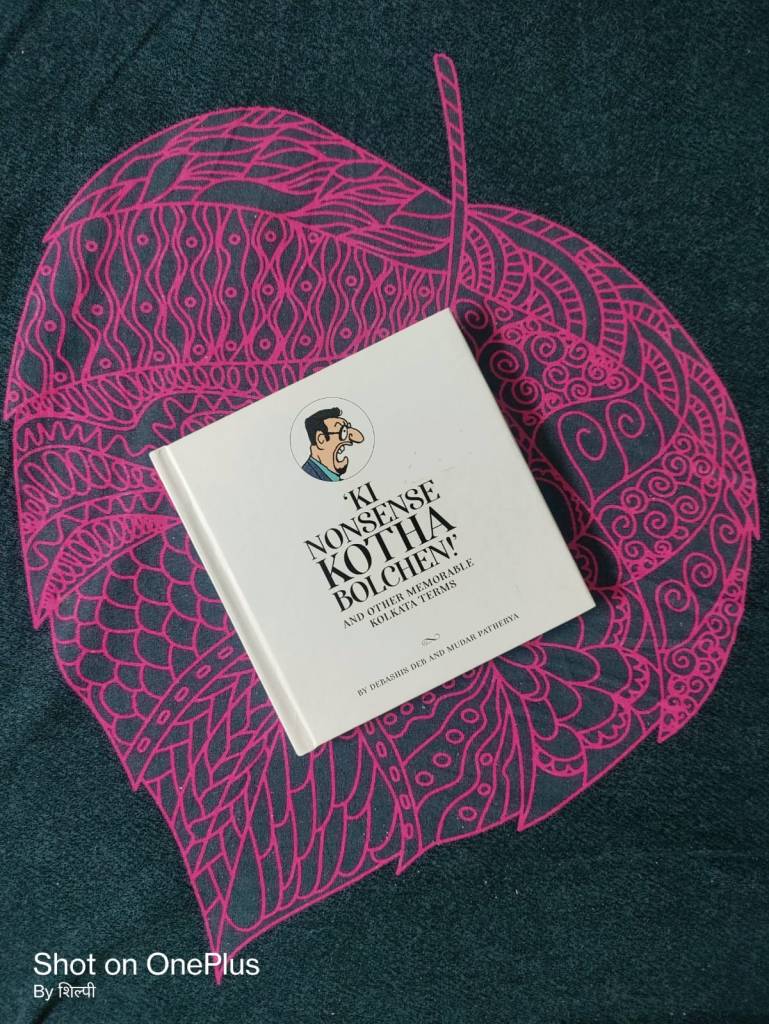
‘Ki Nonsense Kotha Bolchen!’ smothers you with Kolkatan emotion

‘Ki Nonsense Kotha Bolchen!’, a collection of caricatured terms and phrases quintessential Kolkatan in nature, is nothing but unadulterated joy. Painstakingly presented in this tiny pocket-size book by Debashish Deb and Mudar Patherya, it smacks of the City of Joy, the most colourful one in the world, by virtue of its ‘characters’. Kolkata does not run as much by logic or reason as by emotion. Here ‘Shobai Character’ (everyone living in Kolkata is a character). By that analogy, Kolkata has more characters per sq km than any other Indian city, 15.3 million and counting, which makes this no ordinary boi (book) but a celebration of these characters and their spirit — Maverick, Unique, Unpredictable, Effervescent, Excitable, and Rebel.
The title uses “Nonsense”, the only parliamentary English word to which the Bengali takes complete offence because it is synonymous with “extensive dismissiveness, complete disregard and a comprehensive decimation of respect”, simply a non-negotiable term and condition for their existence. If it offends you further, I could only say the most ridiculous line in a Kolkatan’s parlance — “Dhor to Aamakay!”


The tiny book (currently out of stock) has vividly captured the city’s distinctive lingual flavour — a part of it that speaks Bengali, a part that speaks English, a part that speaks Hindi and a part that speaks European… making Kolkata the melting pot of cultures and gives us a distinctive verbal reference for the city’s people, places, passion and purpose. It regales the outsider by capturing its varied essence. It makes the insider nostalgic, reminiscing about the characters who represent “innocence in a commercial world, a special sauce in an otherwise dull world, diversity in a conforming world and rebelliousness in a cowering world.”
After flipping through these pages, I can only exclaim, “Mairi! Hebbey Laagchey!” (Excellent) or better, “Aantel Marka” (deeply artistic with a profound thought).
But if you say, “Sheta Bodo Kotha Noi! (It’s no big deal)” I will give up because “Aar Baba Paarchi Na! Bolay Dilam Maanay Rella Nini Ba!” (I can’t deal with it anymore. Could you not create an uproar over it, pl)?
In praise of the Bhodrolok behind this creation, I can only say, “Uni Holayn Aamader Khoob My Dear Lok” (endearingly affable person), for adding many more terms to my limited Bengali vocabulary. If someone asks, “Kon Bawaal Kees” (Who created this drama)?, you can blame the “Goodself” (Yours Truly), “Babushona”!
I couldn’t help but agree with the duo that ‘Ei Rokom Jaayega Kothaaaao Nei’ (There’s no place like Kolkata anywhere), and this book is “Byaapak, Shanghaatik, Durdaanto, Phaatafati” — OUTSTANDING!
Boi ta fatiye diyeche! (The book has nailed Kolkata like never before).

Ferris Wheel in Three of Us: A ride to remember

February 14th is observed as National Ferris Wheel Day in honour of the birth of George Washington Gale Ferris, Jr., the man who invented the Ferris Wheel. 

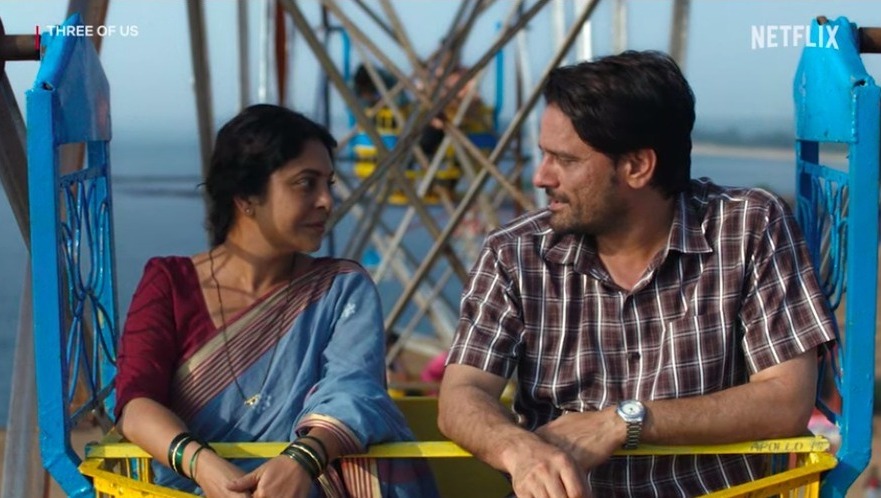
So here is celebrating the day, a bit belated, with the most telling image of the #FerrisWheel or the #GiantWheel from Avinash Arun Dhaware’s #ThreeofUs.

In the novel, “The Catcher in the Rye”, by J.D. Salinger, the protagonist, Holden Caulfield, reflects on his childhood memories while riding a Ferris Wheel with Phoebe at a carnival. He wishes it could be this way for him and her forever.

In this film, while taking a spin on the Ferris Wheel, childhood buddies Pradeep Kamath and Shailaja Desai relive their good old days, rewinding to that moment with a tinge of nostalgia when they were here together for the last time as children and giving that unfinished story the much-needed closure as adults.   

Three of Us

A Ferris Wheel has a distinctive and universally recognizable nature, and it is no surprise that this scene is one of the most memorable in the film and finds a place on the poster, too. 

The circular motion of a Ferris Wheel symbolizes cycles, continuity, and the never-ending nature of certain processes or experiences for both Pradeep and Shailaja and even Dipankar Desai.

The motion of a Ferris Wheel, with its ascending and descending movements, can be seen as a metaphor for their lives ups and downs after their last ride together on the Ferris Wheel many moons ago. 

When Pradeep says, “If the wheel ever stopped mid-air, I didn’t want it to start again,” it highlights how the Ferris Wheel evoked nostalgia and a sense of the past, connecting people to memories of fun times and simpler pleasures. It also creates a sense of adventure and excitement because we see Dipankar choosing to stay away from the ride, letting Shailaja and Pradeep go for a ride one last time before they bid goodbye to each other forever. 

Three of Us is streaming on Netflix.

When the wheel stops for a while (a brilliant way to pause and let the characters converse), Shailaja takes a moment to express how she still wouldn’t wish the wheel to restart. She reminisces how she was in a great hurry to get to Vengurla, and now, when she’s here, she’s missing Mumbai. But at that particular moment when the wheel has halted, she doesn’t feel the need to hurry anymore. “This is where I want to be, and I’m here,” she says, to which Pradeep couldn’t help but ask her, “Why didn’t you come back sooner, Shailaja?” She has no answer to his question but makes up for all that was and is now lost by saying, “After I left, I didn’t find the time to return. Our whole life is spent in a dilemma. Do we choose a busy or a peaceful life? Only recently, life said to me, “Slow Down.” And I did.” 

Riding the Ferris Wheel together provides a different perspective of the surroundings with each revolution. It also symbolizes the importance of gaining new perspectives, reflecting, and seeing the bigger picture in various aspects of life for Pradeep and Shailaja. 

However, the filmmaker has steered away from giving any romantic connotation to the Ferris Wheel ride by filming this scene in the glowing light of the evening and not an illuminated Ferris Wheel at night.

The scene is subtle, subdued, and sublime, much like their performances and the film, #ThreeofUs.  

Sanjoy Nag’s Mujhe Jaan Na Kaho Meri Jaan unfolds like a symphony of love

National Award-winning filmmaker Sanjoy Nag draws inspiration from the timeless lyrics of Gulzar and the soulful rendition of Geeta Dutt in Anubhav for his debut work of fiction, Mujhe Jaan Na Kaho Meri Jaan, published by Red Grab Books last year.

Much like its musical counterpart, the book effortlessly captures the essence of love, seamlessly blending playfulness with poignant moments, joy with melancholy, and togetherness with loneliness. Through its pages, readers embark on a journey delving into the lives of two star-crossed lovers, Sadabahaar and Purbasha, whose tale unfolds like a symphony of love, each note resonating with emotion. Beyond its title, the book exudes a distinctive Gulzar-esque essence. Like the renowned poet, lyricist, and director Gulzar, who has immortalized his iconic films in the screenplay format, Nag’s book ventures into this lesser-explored literary genre with finesse. His first attempt at writing a piece of fiction around the lives of two women who decide to give birth to their baby is a hit from the word go. He gives us a story that tugs at the heartstrings because, like love in all its hues, it is all-embracing, and his craft shines in how he has skillfully dealt with the sensitive narrative, plot and characterisation. And much like his other films that have had strong female protagonists, this one is no exception. It’s Nag’s default choice. He once told me, “It is a deliberate attempt because I am surrounded by strong women. They make my life beautiful and more meaningful. Their stories inspire me, interest me and enrich my life.” This story, like his films, is an extension of his creative template. As I turned the pages, I couldn’t help but envision the story unfolding on the silver screen. Nag’s work begs for adaptation, a cinematic journey waiting to be realized. Perhaps someday soon.

Jhini Bini Chadariya: A tale of our troubled times woven with honesty

Centuries ago, the humble weaver, mystic and poet Kabir, who once lived in the lanes of Kashi, wrote a profound poem titled ‘Jheeni Jheeni Beeni Chadariya’. His verse is a metaphorical and philosophical expression that uses the metaphor of the loom and weaving process to reveal the mysteries of life. The title also inspired Abdul Bismillah’s Hindi novel ‘Jheeni Jheeni Beeni Chadariya’ on the lives of weavers in Varanasi, much like filmmaker Ritesh Sharma, who borrows it for his film, ‘Jhini Bini Chadariya’, to explore the lesser-talked-about character of the holy city — Kabir’s Kashi where Muslim weavers run the looms and produce some of the world’s finest silk saris worn mostly by Hindu women, and also its once flourishing and now fading into oblivion courtesan culture. 

These two quintessential characters of Kashi come to life as Shahdab, the young Muslim weaver facing an existential crisis, and Rani, the orchestra dancer who gyrates and grooves to vulgar songs in the glare of myriad-coloured light beams, entertaining the lustful local audience with her sleazy moves. The filmmaker uses them as the access point to delve deeper into the city’s socio-political, socio-cultural and socio-religious fabric and lays it threadbare. The motif here is the same as that was seen in ‘Nasir’, ‘Aani Maani’, etc, and Ritesh joins other independent voices in filmmaking who aren’t shying away from exploring centuries-old traditions of India that champion humanism, inclusion, syncretism, and how all these ideals are being swiftly eroded under the strong winds of Hindutva.   

A traditional handloom weaver, Shahdab, lives in the silk-weaving neighbourhood of Pili Kothi, and the clackety-clack sounds from the looms fill the air in his room but not loud enough to drown the threat of being wiped off sometime soon. The fear looms large over him because his art is helpless before the modern power looms that can produce silk saris cheaper and faster. The shot through the open door also gives us a glimpse of the sari-clad mannequin, his constant companion. On the other hand, Rani fends for herself and her deaf and mute daughter, Pinky, with earnings from a not-so-respectable trade. She dreams of sending her daughter away to a boarding school one day so that the poor child doesn’t have to live with her classmates’ taunts of being a dancer’s daughter. Rani has stars in her eyes and hopes to make it big with a much-awaited debut in a music video and, from there, move on to act in films one day.   

The filmmaker uses symmetry in characterisation and plot to show the parallels in the lives of its male and female actors, perhaps to reiterate the more resounding theme of communal bigotry and show how they end up being the victim of circumstances, eventually falling prey to it, in one way or the other, for no fault of theirs. It starts with parallels between Hindu prayer chants and a mosque’s Muslim prayer call, interspersed on the screen. The constant blaring of hate speeches on loudspeakers and the airing of news on radio and television in the background gives the film a documentary feel.     

Jhini Bini Chadariya

While Shahdab befriends an Israeli backpacker, Adah, Rani deals with the romantic overtures of a young man, Baba, who has no agency to change things for good for her object of affection. Still, he harbours a deep intent to do so and quite hopelessly nurtures dreams of a good life and helplessly sees it blown to smithereens.  

Shahdab’s one-sided love remains unrequited as Adah puts him in the friend zone, nothing more, nothing less. Rani disapproves of the man’s possessiveness and shows complete disdain for his heroism in trying to protect her honour at the hands of vulturous men who treat her like a piece of meat, wanting to devour her at the first given opportunity, all because she treats herself as no-man’s business. 

Shahdab weaves a sari to gift Adah, and she, in return, leaves unannounced with a book on Kabir for him as a parting gift. Rani’s paramour Baba gifts her a sari, too, but she throws it away on his face in a fit of rage, and from there, things go downhill for her. 

Shahdab goes on to marry her Shazia, while Rani dilly-dallies on the Baba’s proposal before being brutalised by the henchmen of the local Hindu politico, Shiv Shankar Tiwary. An irate Baba avenges Rani’s ill-treatment at his hands, realising little that his ire will stoke the communal fire in the holy city. The two men, Baba on his bike and Shahdab on his scooter brush past each other for a fleeting moment on a well-lit bridge, perhaps in an ominous suggestion that the peace and harmony will soon be up in flames. 

Two threads — Rani and Shahdab’s lives — are intertwined when the riots break out in the city, and that’s how the filmmaker explores the third, invisible character — the city — adeptly exposing the tectonic changes under religious fanaticism. After Shankar’s killing, the cow vigilante breaks loose, blaming the Muslim beef traders in the city for Gaurakshak’s murder. The news spreads like wildfire and consumes the peace and brotherhood of the locality. It leaves Shahdab’s family dead at the hands of rioters, much like the communal riots that broke after the demolition of Babri Mosque on the night of December 6, 1992, and his parents who were killed in its aftermath. Baba, too, is killed in a police encounter after being hunted down for shooting the Hindu leader and, in death, is called Mustafa, which pretty much explains the story in a nutshell.  

One of the most telling scenes unfolds amidst the resonant chants and the echo of bells. Once a dynamic hub of diverse languages, faiths, and profound knowledge, the vibrant city echoed with loud slogans and ritualistic fervour. The air was filled with the booming beats of dumroos, fervent cries of “Har Har Mahadev” mingling with “Jai Shri Ram,” the showering of petals, and an elaborate display of ceremonial worship, and the city fitting in the oversized idea of aggressive Hindutva. 

The camera becomes a silent spectator, standing still and documenting their lives, ways and means of living with acute detachment, offering the audience a voyeuristic glimpse on a few occasions. The cinematic framing of windows, doors and the windows above the doors in the characters’ homes, or the movement of two-wheelers in the city’s lanes and bylanes with the camera positioned at the fag end, or shots of religious processions, are spread liberally all throughout, from beginning to end, to show the camera’s distant approach in filming, and showing the changing face of the city, and not the usual touristy stuff.    

The actors owned their roles with ease as if they were one amongst the many Ranis or Shahdabs that inhabit the ancient city of Kashi. Their dialogue delivery, body language, mannerisms, and looks seemed a seamless blend and a perfect reflection of the milieu painstakingly portrayed in the film.   

The sound design combines every piece of audio in the film—including dialogues, sound effects, ambience, and score—to create the film’s soundscape quite effectively. It suitably adds to give the film a docu-drama touch. 

Much like the poem, where Kabir uses the weaving process as a symbolic representation of life and its mysteries, comparing the fine, delicate cloth to the subtle and intricate nature of existence, with the act of weaving serving as a metaphor for the divine process of creation and the unfolding of life, the filmmaker uses the loom to represent the current political order, and each thread in the fabric signifies an individual’s life. The interconnectedness of the threads illustrates the interdependence of all life forms. The cloth being woven here by the filmmaker symbolizes the intricate tapestry of the prevailing situation in the country. 

The disclaimer at the beginning, “some of the events and situations in this film are not fictional”, sets the tone, and in 1 hour 37 minutes, Ritesh portrays all of it with sensitivity, honesty, tenderness and aloofness. The film seems like a leaf out of everyday India, documented by a young filmmaker who manages to weave the fabric with a keen eye on the prevailing situations, leaving us visibly rattled and shaken. We, the audience, are like Pinky, who takes up dancing and is framed from an open window in the last shot, complicit, complacent and conformists in the changing landscape of secular India. It is a brittle thread, and we need to protect it now more than ever.

एक ही दीवाने को आये थे समझाने कई
पहले दीवाना मैं था अब हैं दीवाने कई
एक ही पत्थर लगे है हर इबादतगाह पर
अपने-अपने बुत का सबने गढ़ लिए अफसाने कई
~ नज़ीर बनारसी के लिखी ये पंक्तियां जो इस फ़िल्म में इस्तेमाल हुई हैं

Written and Directed by Ritesh Sharma
Cast​:​ 
Megha Mathur…Rani
Muzaffar Khan…Shahdab
Sivan Spector…Adah 
Syed Iqbal Ahmed…Abbu
Roopa Chaurasiya…Pinky
Nishant Kumar…Nadeem
Shweta Nagar…Shazia
Ashutosh Singh…Shiv Shankar Tiwari
Utkarsh Srivastav…Baba
Heramba Shankar Tripathi…Faisal

More here: https://www.imdb.com/title/tt15624918/fullcredits

(All photos sourced from IMDb)

Nothing to do is itself a great doing, ain’t it?

What did you do today? Well, I stepped back and did nothing because it was the National Day of Nothing. In a constantly hustling and bustling world, January 16 stands out for its sheer celebration of nothingness, and I must admit that I love its sheer ingenuity because we often tend to glorify productivity and busyness; celebrating “nothing at all” may seem a counterintuitive move. Our society often places a premium on constant activity, so taking a day to celebrate nothing at all becomes a radical act of self-care. It’s a deliberate step towards a healthier, more balanced life—where moments of stillness are accepted and embraced as essential for overall well-being. 

However, taking a day off to do nothing provides a much-needed pause in our hectic lives. It is a time to step back, reflect, rethink and recalibrate oneself. However, those aboard the Hamster’s Wheel may find it a tad difficult to pretend to do something when doing nothing, but it is an art form in itself, and with time, one can become adept at doing nothing and relatively guilt-free. 

The importance of doing nothing bodes well for one’s being, and these need to be emphasised repeatedly, like a broken record. 

Mental Well-being: Constantly being on the go can affect our mental health. Taking a day to do nothing allows our minds to rest, recharge, and find a sense of calm. It’s an opportunity to step back from the daily hustle and prioritize mental well-being.

Stress Reduction: The relentless pace of modern life often leads to stress and burnout. Celebrating nothing at all is a conscious choice to break free from the cycle, reducing stress levels and promoting overall relaxation.

Reflection and Mindfulness: Doing nothing doesn’t mean mindless idleness. It’s a chance to reflect on our lives, goals, and priorities. Embracing mindfulness during this time can lead to greater self-awareness and a deeper connection with our thoughts and emotions.

The Cult of Busyness: Society often equates busyness with success, but this mindset can harm our well-being. Taking a day to do nothing challenges this cultural norm, emphasizing the importance of balance.

Creativity Boost: Allowing our minds to wander and daydream during a day of doing nothing can spark creativity. In these moments of quiet, innovative ideas often surface, unburdened by the usual demands of a busy schedule.

How to celebrate Nothing Day?

Disconnect: Turn off notifications, put away electronic devices, and revel in the simplicity of unplugging by creating a tech-free zone to detach from the outside world.

Engage in Restful Activities: Read a book, stroll, or indulge in a favourite hobby. Choose activities that bring joy without the pressure of productivity.

Embrace the Silence: Enjoy the beauty of silence. Whether through meditation or simply sitting in quiet contemplation, let your mind unwind without external distractions. Embrace the present moment and let go of the constant need for productivity.

Creative Expression: Channel your inner artist—paint, write, or create without any specific goal in mind, and let creativity to flow freely, unburdened by the constraints of productivity.

Connect with loved ones: Spend quality time with friends and family, share laughter, and create lasting memories. Strengthening bonds can be a beautiful way to celebrate the day of nothingness.

As the renowned poet Daag Dehlavi once mused, 

“हजारों काम मोहब्बत में हैं मजे के दाग

जो लोग कुछ नहीं करते कमाल करते हैं.” 

Translated, it means, “Thousands of tasks lie in the realm of love… those who do nothing, achieve wonders.” This sentiment echoes the wisdom of poets and philosophers who recognize the value of embracing a day dedicated to the art of non-productivity.

Mirza Ghalib, the celebrated Urdu poet, once remarked, ‘इश्क ने ‘गालिब’ निकम्मा कर दिया, वर्ना हम भी आदमी थे काम के,’ which translates to, “Love made Ghalib worthless, otherwise, I too was a man of substance.” These words highlight the unconventional wisdom that lies in doing nothing. Ghalib implies that love, or in this case, the National Day of Nothing, can render life’s mundane tasks inconsequential, allowing us to appreciate the beauty of simply being.

To celebrate the National Day of Nothing, in letter and spirit, let’s embrace the words of Daag Dehlavi and Mirza Ghalib. In the pursuit of doing nothing, we might just find the extraordinary in the ordinary. So, take a break from the hustle, let go of the need to accomplish, and revel in the joy of non-productivity. After all, in the art of doing nothing, there lies the potential for something truly remarkable. Schedule a day to do nothing and see its positive impact on your life. You will be surprised at the results.

Joygerms: The carriers of happiness around us

In a world clouded with chaos, confusion, challenges, stress, and uncertainties, an infectious force is hard at work, quite unnoticed. Their task is spreading joy around like a glitter bomb that won’t go away quickly. The cheery bunch seems filled with joie de vivre in abundance, the sure-shot fallback option to beat out the blues for the dispirited fellas like me. These joy carriers are the silver lining—a powerful phenomenon that can spread like wildfire, infecting one’s heart and mind with a delightful contagion.
In the huge cosmic space, these Joygerms are microscopic entities—tiny, powerful, and yet capable of transforming the emotional landscape of anyone they touch. These Joygerms encapsulate the essence of joy as an infectious agent.


Laughter is the ultimate carrier of joy and the background music of a Joygerm’s life. Joygerms often have an infectious laugh that can brighten dull moments and create a joyful melody that captivates everyone around them. Their ability to find humour in everyday situations becomes a source of delight for those within their sphere of influence. It’s always good to be that tiny dot connecting others in the laughter circle. Laughter alone has a positive impact on one’s environment. It is an intentional, feel-good step towards radiating positivity. It starts with sharing encouraging words, offering support, and creating an environment where optimism becomes contagious.
Joygerms thrive on resilience and optimism. They see challenges as opportunities and setbacks as stepping stones, spreading a resilient outlook and encouraging gloomy ones to keep their chin up and face adversity with a positive mindset. With time, I have learnt it too. Joygerms emit a distinct aura, and aura of hope. Their presence alone can uplift spirits, creating an environment where positivity becomes the default setting. It’s not just what they say or do; it’s the vibe they carry with aplomb.
They radiate positivity effortlessly. Their presence can brighten the room, and they have a knack for turning gloomy atmospheres into lively ones.
Spontaneity is their forte. Joygerms are known for surprising others with unexpected acts of joy—a cheerful note, a small gift, or a spontaneous call to lighten the mood. These Joygerms have taught me to embrace challenges as opportunities for growth and cultivate resilience by adopting an optimistic perspective despite adversity.
Joygerms are synonymous with kindness. Whether a small gesture or a grand act, their thoughtfulness is kindness that creates a ripple effect. A kind deed triggers a chain reaction of positivity from them to me and from me to others. Isn’t that a good chain reaction? They have taught me to spread kindness far and wide. Acts of kindness, whether through words, gestures, or thoughtful deeds, no matter how small, can have a profound impact on the lives of others, and it is the least we can do for others.
The impact of Joygerms is limitless, and the more carriers we have (like my bunch), the brighter our collective world becomes because embracing the role of a Joygerm is not just about personal happiness; it’s about contributing to the well-being of those around you. So, are you ready to be a carrier of joy? And pass it on! Just keep it going. 

(I am happy to be infected by the countable few “Joygerms” in my life, and I take this opportunity to express my profound gratitude towards them. They enrich my life with their mere presence. Once infected, I am bound to become a happiness carrier and infect many more, actively spreading it to those around me. That’s how it works.)

Goodbye, Ma’am!

Ma’am, you were my anam cara, soul friend, teacher, and eternal guide, and you will always be.
As our moral science teacher in class 8, you set the moral compass in each one of us, and that became our guiding light, from then to now. We were privileged to learn briefly under your tutelage in Class 9. But then you left for Delhi, and my batch felt like a headless chicken or rather a cat on a hot tin roof, scattered, lost and grappling with the vast English syllabus, prose, poetry and drama, and that too Julius Caesar, and change of two teachers in the entire term. That was a tad disappointing for me and the rest of my batchmates. All of us had heard about how you had helped the batch of 1993, then in Class 11, stage the play at Pell Mell and on a quote historical day… 6th December 1992, and oh boy, it was a roaring success from the word go.
My wish to be your student remained largely unfulfilled back then in school. But the Universe was watching and found a way to fulfil this earnest desire most beautifully. I chanced upon an online news feature on you, which surprisingly had a backlink to your website with your email address and mobile number.
I quickly emailed a request, and in a day, with Naaz’s help, you called me. I was over the moon.
I went to meet in late 2015 and was stunningly delighted at this chance encounter with my favourite teacher. I kept meeting you on and off.


From 2016 onwards, I became more regular here. I found your energy and enthusiasm remarkable and secretly hoped a bit of it could rub off on me, too. I saw you attending the school, looking after its day-to-day affairs, monitoring and managing it so well, quite singlehandedly. Year after year, I saw you successfully organise Mehendi Camps here in C Pocket Park, eye care camps, health care camps, and blood donation camps in Madanpur Khadar Village, and events for every occasion in the school without fail.
You knew that empowering children through education wasn’t enough. You introduced Dance, Yoga, Sports sessions, and vocational training for underprivileged children, a thoughtful way of well-rounded growth and development. While preparing the Souvenir in 2016 for the 21st Annual Day celebration, I learned about your long and arduous journey, and I will doff my hat in honour of your tenacious spirit.
You taught me more than you could have as my English teacher in school. I have done it all these years, which I attribute to you. You were a pretty hard taskmaster, I must say. I connected my Carmel school seniors and teachers, designed and edited the newsletters, booklets and Souvenirs, did fundraising by way of selling ad spaces in the annual Souvenir, and also found buyers for your hand-knit woollen sweaters, caps, mufflers, socks, stoles, papad, achaar, badi, diwali candles and diyas, embroidered towels, cushion covers, and table cloths, and cloth shopping bags; organising stalls at different events across the city to sell of these kinds of stuff too. You trusted me to organise a picnic for school children around Delhi’s historical hotspots in 2017, screening films for them, and organising workshops for teachers. Well, you taught me more than anyone else could in all these years.


I joined you as a Volunteer, and even though I was formally inducted into the core team of the NGO and took up the position of Secretary, I always felt like your foot soldier.
We Carmelites met on your birthday, teacher’s day and Guldasta’s annual day, and you were the most gracious host ever.
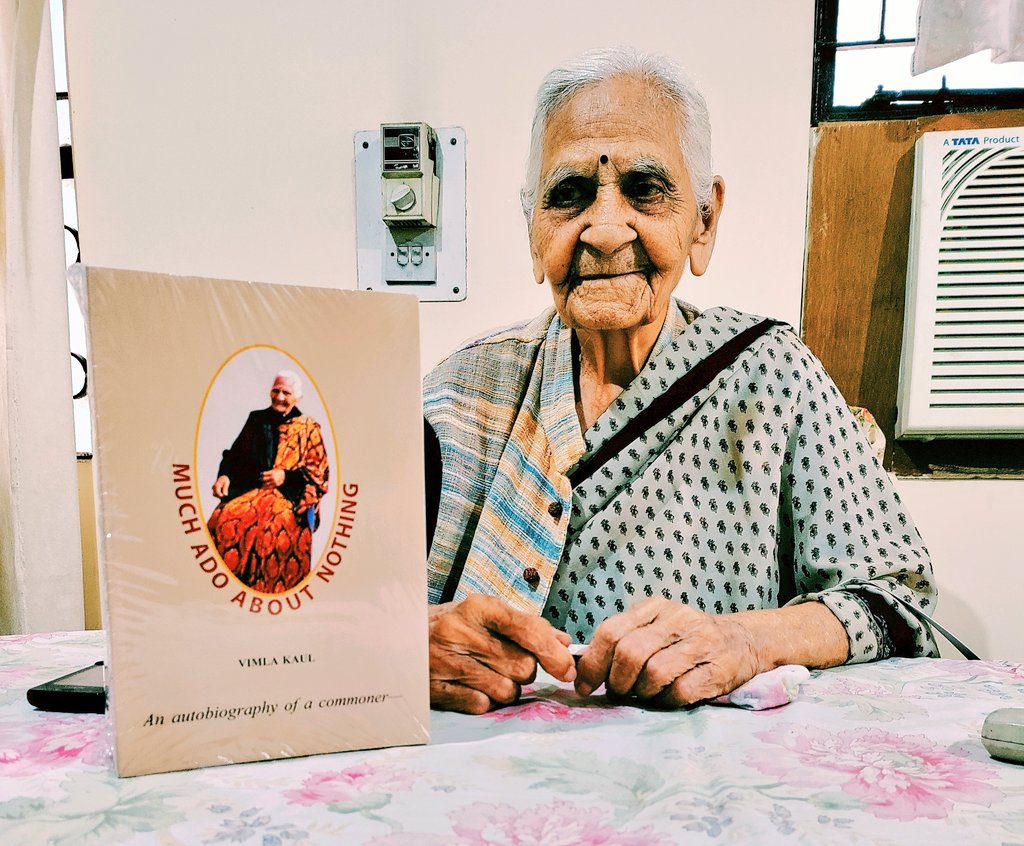
The last assignment you entrusted me with was spreading the word about your autobiography, Much Ado About Nothing. I did.
But yes, I couldn’t carry forward the mantle of leading the NGO or taking charge of the school, Guldasta. I knew I didn’t have the chops for the same or could, in my wildest dreams, match your passion for the cause, dedication to the task and commitment to lead it. I was struggling with my health and withdrew because I thought that was the best way to avoid disappointing you. I failed. And I am sorry.
An African proverb says when an old man dies, a library burns to the ground. And when an old woman dies, I say, a school burns to the ground. This is how I feel writing about everything you meant to me. It is a strange coincidence that you chose to pack off in December, the most important month in your school’s calendar, when you would be right here in the Community Hall for Guldasta’s Annual Day. It is here where we have assembled today to celebrate you but without you.
I will miss your childlike innocence, strength, wit and humour, and life lessons. I will crack up thinking how you had asked me to arrange for a death certificate in advance. Well, that remains unbeatable to date.
Everything about you, my chocolatey lady, as I fondly called you for your love of chocolates and cakes, will be missed by all of us here… Your birthday, which falls on World Chocolate Day, will be another reason to binge on chocolates from 2024 onwards.
Goodbye till we meet again!

The Goodness of the Good Morning Syndrome

It’s more than just a greeting; it’s a reassuring reminder of our enduring connections with friends, relatives, and loved ones. It’s a beautiful manifestation of thoughtfulness and a daily reminder of the special people who enrich our lives in beautiful ways.

For nearly a decade, my day started with a subtle ping, courtesy of a WhatsApp message from my friend M. Like a morning rooster, M would gently nudge me awake with his daily dose of positivity. Yes, I’m a victim of the “Good Morning Syndrome,” and I absolutely adore it!

M’s unwavering dedication to this ritual touched my heart. Rain or shine, holiday or workday, that “Good Morning” message was my daily anchor. It was a heartfelt reminder of our love and connection, and it’s as indispensable as my morning tea and M’s coffee.

Over the years, M’s messages have served as life vests in a world that spins faster than a Beyoncé dance routine, keeping me afloat. They’re a testament to the enduring relationships we two treasure. The regularity created a sense of reassurance. Knowing someone is around, popping off the Whatsapp screen first thing in the morning, is a comforting thought to start the day. A small gesture like this has tremendous bearing; it can uplift spirits, fostering a sense of happiness and well-being.

But what’s the secret sauce that makes this daily “ping” so powerful? It’s not just a greeting; it’s an expression of love, like a warm hug from afar. It shouts, “Hey, I’m thinking of you even before my caffeine fix!” It’s the perfect Dopamine-Oxytoxin-Serotonin-Endorphin overdose in one text to help sail through the mundane day.

These morning messages that trickle on one’s phone aren’t one-size-fits-all. Each is a unique art piece, showcasing the sender’s personality. Some go the image route, some the poetic, but they all add warmth and authenticity to our otherwise screen-dominated lives.

I must confess that in a world where emojis often replace emotions and screens substitute for face-to-face chats, “Good Morning” messages are and will be my lifelines. They remind me that real people exist behind the screens and that our relationships remain steadfast and valued.

In our whirlwind lives, where schedules are tighter than a corset, a simple “Good Morning” packs a punch too. It’s the espresso shot of encouragement we need to kickstart the day. Consistency is the key. It is this daily spadework that builds bonds that withstand time.

Is it love, you ask? Absolutely! Just as pure as the Radha and Krishna in those accompanying images, M’s messages connected us in a way only genuine care can. It’s a daily affirmation that someone wishes you a splendid day ahead, no matter the distance. It’s a digital bridge for long-distance connections, reaffirming that love can’t be measured in miles but in the width of the curve that it eventually brings on the face.

These messages are also golden nuggets of thoughtfulness in a world cluttered with distractions. They uplift spirits, injecting a dose of happiness into our morning routine. They say, “You’re not forgotten in this sea of chaos.” I must confess that the days when M’s message doesn’t pop up (which has been the case lately), it feels like a night of not knowing anything, long, dark, cold and unending. Also, old habits die hard. Knowing one hasn’t been forgotten is a beautiful feeling in a world full of mundane distractions.

The habit of remembering and forgetting can significantly impact one’s being; after all, we are social beings. We thrive on love. A friend asked why I wait for a message and why I don’t send one if the person doesn’t. I did try for a few days but failed. I realised that I am a truant and can’t stick to a routine and do it relentlessly and religiously, unlike others like M. My bad. But I count on each Good Morning message as an opportunity, and I heartily reciprocate the gesture and express my deepest gratitude for having such caring individuals in my life. They make my life beautiful.

The “Good Morning Syndrome” is a beautiful reminder of the special people who enrich our lives and make each day a little brighter. So, let’s raise a virtual toast to this good-for-all Syndrome. It’s a reminder that in our jumbled lives, people genuinely care. It’s a small but powerful way to nurture relationships, spread positivity, and start each day with warmth.