All posts by Shillpi A Singh

Unknown's avatar

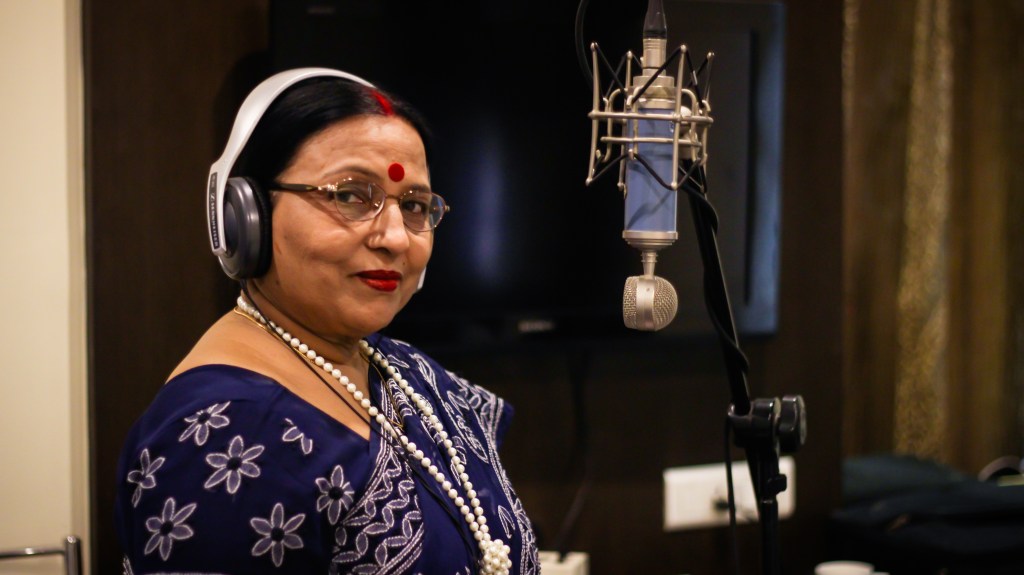
About Shillpi A Singh

क़लम मज़दूर | Commspreneur | Recipient of the IIMCAA Award for Public Relations Person of the Year 2024 | Canva's Top 10 Social Media Creator for 2023 | Work-in-Progress

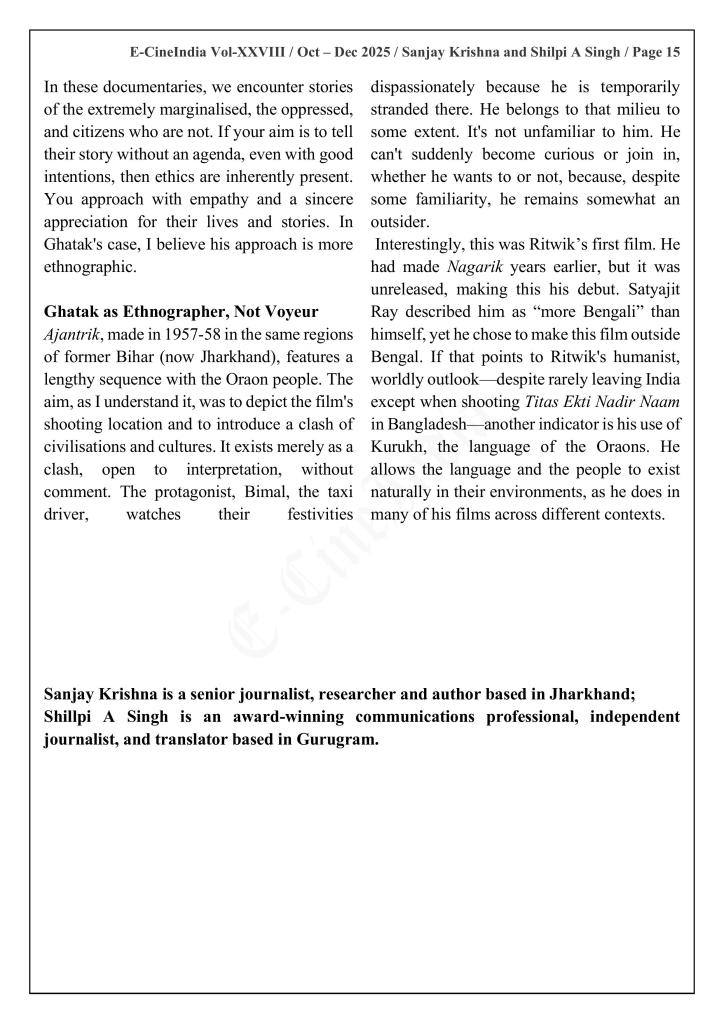
Rediscovering Radhakrishna: Ritwik Ghatak’s Invisible Write Hand in Jharkhand

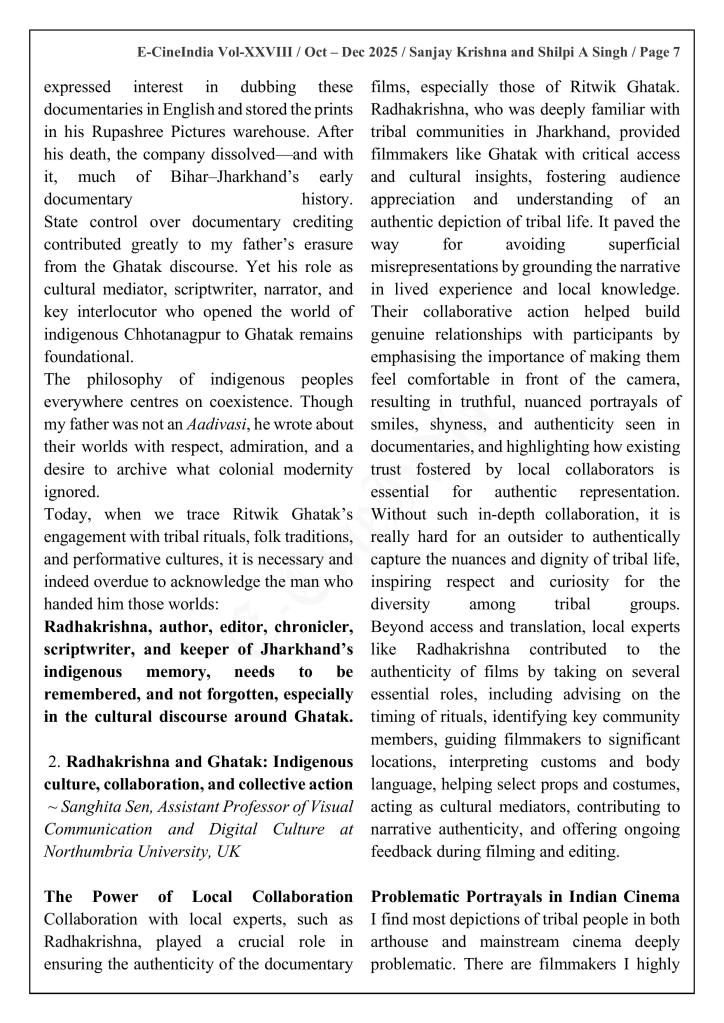
2026 writing begins with this deeply personal and archival piece for Fipresci-India, where Sanjay Krishna and I revisited my family history, which led us to an overlooked but vital figure in Indian cinema: #Radhakrishna—litterateur, editor, screenwriter, linguist, and what I call Father of the Indian New Wave Ritwik Ghatak’s “invisible write hand” in Jharkhand.

“The voice, words, and worldview that flow through Ghatak’s first documentary, Aadivasiyon Ka Jeevan Srot, and his other documentaries focusing on the indigenous communities of Bihar have long puzzled scholars. Many have struggled to find the strot (source) of that distinctive narrative tone: the unnamed, unseen, and almost entirely uncredited collaborator from Jharkhand whose imprint is unmistakable but remains undocumented.

That man was Radhakrishna, a litterateur, editor, screenwriter, linguist, and one of Ghatak’s most important intellectual contacts and cultural collaborators in the region. But as his son, Ranchi-based writer and custodian of his legacy, Sudhir Lal, recalls, Radhakrishna has largely been made invisible in the mainstream discourse on Ghatak’s documentaries.

We explore how indigenous art forms profoundly shaped Ghatak’s cinematic aesthetics and worldview while focusing on his three notable documentaries scripted with the help of noted litterateur Radhakrishan—Aadivasiyon ka Jeevan Srot, Bihar ke Darshaniye Sthan and Oraon. Through these six essays, we trace Ghatak’s engagement with tribal rituals, folk traditions, and performative cultures, examining how these elements informed his larger body of work and differentiated his sensibility from the Western cinematic canons of his time. “

With inputs from

~ Sudhir Lal (Writer and Radhakrishna’s son), who spoke about Indigenous Art Forms, Radhakrishna, and Ghatak

~ Sanghita Sen, Assistant Professor of Visual Communication and Digital Culture at Northumbria University, UK, on Radhakrishna and Ghatak: Indigenous culture, collaboration, and collective action

~ Biju Toppo, an anthropological and national award-winning tribal documentary filmmaker from Jharkhand, on Ghatak, and how he understood the tribal philosophy of life well

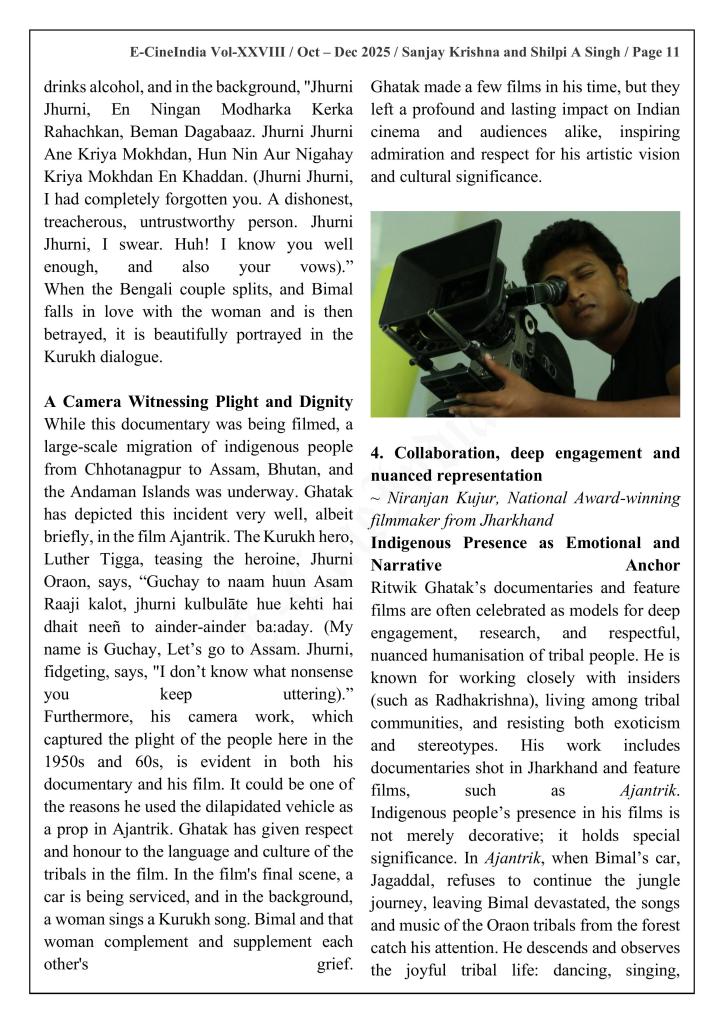
~ Niranjan Kujur, National Award-winning filmmaker from Jharkhand, on their collaboration, deep engagement and nuanced representation

~ Arin Paul, an independent filmmaker currently working on a documentary titled The Ritwik Ghatak Experience, on collective voice being the biggest motif in Ghatak’s cinema

~ Shamya Dasgupta, editor, Unmechanical: Ritwik Ghatak in 50 Fragments, on Ghatak as a deft observer and interpreter of indigenous culture
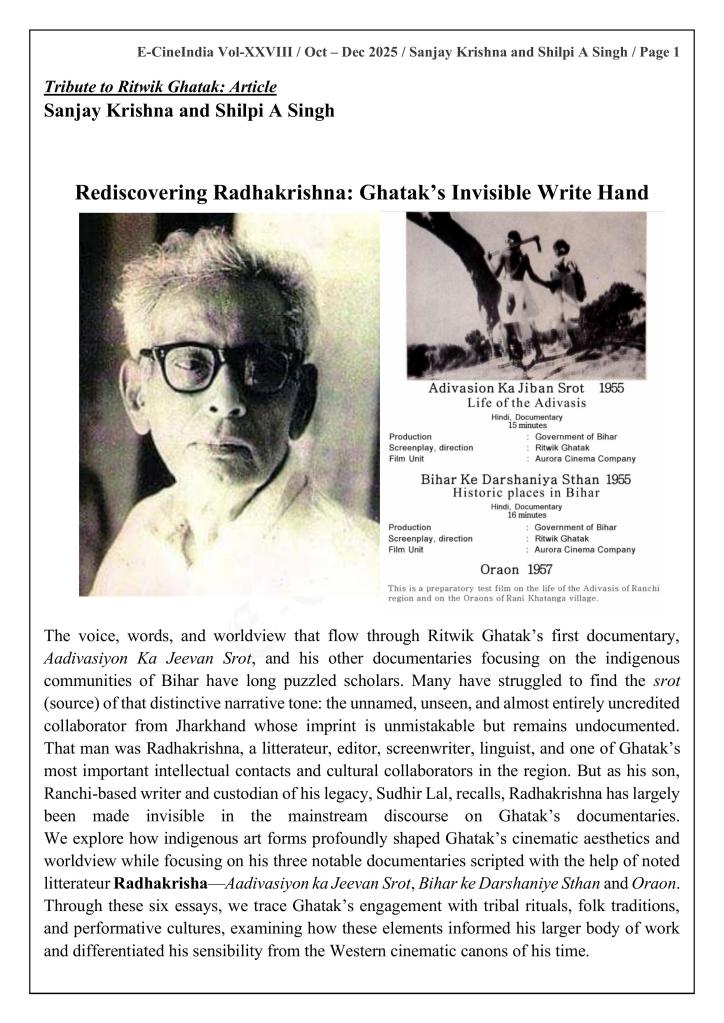
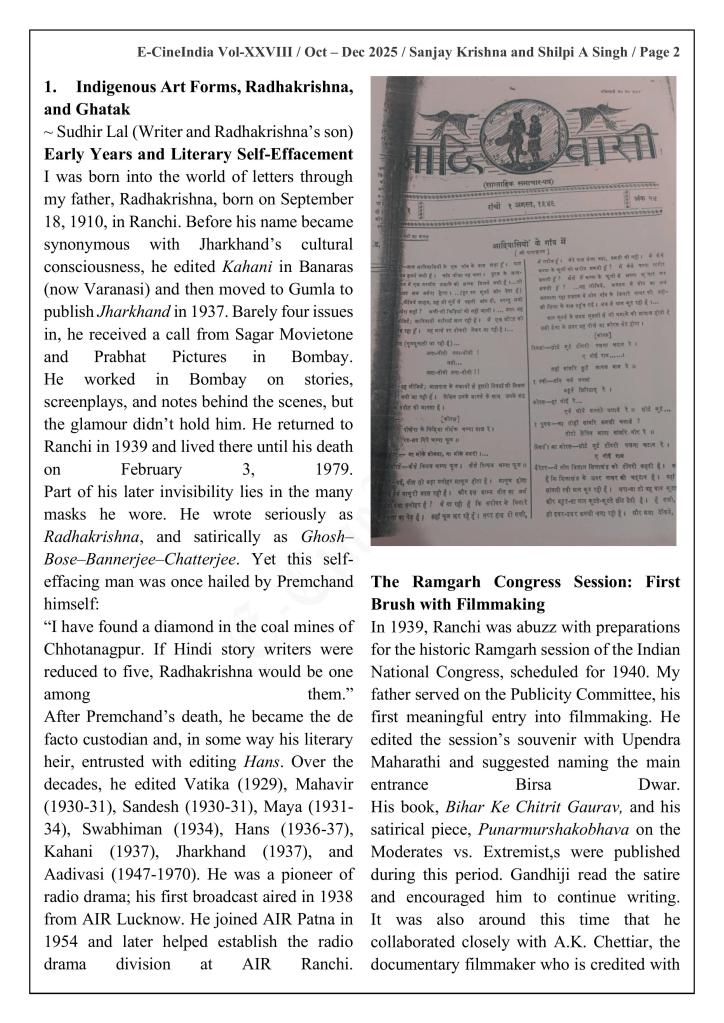
Read here: https://fipresci-india.org/wp-content/uploads/2026/01/6.-TRG-Art-Sanjay-Krishna-and-Shilpi-A-Singh-Ghatak.pdf

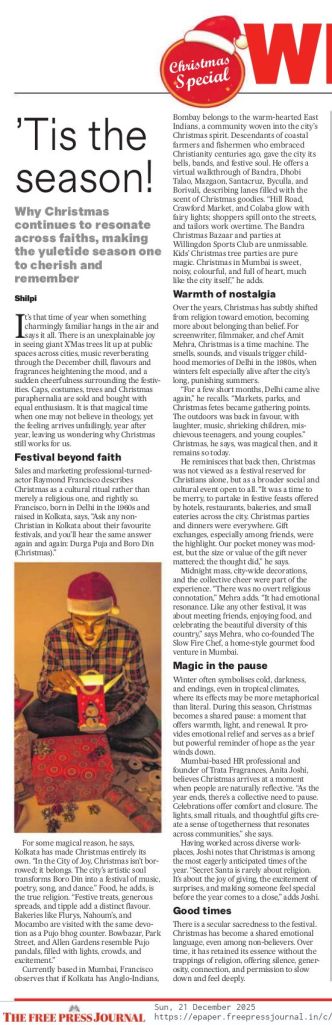
‘Tis the season

The article was published in The Free Press Journal, Mumbai, on December 21, 2025. https://www.freepressjournal.in/weekend/why-christmas-still-feels-magical-even-for-non-believers

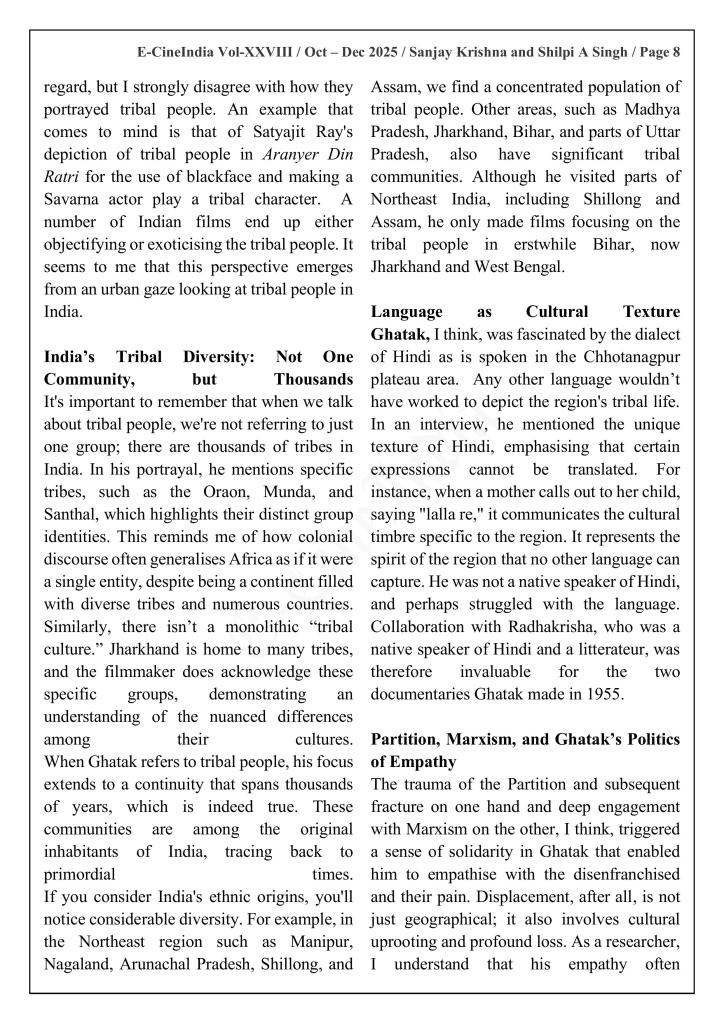
It’s that time of year when something charmingly familiar hangs in the air and says it all. There is an unexplainable joy in seeing giant Christmas trees lit up in public spaces across cities, music reverberating through the December chill, flavours and fragrances heightening the mood, and a sudden cheerfulness surrounding the festivities. Caps, costumes, and Christmas paraphernalia are sold and bought with equal enthusiasm. People dress in reds, whites, and greens, savour festive treats, spreads, and tipple, and exchange Secret Santa gifts.

Over time, Christmas’ festive fervour has transcended religious boundaries, evolving into a shared cultural ritual—one shaped by experiences that collectively create memory and meaning for one and sundry. It is that magical season when one may not believe in theology, yet the feeling arrives unfailingly, year after year, leaving us wondering why Christmas still works on us.

Four Mumbaikars explore why Christmas continues to resonate across faiths, making the yuletide season one to cherish and remember.

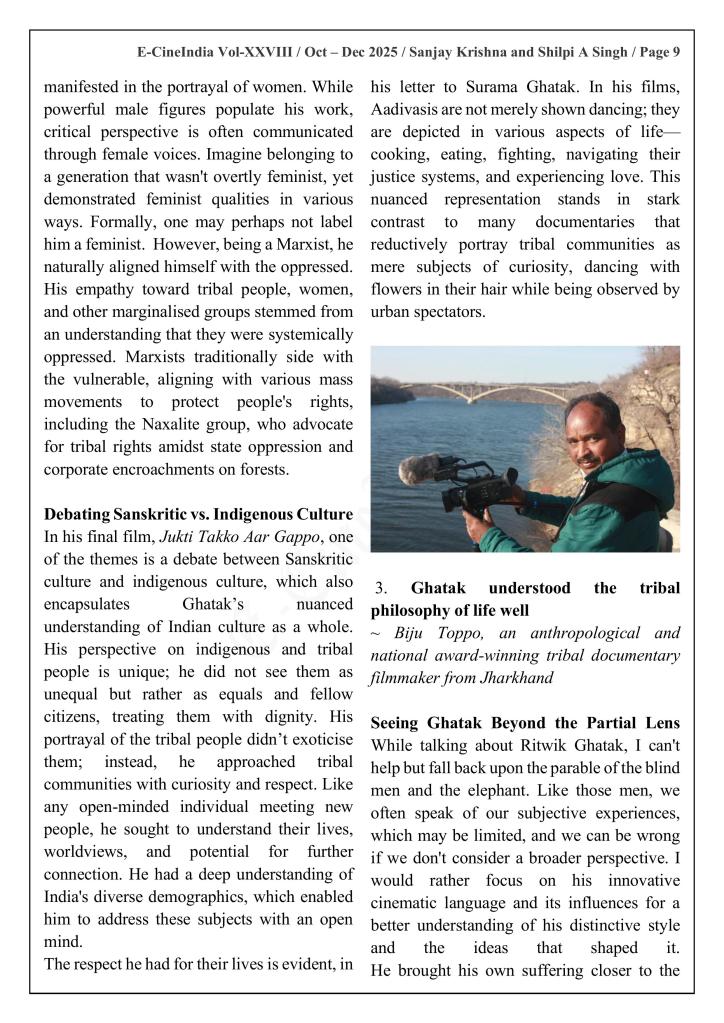
Parenting Mantra 2025: Raising emotionally strong children

(The piece was published on Sunday, November 16, 2025, in The Free Press Journal, Mumbai. https://www.freepressjournal.in/weekend/are-we-raising-stressed-out-kids-truth-behind-growing-childhood-anxiety)

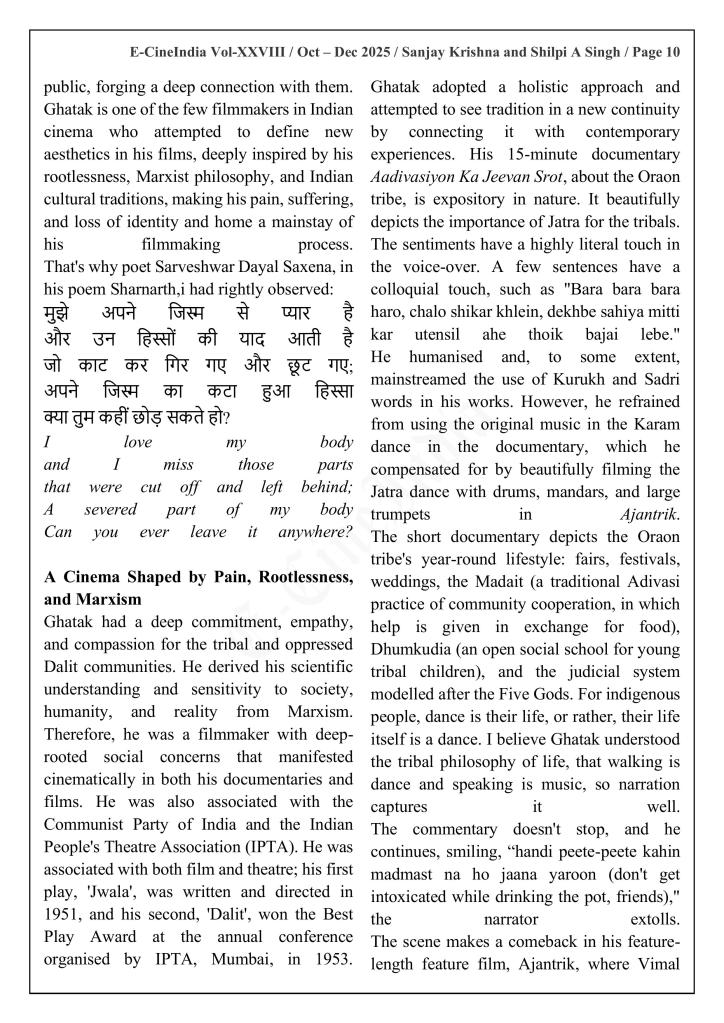
Understanding Down Syndrome: A Guide for Parents

https://www.freepressjournal.in/weekend/what-every-parent-should-know-about-down-syndromebefore-you-make-a-decision
It was published in The Free Press Journal, Mumbai, on October 26, 2025.

Sharda Sinha: The Voice of Bihar’s Folk Music Renaissance

https://www.thehindu.com/entertainment/music/how-sharda-sinha-turned-the-spotlight-on-bihars-folk-music/article68858901.ece

The Burnt Toast Theory: Turning Setbacks into Success

https://www.freepressjournal.in/lifestyle/understanding-burnt-toast-theory-and-transforming-setbacks-into-valuable-lessons

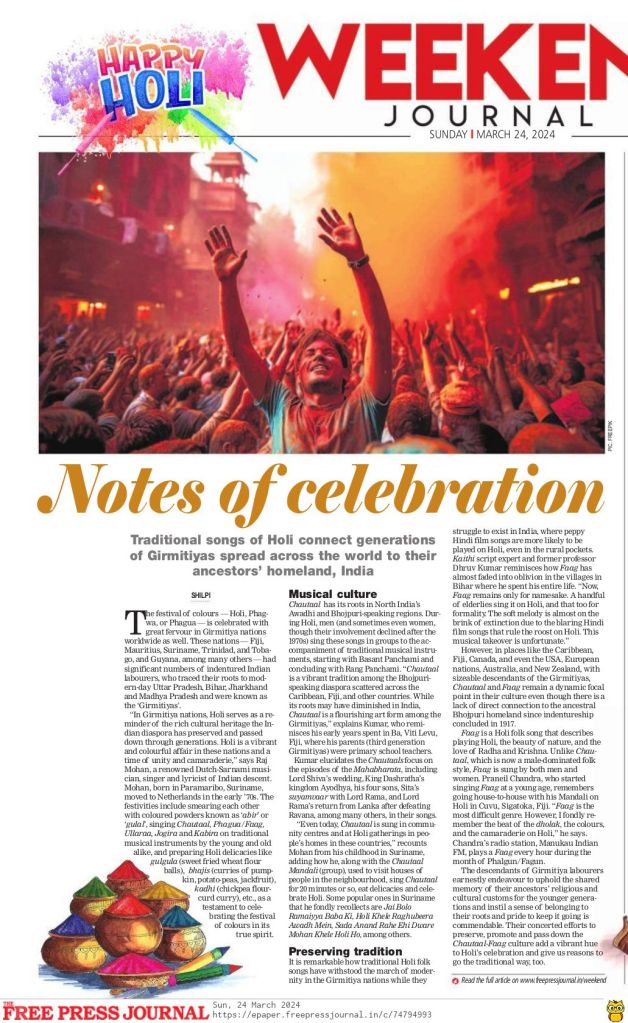
Notes of celebration

Chautaal-Faag and other traditional songs played during Holi serve as musical bridges, connecting the young and older generations of Girmitiyas spread across the world to their ancestors’ homeland, India. These songs are the heartbeat of their celebrations, and they are trying to preserve and promote these in all possible ways.

The article, covering the musical tradition prevalent among the descendants of the Girmitiyas, was published in The Free Press Journal, Mumbai, on the eve of Holi. https://www.freepressjournal.in/lifestyle/holi-2024-how-traditional-songs-bridge-generations-across-the-globe

Taking a Macro View of the Micro Schools

The article was carried in The Free Press Journal, Mumbai, edition dated February 25, 2024. https://www.freepressjournal.in/weekend/micro-schooling-why-modern-parents-prefer-it-traditional-school-system