
The article appeared in The Free Press Journal, edition dated: December 17, 2023 https://www.freepressjournal.in/weekend/50-and-single-heres-how-you-can-up-your-dating-game

The article appeared in The Free Press Journal, edition dated: December 17, 2023 https://www.freepressjournal.in/weekend/50-and-single-heres-how-you-can-up-your-dating-game

Pyar mein giro mat bachche … utho, rise in love.
Sushma seth, Taal
Today’s society often focuses on the initial stages of romantic relationships, glorifying the passionate rush of falling in love. However, many fail to realize that sustaining love requires effort and dedication. While falling in love is easy and exhilarating, growing in love is a lifelong journey that demands maturity, understanding, and commitment. This article delves into the significance of transitioning from a mere feeling of love to a practice of love, highlighting the rewards and challenges of nurturing and evolving a deep connection.

Understanding Love as a Practice, Not Just a Feeling: Love is often mistakenly perceived as a fleeting emotion, something we stumble into by chance. However, true love extends beyond transient feelings and requires ongoing cultivation. It is a conscious decision and commitment to be the best versions of ourselves, both individually and as partners. Recognizing this paradigm shift is crucial to embracing growth and rising in love.
Navigating Conflict and Changes: Every relationship is bound to encounter conflicts and experience changes over time. Understanding that conflicts are not signs of a failing relationship but rather growth opportunities is essential. The initial hormonal rush inevitably subsides, giving way to a more stable and grounded connection. Instead of chasing the fading euphoria, couples who grow in love learn to adapt and find new ways to nurture their bond.
Embracing the Beauty of Growth: Growing in love requires maturity, acknowledging that our partner cannot be responsible for our happiness. It entails accepting that disappointments and disagreements are natural aspects of any relationship. There may be times when both partners are not on the same page or moments of boredom need to be addressed. It is through these challenges that love is tested and fortified.
Nurturing the Relationship: A thriving relationship demands constant nourishment. Growing in love means investing time and effort in self-reflection and recognizing areas within ourselves that require work. It involves being comfortable with occasional discomfort and periods where the emotional connection may wane. Moreover, it requires a willingness to give and receive, understanding that equality is not always about a perfect balance but meeting each other’s needs differently.
The Journey of Growth: While growing in love may not always be easy, it is a beautiful process that offers tremendous rewards. It can be an intense and transformative experience that unearths old wounds, triggering emotional responses from the past. However, it is through these challenges that trust, security, safety, and a joy-filled connection can be established, fostering a deep bond that withstands the test of time.
Moving beyond the initial stage of falling in love, growing and rising in love requires a shift in mindset and a commitment to continuous personal and relational development. Love is not merely a fleeting feeling but an ongoing practice that demands dedication, understanding, and the willingness to navigate challenges together. By embracing the beauty of growth and nurturing our relationships, we can cultivate profound connections that enrich our lives and create lasting happiness.

When it comes to relationships in nature, the partnership between orchids and fungi is a stunning example of symbiosis. As you carefully select a beautiful orchid for your loved one, did you know that orchids have their own partners? In this article, we delve into the intricate world of symbiotic relationships, shedding light on the various types of symbiosis and exploring how orchids and fungi create a unique and mutually beneficial bond.

Flavours of Symbiosis: Symbiosis, derived from Greek roots meaning “living” and “together,” encompasses relationships between different species where one species relies on another for survival. Much like a box of chocolates, symbiosis comes in different flavours, ranging from harmonious to more complicated connections.
Orchids and Fungi: Orchids form a complex symbiotic relationship with certain fungi known as mycorrhizae. This relationship is critical for the survival of juvenile orchids, as they rely on these fungal symbionts for carbohydrates. In return, the fungi receive moisture and access to organic matter, creating a sweet and mutually beneficial arrangement.
The Role of Fungi in Orchid Growth: Since orchids often grow in habitats with limited sunlight, they face challenges in producing chlorophyll, essential for their growth. Orchids have overcome this obstacle by depending on specific fungi. These fungi digest organic matter in the surroundings, converting it into simpler molecules such as sugar that the orchids can absorb. Consequently, orchids rely on fungi during their early growth stages.
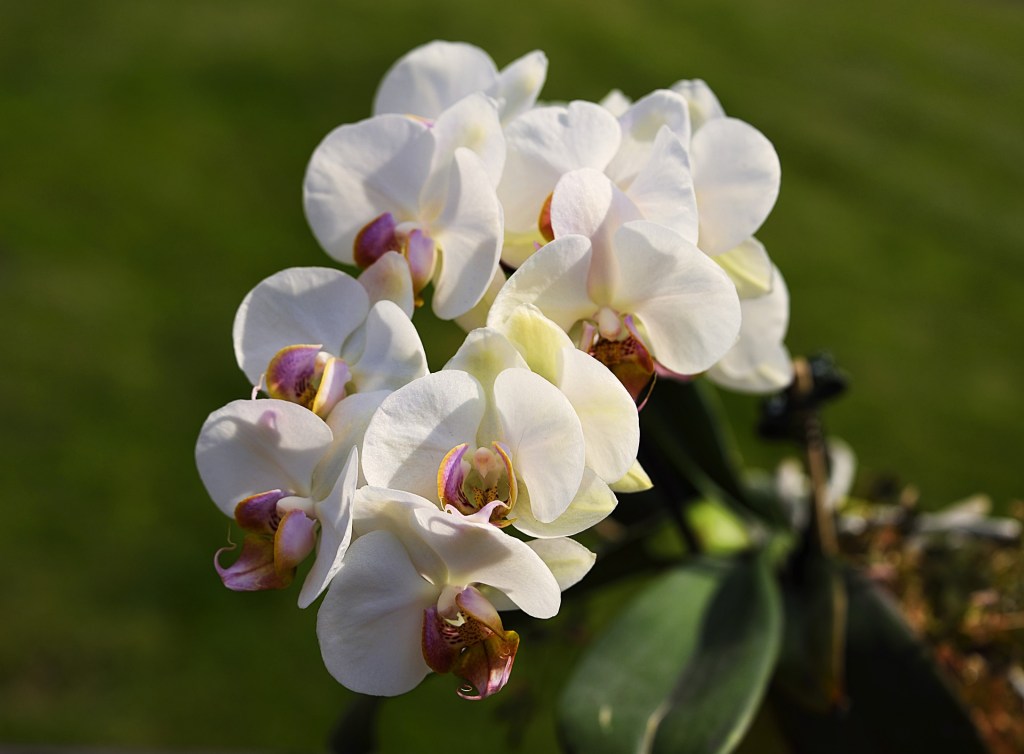
The Intricacies of Togetherness: In the symbiotic process between orchids and fungi, the fungi invade the orchid seeds before germination, providing vital nutrients to the young orchid. As orchids mature, some species can produce their food through photosynthesis. However, research suggests that even photosynthetic orchids may continue to utilize fungi as a supplementary food source.
The Hidden Connection: The intricate connection between orchids and fungi occurs between the plant’s root tissue and the fungus’s mycelium. While unseen to the naked eye, this relationship plays a vital role in the growth and nourishment of orchids.
Beneficial for Both: The fungi gain moisture and nutrition by digesting plant material in the roots of orchids. In turn, the orchids provide a water-rich environment for the fungi, ensuring their survival. The humid and moist conditions created by orchids offer a haven for the fungi to thrive.
Unveiling the Mycorrhizal Cheaters: Certain plants sometimes bypass traditional photosynthetic processes and obtain nutrients from nearby fungi. Referred to as “mycorrhizal cheaters,” these plants defy conventional methods of nutrient acquisition, showcasing the remarkable diversity of symbiotic relationships in nature.
As you celebrate your loved ones with romantic gestures, remember the captivating partnership between orchids and fungi—a love so true in symbiosis. This extraordinary relationship reminds us that giving and receiving are fundamental to any successful connection. From the sweet mutualism between orchids and fungi, we can learn valuable lessons about the beauty and intricacies of nature’s symbiotic dances.

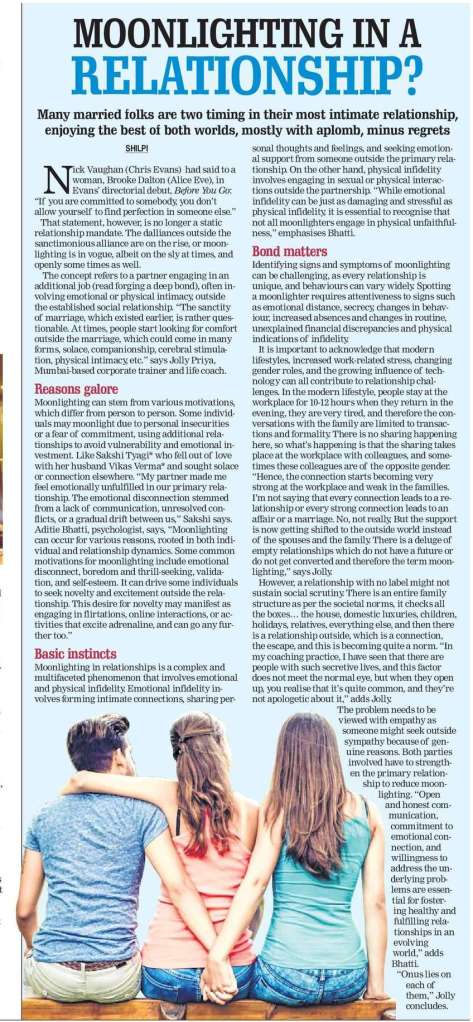
The article was published in The Free Press Journal on July 9, 2023. https://www.freepressjournal.in/weekend/heard-about-moonlighting-in-relationship-heres-what-it-entails

In the realm of modern dating and relationships, breadcrumbing has emerged as a common and frustrating practice. Breadcrumbing refers to the practice of intermittently giving attention, communication, or affection to someone while lacking genuine intentions for a committed relationship. Discover how breadcrumbing keeps individuals on the periphery, with sporadic messages, occasional dates, and displays of affection that lead nowhere. Whether experienced in online or offline relationships, breadcrumbing can leave you feeling confused and emotionally drained.

Signs and Symptoms of Breadcrumbing: Recognizing the signs of breadcrumbing is crucial to protect yourself from potential heartbreak. Understand the common indicators of this practice:
Safeguarding Against Breadcrumbing: Protecting yourself from breadcrumbing requires awareness and proactive steps. Implement the following strategies:
Understanding breadcrumbing and implementing strategies to safeguard yourself can protect your emotional well-being and cultivate healthier and more fulfilling relationships. Remember, you deserve genuine love and commitment, not mere breadcrumbs. Safeguard your heart and navigate breadcrumbing with confidence.


Communication remains the key to bridge the geographical separation between a couple and help them stay connected with each other.
Mr X and Ms Y, a young couple were dating each other for two years when suddenly due to career commitments, Ms Y had to move to a different city. This is a familiar situation for many couples today, as career, personal and professional growth, as well as family commitments, make them get into ‘long-distance relationship’. With people connecting online, long-distance relationships are prevalent. A 2018 survey of long-distance couples found that while 27% had never lived near each other, about 50% of couples in the survey had met each other online.
A long-distance relationship is a phase where people are geographically distanced from each other, and work to overcome the physical distance by being connected virtually. Initially, Ms Y was very apprehensive about the prospect of staying away from Mr X. Negative thoughts and the questions that people would ask her like “How can you stay away from him?” and “He will find somebody better than you!” plagued her.
The most important thing that Ms Y and Mr X did was communicate with each other. Before going ‘away’ they spoke a lot, they understood each other’s situation, perspective and promised to not breach their trust in each other. A few coping mechanisms that any Mr X and Ms Y can use to nurture a long-distance relationship are as follows:
MUTUAL ACCEPTANCE: First and foremost, accept that the person is not going to be around you physically, and also acknowledge the reasons behind getting into this phase; the variable reasons could be a job switch, financial needs, family circumstances, etc. Acceptance would make the couple sail through the phase smoothly.
COMMUNICATION: It is always suggested to talk about things with each other. Communication becomes a key aspect when people are in a long-distance relationship. However, one needs to understand that there is some leeway that needs to be given. Communicate because you feel like it and do not force yourself into it. Sharing things about each other’s day can help in maintaining a crucial connection even from afar.
USING TECHNOLOGY IN DIFFERENT WAYS: It is an excellent idea to use technology to your advantage such as making a video call, writing an E-mail, surprising through letters, online gifting to keep the spark alive in the relationship.
DOING ACTIVITIES TOGETHER: There is a need to explore and experience things together when people are in a relationship, but for some, it becomes difficult when there is a geographical distance. However, doing some activities together like watching a movie at the same time, virtually cooking together, or exploring one’s day virtually could help the couple sail through
MAINTAINING TRUST BEYOND THE DISTANCE: Even if there is a physical distance, attachment, and emotional connection can be sustained effectively. Trusting the partner becomes an important aspect of the relationship, whether long-distance or face to face. Try giving the virtual and personal space to each other, respecting, and accepting the changes. Try and avoid linking all the issues and concerns to physical distance.
Getting into a long-distance relationship is a unique phase that people go through; however, keeping in mind certain things, it can be managed effectively. As there can be times when things can be overwhelming and emotionally disturbing, self-care is important, including taking both physical and mental care of oneself.
(This article has been written by Dr Hirak Patel, Counselling Psychologist, Fortis Hospital, Mulund.)
 mindthegapalways