
The article was carried in The Free Press Journal, Mumbai, edition dated February 25, 2024. https://www.freepressjournal.in/weekend/micro-schooling-why-modern-parents-prefer-it-traditional-school-system

The article was carried in The Free Press Journal, Mumbai, edition dated February 25, 2024. https://www.freepressjournal.in/weekend/micro-schooling-why-modern-parents-prefer-it-traditional-school-system

In a country where fashion trends come and go, a timeless and iconic garment continues to grace the Indian landscape with its elegance and cultural significance – the dhoti. This versatile and traditional attire has been integral to Indian men’s wardrobe for centuries. While modern fashion trends may have introduced new styles, the Dhoti Daredevils of India proudly wear this classic garment, embodying a spirit of tradition and fearlessness.

India has diverse cultures and traditions; its traditional attire reflects this rich tapestry. The dhoti is essentially a rectangular piece of unstitched cloth, typically measuring around 4.5 meters (15 ft) in length. It is draped around the waist and legs and then knotted at the waist. This elegant garment reflects the cultural diversity and regional variations found within the Indian subcontinent. The dhoti holds a special place among men’s many traditional garments; it holds significant prominence in almost all states. In the northern parts of Gujarat and southern parts of Rajasthan, the dhoti, known as “Pancha,” is often paired with a short kurta called “kediya.” The most common combination is dhoti and kurta, known as “dhoti kurta.” In Bengal, the kurta is called “panjabi,” and the ensemble is known as “dhuti panjabi.” In Tamil Nadu, it is worn with a “sattai” or shirt, while in Andhra Pradesh, it is paired with a “chokka” and in Kerala as “jubba.” Assam embraces the kurta as “panjabi,” and the combination is called “suriya panjabi.” Dhoti, as it is called in the Hindi belt, Mundu in Kerala and Veshti in Tamil Nadu, is a traditional attire, especially in the country’s southern parts.

Preserving Tradition:
The dhoti is more than just a piece of clothing; it represents a deep-rooted cultural heritage that connects the past with the present. Dhoti daredevils are the torchbearers of this ancient tradition, donning the attire on various occasions, from religious ceremonies and weddings to festive celebrations and cultural events. Their unwavering dedication to preserving this aspect of Indian culture keeps the flame of tradition alive and burning brightly.

Reviving the Style:
Despite being steeped in tradition, the dhoti is not immune to the winds of change. Over time, its popularity has fluctuated, and younger generations have sometimes veered towards more Westernized fashion. However, the dhoti daredevils play a pivotal role in reviving this traditional style, embracing it with pride and incorporating it into contemporary fashion with a touch of modern flair. By doing so, they inspire others to appreciate the elegance and versatility of this timeless garment.
Dhoti as a Symbol of Fearlessness:
Wearing a dhoti requires a certain level of skill and confidence. The dhoti daredevils exhibit fearlessness as they gracefully carry themselves in this attire, navigating their way through various social and cultural settings with poise and charm. Their bold choice to wear dhotis challenges stereotypes and showcases that traditional attire can be as powerful and stylish as any modern fashion statement.

Breaking Gender Norms:
While the dhoti has predominantly been associated with men’s fashion, the dhoti daredevils are breaking gender norms by encouraging women to embrace this garment as well. With the rise of gender-inclusive fashion, women are increasingly choosing to wear dhotis, celebrating their heritage and expressing empowerment.
Cultural Ambassadors:
The Dhoti Daredevils are cultural ambassadors, not just within India but also on the global stage. Their fearless display of traditional attire showcases the rich diversity of Indian culture to the world, drawing admiration and respect from different corners of the globe. They preserve the country’s unique identity and heritage by embracing their roots.
The dhoti’s cultural significance lies in its deep-rooted connection to traditions, customs, and regional identities. It represents the rich heritage and diverse cultural tapestry of the Indian subcontinent. Wearing the dhoti is not just a fashion statement but an expression of respect, identity, and an appreciation for the customs and rituals associated with the garment.
The Dhoti Daredevils of India are remarkable men who wear their traditional attire with immense pride. They are the torchbearers of a rich cultural heritage, keeping the flame of tradition alive in a world of ever-changing fashion trends. Through their bold fashion choices, they inspire others to appreciate and embrace the elegance of the dhoti while breaking stereotypes and challenging gender norms. As cultural ambassadors, they spotlight India’s diverse heritage and showcase the power of tradition in the modern world. The Dhoti Daredevils remind us all of the significance of preserving our cultural roots and celebrating the essence of who we are.

Rajasthan:
The Rajasthani dhoti, also known as the “Safa Dhoti,” reflects the royal heritage and grandeur of the region. Made from luxurious fabrics like silk or cotton, the dhoti features exquisite hand-block prints, intricate embroidery, and ornate borders. The colours are vibrant and eye-catching, ranging from rich reds and royal blues to earthy browns and mustard yellows. The Rajasthani dhoti is often paired with a matching bandhani (tie and dye) or colourful turban, reflecting the traditional attire of Rajput warriors. This ensemble is commonly worn during festive occasions, weddings, and cultural celebrations, symbolizing grace, valour, and a deep connection to Rajasthan’s rich history.
Gujarat:
The Gujarati dhoti, popularly known as the “Patola Dhoti,” is a testament to Gujarat’s weavers’ exceptional craftsmanship and artistic skills. Patola silk, renowned for its intricate double ikat patterns, is the hallmark of the Gujarati dhoti. The weaving process is meticulous, involving tying and dyeing the warp and weft threads separately before carefully weaving them together. The result is a mesmerizing display of geometric designs, vibrant colors, and intricate motifs. The Gujarati dhoti is often paired with an embellished bandhgala jacket or kurta, creating a stunning ensemble for weddings, festivals, and cultural events. It represents the rich textile heritage of Gujarat and reflects the wearer’s refined taste and appreciation for artistic excellence.
Maharashtra:
Maharashtrian dhotis, known as “Dhotar” in Marathi, are a traditional attire worn by men in the Indian state of Maharashtra. The dhoti is a rectangular piece of cloth that is typically wrapped around the waist and legs. Maharashtrian dhotis have a distinct style and are often accompanied by a unique way of draping, each with its own significance and cultural variations. The choice of style often depends on the occasion, personal preference, and regional customs.

Why do temples down south insist men wear a Dhoti before entering its premises?It is a sign of reverence, respect, and a sense of purity. Also, some temples insist on removing the shirt, and the person has to enter the temple bare-chested. Also, the belief is that the temple has a lot of energy within, which can be imbibed if we are bare-chested. Historically, only the wealthy and well-to-do scholars used to wear an upper-body vest and the lower class used to be bare-chested. Wearing a shirt was considered ostentatious and a sign of showing off one’s wealth. But in the presence of God, there should not be any opulent show of wealth; hence, temples asked the male devotees to remove shirts. This is practised to this day in most of the temples in Kerala. While in some temples, you are permitted to wear the shirt in the outer perimeter within the temple walls, you will have to remove the shirt if you have to enter the inner sanctum. In some temples, you must remove the shirt even if you have to enter the main gate of the temple, e.g. The Shree Padmanabhaswamy Temple in Thiruvananthapuram requires male devotees to remove their shirts and compulsorily wear dhotis even to enter the main gate.
~ M. Subbamani, a native of Tamil Nadu

The article was published in The Free Press Journal, Mumbai, on February 18, 2024. https://www.freepressjournal.in/weekend/international-mother-language-day-how-bilingual-parenting-is-changing-the-way-kids-learn-languages

‘Ki Nonsense Kotha Bolchen!’, a collection of caricatured terms and phrases quintessential Kolkatan in nature, is nothing but unadulterated joy. Painstakingly presented in this tiny pocket-size book by Debashish Deb and Mudar Patherya, it smacks of the City of Joy, the most colourful one in the world, by virtue of its ‘characters’. Kolkata does not run as much by logic or reason as by emotion. Here ‘Shobai Character’ (everyone living in Kolkata is a character). By that analogy, Kolkata has more characters per sq km than any other Indian city, 15.3 million and counting, which makes this no ordinary boi (book) but a celebration of these characters and their spirit — Maverick, Unique, Unpredictable, Effervescent, Excitable, and Rebel.
The title uses “Nonsense”, the only parliamentary English word to which the Bengali takes complete offence because it is synonymous with “extensive dismissiveness, complete disregard and a comprehensive decimation of respect”, simply a non-negotiable term and condition for their existence. If it offends you further, I could only say the most ridiculous line in a Kolkatan’s parlance — “Dhor to Aamakay!”
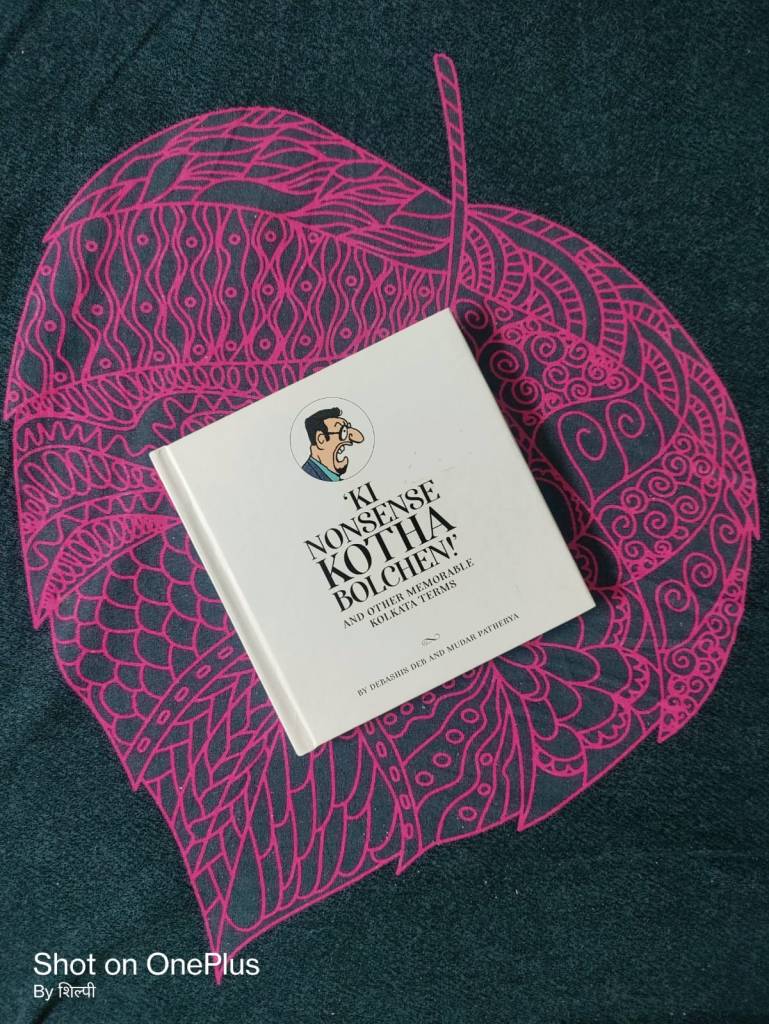
The tiny book (currently out of stock) has vividly captured the city’s distinctive lingual flavour — a part of it that speaks Bengali, a part that speaks English, a part that speaks Hindi and a part that speaks European… making Kolkata the melting pot of cultures and gives us a distinctive verbal reference for the city’s people, places, passion and purpose. It regales the outsider by capturing its varied essence. It makes the insider nostalgic, reminiscing about the characters who represent “innocence in a commercial world, a special sauce in an otherwise dull world, diversity in a conforming world and rebelliousness in a cowering world.”
After flipping through these pages, I can only exclaim, “Mairi! Hebbey Laagchey!” (Excellent) or better, “Aantel Marka” (deeply artistic with a profound thought).
But if you say, “Sheta Bodo Kotha Noi! (It’s no big deal)” I will give up because “Aar Baba Paarchi Na! Bolay Dilam Maanay Rella Nini Ba!” (I can’t deal with it anymore. Could you not create an uproar over it, pl)?
In praise of the Bhodrolok behind this creation, I can only say, “Uni Holayn Aamader Khoob My Dear Lok” (endearingly affable person), for adding many more terms to my limited Bengali vocabulary. If someone asks, “Kon Bawaal Kees” (Who created this drama)?, you can blame the “Goodself” (Yours Truly), “Babushona”!
I couldn’t help but agree with the duo that ‘Ei Rokom Jaayega Kothaaaao Nei’ (There’s no place like Kolkata anywhere), and this book is “Byaapak, Shanghaatik, Durdaanto, Phaatafati” — OUTSTANDING!
Boi ta fatiye diyeche! (The book has nailed Kolkata like never before).

February 14th is observed as National Ferris Wheel Day in honour of the birth of George Washington Gale Ferris, Jr., the man who invented the Ferris Wheel.
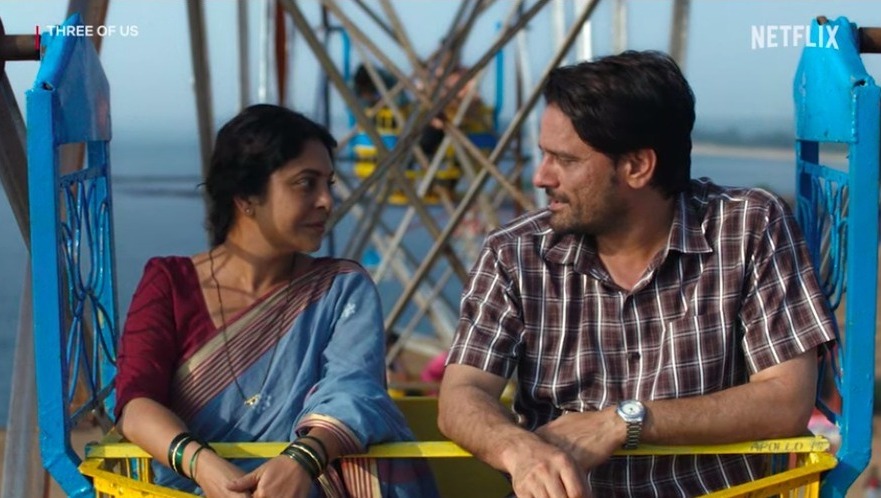
So here is celebrating the day, a bit belated, with the most telling image of the #FerrisWheel or the #GiantWheel from Avinash Arun Dhaware’s #ThreeofUs.
In the novel, “The Catcher in the Rye”, by J.D. Salinger, the protagonist, Holden Caulfield, reflects on his childhood memories while riding a Ferris Wheel with Phoebe at a carnival. He wishes it could be this way for him and her forever.
In this film, while taking a spin on the Ferris Wheel, childhood buddies Pradeep Kamath and Shailaja Desai relive their good old days, rewinding to that moment with a tinge of nostalgia when they were here together for the last time as children and giving that unfinished story the much-needed closure as adults.
A Ferris Wheel has a distinctive and universally recognizable nature, and it is no surprise that this scene is one of the most memorable in the film and finds a place on the poster, too.
The circular motion of a Ferris Wheel symbolizes cycles, continuity, and the never-ending nature of certain processes or experiences for both Pradeep and Shailaja and even Dipankar Desai.
The motion of a Ferris Wheel, with its ascending and descending movements, can be seen as a metaphor for their lives ups and downs after their last ride together on the Ferris Wheel many moons ago.
When Pradeep says, “If the wheel ever stopped mid-air, I didn’t want it to start again,” it highlights how the Ferris Wheel evoked nostalgia and a sense of the past, connecting people to memories of fun times and simpler pleasures. It also creates a sense of adventure and excitement because we see Dipankar choosing to stay away from the ride, letting Shailaja and Pradeep go for a ride one last time before they bid goodbye to each other forever.
When the wheel stops for a while (a brilliant way to pause and let the characters converse), Shailaja takes a moment to express how she still wouldn’t wish the wheel to restart. She reminisces how she was in a great hurry to get to Vengurla, and now, when she’s here, she’s missing Mumbai. But at that particular moment when the wheel has halted, she doesn’t feel the need to hurry anymore. “This is where I want to be, and I’m here,” she says, to which Pradeep couldn’t help but ask her, “Why didn’t you come back sooner, Shailaja?” She has no answer to his question but makes up for all that was and is now lost by saying, “After I left, I didn’t find the time to return. Our whole life is spent in a dilemma. Do we choose a busy or a peaceful life? Only recently, life said to me, “Slow Down.” And I did.”
Riding the Ferris Wheel together provides a different perspective of the surroundings with each revolution. It also symbolizes the importance of gaining new perspectives, reflecting, and seeing the bigger picture in various aspects of life for Pradeep and Shailaja.

However, the filmmaker has steered away from giving any romantic connotation to the Ferris Wheel ride by filming this scene in the glowing light of the evening and not an illuminated Ferris Wheel at night.
The scene is subtle, subdued, and sublime, much like their performances and the film, #ThreeofUs.
National Award-winning filmmaker Sanjoy Nag draws inspiration from the timeless lyrics of Gulzar and the soulful rendition of Geeta Dutt in Anubhav for his debut work of fiction, Mujhe Jaan Na Kaho Meri Jaan, published by Red Grab Books last year.

Much like its musical counterpart, the book effortlessly captures the essence of love, seamlessly blending playfulness with poignant moments, joy with melancholy, and togetherness with loneliness. Through its pages, readers embark on a journey delving into the lives of two star-crossed lovers, Sadabahaar and Purbasha, whose tale unfolds like a symphony of love, each note resonating with emotion. Beyond its title, the book exudes a distinctive Gulzar-esque essence. Like the renowned poet, lyricist, and director Gulzar, who has immortalized his iconic films in the screenplay format, Nag’s book ventures into this lesser-explored literary genre with finesse. His first attempt at writing a piece of fiction around the lives of two women who decide to give birth to their baby is a hit from the word go. He gives us a story that tugs at the heartstrings because, like love in all its hues, it is all-embracing, and his craft shines in how he has skillfully dealt with the sensitive narrative, plot and characterisation. And much like his other films that have had strong female protagonists, this one is no exception. It’s Nag’s default choice. He once told me, “It is a deliberate attempt because I am surrounded by strong women. They make my life beautiful and more meaningful. Their stories inspire me, interest me and enrich my life.” This story, like his films, is an extension of his creative template. As I turned the pages, I couldn’t help but envision the story unfolding on the silver screen. Nag’s work begs for adaptation, a cinematic journey waiting to be realized. Perhaps someday soon.
 mindthegapalways